
Archaeologists in the necropolis of Abusir in Egypt have discovered remains of a long-lost valley temple belonging to the solar complex of King Nyuserre, who was one of the most powerful rulers of the Fifth Dynasty and reigned more than 4,300 years ago. The find, made by an Italian archaeological mission in Abu Ghurab, is one of the most significant advances in the study of ancient Egyptian sun temples in over the past century.
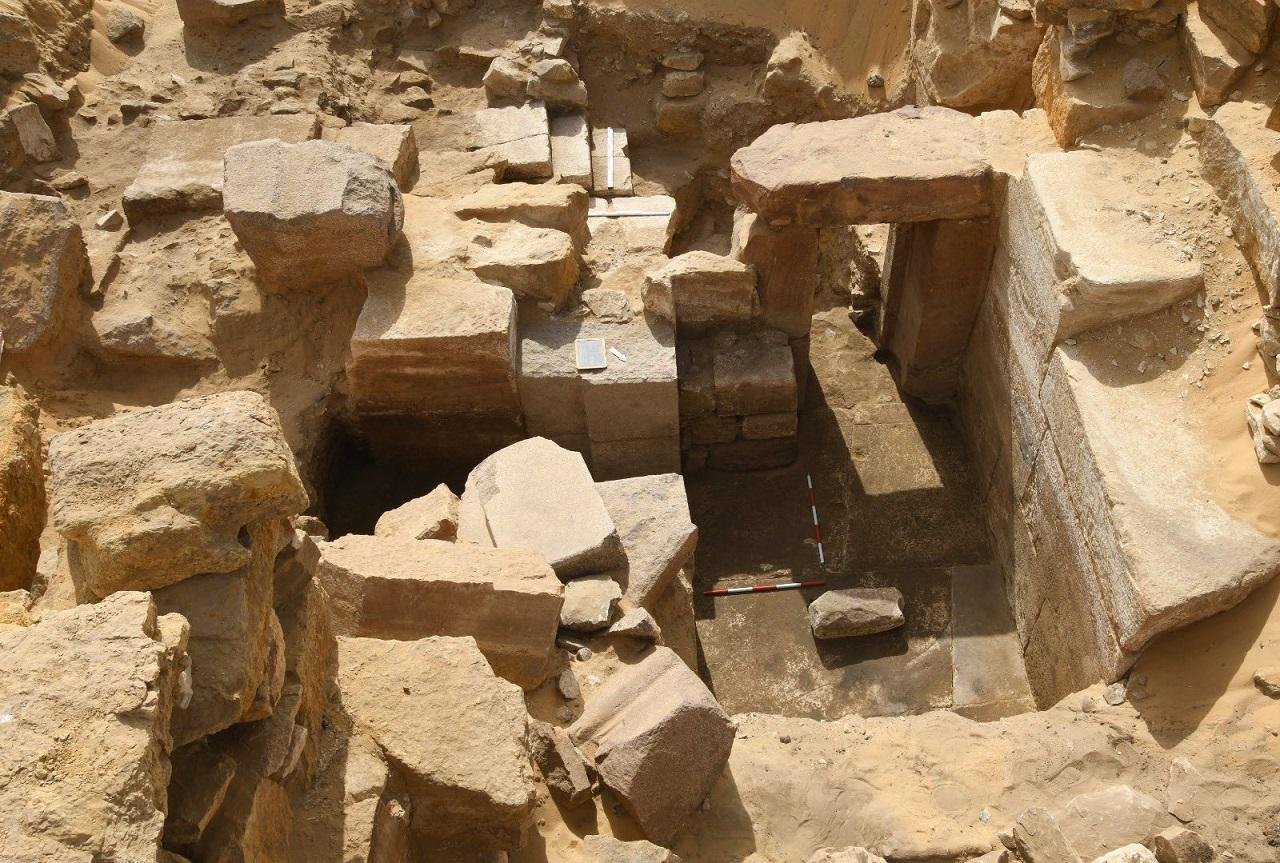
For the first time, more than half of the temple’s original structure has been exposed, and a monumental complex of over 1,000 square meters has been discovered. Its layout is unparalleled among any known valley temple in the Memphite region and underlines the architectural ambitions of Nyuserre’s solar cult. Only two sun temples from ancient Egypt have been conclusively identified to date.
The temple’s location was discovered by German Egyptologist Ludwig Borchardt in 1901; however, excavations could not be carried out due to high groundwater levels. Recent conditions have finally made it possible to investigate the site, where the entrance to the temple lay buried under approximately 1.2 meters of Nile River silt. The excavation revealed the original floor of the temple, a limestone column base, and fragments of a granite column that may have been part of the entrance portico. Door frames made of granite and lintels were also discovered in their original positions.
Other discoveries include sections of stone casing that originally lined the passage between the entrance and the causeway that led toward the main solar sanctuary. A well-preserved quartzite gateway, along with the remains of an internal staircase leading to the roof, was discovered during an earlier season, indicating that a secondary entrance also existed on the northwest side of the temple. A sloping ramp has also been detected, which likely connected the complex directly to the Nile or one of its ancient branches, and emphasizes the temple’s close relationship with the river.
One of the most interesting finds to come to light is a massive stone threshold featuring hieroglyphic inscriptions that include an extensive festival calendar associated with the temple and references to King Nyuserre. There have also been discoveries of well-carved fragments of limestone and a large number of pottery vessels that range from the late Old Kingdom period to the early Middle Kingdom. A vast amount of the pottery belongs to the First Intermediate Period, which was a time when central authority in Egypt weakened.
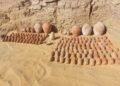
Evidence indicates that afterward, when the solar cult was no longer functioning, the abandoned temple was reused as a small settlement. This secondary use is a rare historical find that provides insight into life in the Memphis region during a poorly documented period of Egyptian history. Other artifacts that have been found include wooden pieces from the ancient Senet board game, showing leisure activities practiced by later inhabitants.
Archaeological excavations will continue in future seasons, with archaeologists working to trace the full extent of the complex and unlock the secrets of how sun temples functioned during the Fifth Dynasty of ancient Egypt.
More information: Ministry of Tourism and Antiquities











Disclaimer: This website is a science-focused magazine that welcomes both academic and non-academic audiences. Comments are written by users and may include personal opinions or unverified claims. They do not necessarily reflect the views of our editorial team or rely on scientific evidence.
Comment Policy: We kindly ask all commenters to engage respectfully. Comments that contain offensive, insulting, degrading, discriminatory, or racist content will be automatically removed.