
In waters off the coast of Brittany, archaeologists have identified an impressive set of submerged stone structures that reveal the presence of a remarkably sophisticated coastal society more than 7,000 years ago. The findings, which were made near the Île de Sein in western France, include a massive granite wall and at least a dozen smaller constructions now located several meters beneath the surface.
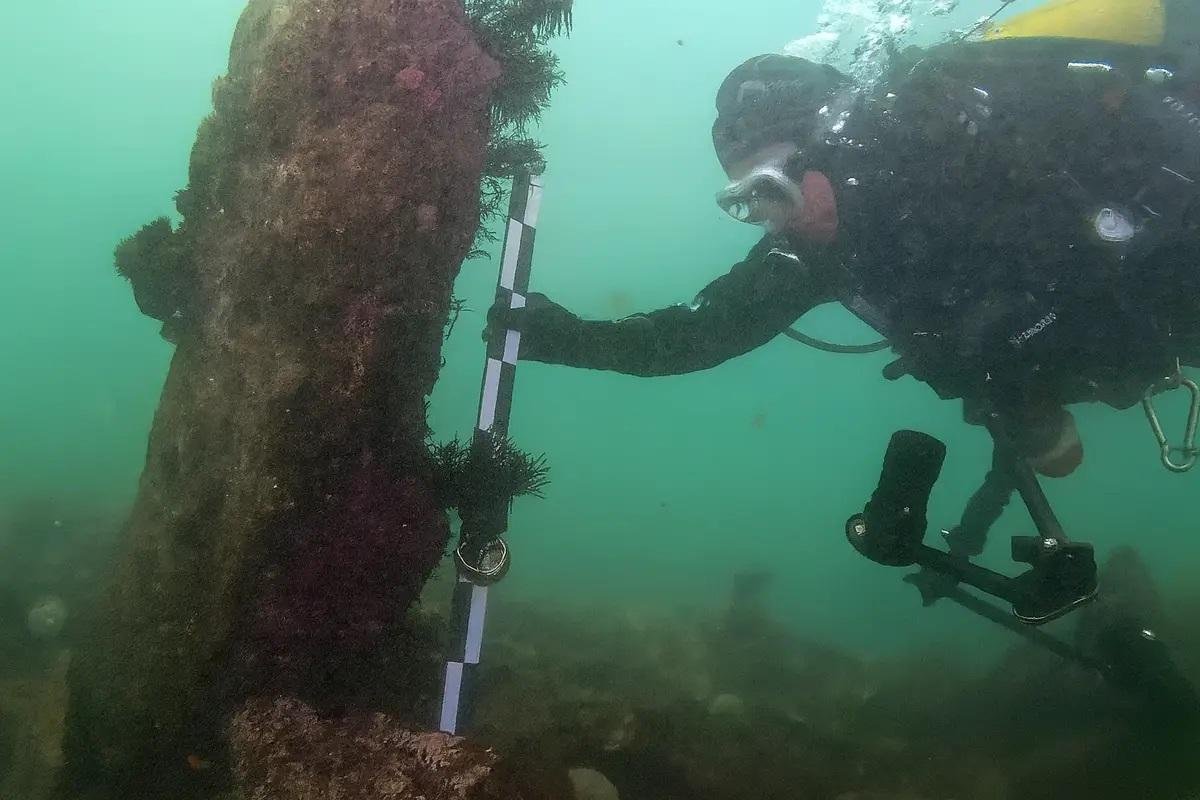
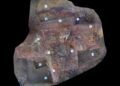
The largest structure is a wall measuring 120 meters long, which spans a submerged valley. Divers investigating it between 2022 and 2024 discovered stacked blocks of granite, reinforced by more than 60 upright monoliths and slabs nearly two meters high. Other structures, labeled TAF2A, TAF2B, and TAF3, appear to use the same construction methods, while a second group—identified during the dives of 2024—is characterized by narrower walls composed of smaller stones that were arranged to block natural depressions in the terrain. One of these later discoveries, YAG3C, consists of a 50-meter-long line of closely spaced small monoliths, sometimes set in parallel rows.
The site was first noticed in 2017 when seabed mapping using laser-based imaging suggested the presence of linear features on the ocean floor. Subsequent LIDAR work and underwater surveys showed that these were not natural features. Based on their depth, the structures are believed to have been built between 5800–5300 BCE, when sea level was considerably lower and the area formed part of the coastal landscape during the Late Mesolithic and Early Neolithic transition.

According to researchers, the small formations resemble fish traps, while the scale of the bigger constructions suggests additional purposes, possibly coastal protection or boundary markers. Their size and engineering are unlike anything previously documented in France for this period. The labor required to extract, transport, and erect multi-tonne slabs testifies to advanced technical skills and a structured community capable of organizing large building projects centuries before the region’s first known megalithic monuments appeared.

The find also puts an archaeological twist on local folklore. Legends from Brittany speak of a drowned city west of the Bay of Douarnenez, not far from the discovery site. While there is no evidence of any lost urban center, researchers note that memories of an abandoned coastal landscape, later submerged by rising seas, may have contributed to such stories over millennia.


Beyond the regional implications, the structures add to a growing body of underwater evidence demonstrating that complex stone-building traditions existed among coastal hunter-gatherer groups long before agriculture spread across Europe. Similar submerged constructions have recently been documented in the Baltic, where prehistoric communities built long stone alignments to channel migrating animals. The French team plans to further refine the dating, study construction techniques, and search for additional traces of early settlement along the now-submerged coast.















Disclaimer: This website is a science-focused magazine that welcomes both academic and non-academic audiences. Comments are written by users and may include personal opinions or unverified claims. They do not necessarily reflect the views of our editorial team or rely on scientific evidence.
Comment Policy: We kindly ask all commenters to engage respectfully. Comments that contain offensive, insulting, degrading, discriminatory, or racist content will be automatically removed.
Working with granite that large also implies advanced metal use, including diamond tipped or carbide cutting equipment meaning, thus implying that they were much more than hunter gatherers. It’s likely that various natural disasters like the Younger Dryas Event forced hunting and gathering as a consequence of those disasters. Seriously, how did the Egyptians shape Andecite perfectly? It could not have been copper tools. Mankind has amnesia.
Completely agree
The problem with this site though currently it doesn’t fit that timeline as they suggest just over 7000 years old and the younger dryas happened between 12-140000 years ago.
That being said that doesn’t means it’s accurate either a lot of ancient sites are dated much younger from carbon dating and we all know you can’t carbon date stone.
There has to be an answer to how sites like these and the hundreds more that keep being found were engineered and then just suddenly we don’t know how they did it and some we’d even struggle to recreate with today’s technology and engineering.