
A team of international archaeologists, physicists, and engineers will soon explore inside one of the greatest monuments of the ancient Maya world using a non-invasive imaging technique. Later this year, a team will deploy muography technology inside the ancient temple El Castillo, or the Temple of Kukulcán, at the Maya site of Chichén Itzá in Mexico to identify hidden chambers and clarify long-standing questions about the pyramid’s internal structure.

El Castillo dates from the eighth through the twelfth centuries CE and dominates the ceremonial core at Chichén Itzá. With sides nearly 55.5 meters long and a height of 30 meters, the pyramid has the largest volume at the site. Typical of Maya temples, it was built in successive phases, with layers of newer buildings erected over earlier temples, leading to a complex interior that is not yet fully understood.
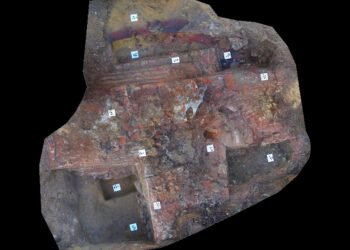
Previous investigations have already provided some clues about what might be hidden. In the 1930s, archaeologists unearthed a tunnel excavated on the northern side of the pyramid. Excavation revealed two interior spaces now known as the Offering Chamber and Sacrificial Chamber. These rooms yielded remarkable finds: a sculpture of a Chac Mool and a jaguar throne painted red. Decades later, research using electric resistivity surveys indicated other hidden voids within the substructure and confirmed that there is a water-filled cavity connected to the region’s cenote system under the pyramid, features considered to be sacred entrances to the underworld by the Maya.

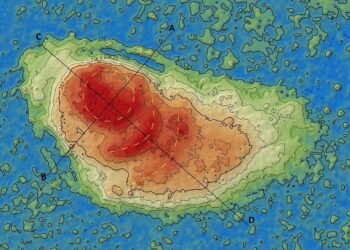
The new project, led by Mexico’s National Institute of Anthropology and History (INAH) in collaboration with the National Autonomous University of Mexico (UNAM) and several U.S. institutions, plans to use naturally occurring cosmic-ray muons to create a density map of the pyramid’s interior. This process works by tracking how these subatomic particles pass through stone and empty spaces, which allows researchers to detect variations that may signal hidden rooms or architectural features, without drilling or excavation.

Two custom-built muon detectors will be placed in existing tunnels in the pyramid on the northern and southern sides. In the initial six-month field phase, the team hopes to clearly identify the two known chambers. The detection of these spaces will verify the method, and scientists will expand their research to the rest of the pyramid, where anomalies could point to additional chambers that are currently unknown.
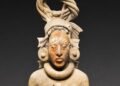
Moreover, aside from mapping hidden spaces in El Castillo, the study could help test broader archaeological hypotheses. It has been suggested by some archaeologists that an earlier temple encased within El Castillo may have functioned as a royal burial, a practice known in other areas of Mesoamerica. If muography reveals new internal features supporting this function, it would mark a major advance in understanding both the monument and Maya ritual architecture.
The project, once successful, would prove the effectiveness of muography as a method for exploring ancient structures and provide answers to fundamental questions while preserving invaluable cultural heritage.








Disclaimer: This website is a science-focused magazine that welcomes both academic and non-academic audiences. Comments are written by users and may include personal opinions or unverified claims. They do not necessarily reflect the views of our editorial team or rely on scientific evidence.
Comment Policy: We kindly ask all commenters to engage respectfully. Comments that contain offensive, insulting, degrading, discriminatory, or racist content will be automatically removed.