
Early humans were not the single-minded meat hunters often imagined in popular “Paleo” narratives. A new study published in the Journal of Archaeological Research argues that our ancestors were skilled at gathering, processing, and eating a wide range of plants long before the first farms appeared. Researchers from the Australian National University and the University of Toronto Mississauga reviewed archaeological evidence from sites across the world and concluded that humans evolved as “broad-spectrum” eaters, relying on diverse food sources rather than primarily on animal protein.

This research challenges the long-standing view that plant foods became important only late in prehistory during the Epipaleolithic, when hunter-gatherers supposedly began using seeds, grasses, and other previously overlooked resources. Instead, researchers demonstrate that early humans were grinding wild seeds, cooking starchy roots, and processing nuts thousands of years earlier. Plant remains and stone tools with grinding residues at sites like Ohalo II in Israel and Madjedbebe in Australia illustrate the long tradition of complex food processing.
This broad diet was not only a preference but also a physiological necessity. Humans can’t subsist on lean meat alone. Our bodies have what’s called a “protein ceiling,” where too much protein without sufficient fat or carbohydrates leads to illness, and this is sometimes referred to as “rabbit starvation.” In most environments, early people balanced meat with plant foods, rich in carbohydrates and energy. Studies of different hunter-gatherer societies show plants supplying 35–55% of calories, and sometimes even more in arid landscapes.
The authors make the case that long-standing assumptions about a “Broad Spectrum Revolution,” a supposed late expansion of diet before farming, are outdated. Instead of a sudden shift, plant use appears to be a long-term adaptation that shaped human evolution. Processing technologies — such as grinding stones, pounding tools, and cooking — allowed people to unlock nutrients from otherwise tough, bitter, or low-calorie plant resources. This flexibility helped humans occupy deserts, savannas, highlands, and temperate regions.

The authors propose a new term: the “Broad Spectrum Species.” Their analysis reveals that humans and other hominins succeeded because they were able to turn a wide range of natural materials into food. Today, about 80% of the global diet is composed of plant foods, a legacy of this ancient adaptability. Even though modern agriculture relies on a few highly productive crops, this study asserts that diverse plant use has always been central to human survival.

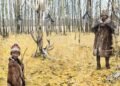
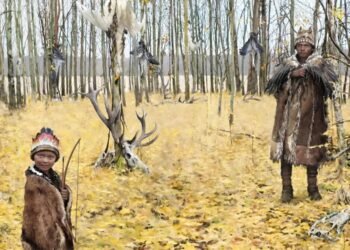
The study reframes early people not as strictly hunters, but as inventive, tool-using foragers who mixed animal fat, starches, seeds, and roots to meet their needs. Far from being a step toward farming, the broad plant use was itself one of the key strategies that allowed our species to spread around the world.










Disclaimer: This website is a science-focused magazine that welcomes both academic and non-academic audiences. Comments are written by users and may include personal opinions or unverified claims. They do not necessarily reflect the views of our editorial team or rely on scientific evidence.
Comment Policy: We kindly ask all commenters to engage respectfully. Comments that contain offensive, insulting, degrading, discriminatory, or racist content will be automatically removed.
I always thought planting came after the processing of the plant and integration into their life. You gotta really understand what plants are and how they reproduce to know that putting seeds in the dirt makes more plants. Then you really have to value a plant as to not consume its essence when all you gotta do is go out to the local wild patch; and then when you finally value it enough to plant the seeds, you gotta have enough experience with it to say, “this one is exceptional when compared to the rest, this one I wish there to be more of in this world”.
It would be nice if we could just do that but we would literally have to own property to plant here in the United States. You can not just plant anywhere. If I like something enough to see more of. I would just have to wait to have more money to buy more. Most people don’t have the property to plant on. It would be nice if we could plant our own food like farmers in the old days. They had their own vegetable gardens at least it is what I thought or made to believe.
Talk to your landlord. The Federal Government made it illegal for them to stop you from growing a vegetable garden. Even HOAs have been restricted. Even if you’re in an Apt you can grow a substantial amount of food on your window sills, balcony and using lighted hydroponic racks where sunlight doesn’t reach.
You have only to ask the existing “Paleo” cultures, they’ll tell you.