
Archaeologists working at Pompeii are using new digital tools to reimagine parts of the ancient city that vanished almost two millennia ago. A recent study focuses on the House of Thiasus, a grand residence in Regio IX, where excavations uncovered some impressive banquet rooms and a striking staircase that appears to end abruptly. That was an unusual feature, raising a question: What once stood above it?
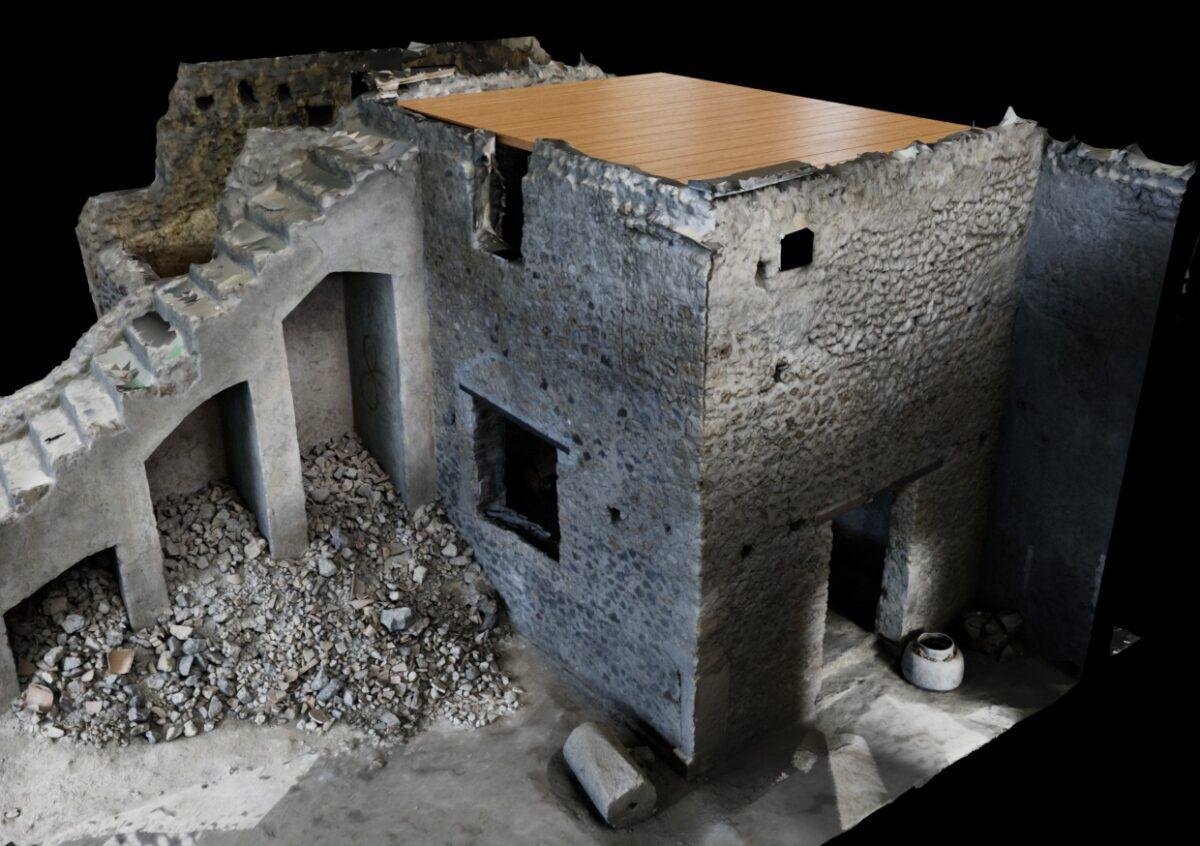
When Mount Vesuvius erupted in CE 79, it buried the city under meters of ash and rock. Although the lower floors of many of its buildings survived in these conditions, their upper stories collapsed long before excavations began in the eighteenth century. This “lost Pompeii,” as researchers call it, has long limited our understanding of daily life and the city’s striking architecture.
A team from the Archaeological Park of Pompeii and Humboldt University of Berlin is applying digital archaeology to reconstruct missing upper floors. Their work, part of the broader POMPEII RESET project, brings together detailed scanning, LiDAR, and close-range photography to create 3D models of the remaining structures. From cues such as beam sockets, remnants of a ceiling, or stairway alignments, they create digital “twins” that simulate the original appearance of the buildings.
One of the most important examples is the House of Thiasus. Digital studies indicate that its sweeping stone staircase once led to a tall tower reaching as high as 40 feet above the villa. Researchers identified space within this reconstructed tower for a wooden staircase and an upstairs dining room encircled by windows. The lower portion appears much more utilitarian, potentially where food was prepared before being carried upstairs to entertain guests in a sumptuous setting.
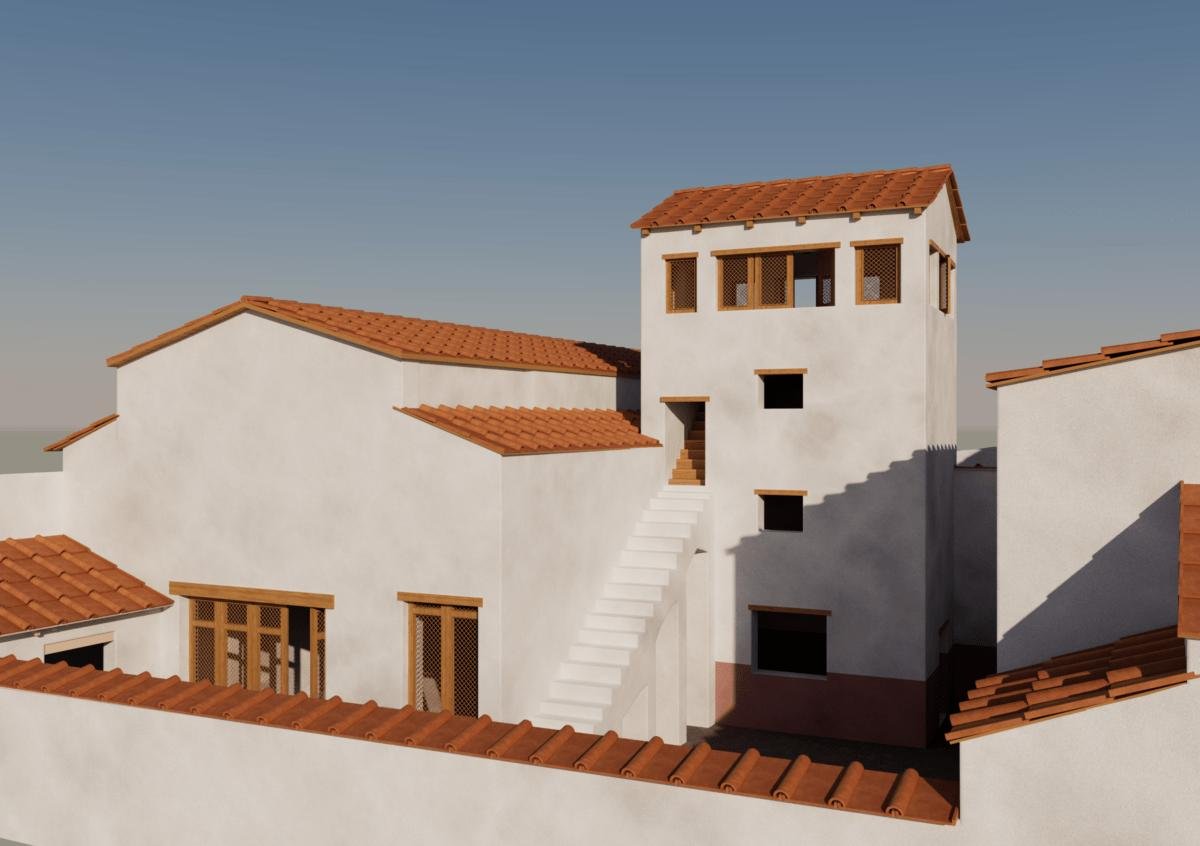
These findings correspond with descriptions and artworks from the Roman world that show multistory villas with crowning towers. Such architectural features were characteristic of elite residences and offered exceptional views of the landscape, including the Bay of Naples. Literary sources record the presence of similar towers in luxury estates, ranging from Pliny the Younger’s seaside villa to the famous tower in the Gardens of Maecenas.

The new research suggests that some wealthy families in Pompeii adopted this trend in their urban houses, shaping a skyline that would have looked more vertical and dramatic than the ruins indicate today. In the case of the House of Thiasus, researchers believe the property may have belonged to a prominent figure in the city’s political sphere.

Digital reconstruction not only reveals missing architecture but also helps preserve fragile remains that are threatened by weather and environmental change. Building virtual models allows archaeologists to explore ancient spaces without disturbing the site and to visualize buildings as their inhabitants once experienced them. The results, which have now been published in the E-Journal of the Excavations of Pompeii, hint at a Pompeii far more architecturally ambitious than the flattened ruins seen today.
The team hopes that more reconstructions of “lost Pompeii” will sharpen our picture of urban life before the eruption and reveal how its residents shaped and experienced their vibrant city.
More information: E-Journal of the Excavations of Pompeii












Disclaimer: This website is a science-focused magazine that welcomes both academic and non-academic audiences. Comments are written by users and may include personal opinions or unverified claims. They do not necessarily reflect the views of our editorial team or rely on scientific evidence.
Comment Policy: We kindly ask all commenters to engage respectfully. Comments that contain offensive, insulting, degrading, discriminatory, or racist content will be automatically removed.