
A well-preserved ritual purification bath, also known as a mikveh, which dates to the final years of the Second Temple period, was uncovered in archaeological excavations beneath the Western Wall Plaza in Jerusalem. This discovery provides physical evidence of daily religious life in Jerusalem shortly before the city’s destruction in 70 CE.

The mikveh was carved into the rock and was found sealed under a thick destruction layer left by the Roman conquest of Jerusalem, which took place almost 2,000 years ago. That layer included burned ash, collapsed material, and domestic items, which point to a very sudden and violent end to activity at the site. The bath itself is rectangular in shape and measures about 3.05 meters in length, 1.35 meters in width, and 1.85 meters in height. The interior walls were covered with plaster, and from the south side, four very precise steps lead down into the pool, showing attention to ritual requirements.
In the same destruction layers, archaeologists recovered pottery fragments as well as stone vessels, which were widely used by Jerusalem’s population during the late Second Temple period. Stone vessels are a hallmark of ritual purity practices, as Jewish law considered stone immune to ritual impurity, unlike clay or metal. Their presence alongside the mikveh is a key indicator that the area was deeply embedded in religious observance.
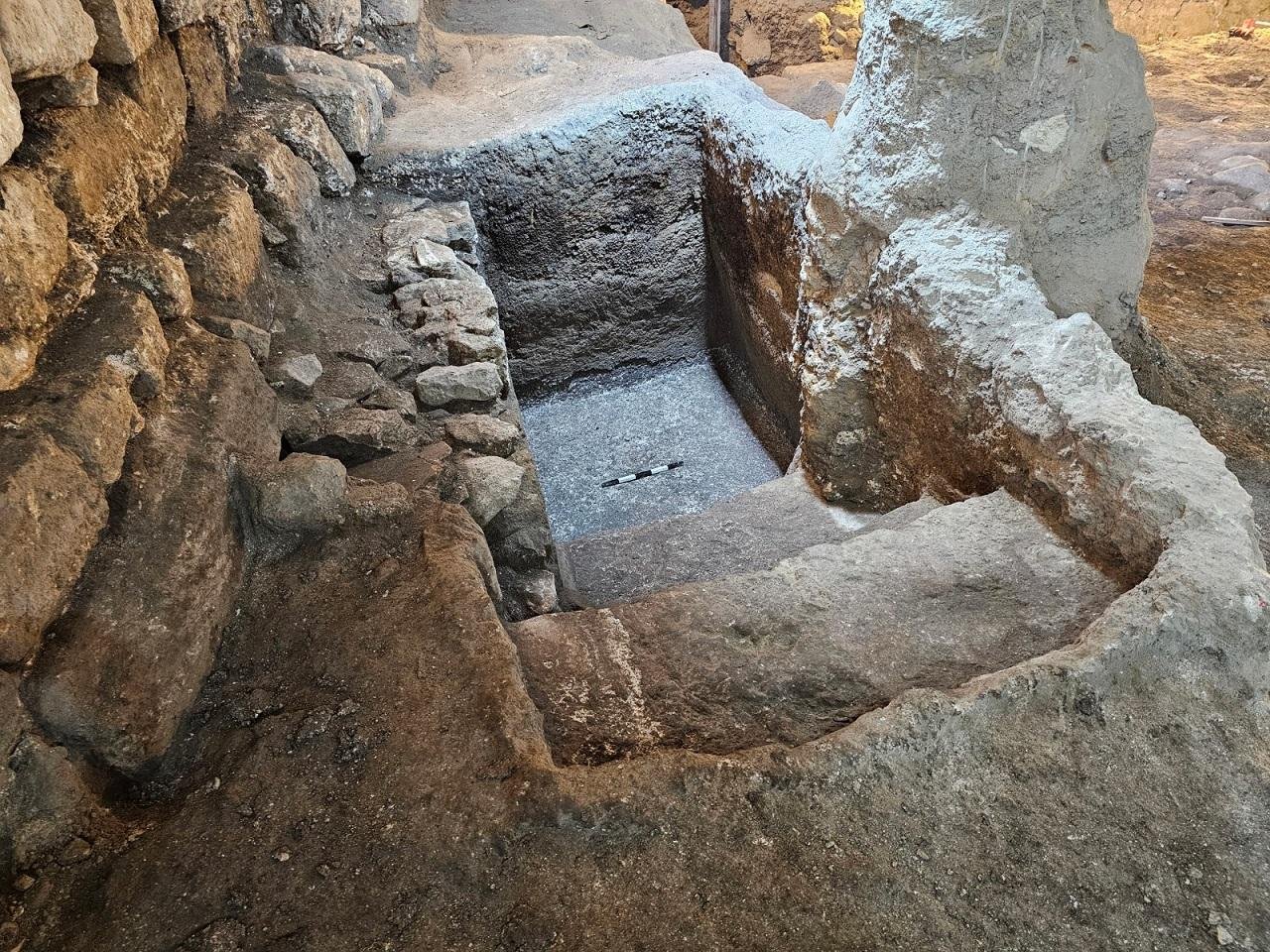
The excavation site is very close to the Temple Mount and near access routes to the Temple complex, which include the Great Bridge to the north and Robinson’s Arch to the south. In past excavations in this zone, archaeologists uncovered more mikva’ot and other structures linked to ritual purification, which indicate that the area was home to both local residents and large numbers of pilgrims who visited Jerusalem, especially during festivals.

Researchers emphasize that the discovery shows how religion shaped urban space in Jerusalem at the time. Ritual purity laws influenced architecture, household goods, and daily routines, especially in areas close to the Temple. The newly uncovered mikveh offers evidence demonstrating how these laws were followed not only in the home but also in public and semi-public spaces near the Temple.
The find also has historical value beyond its architectural significance. The ash found within the sealing layer directly connects the mikveh to the dramatic events surrounding the Roman destruction of Jerusalem. As such, it provides a rare picture of a working ritual installation that, at the moment of the city’s fall, was frozen in use.
Archaeologists view the discovery as an important piece of the puzzle, contributing to an understanding of Jerusalem as a Temple-centered city, where religious life and everyday activity were not separate.











Disclaimer: This website is a science-focused magazine that welcomes both academic and non-academic audiences. Comments are written by users and may include personal opinions or unverified claims. They do not necessarily reflect the views of our editorial team or rely on scientific evidence.
Comment Policy: We kindly ask all commenters to engage respectfully. Comments that contain offensive, insulting, degrading, discriminatory, or racist content will be automatically removed.