
Archaeologists working ahead of the construction of the future D11 motorway in eastern Bohemia have uncovered an exceptional group of military burials spanning more than a century of European warfare. The finds, which include a rare mass military grave from 1745 associated with the Second Silesian War and three 1866 mass graves from the Austro-Prussian War, represent a unique archaeological window into two major conflicts fought in the same landscape.
The rescue excavation was carried out by a consortium led by the Archaeological Centre Olomouc along a 3.6-kilometre section of the planned motorway between Jaroměř and Trutnov. Systematic metal-detector surveys recorded concentrations of projectiles and ammunition associated with both 18th- and 19th-century warfare, leading to targeted archaeological investigation. Round lead musket balls correspond to flintlock firearms used during the War of the Austrian Succession, while elongated bullets reflect later rifled weapons typical of 1866.
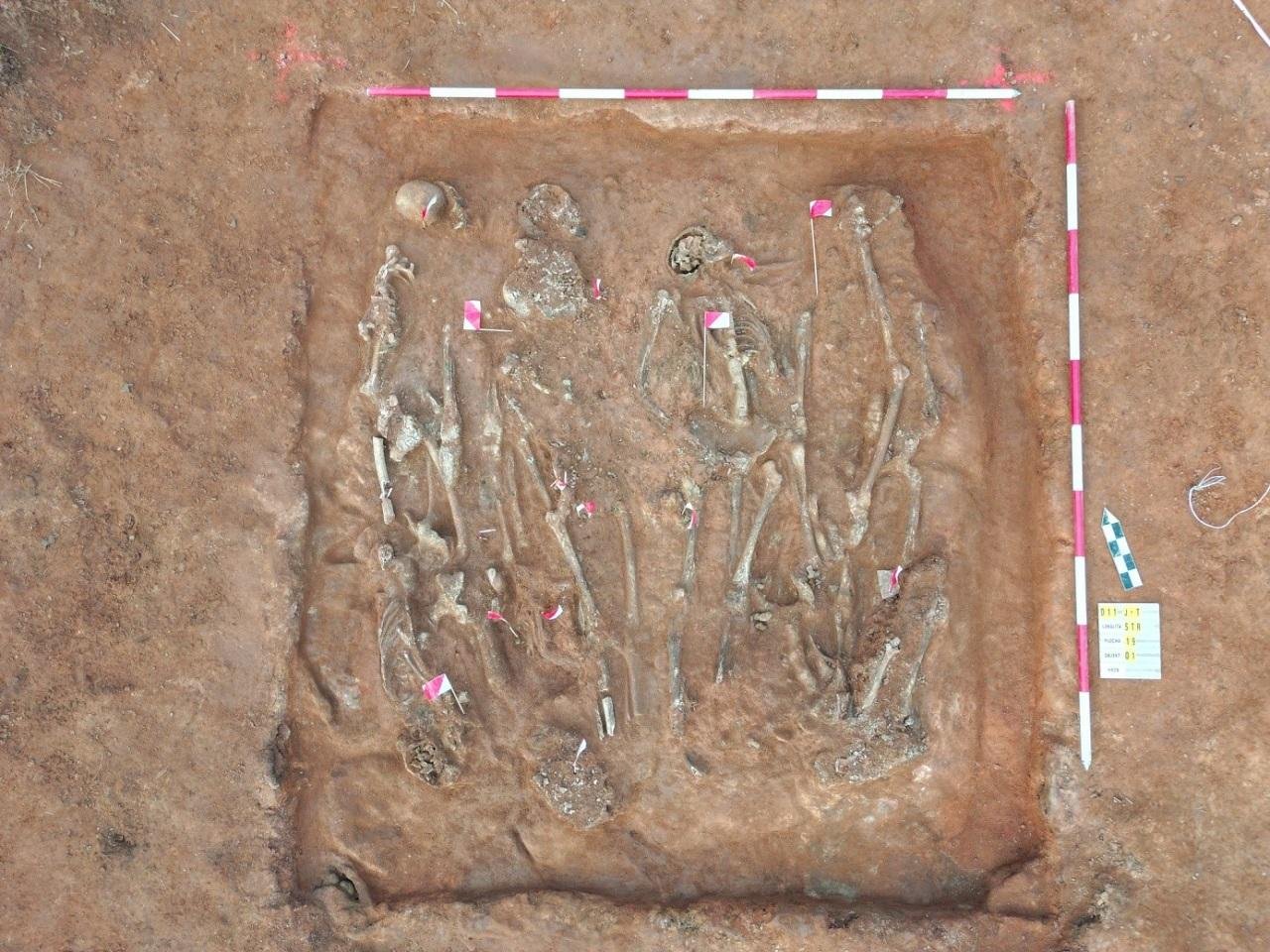
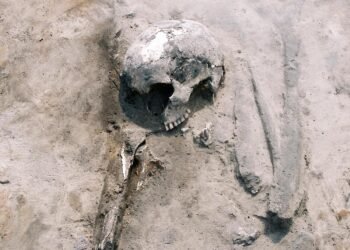
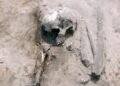
Between motorway kilometers 126 and 129 near the village of Střítež, archaeologists have discovered a mass grave associated with the Battle of Žďár in 1745. Twelve individuals were buried directly within the historical battle line, which is followed by the route of the modern motorway. Several skeletons bear gunshot wounds to the head caused by lethal shots.
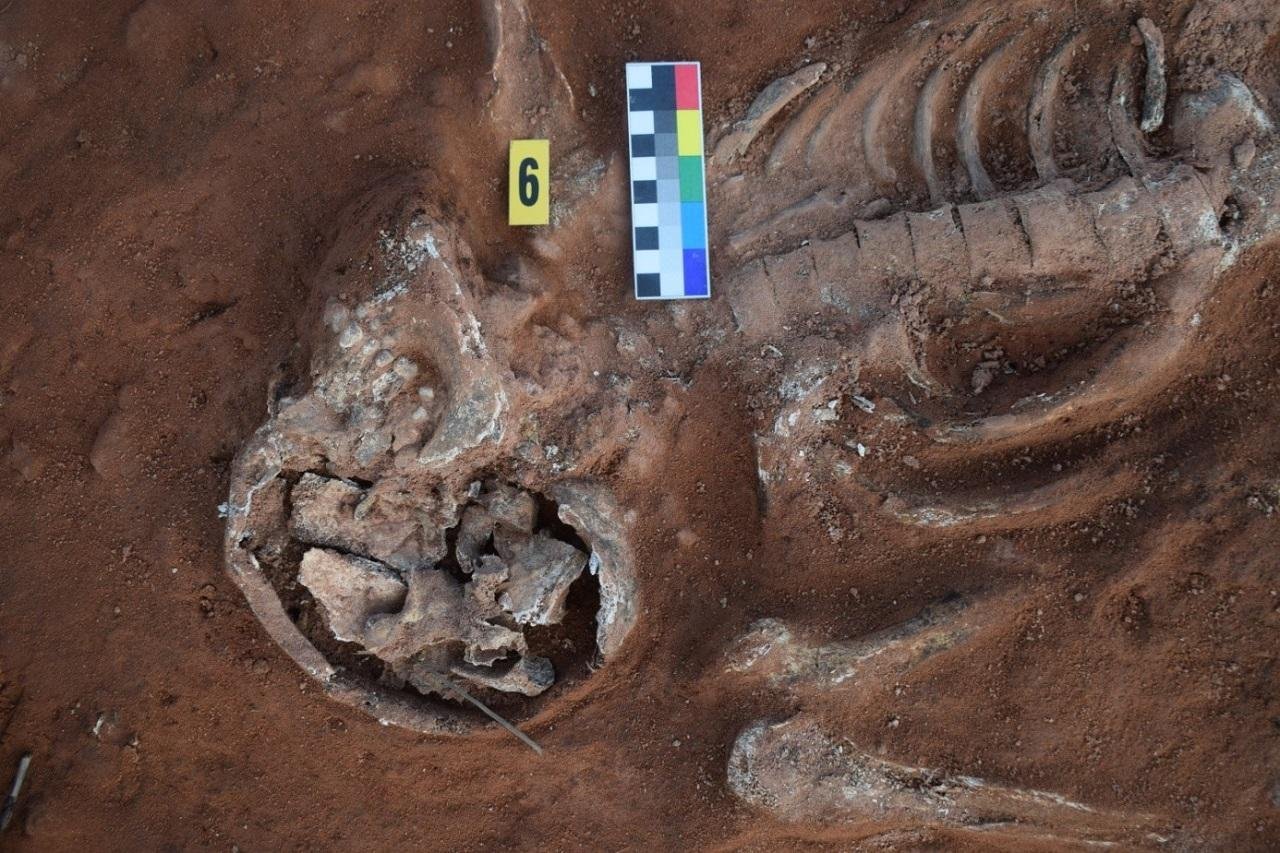
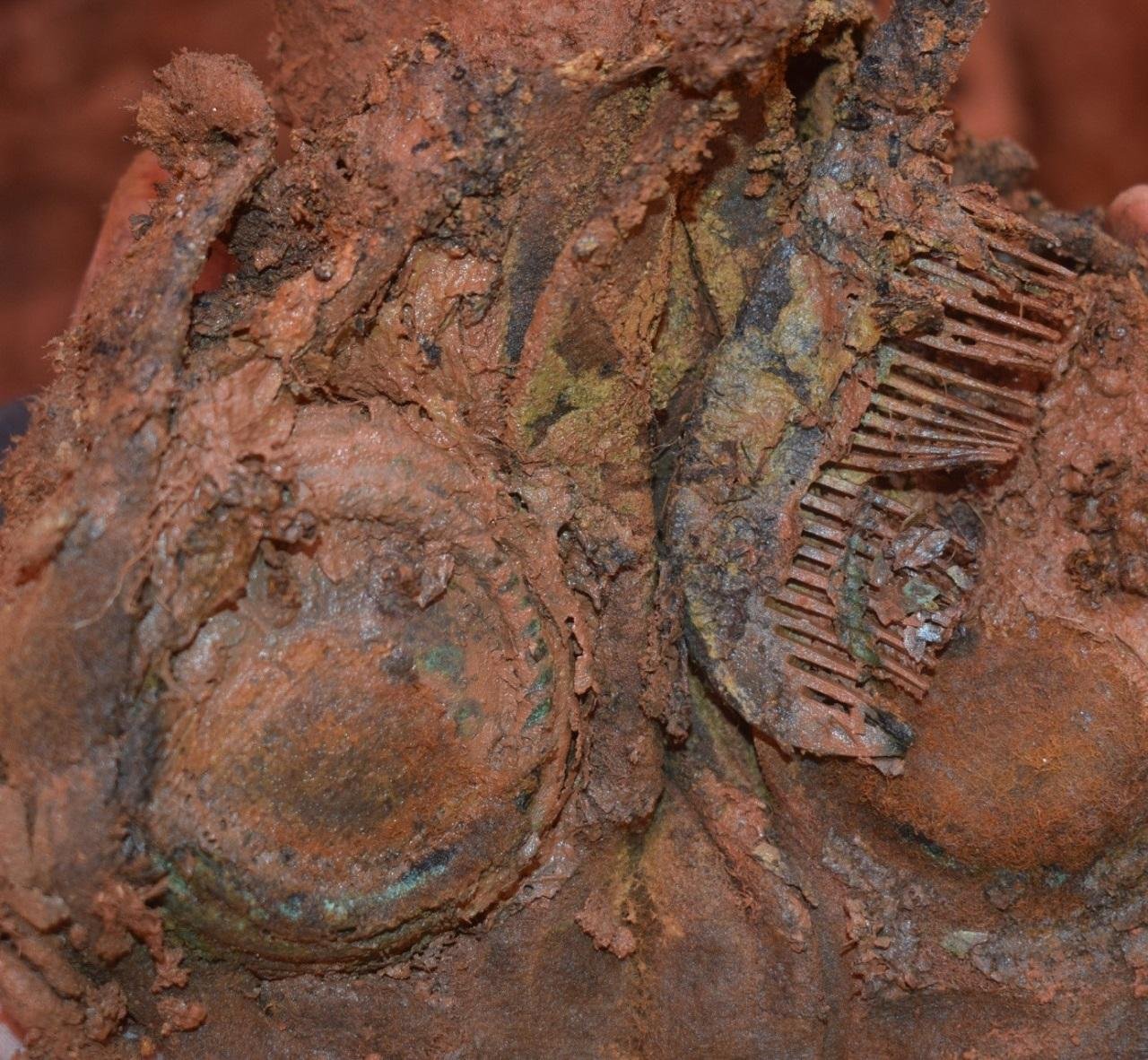
The artifacts retrieved from the grave include fragments of uniform, buttons with traces of textile fibers, projectiles, and personal equipment items. Although it has not yet been possible to determine which army the dead belonged to, this burial is considered an exceptional find since comparable 18th-century mass military graves are extremely rare in Europe.
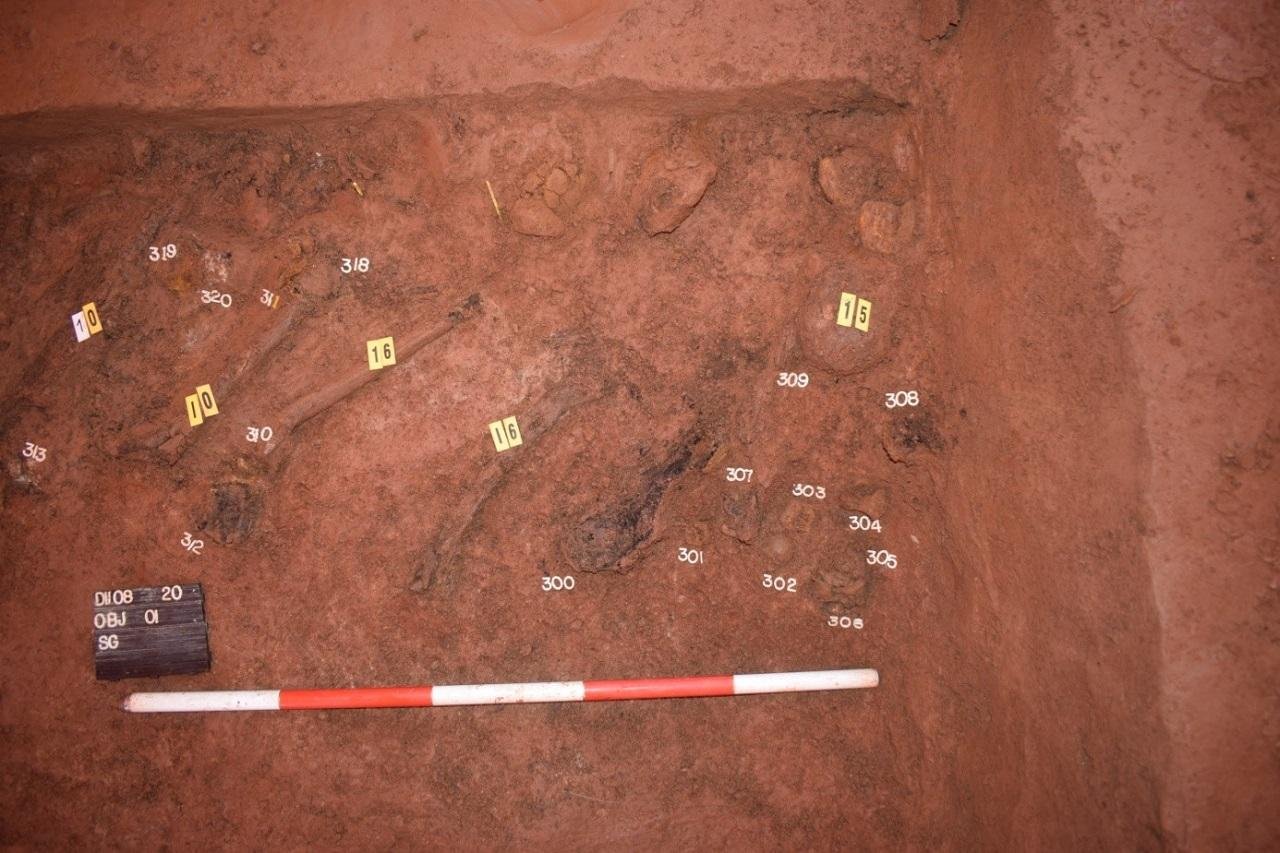
Further on the road, two more mass graves were discovered near kilometer 130 and attributed to Prussian soldiers who were killed during the Battle of Nový Rokytník, which occurred on 28 June 1866. This engagement followed the Battle of Trutnov and involved retreating Austrian forces and the Prussian Guard.
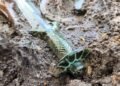
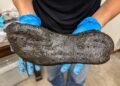
Seven individuals were buried in one grave, three in another. The preservation conditions for organic materials were excellent; vast numbers of fragments of textiles, uniform elements, weapons parts, and personal objects such as a mirror and a pocket coffee grinder were found. Military artifacts unequivocally indicate that the war dead were Prussian soldiers.
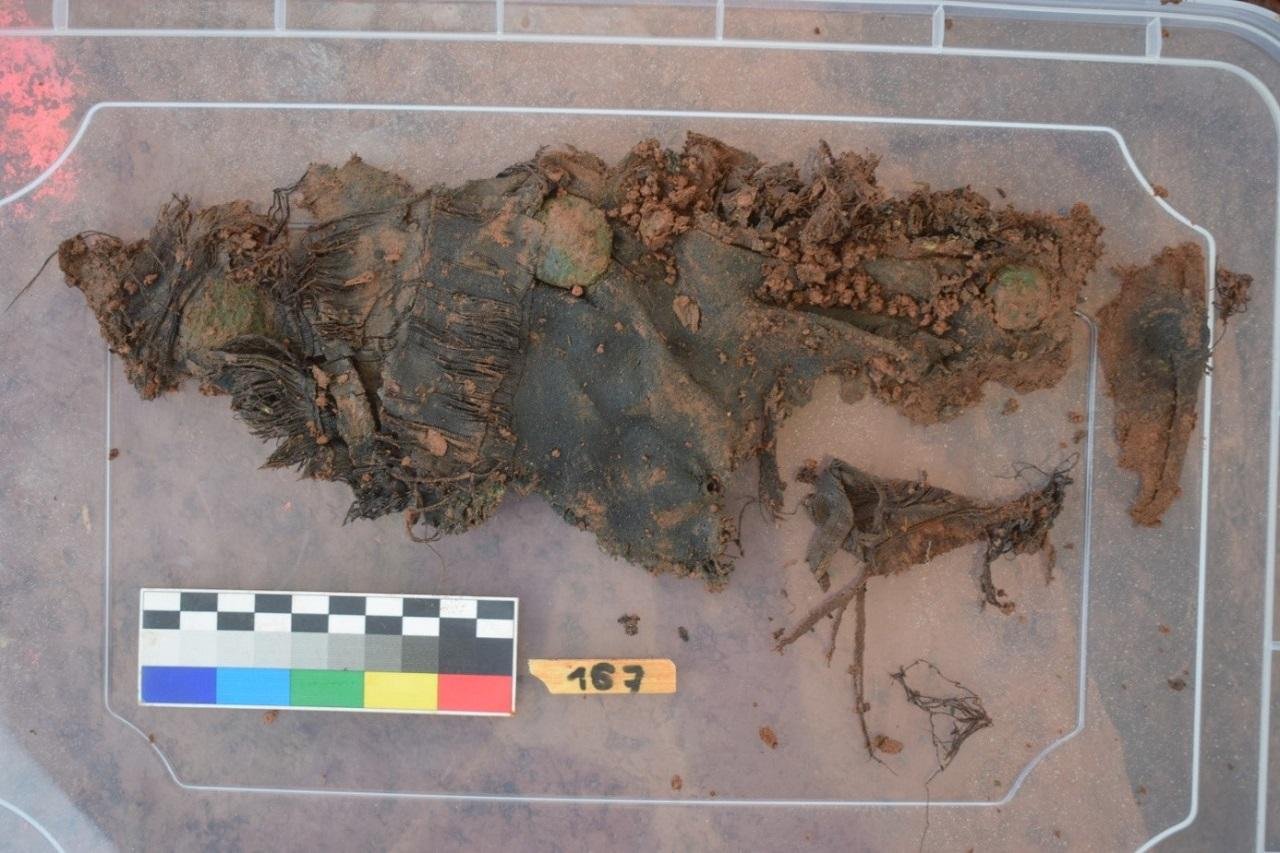
A fourth mass grave, found near kilometer 132 in the direction of the village of Studenec, held the remains of 23 Austrian soldiers from the same 1866 battle. The skeletal material was poorly preserved; the number of individuals was determined principally through surviving pairs of boots.
Despite the state of the bones, textiles and equipment were very well preserved. Finds include coat fragments, military fittings, personal belongings, a silver pocket watch decorated with a dog motif, and a gold franc minted in 1854. A saber scabbard fitting suggests a non-commissioned officer may be present among the fallen.
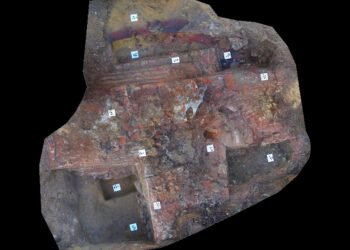
Fieldwork was completed in early December, and all human remains and artifacts were transported to laboratories in Olomouc for detailed anthropological, material, and conservation analyses. After study, the finds will be curated by the Museum of Eastern Bohemia in Hradec Králové, with the soldiers’ remains reburied according to legal requirements.
More information: Archaeological Center Olomouc










Disclaimer: This website is a science-focused magazine that welcomes both academic and non-academic audiences. Comments are written by users and may include personal opinions or unverified claims. They do not necessarily reflect the views of our editorial team or rely on scientific evidence.
Comment Policy: We kindly ask all commenters to engage respectfully. Comments that contain offensive, insulting, degrading, discriminatory, or racist content will be automatically removed.