
A newly published study has uncovered the oldest known evidence of human cremation in Africa, extending Africa’s cremation record by several thousand years and overturning long-held views on the societal and ritualistic behavior of ancient hunter-gatherers. This new discovery centers on a 9,500-year-old funerary pyre found at the base of Mount Hora in northern Malawi, a remarkable geographical landmark that seems to retain great symbolic significance for prehistoric communities.

This find, described in Science Advances by an international team of scholars from Africa, Europe, and the United States, provides evidence of the oldest known in situ cremation pyre containing the remains of an adult. Although there have been finds of human bones from much earlier contexts elsewhere, such as Lake Mungo in Australia, dated to around 40,000 years ago, this is the oldest example of intentionally constructed pyres fueled and maintained to cremate a body, and it had not been identified among African hunter-gatherers of this age.
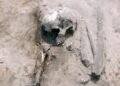
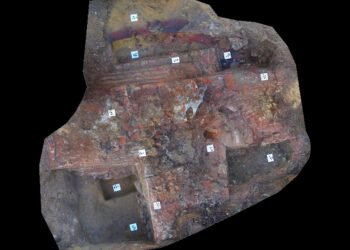
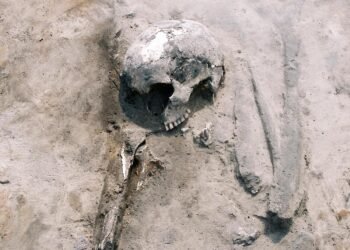
The cremation was discovered at a site called Hora 1, which was situated beneath a rock shelter at the foot of a granitic inselberg, rising several hundred feet above the plain. Archaeological excavations have indicated that this area was inhabited starting from as far back as 21,000 years ago and was a burial ground from about 16,000 to 8,000 years ago. In all cases, there were complete inhumations, so this one cremation of a single individual around 9,500 years ago was a radical shift from the established practice.

A total of about 170 fragments of human bone that were recovered from the extensive ash deposit suggest that the cremated individual was a short adult female between 18 and 60 years old. The burning and fracturing patterns indicate that the body was placed on the pyre shortly after death, when the decomposition process had yet to begin. The cut marks on limb bones suggest deliberate defleshing or dismemberment before burning, and the absence of teeth and skull fragments suggests that the individual’s head may have been removed before burning.

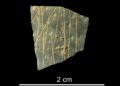
Reconstruction of the pyre shows it to have been a communal effort. At least 30 kilograms of wood and grass were collected as fuel. The microscopic evidence shows control of the fire by adding fuel in order to maintain a temperature of more than 500 degrees Celsius. The stone tools found in layers of ash may have been placed as a ritual act during the burning.
The history of the site adds an extra dimension of significance. It appears that large fires were made in the same location several centuries before the cremation and, importantly, that people returned to make additional fires directly over the pyre for several centuries afterward. Although no other individuals were cremated there, this repeated activity suggests that the place remained fixed in collective memory as a location of ritual significance.
Why this woman alone was treated in so elaborate and labor-intensive a way remains a mystery. In any event, it is now clear that early African foragers were capable of symbolic and complex mortuary practices, using fire and landscape to mark death in ways far more intricate than previously recognized.











Disclaimer: This website is a science-focused magazine that welcomes both academic and non-academic audiences. Comments are written by users and may include personal opinions or unverified claims. They do not necessarily reflect the views of our editorial team or rely on scientific evidence.
Comment Policy: We kindly ask all commenters to engage respectfully. Comments that contain offensive, insulting, degrading, discriminatory, or racist content will be automatically removed.