
A significant prehistoric settlement uncovered in eastern Ireland challenges how archaeologists had previously understood population density and social organization during the Late Bronze Age. New research published in Antiquity details how evidence for over 600 dwellings was contained within the Brusselstown Ring hillfort in County Wicklow, making it the largest nucleated settlement to have been identified so far in prehistoric Britain or Ireland.

Brusselstown Ring lies within the Baltinglass hillfort cluster, a landscape of up to 13 large hilltop enclosures that shows nearly continuous activity from the Early Neolithic through the Bronze Age. What is singular about Brusselstown, however, is its extraordinary scale and layout. Two widely spaced ramparts surround the site, with the outer boundary encompassing not only the main hillfort but also the nearby Neolithic enclosure at Spinas Hill 1. Enclosures extending across more than one hill are rare in Ireland and Britain and are very uncommon even in later Iron Age Europe.
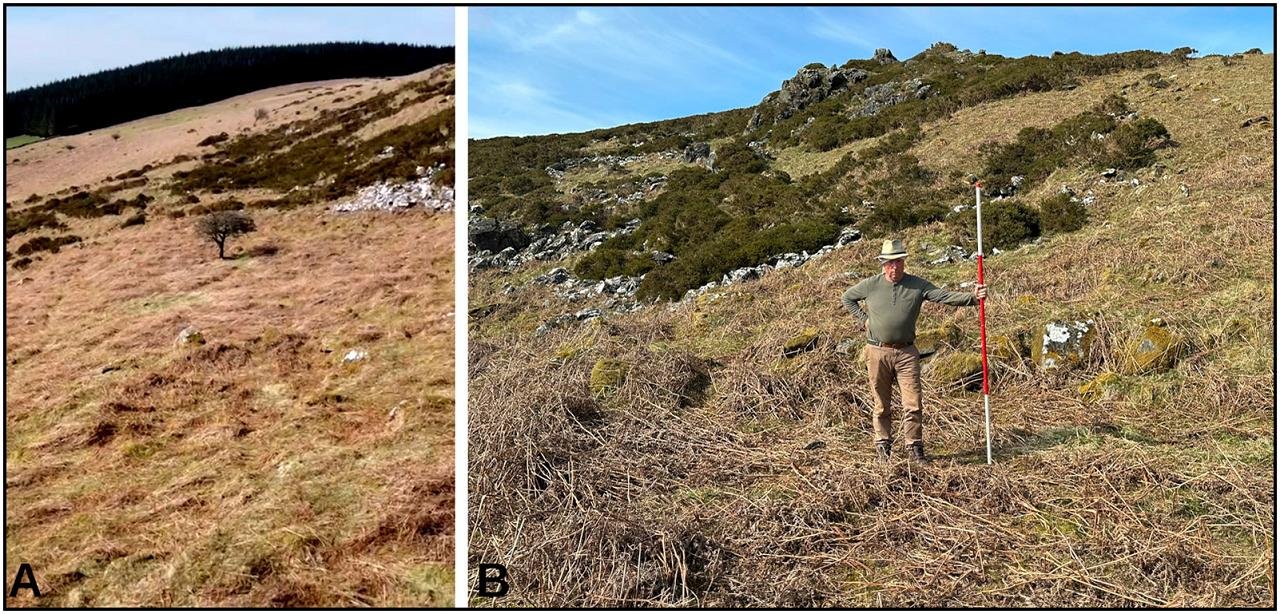
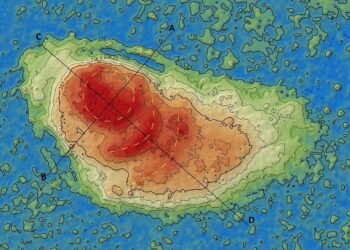
Airborne and topographical surveys identified more than 600 subtle platforms interpreted as former house foundations. Ninety-eight lie within the inner enclosure, while more than 500 occupy the area between the inner and outer ramparts. This is a dense concentration of dwellings, implying a permanently occupied, tightly organized community rather than the small, scattered farmsteads that dominate most of prehistoric Ireland.
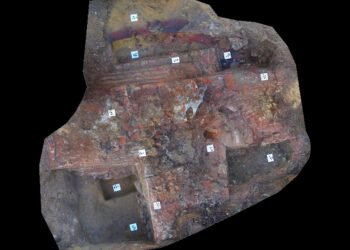
Researchers put these interpretations to the test with four targeted excavations across house platforms of varying size. Radiocarbon dates and material evidence suggest that the settlement’s occupation was primarily between approximately 1200 and 400 BCE, spanning the Late Bronze Age into the Early Iron Age. Significantly, houses of different diameters were in use contemporaneously, and the artifacts recovered from them reflect no clear differences in wealth or status. This pattern suggests a relatively egalitarian community despite the large population.

Excavations also revealed a very unusual stone-lined structure near one trench. The flat interior and its association with a natural water source make it unlikely to be a typical roundhouse. Researchers instead believe that it may have served as a water cistern, a feature identified in parts of continental Europe but as yet undocumented in Irish hillforts. If confirmed, it would be evidence of considerable planning to support a large population on the hilltop.


The site was apparently gradually abandoned during the third century BCE, following trends seen at other smaller hilltop settlements in Ireland. This decline does not seem to be directly linked to climatic changes, suggesting that social and economic factors played a larger role in the process.
Ongoing research thus seeks to confirm the function of the possible cistern, refine the chronology of the enclosing ramparts, and further contextualize why one of prehistoric Ireland’s largest communities ultimately faded from use.









Disclaimer: This website is a science-focused magazine that welcomes both academic and non-academic audiences. Comments are written by users and may include personal opinions or unverified claims. They do not necessarily reflect the views of our editorial team or rely on scientific evidence.
Comment Policy: We kindly ask all commenters to engage respectfully. Comments that contain offensive, insulting, degrading, discriminatory, or racist content will be automatically removed.