
It was on a quiet summer day, in the heart of Tønsberg, Norway’s oldest town, when the archaeologist Linda Åsheim discovered an intact medieval gold ring emerging from the soil almost within arm’s reach of the modern street surface. Lying just seven centimeters below ground, the jewel instantly stood out for its craftsmanship, rarity, and what it could tell about life and belief in the Middle Ages.

The ring was found during the extensive excavations that the Norwegian Institute for Cultural Heritage Research, NIKU, carried out on behalf of the Municipality of Tønsberg. The work is part of improvements to the stormwater infrastructure and has unearthed parts of the medieval town near Prestegaten and Storgaten in an area protected as part of Tønsberg’s historic core beneath the former royal fortress of Tunsberghus. Here, archaeologists have previously documented houses, streets, wooden structures, and signs of fire damage, something that tells us a lot about the place as an urban center in medieval Norway.
The ring itself has an oval deep-blue stone set into a finely wrought gold band. The stone is framed by elaborate filigree (thin wires of gold twisted into spirals) as well as delicate granulation made of tiny soldered beads. Although the stone is probably colored glass rather than sapphire, these materials were considered very valuable in the Middle Ages. Blue stones, whether genuine or imitated, were believed to possess protective and moral powers: preserving chastity, cooling bodily heat, and offering divine protection.

Stratigraphic evidence places the ring firmly in the medieval period. Although the cultivation layer from which it came cannot be directly dated, a spruce twig from the layer above has been radiocarbon-dated to between 1167 and 1269. This suggests the ring was lost or deposited sometime before or during that span.

According to experts, the find is exceptionally rare: of the circa 220 gold rings registered in Norway’s national artifact database, only 63 date back to the Middle Ages, and no comparable ring has been recovered in Tønsberg for about 15 years. Stylistically, the ring integrates influences from several periods and regions. The spiral motifs echo designs known from Scandinavia and England during the 9th to 11th centuries, while the combination of filigree and granulation reflects techniques introduced into Norway from Byzantine and Carolingian goldsmithing traditions.

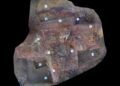
The small size and rich decoration of the ring suggest that it once belonged to a woman of high standing, perhaps connected to the royal or ecclesiastical elite who are known to have lived in or visited medieval Tønsberg. Apart from its material value, the object speaks to the symbolic weight that rings carried at the time, as signs of wealth, power, protection, and bonds never to be severed.
More information: NIKU















Disclaimer: This website is a science-focused magazine that welcomes both academic and non-academic audiences. Comments are written by users and may include personal opinions or unverified claims. They do not necessarily reflect the views of our editorial team or rely on scientific evidence.
Comment Policy: We kindly ask all commenters to engage respectfully. Comments that contain offensive, insulting, degrading, discriminatory, or racist content will be automatically removed.
Absolutely stunning