• About
  • Privacy Policy
  • Terms of Use
  • Donation
  • Contact
No Result
View All Result
Archaeology News
  • Home
  • News
    • Archaeology
    • Anthropology
    • Paleontology
  • Academic
    • Books
    • Conferences
    • Universities
  • Articles
  • VR Tours
  • Quiz & Game
  • Download
  • Encyclopedia
  • Forum
Archaeology News
No Result
View All Result
Home News Archaeology

New study rewrites the origins of the Macedonian kingdom, dating Alexander the Great’s dynasty to the 6th century BCE

by Dario Radley
January 3, 2026

For over a century, the foundation of the Macedonian kingdom, the homeland of Philip II and Alexander the Great, has been placed in the mid-7th century BCE. This date, repeated in countless history books, has long been treated as a fact. A new interdisciplinary study now challenges that assumption by dating the emergence of the Argead, or Temenid, dynasty considerably later than previously thought.
New study rewrites the origins of the Macedonian kingdom, dating Alexander the Great’s dynasty to the 6th century BCE
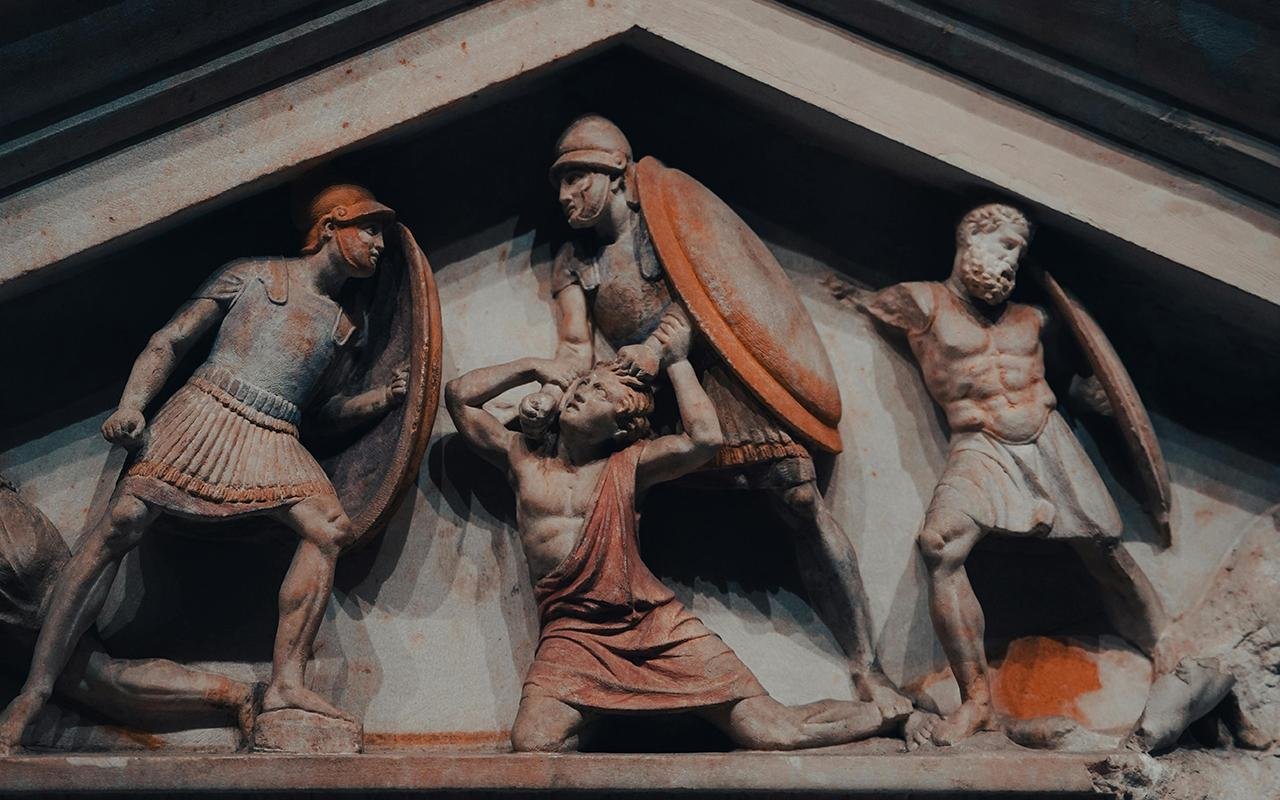
Decoration of the Alexander Sarcophagus at the Istanbul Archaeology Museum. Credit: Engin Binbas

A study published in the journal Karanos, which combines the critical reassessment of ancient textual sources and archaeological evidence from burial sites in Lower Macedonia, collectively indicates that the beginnings of the Macedonian kingdom should be dated to about 575 BCE, almost 75 years later than the traditional chronology.

The traditional timeline is based on king lists preserved by much later writers, such as Eusebius of Caesarea, who recorded the names and reign lengths of Macedonian rulers hundreds of years later. Counting back from the death of Alexander the Great in 323 BCE, these lists place the beginnings of the dynasty far earlier than the available evidence can securely support. Although it has long been realized that the earliest rulers named in these lists are likely legendary figures added for political purposes, the new study shows that even once these names have been removed, the conventional dates cannot be supported.

By comparing the purported reign lengths of early Macedonian kings with those of better-documented historical periods, the researchers demonstrate that the early rulers would have had implausibly long reigns. In contrast, later Macedonian kings, ruling under much more stable conditions, ruled on average for much shorter periods. Applying realistic reign lengths shifts the foundation of the dynasty decisively into the early 6th century BCE.
2,100-year-old Alexander mosaic reveals secrets in first-ever analysis
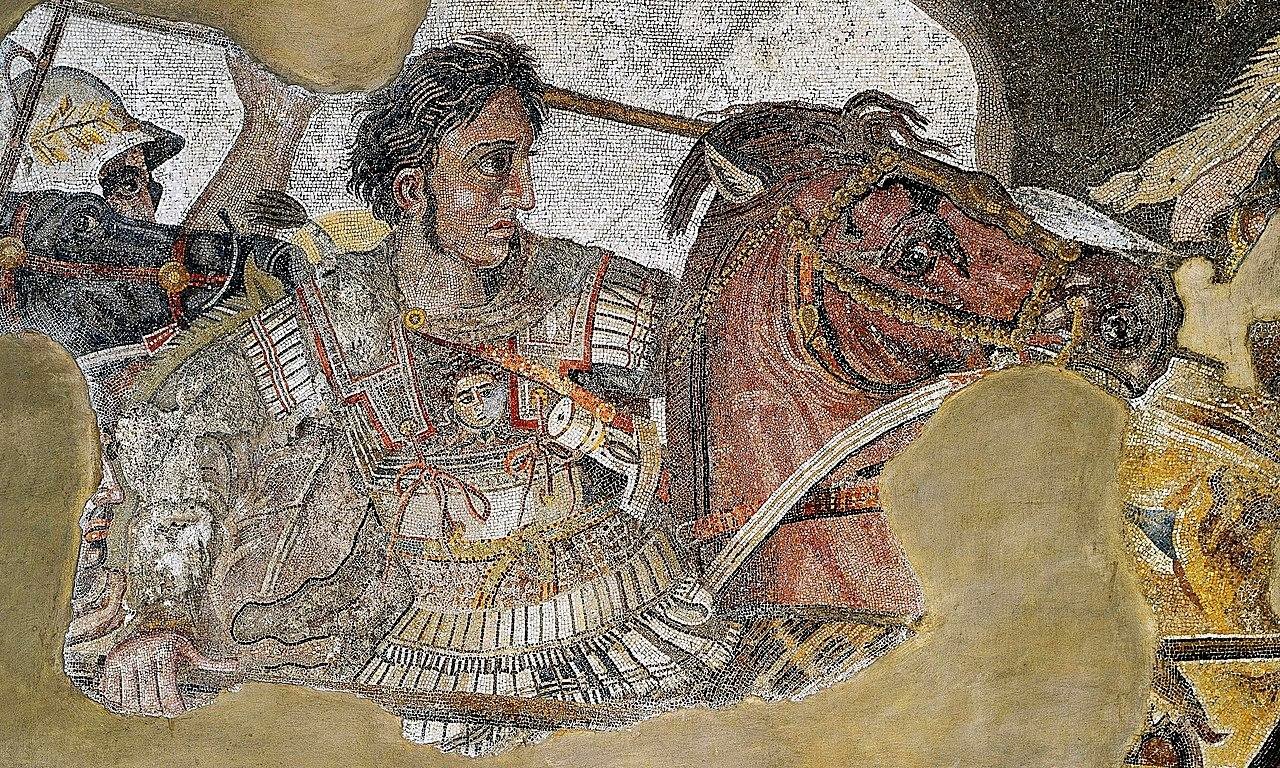
Alexander Mosaic (detail), From House of the Faun, Pompeii. Public domain

This chronology is compellingly confirmed by the archaeological data. A systematic analysis of funerary practices reveals no evidence for an organized kingdom in Lower Macedonia during the 7th century BCE. The burial record of the period demonstrates continuity with earlier Iron Age traditions and displays only limited social differentiation. In c. 570 BCE, however, burial practices changed simultaneously across the region. Graves became richer and more standardized, gold and imported goods appeared in great numbers, and clear evidence for inherited social status emerged even among children.


RelatedStories

Tomb built for Alexander the Great's best friend, Hephaestion, aligned with winter solstice

Tomb built for Alexander the Great’s best friend, Hephaestion, aligned with winter solstice

May 26, 2025
Vergina tomb near Alexander the Great’s hometown doesn’t belong to his father, study finds

Vergina tomb near Alexander the Great’s hometown doesn’t belong to his father, study finds

May 1, 2025

The most ostentatious tombs from this period are concentrated at key sites, such as Vergina (ancient Aigai), where elite male and female burials were placed in separate areas. This sudden transformation is interpreted by archaeologists as evidence of the rise of a new political elite and the consolidation of regional power.

Vergina tomb near Alexander the Great’s hometown doesn’t belong to his father, study finds
Facade of the tomb in Vergina, Greece, previously attributed to Philip II of Macedon, father of Alexander the Great. The door is made of marble and follows the Doric order. Credit: Sarah Murray, CC BY-SA 2.0

Rather than a fully developed state, the early Macedonian kingdom seems to have functioned as a complex chiefdom, based on lineage, prestige, and the control of resources. Through textual criticism combined with material evidence, the study places the rise of Alexander the Great’s dynasty firmly in the mid-6th century BCE. This has prompted a major reassessment of how and when power first formed in northern Greece.


More information: Saripanidi, V., & Greenwalt, W. S. (2025). When was the Argead/Temenid Dynasty founded? Karanos. Bulletin of Ancient Macedonian Studies, 8, 31–46. doi:10.5565/rev/karanos.168
Share501Tweet313Share88ShareSend

You May Also Like...

South African San rock art shows evidence of trance dances and initiation rituals
Archaeology

South African San rock art shows evidence of trance dances and initiation rituals

January 25, 2026
Rare 10th-century bronze wheel cross found in Brandenburg reveals early Christian influence among Slavic populations
Archaeology

Rare 10th-century bronze wheel cross found in Brandenburg reveals early Christian influence among Slavic populations

January 25, 2026
Large Roman cemetery excavation at Brougham reveals diverse burial practices on Britain’s northern frontier
Archaeology

Large Roman cemetery excavation at Brougham reveals diverse burial practices on Britain’s northern frontier

January 24, 2026
5,500-year-old human skeleton in Colombia reveals earliest evidence of syphilis in the Americas
Anthropology

5,500-year-old human skeleton in Colombia reveals earliest evidence of syphilis in the Americas

January 23, 2026
Republican-era tombs and a Hercules shrine unearthed in eastern Rome reveal centuries of suburban life
Archaeology

Republican-era tombs and a Hercules shrine unearthed in eastern Rome reveal centuries of suburban life

January 23, 2026
New study finds evidence that Aztec King Moctezuma kept a zoo for ritual purposes
Archaeology

New study finds evidence that Aztec King Moctezuma kept a zoo for ritual purposes

January 22, 2026

Comments 2

  1. Editorial Team says:
    1 second ago

    Disclaimer: This website is a science-focused magazine that welcomes both academic and non-academic audiences. Comments are written by users and may include personal opinions or unverified claims. They do not necessarily reflect the views of our editorial team or rely on scientific evidence.

    Comment Policy: We kindly ask all commenters to engage respectfully. Comments that contain offensive, insulting, degrading, discriminatory, or racist content will be automatically removed.

    Reply
  2. EVANGELIA Lamprou says:
    3 weeks ago

    I’m Admire You 💕💕😍😍

    Reply
  3. Blas Dim says:
    3 weeks ago

    Macedonia and the macedonian people trive since ancient ages until today throught the Macedonians of Republic of Macedona and all he regions of geographical Macedonia… good work!

    Reply

Leave a Reply Cancel reply

Your email address will not be published. Required fields are marked *

Follow us


Instagram
244K

Facebook
118K

Threads
45K

LinkedIn
14K

Twitter
6K

YouTube
1K
  • Trending
  • Comments
  • Latest
Shipwreck Salvage. Credit: rawpixel.com / Public Domain

2,000-year-old shipwreck discovered off Turkish coast with remarkably preserved stacked ceramics

July 2, 2025
Viking age DNA reveals 9,000-year-old HIV-resistant gene originating near the Black Sea

Viking age DNA reveals 9,000-year-old HIV-resistant gene originating near the Black Sea

May 18, 2025
A new study suggests the mysterious Voynich Manuscript may be a medieval cipher

A new study suggests the mysterious Voynich Manuscript may be a medieval cipher

January 3, 2026
Moses may be named in ancient Egyptian mine inscriptions, sparking debate over earliest biblical references

Moses may be named in ancient Egyptian mine inscriptions, sparking debate over earliest biblical references

July 31, 2025
Mystery of Armenia’s 6,000-year-old dragon stones solved

Mystery of Armenia’s 6,000-year-old dragon stones solved

September 23, 2025
3D analysis reveals Shroud of Turin image likely came from sculpture, not Jesus’ body

3D analysis reveals Shroud of Turin image likely came from sculpture, not Jesus’ body

Moses may be named in ancient Egyptian mine inscriptions, sparking debate over earliest biblical references

Moses may be named in ancient Egyptian mine inscriptions, sparking debate over earliest biblical references

$1 million prize offered to decipher 5,300-year-old Indus Valley script

$1 million prize offered to decipher 5,300-year-old Indus Valley script

Oldest ever genetic data from a human relative found in 2-million-year-old fossilized teeth

Oldest ever genetic data from a human relative found in 2-million-year-old fossilized teeth

Exceptionally large Roman shoes discovered at Magna fort near Hadrian’s Wall

Exceptionally large Roman shoes discovered at Magna fort near Hadrian’s Wall

South African San rock art shows evidence of trance dances and initiation rituals

South African San rock art shows evidence of trance dances and initiation rituals

January 25, 2026
Rare 10th-century bronze wheel cross found in Brandenburg reveals early Christian influence among Slavic populations

Rare 10th-century bronze wheel cross found in Brandenburg reveals early Christian influence among Slavic populations

January 25, 2026
Large Roman cemetery excavation at Brougham reveals diverse burial practices on Britain’s northern frontier

Large Roman cemetery excavation at Brougham reveals diverse burial practices on Britain’s northern frontier

January 24, 2026
5,500-year-old human skeleton in Colombia reveals earliest evidence of syphilis in the Americas

5,500-year-old human skeleton in Colombia reveals earliest evidence of syphilis in the Americas

January 23, 2026
Republican-era tombs and a Hercules shrine unearthed in eastern Rome reveal centuries of suburban life

Republican-era tombs and a Hercules shrine unearthed in eastern Rome reveal centuries of suburban life

January 23, 2026

Archaeology News online magazine

Archaeology News is an international online magazine that covers all aspects of archaeology.


Categories

  • Academics
    • Books
    • Conferences
    • Universities
  • Articles
  • Download
  • Game
  • News
    • Anthropology
    • Archaeology
    • Paleontology
  • Quiz
  • Tours

Subscribe to our newsletter

© 2024 - Archaeology News Online Magazine. All Rights Reserved.

  • About
  • Privacy Policy
  • Terms of Use
  • Donation
  • Contact

Welcome Back!

Login to your account below

Forgotten Password? Sign Up

Create New Account!

Fill the forms below to register

All fields are required. Log In

Retrieve your password

Please enter your username or email address to reset your password.

Log In

Add New Playlist

Manage Consent
To provide the best experiences, we use technologies like cookies to store and/or access device information. Consenting to these technologies will allow us to process data such as browsing behavior or unique IDs on this site. Not consenting or withdrawing consent, may adversely affect certain features and functions.
Functional Always active
The technical storage or access is strictly necessary for the legitimate purpose of enabling the use of a specific service explicitly requested by the subscriber or user, or for the sole purpose of carrying out the transmission of a communication over an electronic communications network.
Preferences
The technical storage or access is necessary for the legitimate purpose of storing preferences that are not requested by the subscriber or user.
Statistics
The technical storage or access that is used exclusively for statistical purposes. The technical storage or access that is used exclusively for anonymous statistical purposes. Without a subpoena, voluntary compliance on the part of your Internet Service Provider, or additional records from a third party, information stored or retrieved for this purpose alone cannot usually be used to identify you.
Marketing
The technical storage or access is required to create user profiles to send advertising, or to track the user on a website or across several websites for similar marketing purposes.
  • Manage options
  • Manage services
  • Manage {vendor_count} vendors
  • Read more about these purposes
View preferences
  • {title}
  • {title}
  • {title}
  • Home
  • News
    • Archaeology
    • Anthropology
    • Paleontology
  • Academic
    • Books
    • Conferences
    • Universities
  • Articles
  • VR Tours
  • Quiz & Game
  • Download
  • Encyclopedia
  • Forum

About  .  Contact  .  Donation

© 2024 - Archaeology News Online Magazine. All Rights Reserved