
Researchers working in central China have identified stone tools shaped for attachment to handles between 160,000 and 72,000 years ago. The findings appear in Nature Communications and shift long-held views about technological development in East Asia. Scholars once described the Chinese Paleolithic record as simple. Evidence from Xigou presents a different picture built on planning, skill, and long-term knowledge transfer.

An international team led by Jian Ping Yue of the Institute of Vertebrate Paleontology and Paleoanthropology and Guo Ding Song of Beijing Union University directed the project. Andreu Ollé from IPHES CERCA and the Universitat Rovira i Virgili, along with Juan Luis Fernández Marchena of Fundación Atapuerca, led microscopic use wear studies. Their work focused on how tool edges changed through contact with different materials and how stone pieces joined wooden or bone shafts.
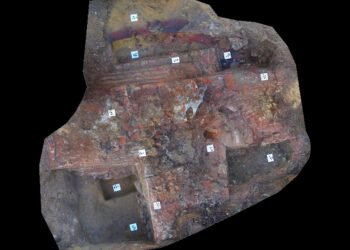
Excavations at Xigou in the Danjiang River region produced more than 2,600 artifacts. Researchers combined sediment studies, dating methods, and detailed stone analysis. Many tools came from quartz, a material known for unpredictable fracture. Even with such challenges, knappers produced small, regular flakes using discoidal and flake core reduction systems. These methods require control over striking angles and force. Repeated patterns across layers show shared technical traditions rather than random production.

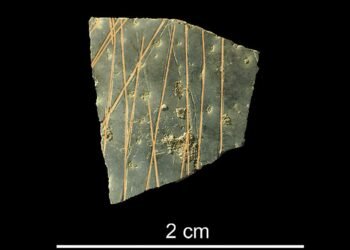
Retouched implements include scrapers, denticulates, perforators, and points. Microscopic study revealed polish, striations, and edge rounding linked with plant processing, piercing, and cutting tasks. Several pieces show wear patterns linked with hafting. Two attachment systems appear in the collection. In one system, the stone rested against a split or notch at the end of a handle. In the other, the stone inserted into a hollowed shaft. Binding materials such as plant fibers or sinew secured the joint. Some cases suggest adhesive use, based on residue traces and polish near contact zones.

Such construction requires multiple steps. A toolmaker first shaped stone for a specific fit. Next came preparation of the handle, followed by binding and possible glue application. This sequence shows planning before use. Standardization across many pieces suggests teaching and learning across generations.


Dating work strengthens the argument. Scientists applied luminescence methods to six sediment samples. Quartz based ReOSL results place occupation layers between 160,000 and 72,000 years ago. These ages fall within a period of diverse human populations across China. Fossils from Lingjing and Xujiayao show large brain volumes among archaic groups. Denisovan ancestry also appears in regional genetic research. Xigou adds behavioral data to this biological diversity.

The long time span at Xigou stands out. Tool forms and production strategies continue with little interruption for nearly 90,000 years. Such persistence points to stable knowledge systems and adaptation to local environments. People returned to similar solutions across climatic shifts and landscape changes.
Findings from Xigou position central China within broader discussions of early complex technology. Hafted tools from Africa and western Eurasia often receive attention as milestones in human innovation. Evidence from this Chinese site shows parallel technical achievements far earlier than many researchers once proposed for East Asia.

















Disclaimer: This website is a science-focused magazine that welcomes both academic and non-academic audiences. Comments are written by users and may include personal opinions or unverified claims. They do not necessarily reflect the views of our editorial team or rely on scientific evidence.
Comment Policy: We kindly ask all commenters to engage respectfully. Comments that contain offensive, insulting, degrading, discriminatory, or racist content will be automatically removed.