
A faded hand outline on a limestone wall in southeast Sulawesi now holds the oldest known date for rock art. Scientists measured mineral growth over the image and found an age of at least 67,800 years. You are looking at evidence older than any other confirmed cave art record.
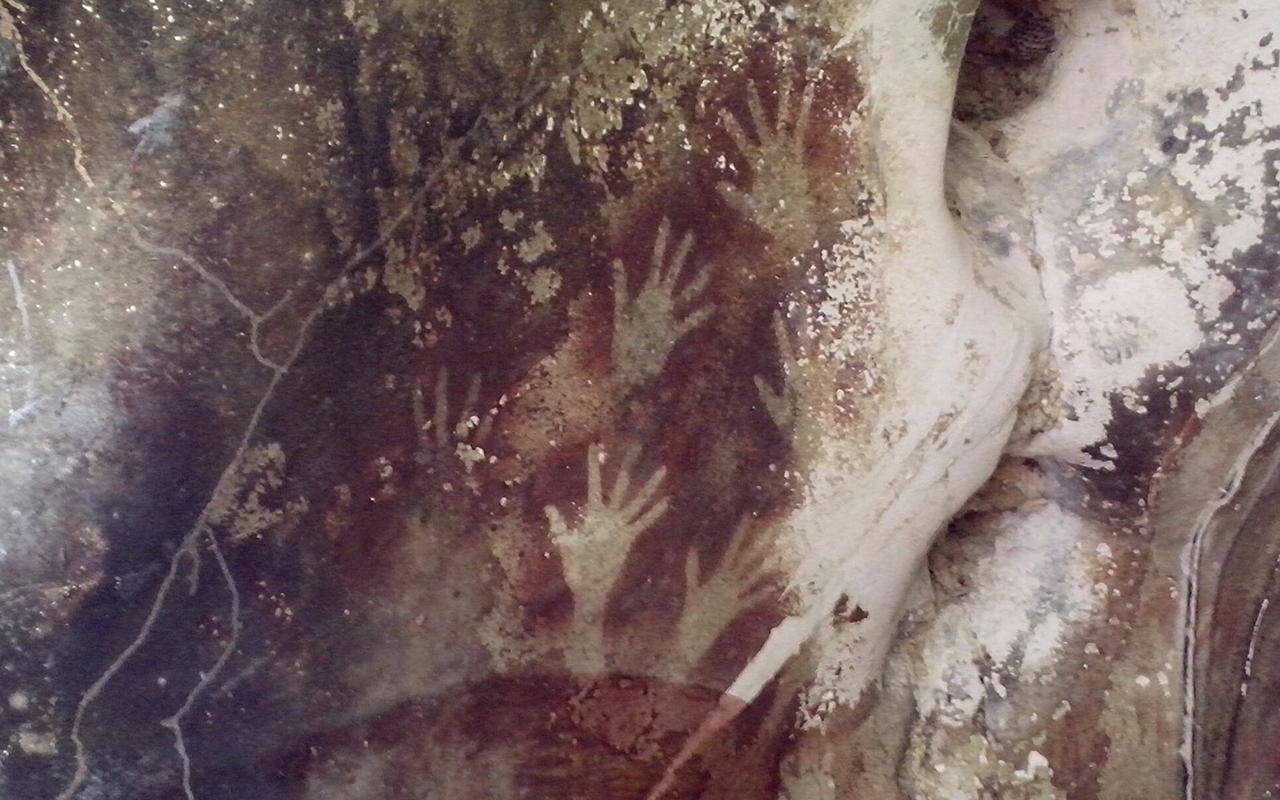
Researchers located the hand stencil inside Liang Metanduno cave on Muna Island. Tourists visit the cave today, yet older images stayed hidden among later paintings. Scientists focused on calcium carbonate deposits called cave popcorn. These deposits formed after painters left pigment on the wall. By dating the deposits, researchers set a minimum age for the image beneath.
Laser ablation U-series dating produced a minimum age of 67,800 years, with an uncertainty of about 3,800 years. This age exceeds earlier records from Sulawesi by more than 16,000 years. The result also surpasses a Spanish hand stencil dated to about 66,700 years, often linked to Neanderthals.
The hand stencil measures about 14 by 10 centimeters. The image shows narrowed fingers, a detail seen only in Sulawesi examples. Artists likely placed a hand on the wall and sprayed ochre mixed with water from the mouth. This method leaves sharp outlines and narrow finger shapes. You see proof of planning and repeated action rather than a casual mark.
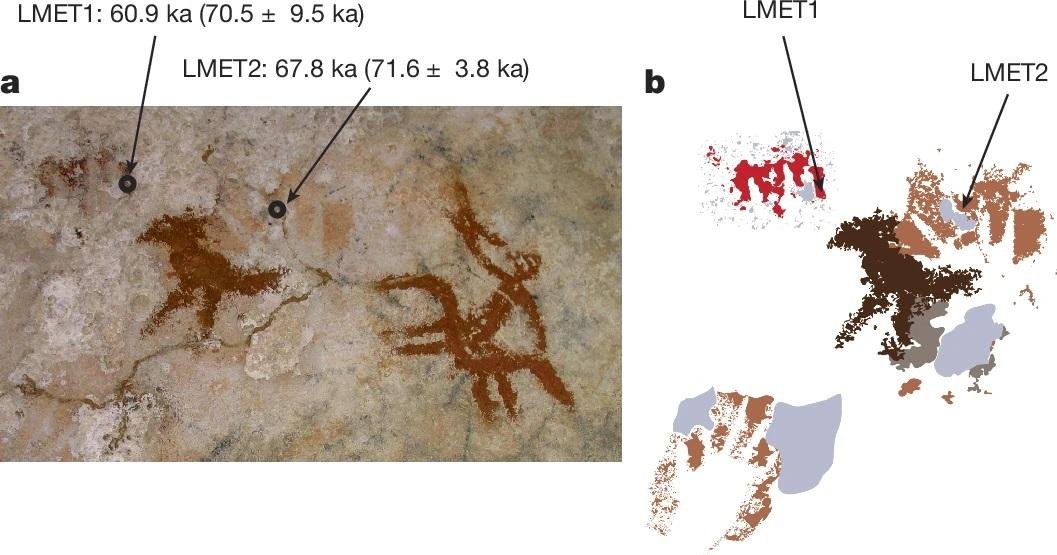
Nearby walls hold younger images. One darker hand stencil sits only 11 centimeters away and dates to no older than 32,800 years. This contrast shows repeated use of the same cave across at least 35,000 years. You gain a clear timeline of human presence and behavior in one place.

The finding also matters for human migration. Sulawesi sits between ancient landmasses known as Sunda and Sahul. Lower sea levels once linked parts of Southeast Asia, yet ocean gaps remained. The presence of people on Sulawesi before 65,000 years ago supports travel along a northern route toward New Guinea and Australia. You can connect this evidence with archaeological dates from northern Australia near 65,000 years.
Scientists link the art to Homo sapiens due to technical choices like finger narrowing and long-term site use. Other human groups lived in parts of Asia during this period, including Denisovans, so debate continues. Some researchers argue finger shapes might reflect movement during painting. Even with disagreement, the age data stand firm.
Sulawesi already holds earlier figurative scenes, including a human figure interacting with a wild pig dated to about 51,200 years. Together with the new hand stencil, these dates show consistent artistic activity across tens of thousands of years.
The results strengthen the case for an early human presence in island Southeast Asia and highlight Sulawesi’s central role in the development of symbolic behavior. The dated hand stencil provides firm chronological evidence that complex cultural practices were already established in the region tens of thousands of years earlier than previously confirmed, refining timelines for human migration toward New Guinea and Australia.


















Disclaimer: This website is a science-focused magazine that welcomes both academic and non-academic audiences. Comments are written by users and may include personal opinions or unverified claims. They do not necessarily reflect the views of our editorial team or rely on scientific evidence.
Comment Policy: We kindly ask all commenters to engage respectfully. Comments that contain offensive, insulting, degrading, discriminatory, or racist content will be automatically removed.