
Two extremely rare Celtic gold coins that were found in a woodland near Arisdorf in northwestern Switzerland are providing new information about the early phases of coinage in the area and ritual practices dating back more than 2,000 years. The gold coins were found in a follow-up survey and date back to around the middle and second half of the 3rd century BCE, making them among the oldest known Celtic coins found in Switzerland.

The discovery was made in the spring of 2025, when volunteer archaeologists from Archaeology Baselland made the find, after earlier explorations in the same area had revealed a cache of 34 Celtic silver coins in 2023. The initial find, which dates back to around 80–70 BCE, encouraged researchers to investigate the landscape surrounding the Bärenfels area, which is marked by water-filled sinkholes and marshy ground. Notably, this turned out to be the right choice, as the two gold coins, one a full stater and the other a quarter stater, were recovered nearby.
Weighing 7.8 grams and 1.86 grams respectively, the coins represent a very small group of just over 20 known examples of early Celtic gold coinage in Switzerland. They are part of a tradition that emerged as Celtic communities began minting their own coins, inspired by gold staters issued during the time of Philip II of Macedon in the 4th century BCE. Those gold staters had been circulating in the Greek world through the payment of Celtic mercenaries and served as models for early Celtic issues.

Like their prototypes in the Mediterranean area, the Arisdorf coins show the head of the Greek god Apollo on one side and a horse-drawn chariot on the other. However, they also feature Celtic artistic adaptations. For example, on the smaller coin, a triple spiral motif, known as a triskele, can be seen beneath the horses, a symbol commonly associated with Celtic art and belief.
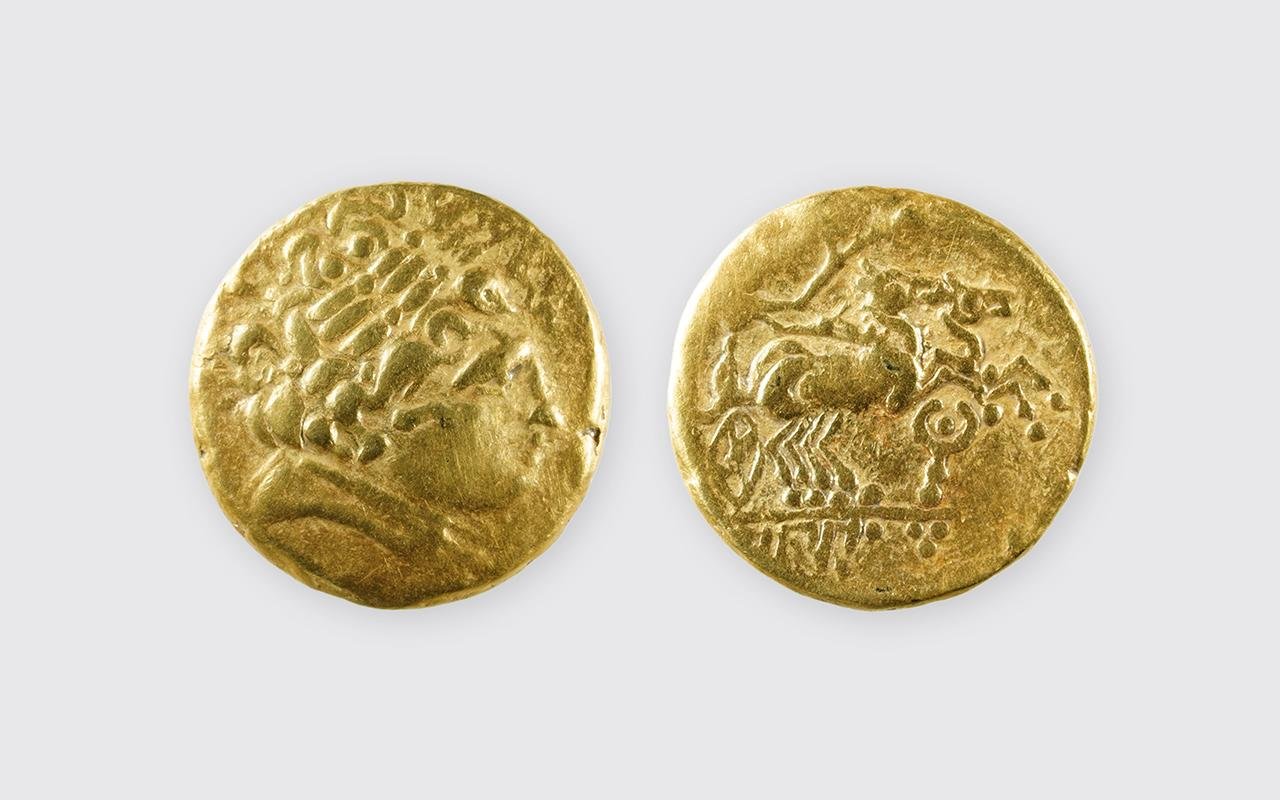
Archaeologists highlight the fact that gold coins such as the ones found likely had limited use in everyday transactions because of their value. These coins may have served as prestige items or as diplomatic gifts, payments to followers, or marriage dowries. However, their location suggests another possibility. Celtic gold coins are often found near water, bogs, or other liminal landscapes considered sacred, and the Bärenfels bog, which was formed by natural sinkholes, fits this pattern.
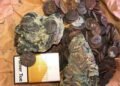
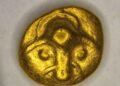
Against this background, it is argued that the coins might have been deliberately dedicated to deities in the form of votive offerings. Such ritual deposits have been attested at numerous sites in Central Europe and are also mentioned in ancient written records, suggesting that the practice was widespread.
As both gold coins are relatively rare and valuable artifacts, they will be exhibited along with the silver coins that were found prior to their discovery in a special display in Basel starting in March 2026.
More information: Archaeology Baselland







Disclaimer: This website is a science-focused magazine that welcomes both academic and non-academic audiences. Comments are written by users and may include personal opinions or unverified claims. They do not necessarily reflect the views of our editorial team or rely on scientific evidence.
Comment Policy: We kindly ask all commenters to engage respectfully. Comments that contain offensive, insulting, degrading, discriminatory, or racist content will be automatically removed.