
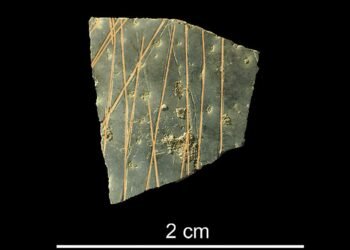
More than 40,000 years ago, people in Europe carved repeated lines, dots, notches, and crosses into tools and small sculptures. A new study argues these sequences were not random decoration. They formed structured sign systems with a measurable capacity to encode information.
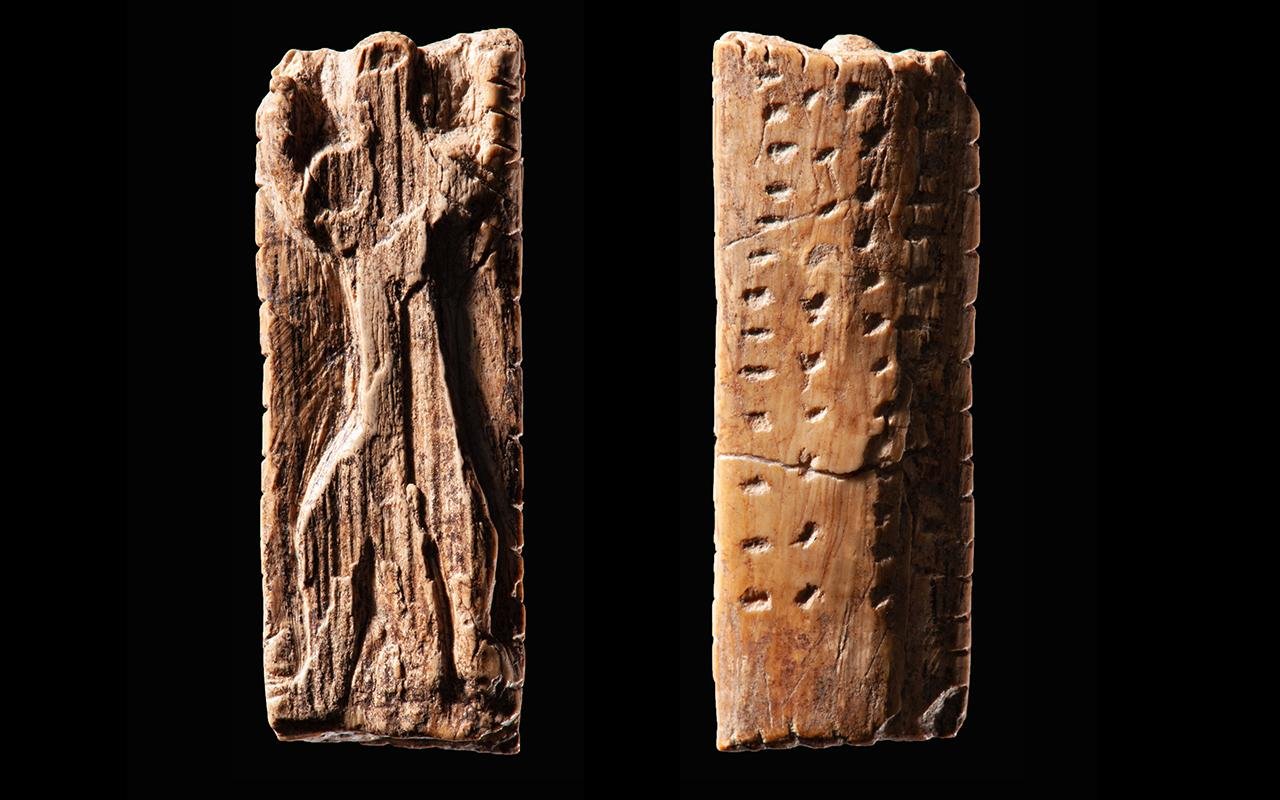
The research, published in PNAS, was led by linguist Christian Bentz of Saarland University and archaeologist Ewa Dutkiewicz of the Museum für Vor- und Frühgeschichte in Berlin. The team examined over 3,000 engraved signs on 260 objects dated between 34,000 and 45,000 years ago. Many come from caves in the Swabian Jura of southwestern Germany, though artifacts from other European regions were also included.
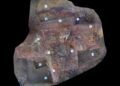
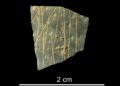
Among the best-known pieces is the Lion Man from Hohlenstein-Stadel Cave in the Lone Valley, a mammoth ivory figure with evenly spaced notches along one arm. A small mammoth figurine from Vogelherd Cave bears rows of crosses and dots carved into its surface. The ivory plaque known as the Adorant from Geißenklösterle Cave in the Ach Valley shows a human figure with lion features on one side and rows of dots and notches on the other. These engravings follow repeated patterns. They appear deliberate and ordered.
To test whether the signs carried structured information, the researchers digitized each sequence and applied statistical models and machine learning classification methods. They measured repetition rates and entropy, a standard measure of information density. Entropy captures how predictable a sequence is. Highly predictable systems have lower entropy. Systems with many possible combinations have higher entropy.
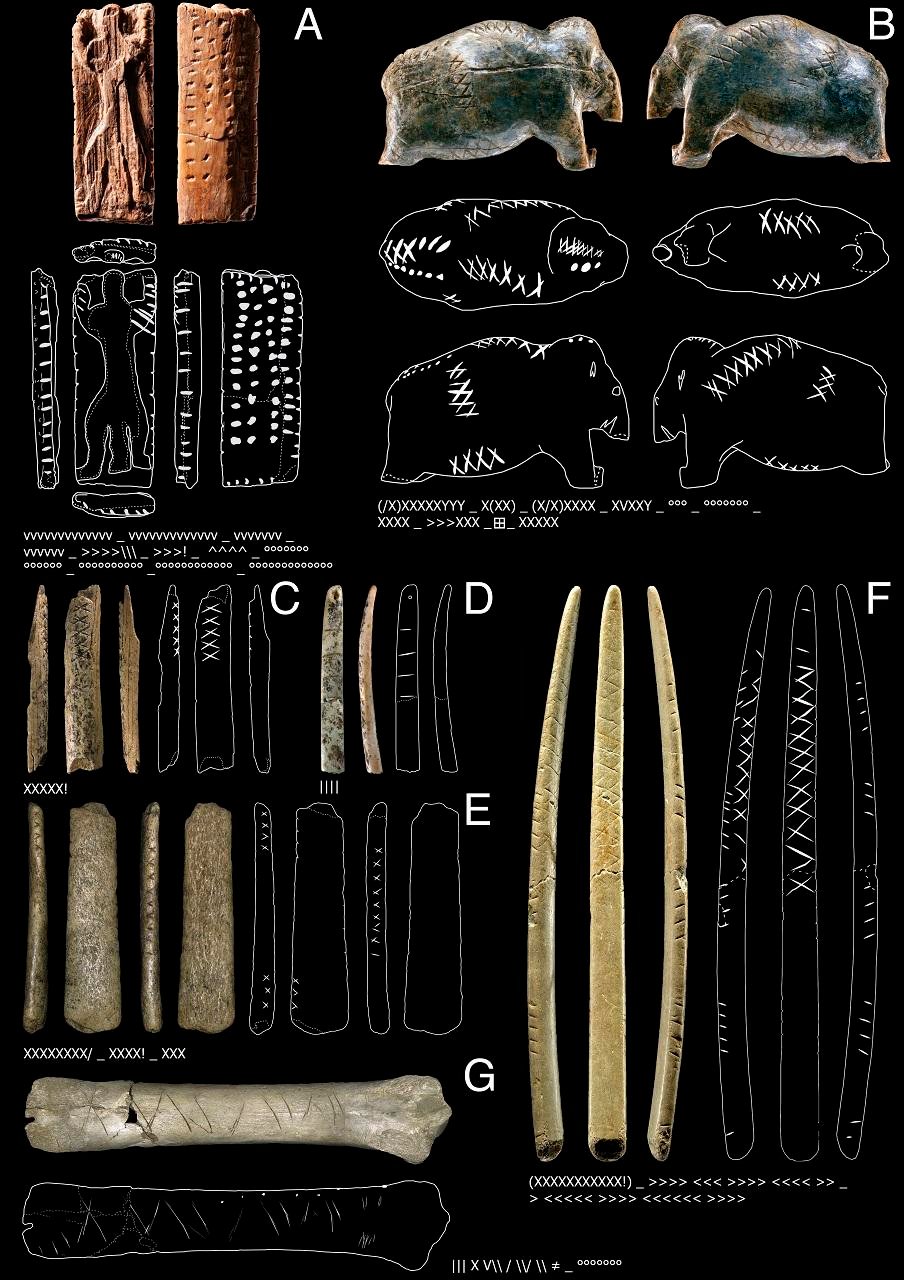
The Paleolithic signs do not represent spoken language. Modern writing systems encode speech and show high information density with less repetition of identical symbols in a row. The engraved sequences often repeat the same mark several times in succession, such as cross, cross, cross, or line, line, line. This pattern does not resemble language.
When compared with the earliest proto-cuneiform tablets from ancient Mesopotamia around 3000 BCE, the results were unexpected. Proto-cuneiform also shows repeated signs and relatively high predictability from one symbol to the next. The entropy values of the Paleolithic sequences fall within a similar statistical range. In terms of measurable structure and repetition, the two systems look alike despite being separated by roughly 40,000 years.
The analysis suggests a long period of stability in how humans encoded information through signs. For tens of thousands of years, people appear to have relied on repetitive, structured symbol sequences. Around 5,000 years ago, a new approach emerged in which writing began to represent spoken language. That shift produced very different statistical patterns.
The study does not attempt to assign meanings to the marks. Many theories have been proposed, from hunting tallies to ritual symbols. The authors focused instead on measurable properties. Their results narrow the range of plausible explanations by showing that the sequences were organized systems rather than casual ornament.
The artifacts themselves are small and portable. Many fit in the palm of a hand. Their size suggests they were handled, carried, and perhaps used repeatedly. The Swabian Jura has yielded an unusually high number of such objects, though similar marks appear across Europe.
Anatomically, the people who made these engravings were like us. Homo sapiens had already reached modern cognitive capacity when they entered Europe and encountered Neanderthals. The ability to record and transmit information through standardized marks would have supported coordination within groups and long-term memory beyond speech.
Writing did not appear suddenly from nothing. The new findings place Upper Paleolithic sign makers within a deep history of information encoding. Long before cities and clay tablets, humans arranged simple marks into structured sequences and left them behind in ivory and stone.
Publication: Bentz, C., & Dutkiewicz, E. (2026). Humans 40,000 y ago developed a system of conventional signs. Proceedings of the National Academy of Sciences of the United States of America, 123(9). doi:10.1073/pnas.2520385123
More information: Saarland University














Disclaimer: This website is a science-focused magazine that welcomes both academic and non-academic audiences. Comments are written by users and may include personal opinions or unverified claims. They do not necessarily reflect the views of our editorial team or rely on scientific evidence.
Comment Policy: We kindly ask all commenters to engage respectfully. Comments that contain offensive, insulting, degrading, discriminatory, or racist content will be automatically removed.