
A small metal tool from a Predynastic cemetery in Upper Egypt is changing views on early Egyptian technology. Researchers have identified the object as the oldest known metal drill from Egypt. The piece dates to the late fourth millennium BCE, long before the first pharaohs ruled.
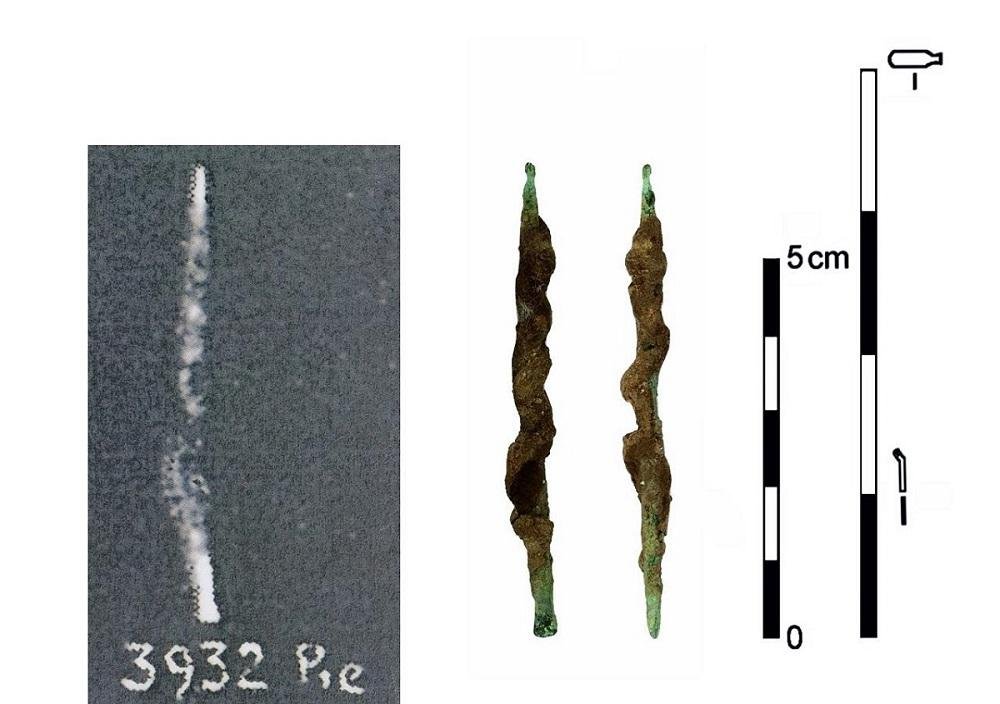
Archaeologists found the tool at Badari about a century ago. Records from the 1920s describe a short copper awl with a strip of leather wrapped around the shaft. The note was brief, and the object drew little notice for decades. The tool measures 63 millimeters in length and weighs about 1.5 grams. Recent work by a team from Newcastle University and the Academy of Fine Arts Vienna brought the object back under study.
Close inspection under magnification revealed clear signs of rotary use. The tip shows fine parallel lines. The edges appear rounded from repeated motion. A slight bend near the working end matches stress from spinning against hard material. These traces differ from damage caused by simple pushing or piercing.
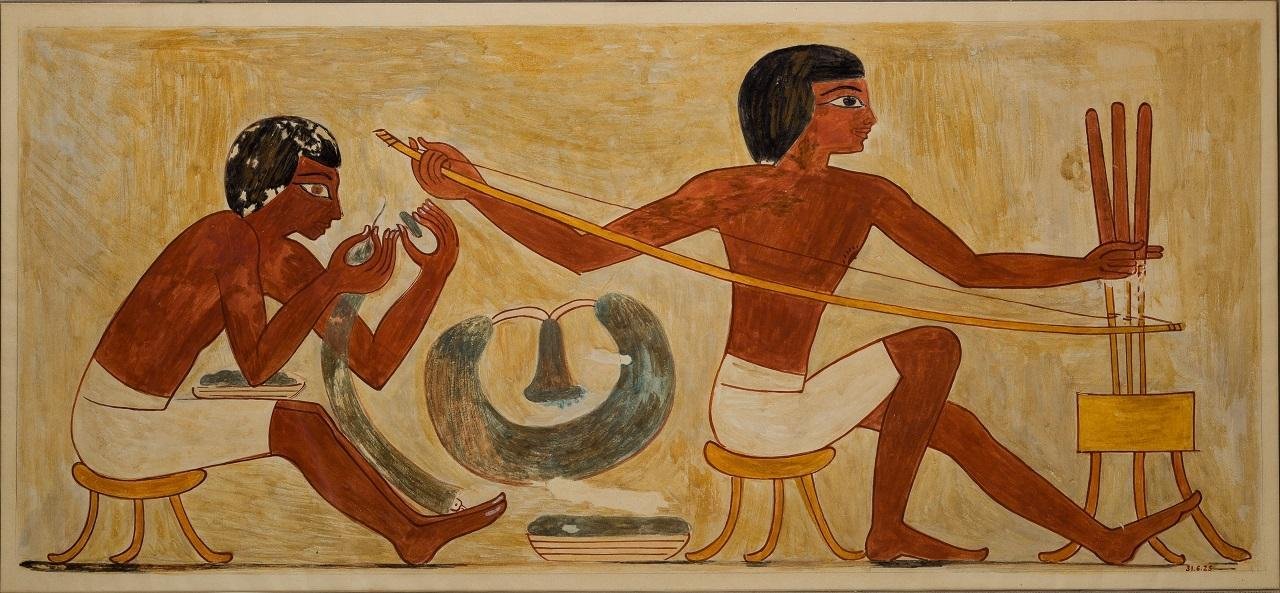
Small coils of dried leather still cling to the shaft. Researchers link these fibers to a bow drill system. In such a device, a cord wraps around a drill shaft. A bow moves back and forth, spinning the drill quickly. Later Egyptian tomb paintings show workers using similar tools to bore holes in beads and wood. Physical examples from the second millennium BCE survive, though few earlier tools remain.
The Badari drill came from Grave 3932, the burial of an adult male. Objects from the cemetery show skilled production of beads, stone vessels, and wooden items. Many of these tasks required careful drilling. A rotary tool would have improved control and speed during such work. The find points to advanced technical knowledge in Predynastic communities.
Portable X ray fluorescence analysis revealed an unusual metal mixture. The tool contains copper combined with arsenic and nickel, along with small amounts of silver and lead. This blend would have produced a harder metal than pure copper. The presence of silver and lead suggests access to varied ore sources or metal exchange beyond the Nile Valley, possibly including the Eastern Desert or regions across the eastern Mediterranean.
Scenes from New Kingdom tombs, dated more than two thousand years later, show similar bow drills in use. The long span between the Badari example and later images indicates steady continuity in tool design. Woodworkers and bead makers relied on the same basic principle across many generations.
The study also highlights the value of museum collections. A small object stored for decades, once summarized in a short catalog line, now provides direct evidence for early rotary drilling, metal alloy selection, and preserved organic tool parts. Careful reanalysis of old finds continues to reshape knowledge of early Egyptian technology.
















Disclaimer: This website is a science-focused magazine that welcomes both academic and non-academic audiences. Comments are written by users and may include personal opinions or unverified claims. They do not necessarily reflect the views of our editorial team or rely on scientific evidence.
Comment Policy: We kindly ask all commenters to engage respectfully. Comments that contain offensive, insulting, degrading, discriminatory, or racist content will be automatically removed.