
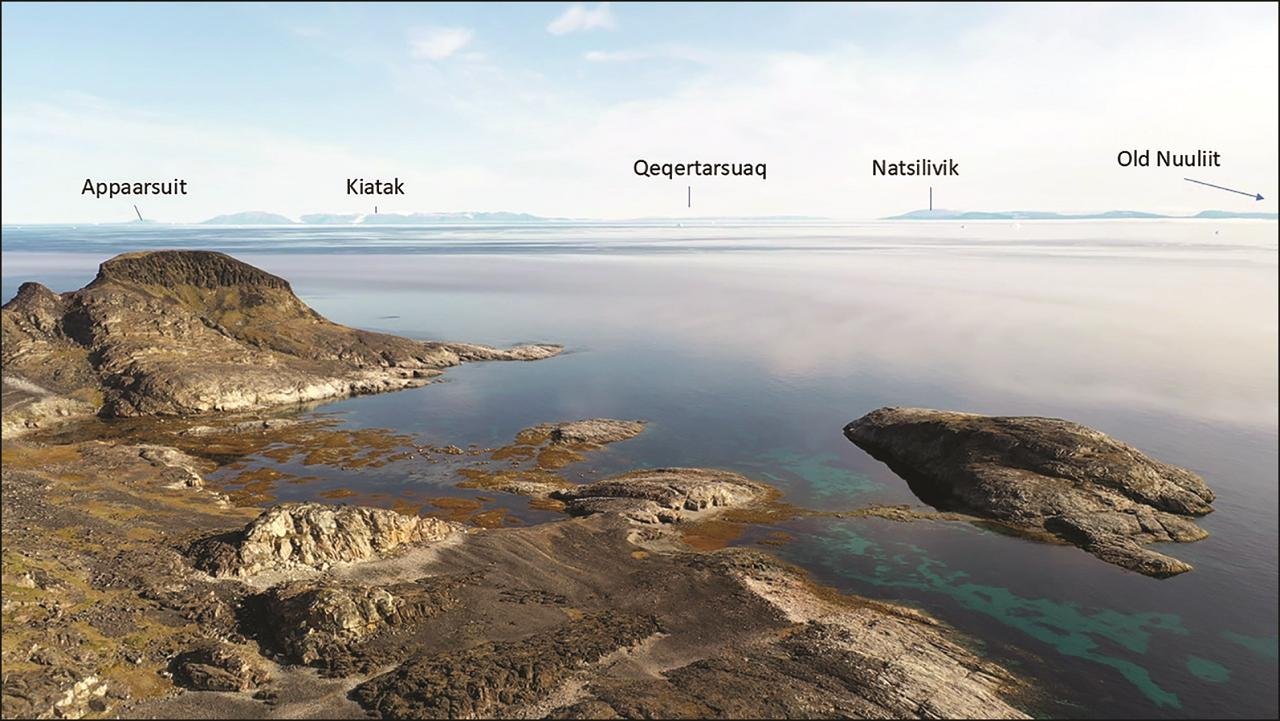
Archaeological work on the Kitsissut islands in northern Greenland shows Early Paleo-Inuit groups reached offshore environments around 4,500 years ago through planned sea travel. The sites sit far from the mainland within Pikialasorsuaq, a large polynya where open water persists year round between Greenland and Canada. Reaching the islands requires crossing roughly 50 kilometers of open ocean.
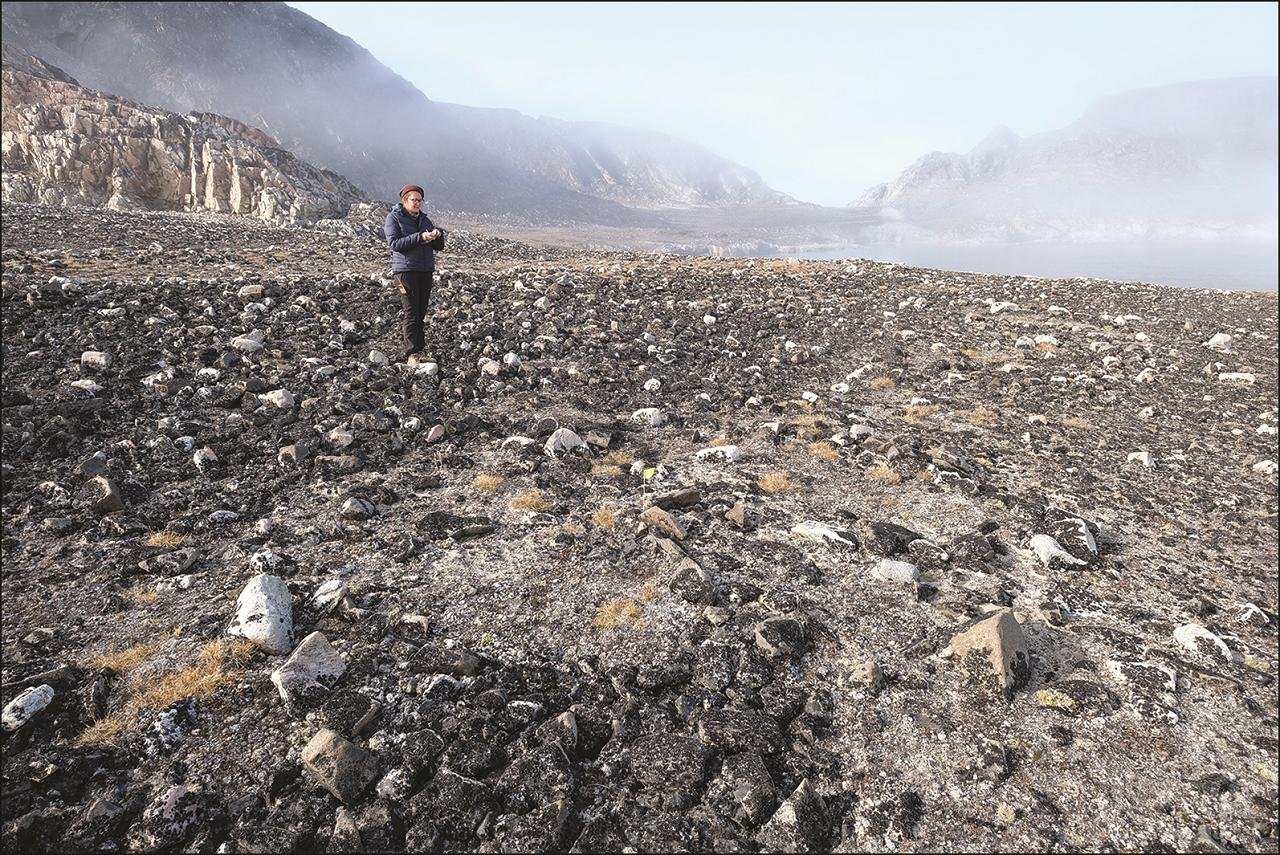
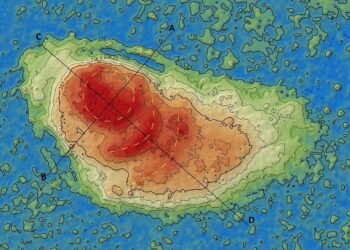
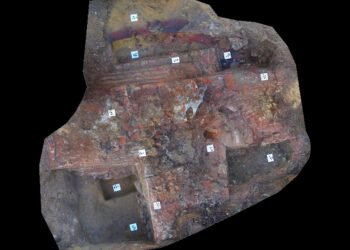
Researchers from the University of Calgary and the University of Greenland recorded close to 300 archaeological features across the island cluster. The features include tent rings, hearths, and work areas linked to early Paleo-Inuit occupations. Radiocarbon dates place repeated visits soon after regional glaciers retreated, during a period when Arctic land ecosystems connected to the polynya were still forming.
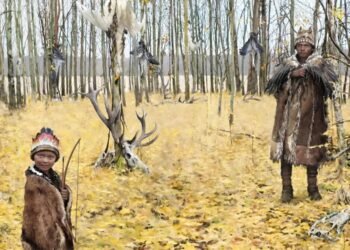
The distance between Kitsissut and the mainland stands out. A 50 kilometer open-water crossing represents the longest sea journey identified from this early period anywhere in the Arctic. Such travel required skin-on-frame boats, knowledge of currents, and planning around weather and seasonal ice. The archaeological record points to regular movement rather than rare exploration. Families and supplies moved across open water to reach seabird colonies and marine mammals concentrated around the polynya.
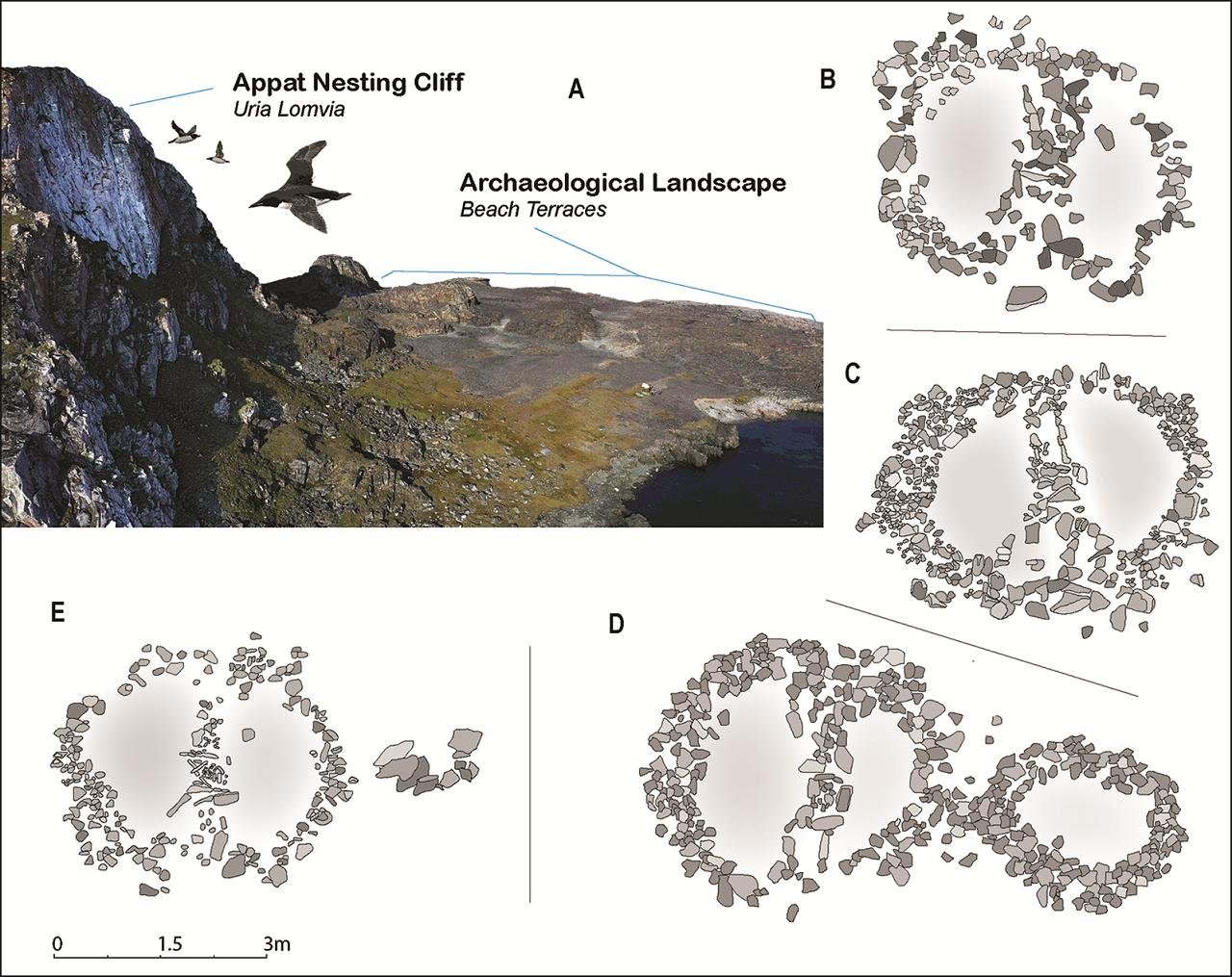
Evidence from campsites shows sustained use across generations. Activities such as hunting, butchering, and food processing transferred large amounts of marine-derived nutrients onto land. Soil enrichment around living areas mirrors effects seen near seabird nesting grounds. Over time, these camps became stable points within the landscape where vegetation growth and animal activity responded to repeated human presence.
Environmental research already identifies seabirds as major drivers of nutrient movement in Pikialasorsuaq. Findings from Kitsissut place Early Paleo-Inuit communities alongside seabirds as active contributors to ecosystem formation. Human movement of marine biomass influenced local plant growth, animal behavior, and patterns of land use during an early stage of Arctic ecological development.


The study also reframes the role of Pikialasorsuaq in cultural history. Rather than a marginal route between regions, the polynya appears as a center where technological and behavioral strategies took shape. Archaeological traditions linked to Independence I, Saqqaq, and Pre-Dorset groups share traits likely formed through early responses to shifting ice edges, seasonal migrations, and dense marine resources.
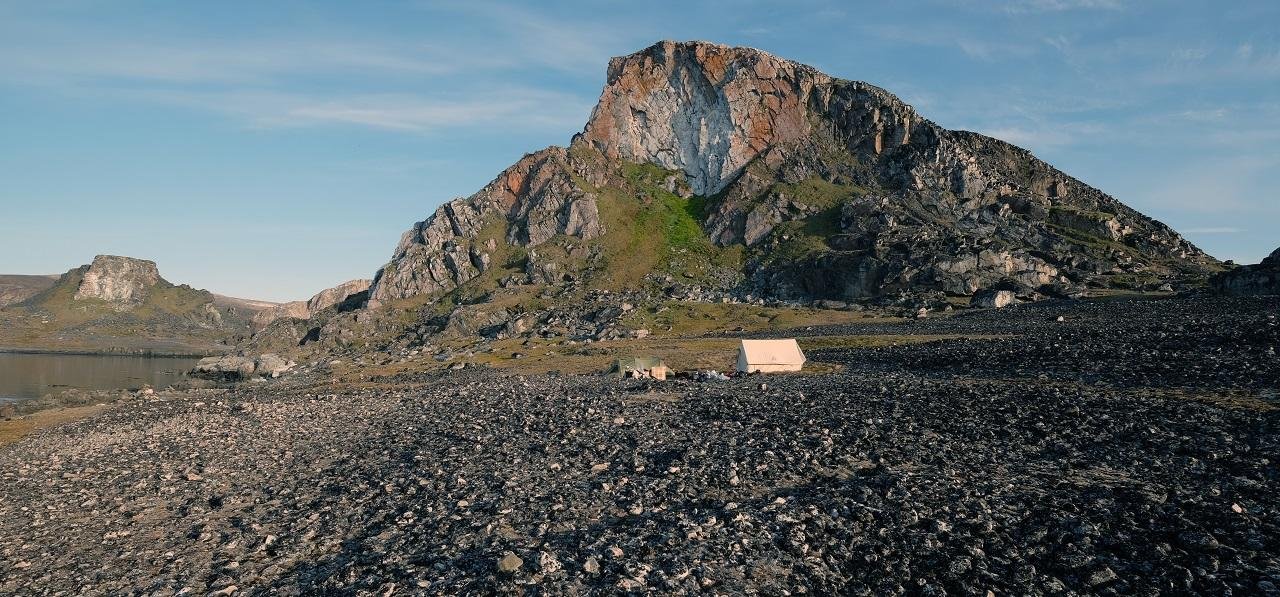
Findings from Kitsissut point to sustained Indigenous involvement in shaping High Arctic environments from the beginning of human settlement. Arctic landscapes developed alongside human action rather than apart from human presence. Early Paleo-Inuit seafaring, seasonal movement, and resource use left marks on both land and sea systems that continue to influence the region today.
More information: Walls, M., Kleist, M., & Knudsen, P. (2026). Voyage to Kitsissut: a new perspective on Early Paleo-Inuit watercraft and maritime lifeways at a High Arctic polynya. Antiquity, 1–17. doi:10.15184/aqy.2026.10285












Disclaimer: This website is a science-focused magazine that welcomes both academic and non-academic audiences. Comments are written by users and may include personal opinions or unverified claims. They do not necessarily reflect the views of our editorial team or rely on scientific evidence.
Comment Policy: We kindly ask all commenters to engage respectfully. Comments that contain offensive, insulting, degrading, discriminatory, or racist content will be automatically removed.
I field it well .