
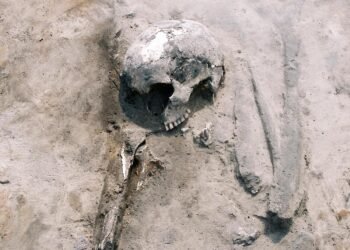
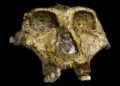
Archaeologists have identified the oldest human remains yet found in northern Britain as those of a young girl who lived more than 11,000 years ago. Her bones came from Heaning Wood Bone Cave near Great Urswick in Cumbria. Radiocarbon dates place her burial between 9290 and 8925 BCE, soon after people returned to northern Britain following the last Ice Age.
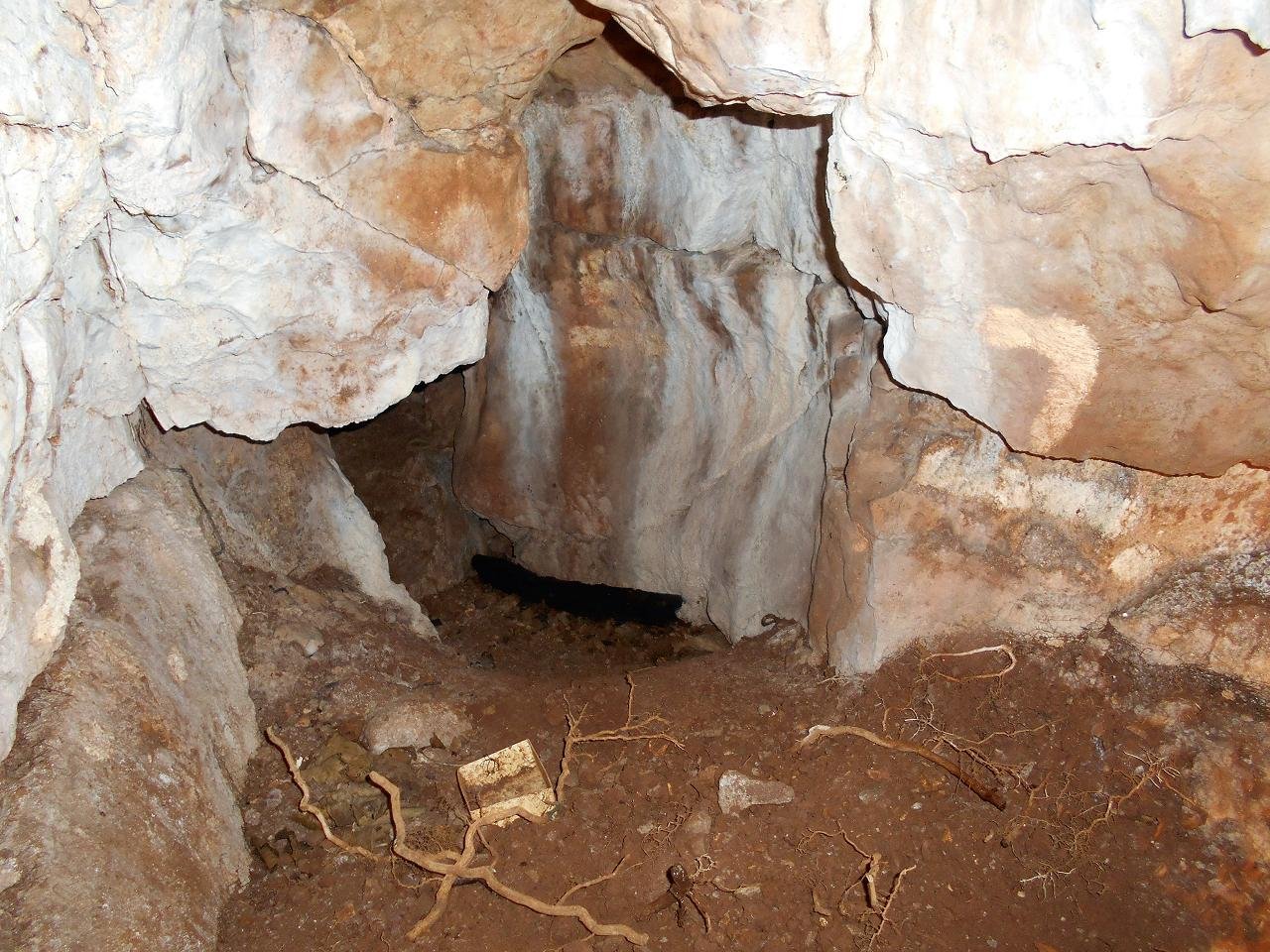
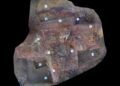
Local archaeologist Martin Stables began excavating the cave in 2016. Years of careful work revealed human bones from different periods. An international research team led by the University of Lancashire later extracted ancient DNA from the earliest remains. Genetic results show that the child was female and between 2.5 and 3.5 years old. Researchers and local residents named her the Ossick Lass, using a Cumbrian term for a girl from Urswick.
Earlier prehistoric burials have been found in southern England and Wales. Northern areas hold fewer remains because glaciers damaged much of the earlier record. Before the Heaning Wood find, the oldest known burial in the region dated to about 10,000 years ago and was discovered at Kent’s Bank Cavern. The new dates push confirmed human presence in northern Britain further back.
The cave served as a burial place more than once. Analysis shows that at least eight people were interred there during three separate phases. One burial belongs to the Early Mesolithic, around 11,000 years ago. Four date to the Early Neolithic, about 5,500 years ago. Two come from the Early Bronze Age, around 4,000 years ago. Genetic testing indicates that all but one of the sampled individuals were biologically female.
Researchers examined the bones and the position of the remains inside the cave. The pattern suggests successive inhumations. People placed the recently deceased into the vertical entrance rather than scattering bones or disturbing earlier burials. This repeated practice across thousands of years points to a shared approach to burial in this location.

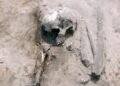
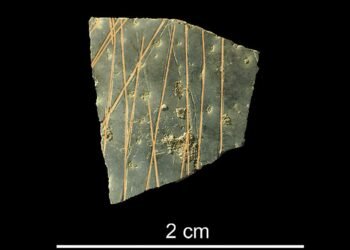
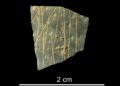
Artifacts from the cave support this interpretation. Perforated periwinkle shell beads and a pierced deer tooth from the Mesolithic layer have been radiocarbon dated to roughly 11,000 years ago, the same period as the child’s remains. Excavators also recovered worked stone tools linked to the Early Neolithic and fragments of Early Bronze Age Collared Urn pottery.
Ancient DNA research across Britain shows major population movements during these periods. Groups entered Britain at the start of the Early Neolithic and again before the Early Bronze Age. The Mesolithic burial occurred during the first reoccupation of northern Britain after glacial retreat. Although different populations used the cave over time, burial practices remained similar.
The findings appear in the Proceedings of the Prehistoric Society. Heaning Wood Bone Cave now stands among the most significant prehistoric cave burial sites in Britain. The Ossick Lass offers rare evidence of childhood and burial practice in northern England more than eleven millennia ago.







Disclaimer: This website is a science-focused magazine that welcomes both academic and non-academic audiences. Comments are written by users and may include personal opinions or unverified claims. They do not necessarily reflect the views of our editorial team or rely on scientific evidence.
Comment Policy: We kindly ask all commenters to engage respectfully. Comments that contain offensive, insulting, degrading, discriminatory, or racist content will be automatically removed.