
A four-year maritime excavation off the coast of Singapore has produced the earliest known shipwreck in the country’s waters and strong evidence of a busy trading port in the 14th century. The vessel, known as the Temasek Wreck, sank sometime between 1340 and 1352. At that time, Singapore was called Temasek and functioned as an entrepot linking regional and long-distance trade networks.
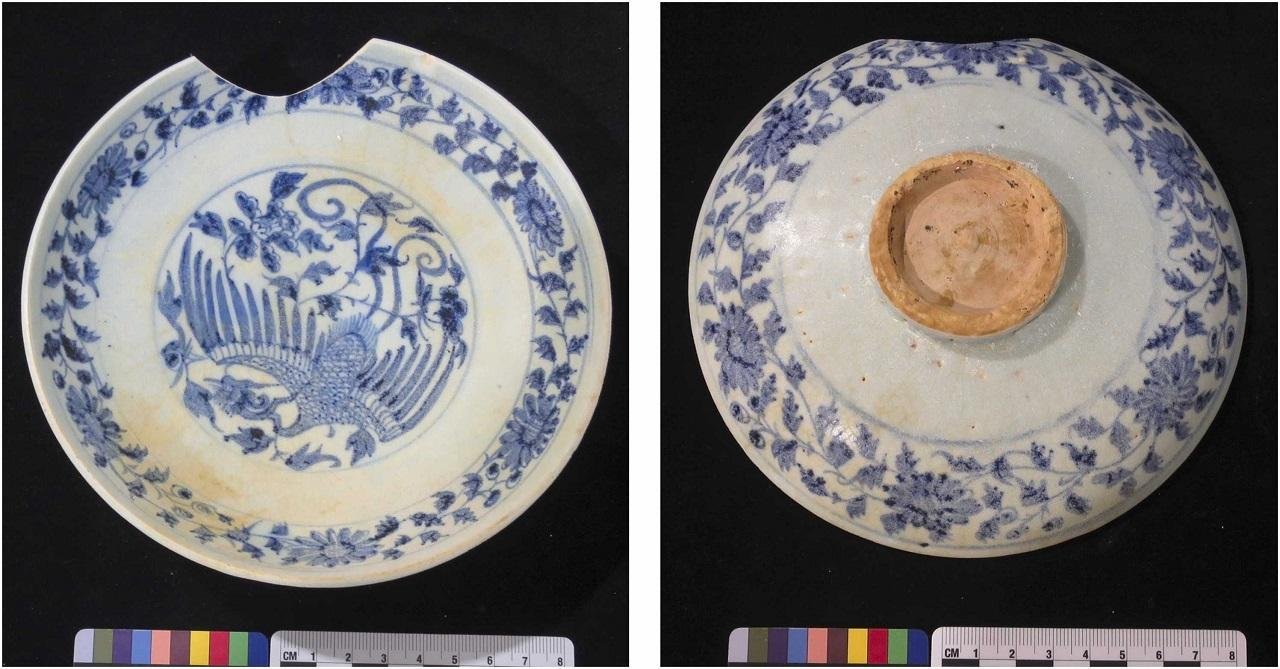
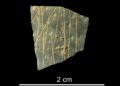
Between 2016 and 2019, archaeologists recovered about 3.5 tonnes of ceramic cargo from the seabed. Most of the material consists of broken shards, yet the team also retrieved a small number of intact or nearly intact pieces. The haul includes around 136 kilograms of blue-and-white porcelain from Jingdezhen, more than any other documented shipwreck has yielded. Longquan celadon, qingbai or shufu ware from Jingdezhen, whiteware from Dehua, greenware from Fujian kilns, and brown stoneware jars from Cizao formed part of the cargo as well.
Dr. Michael Flecker of Heritage SG (a subsidiary of the Singapore National Heritage Board) analyzed the assemblage in a study published in the Journal of International Ceramic Studies. He examined decorative styles, kiln origins, and production histories to narrow the date of the ship’s final voyage. Several blue-and-white bowls display a repeated motif of mandarin ducks swimming in a lotus pond. Production of this design appears to have been limited to a short span during the Yuan dynasty before unrest disrupted kiln activity. This places the sinking in the mid-14th century.
Although no remains of the wooden hull survived, the nature of the cargo and regional trade patterns point to a Chinese junk likely loaded in Quanzhou. The mix of high-quality tableware and large storage jars suggests a merchant vessel carrying both luxury goods and containers for bulk commodities.
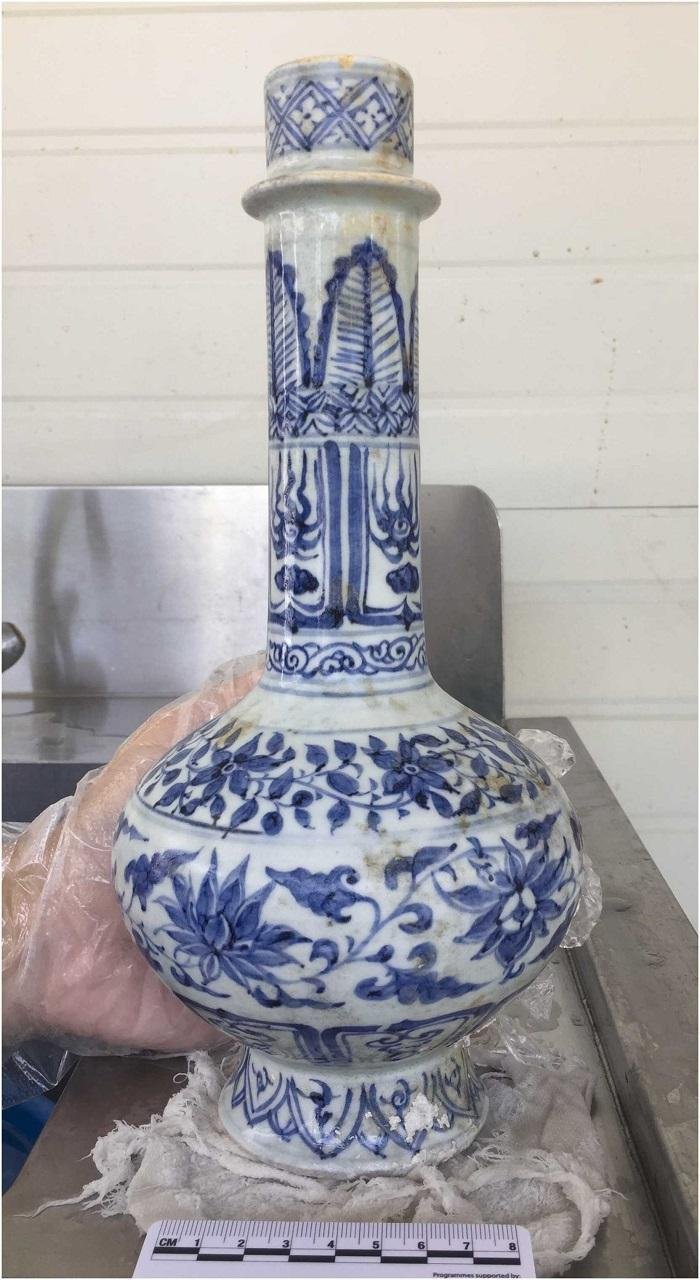
The intended destination becomes clearer when the ceramics are compared with finds from land excavations in Singapore. Decorative patterns on smaller bowls and vases match fragments unearthed at Fort Canning and other sites. Large blue-and-white platters measuring 40 to 50 centimeters across were popular in India and the Middle East during this period. None appear in the Temasek cargo. The dishes on the wreck measure under 35 centimeters. This absence supports the view that the ship was headed for Temasek rather than the Indian Ocean.


The cargo offers a tightly dated snapshot of trade goods circulating in Southeast Asia during the Yuan dynasty. Because the assemblage represents a single shipment from a narrow time frame, researchers view the material as a reference collection for identifying less well-documented finds elsewhere.
For decades, popular accounts described precolonial Singapore as a small fishing settlement. Archaeological work over the past few decades has presented a different picture. The Temasek Wreck adds maritime evidence to that record. A ship carrying several tonnes of ceramics and a concentration of high-grade blue-and-white porcelain did not sail to an isolated village. The finds point to an active port integrated into regional exchange networks centuries before 1819.


















Disclaimer: This website is a science-focused magazine that welcomes both academic and non-academic audiences. Comments are written by users and may include personal opinions or unverified claims. They do not necessarily reflect the views of our editorial team or rely on scientific evidence.
Comment Policy: We kindly ask all commenters to engage respectfully. Comments that contain offensive, insulting, degrading, discriminatory, or racist content will be automatically removed.