• About
  • Privacy Policy
  • Terms of Use
  • Donation
  • Contact
No Result
View All Result
Archaeology News
  • Home
  • News
    • Archaeology
    • Anthropology
    • Paleontology
  • Academic
    • Books
    • Conferences
    • Universities
  • Articles
  • VR Tours
  • Quiz & Game
  • Download
  • Encyclopedia
  • Forum
Archaeology News
No Result
View All Result
Home News Archaeology

Hidden 17th-century bastion fort discovered in Świerże, eastern Poland

by Dario Radley
February 19, 2026
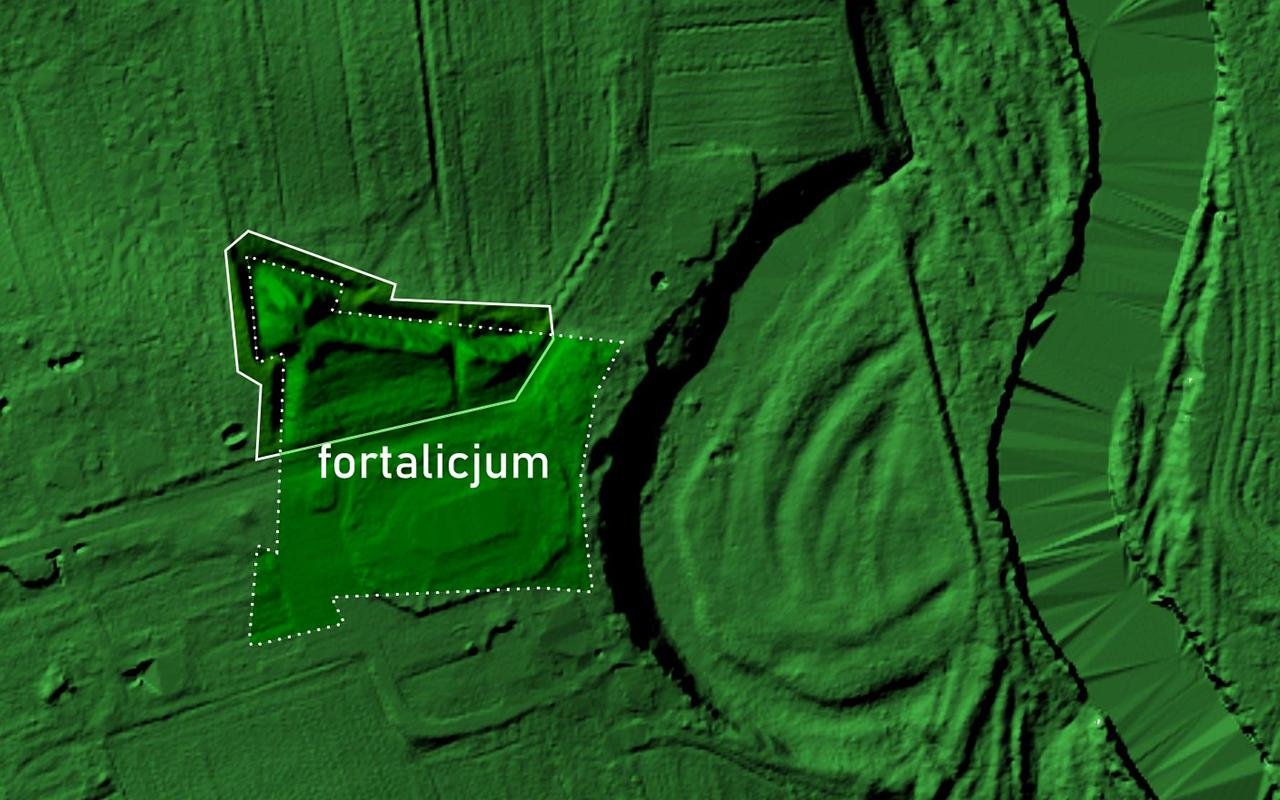
Hidden 17th-century bastion fort discovered in Świerże, eastern Poland
Credit: Lublin Voivodeship Conservator of Monuments

Archaeologists have identified a previously unknown early modern fortification in Świerże, in the Dorohusk municipality of Chełm County, eastern Poland. The site lies within a historic manor and park complex near the Bug River, a region shaped by repeated military conflicts during the seventeenth and eighteenth centuries.

Researchers located the structure through airborne laser scanning and detailed LiDAR analysis, followed by field inspection. The earthworks had long been visible in the terrain, yet earlier surveys had misidentified them as the remains of an early medieval stronghold with a horseshoe plan. The new study shows a different picture. The preserved forms match a bastion fortification, or fortalicium, built for gunpowder warfare.

Today, only part of the northwestern section survives, including one corner bastion. The remaining ramparts rise to about two meters and cover roughly 0.4 hectares. Based on the layout of the visible embankments, the original complex likely covered around 1.5 hectares and measured close to 120 by 140 meters. The plan appears rectangular, with projecting bastions at the corners. Such arrangements reflect principles linked to the French school of fortification engineering, associated with Sébastien Le Prestre de Vauban. Comparable fortified residences exist in Tykocin, Krynice in Tomaszów County, and Duba in Zamość County.

Historical maps confirm the structure’s existence. The Austrian military map West Galizien, prepared between 1801 and 1804, marks the site as a ruin. By the turn of the nineteenth century, the fortification had already lost its defensive role. Nineteenth-century maps show further damage, especially in the southern section. Farming activity and landscape changes tied to the creation of the manor park contributed to the gradual leveling of the earthworks. The southern part lay outside the protected park area and deteriorated further. Construction of the Church of Saints Peter and Paul in the nineteenth century likely erased what remained of that sector.

Archival sources support the dating. A document from 1694 mentions an entrenchment near the Bug River. An eighteenth-century record refers to nearby fields known locally as the rampart, preserving the memory of the former defenses. The fortification may be connected to the Olędzki family, who owned the estate in the late seventeenth and eighteenth centuries, or to Mikołaj Firlej of Dąbrowica, who held part of the property before the mid-seventeenth century.


RelatedStories

Drone surveys reveal Roman forum and previously unknown monumental theater at Fioccaglia

Drone surveys reveal Roman forum and previously unknown monumental theater at Fioccaglia

February 15, 2026
LiDAR mapping reveals over 630,000 historic charcoal kiln sites across Poland’s forests

LiDAR mapping reveals over 630,000 historic charcoal kiln sites across Poland’s forests

February 5, 2026

The proposed date range fits a period marked by Cossack uprisings, the Swedish Deluge, and wars between Poland and Russia. Landowners in border regions often fortified their residences during these conflicts. In 1792, during the Polish–Russian War, Prince Józef Poniatowski established his headquarters at Świerże while commanding forces along the Bug River. The estate served as a base for operations linked to fighting near Dubienka.

Further archaeological work and archival study will clarify the sequence of construction, use, and abandonment. Excavation could also help explain how the earlier fortified residence related to the later manor and how the estate changed over time.

More information: Lublin Voivodeship Conservator of Monuments

Share1Tweet1ShareShareSend

You May Also Like...

1.77-million-year-old Homo erectus skulls in China show early humans reached Asia sooner than believed
Anthropology

1.77-million-year-old Homo erectus skulls in China show early humans reached Asia sooner than believed

February 19, 2026
Seabird guano fueled the rise of Peru’s Chincha Kingdom, isotope study finds
Archaeology

Seabird guano fueled the rise of Peru’s Chincha Kingdom, isotope study finds

February 19, 2026
Historic cannon unearthed during Hull’s Queen’s Gardens restoration in the UK
Archaeology

Historic cannon unearthed during Hull’s Queen’s Gardens restoration in England

February 18, 2026
DNA reveals extended hunter-gatherer family ties in 5,500-year-old Stone Age graves on Gotland
Anthropology

DNA reveals extended hunter-gatherer family ties in 5,500-year-old Stone Age graves on Gotland

February 18, 2026
Earliest shipwreck in Singapore reveals 14th century trading port and massive ceramic cargo
Archaeology

Earliest shipwreck in Singapore reveals 14th century trading port and massive ceramic cargo

February 18, 2026
New study reveals how Londoners used weekly death data to Survive the Great Plague of 1665
Archaeology

New study reveals how Londoners used weekly death data to survive the Great Plague of 1665

February 18, 2026

Comments 0

  1. Editorial Team says:
    1 second ago

    Disclaimer: This website is a science-focused magazine that welcomes both academic and non-academic audiences. Comments are written by users and may include personal opinions or unverified claims. They do not necessarily reflect the views of our editorial team or rely on scientific evidence.

    Comment Policy: We kindly ask all commenters to engage respectfully. Comments that contain offensive, insulting, degrading, discriminatory, or racist content will be automatically removed.

    Reply

Leave a Reply Cancel reply

Your email address will not be published. Required fields are marked *

Follow us


Instagram
244K

Facebook
118K

Threads
45K

LinkedIn
14K

Twitter
6K

YouTube
1K
  • Trending
  • Comments
  • Latest
Shipwreck Salvage. Credit: rawpixel.com / Public Domain

2,000-year-old shipwreck discovered off Turkish coast with remarkably preserved stacked ceramics

July 2, 2025
Viking age DNA reveals 9,000-year-old HIV-resistant gene originating near the Black Sea

Viking age DNA reveals 9,000-year-old HIV-resistant gene originating near the Black Sea

May 18, 2025
A new study suggests the mysterious Voynich Manuscript may be a medieval cipher

A new study suggests the mysterious Voynich Manuscript may be a medieval cipher

January 3, 2026
Moses may be named in ancient Egyptian mine inscriptions, sparking debate over earliest biblical references

Moses may be named in ancient Egyptian mine inscriptions, sparking debate over earliest biblical references

July 31, 2025
Mystery of Armenia’s 6,000-year-old dragon stones solved

Mystery of Armenia’s 6,000-year-old dragon stones solved

September 23, 2025
3D analysis reveals Shroud of Turin image likely came from sculpture, not Jesus’ body

3D analysis reveals Shroud of Turin image likely came from sculpture, not Jesus’ body

Moses may be named in ancient Egyptian mine inscriptions, sparking debate over earliest biblical references

Moses may be named in ancient Egyptian mine inscriptions, sparking debate over earliest biblical references

$1 million prize offered to decipher 5,300-year-old Indus Valley script

$1 million prize offered to decipher 5,300-year-old Indus Valley script

Oldest ever genetic data from a human relative found in 2-million-year-old fossilized teeth

Oldest ever genetic data from a human relative found in 2-million-year-old fossilized teeth

Exceptionally large Roman shoes discovered at Magna fort near Hadrian’s Wall

Exceptionally large Roman shoes discovered at Magna fort near Hadrian’s Wall

1.77-million-year-old Homo erectus skulls in China show early humans reached Asia sooner than believed

1.77-million-year-old Homo erectus skulls in China show early humans reached Asia sooner than believed

February 19, 2026
Hidden 17th-century bastion fort discovered in Świerże, eastern Poland

Hidden 17th-century bastion fort discovered in Świerże, eastern Poland

February 19, 2026
Seabird guano fueled the rise of Peru’s Chincha Kingdom, isotope study finds

Seabird guano fueled the rise of Peru’s Chincha Kingdom, isotope study finds

February 19, 2026
Historic cannon unearthed during Hull’s Queen’s Gardens restoration in the UK

Historic cannon unearthed during Hull’s Queen’s Gardens restoration in England

February 18, 2026
DNA reveals extended hunter-gatherer family ties in 5,500-year-old Stone Age graves on Gotland

DNA reveals extended hunter-gatherer family ties in 5,500-year-old Stone Age graves on Gotland

February 18, 2026

Archaeology News online magazine

Archaeology News is an international online magazine that covers all aspects of archaeology.


Categories

  • Academics
    • Books
    • Conferences
    • Universities
  • Articles
  • Download
  • Game
  • News
    • Anthropology
    • Archaeology
    • Paleontology
  • Quiz
  • Tours

Subscribe to our newsletter

© 2024 - Archaeology News Online Magazine. All Rights Reserved.

  • About
  • Privacy Policy
  • Terms of Use
  • Donation
  • Contact

Manage Consent
To provide the best experiences, we use technologies like cookies to store and/or access device information. Consenting to these technologies will allow us to process data such as browsing behavior or unique IDs on this site. Not consenting or withdrawing consent, may adversely affect certain features and functions.
Functional Always active
The technical storage or access is strictly necessary for the legitimate purpose of enabling the use of a specific service explicitly requested by the subscriber or user, or for the sole purpose of carrying out the transmission of a communication over an electronic communications network.
Preferences
The technical storage or access is necessary for the legitimate purpose of storing preferences that are not requested by the subscriber or user.
Statistics
The technical storage or access that is used exclusively for statistical purposes. The technical storage or access that is used exclusively for anonymous statistical purposes. Without a subpoena, voluntary compliance on the part of your Internet Service Provider, or additional records from a third party, information stored or retrieved for this purpose alone cannot usually be used to identify you.
Marketing
The technical storage or access is required to create user profiles to send advertising, or to track the user on a website or across several websites for similar marketing purposes.
  • Manage options
  • Manage services
  • Manage {vendor_count} vendors
  • Read more about these purposes
View preferences
  • {title}
  • {title}
  • {title}
  • Home
  • News
    • Archaeology
    • Anthropology
    • Paleontology
  • Academic
    • Books
    • Conferences
    • Universities
  • Articles
  • VR Tours
  • Quiz & Game
  • Download
  • Encyclopedia
  • Forum

About  .  Contact  .  Donation

© 2024 - Archaeology News Online Magazine. All Rights Reserved