
Archaeologists working at Qubbet el Hawa in Aswan have uncovered a new group of rock-cut tombs dating to the Old Kingdom, around 2686 to 2181 BCE. The Egyptian mission from the Supreme Council of Antiquities found the tombs during the current excavation season on the west bank of the Nile.
The team cleared a network of burial shafts and chambers carved into the rock. The architecture points to an Old Kingdom origin, yet the story of the site did not end there. Evidence from the layers inside the shafts shows later reuse during the First Intermediate Period and again in the Middle Kingdom. Changes in blocking stones, burial deposits, and object placement mark these later phases.
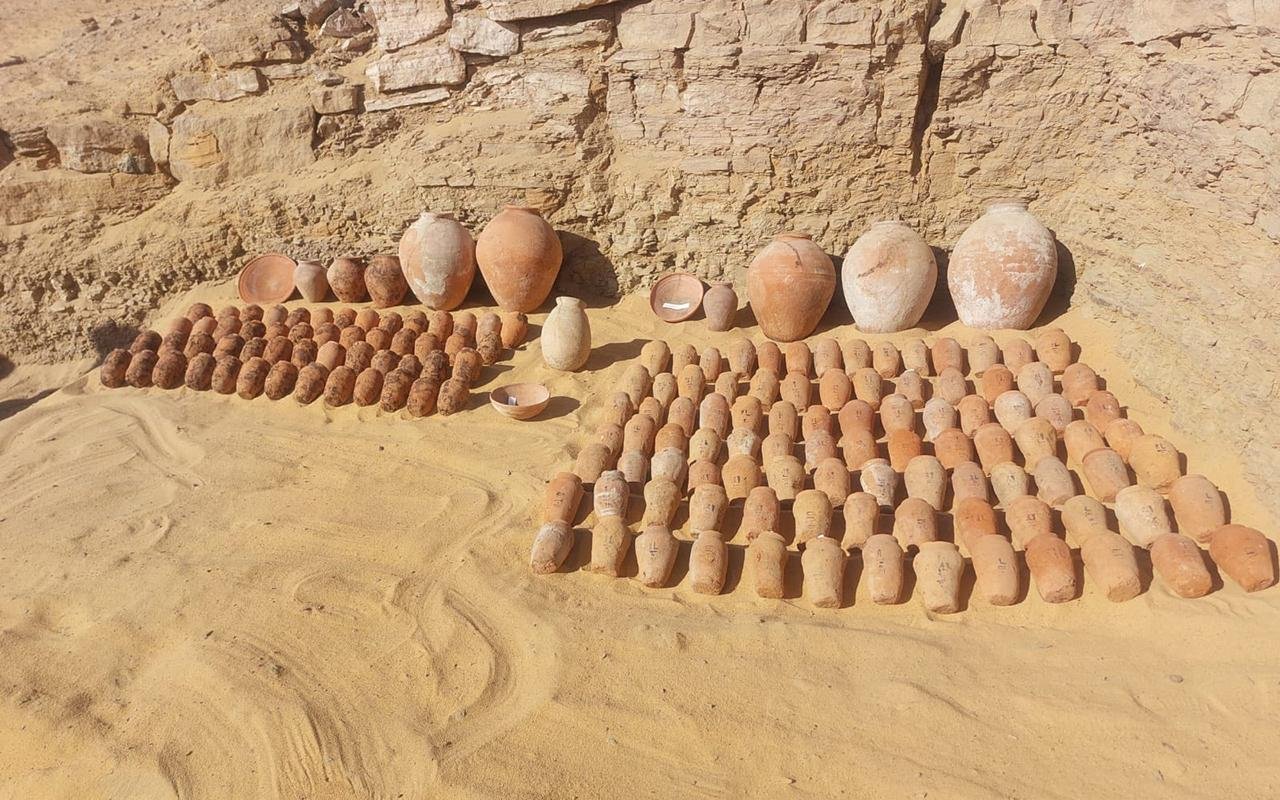
Inside two chambers, archaeologists recovered about 160 pottery vessels. Most date to the Old Kingdom, and many were found intact. Several jars still bear hieratic inscriptions, the cursive script used for administrative and daily writing. The markings likely recorded contents or ownership. Early analysis suggests the vessels once held liquids and grain. Such goods formed part of the funerary equipment placed with the dead to supply them in the afterlife.
The condition and number of the vessels stand out. Groups of jars were arranged in ways that reflect planned storage rather than random discard. For researchers, this offers direct evidence of how food and drink were prepared and labeled for burial in southern Egypt more than four thousand years ago.
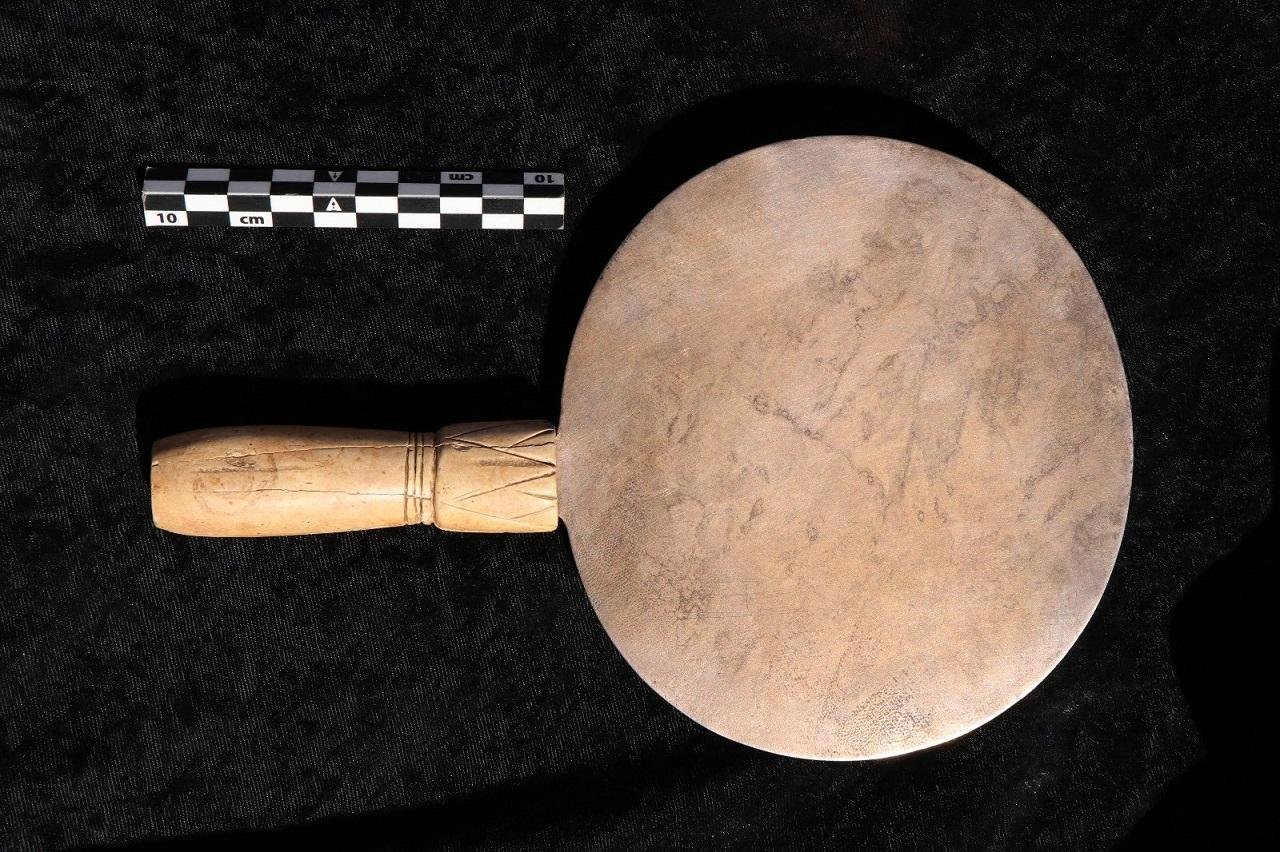
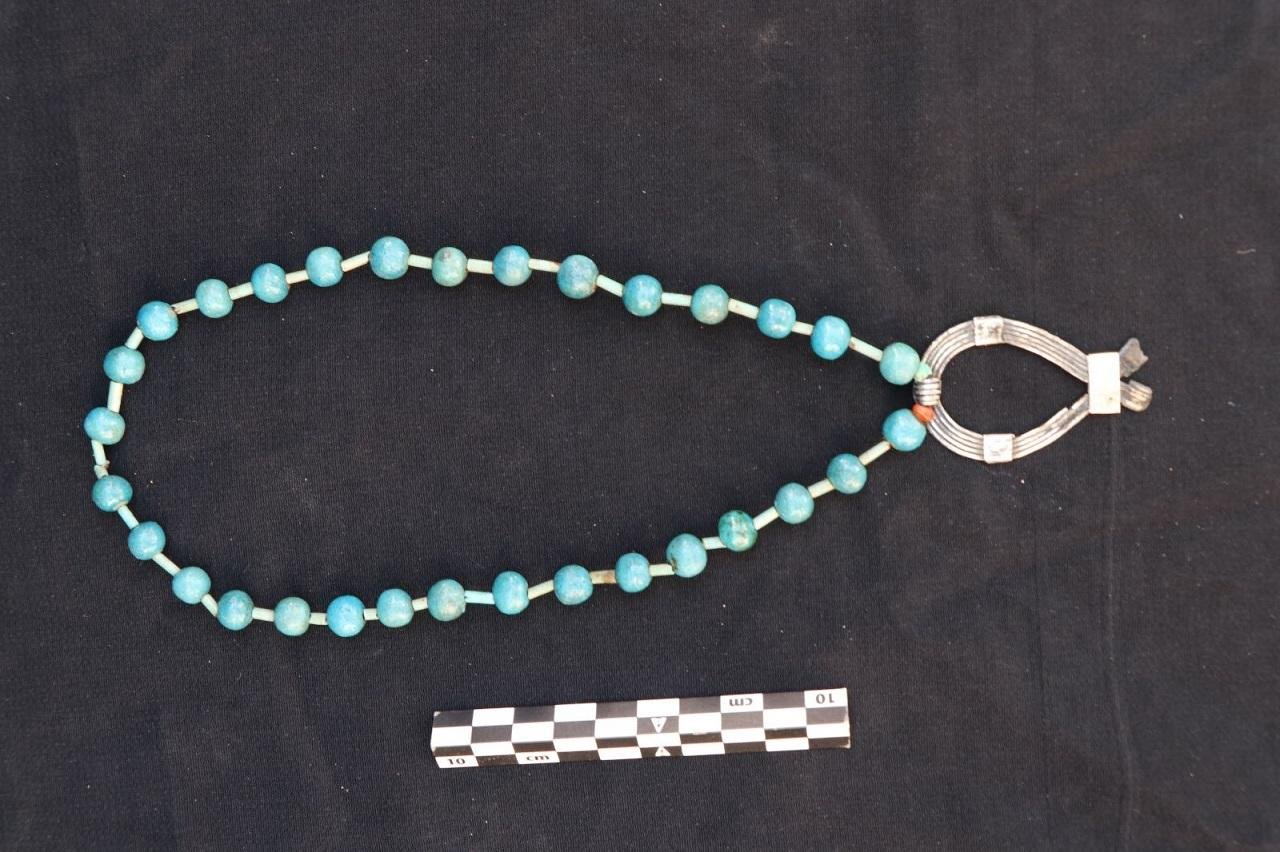
In the outer courtyard, the mission found objects from a later period. These include copper alloy mirrors, alabaster kohl containers, bead necklaces in different shapes and colors, and several amulets. Based on style and material, archaeologists date these items to the Middle Kingdom, around 2055 to 1650 BCE. Their presence confirms that people returned to the same tomb complex centuries after the first burials.
Qubbet el Hawa has long served as a major necropolis for Aswan. The hill overlooks the First Cataract and holds tombs of governors and officials who managed Egypt’s southern frontier. Burials at the site span from the early Old Kingdom through the Greco-Roman period. The newly uncovered tombs add another layer to this long sequence.
The team is now documenting the architecture, pottery inscriptions, and small finds in detail. Further excavation in nearby areas is planned. Continued work at Qubbet el Hawa aims to clarify how different generations reused earlier tombs and how burial customs shifted over time in southern Egypt.
More information: Ministry of Tourism and Antiquities











Disclaimer: This website is a science-focused magazine that welcomes both academic and non-academic audiences. Comments are written by users and may include personal opinions or unverified claims. They do not necessarily reflect the views of our editorial team or rely on scientific evidence.
Comment Policy: We kindly ask all commenters to engage respectfully. Comments that contain offensive, insulting, degrading, discriminatory, or racist content will be automatically removed.