
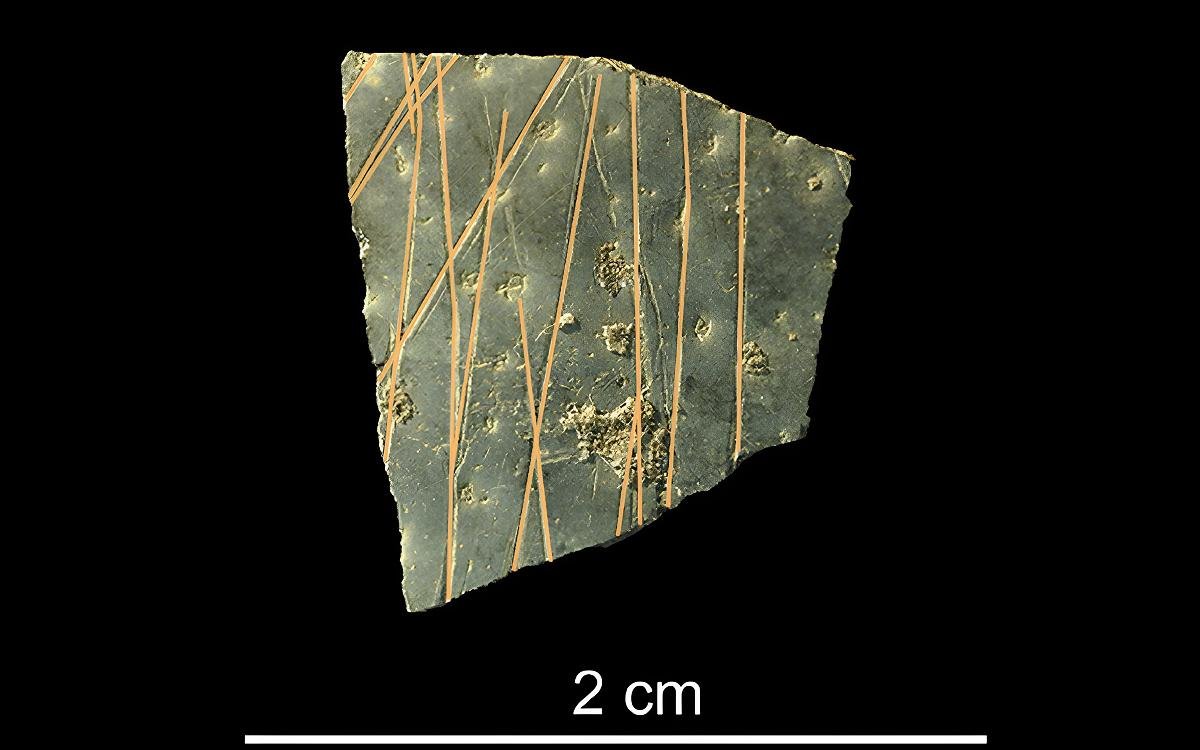
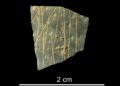
More than 60,000 years ago, groups of Homo sapiens in southern Africa carved patterns into ostrich eggshells. Archaeologists have recovered hundreds of these fragments from sites linked to the Howiesons Poort phase of the late Middle Stone Age. Key finds come from Diepkloof and Klipdrift in South Africa and from Apollo 11 in Namibia. The shells likely served as water containers, yet their surfaces carry repeated geometric designs rather than random scratches.
A research team from the University of Bologna set out to test whether these engravings followed clear rules. Their study, published in PLOS ONE, examined 112 fragments through detailed geometric and spatial measurement. The team recorded angles, spacing, curvature, and the alignment of lines. They focused on features such as parallelism, co-termination of lines, and the recurrence of specific angular values.
The results show strong regularity. More than 80 percent of the patterns display consistent spatial order. Many lines run in parallel sets with careful spacing. Angles cluster close to 90 degrees, showing repeated use of right-angle crossings. Some designs form hatched bands made of evenly spaced lines. Others create grids or diamond shapes built from intersecting diagonals.
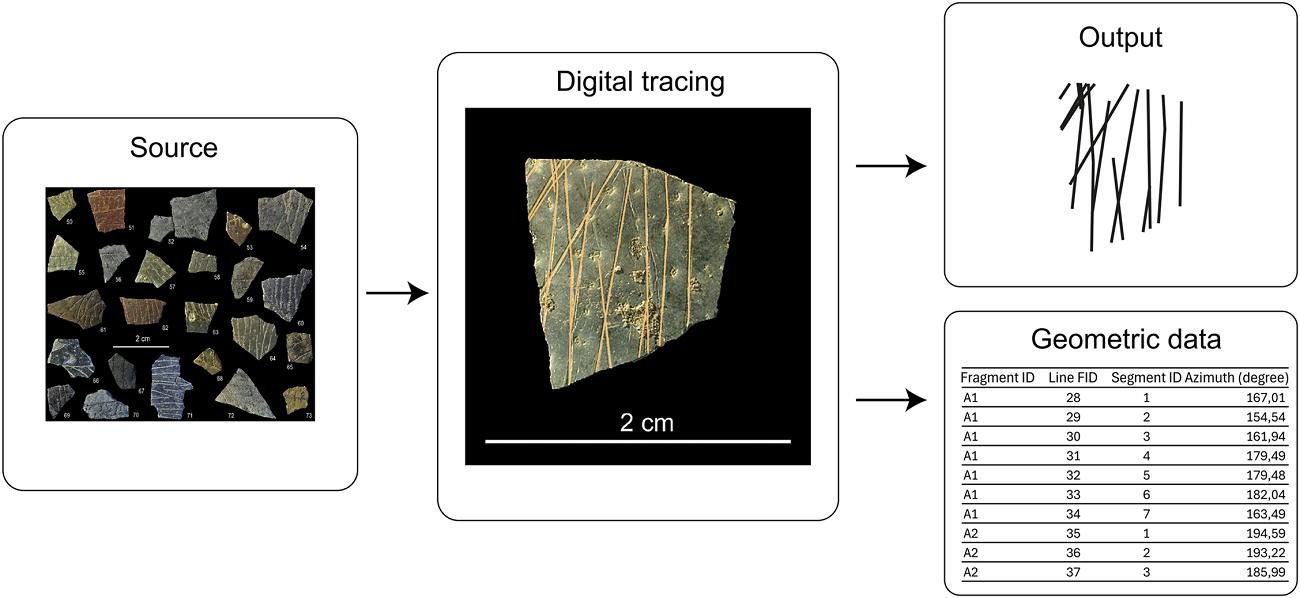
These patterns did not arise from the chance movement of a sharp tool. The engravers repeated the same operations across different shells. They rotated lines to form crossings with controlled openings. They translated motifs across the surface, keeping distance and alignment stable. They iterated elements to build longer bands or wider grids. In several cases, the engraver first laid out a basic framework and then inserted smaller elements within that structure. This nesting of forms points to planned construction rather than casual marking.
The researchers describe these operations as a form of geometric grammar. The term refers to a stable set of procedures used to organize visual space. The engravings show that Homo sapiens at these sites applied consistent rules when arranging lines and angles. The makers did not place marks one by one without direction. The repetition of right angles and parallel bands suggests that they held a clear layout in mind before cutting into the shell.


The findings bear on debates about early symbolic behavior. Structured graphic systems require control of space and memory of prior marks. The ability to repeat forms, align them, and embed them within a broader layout reflects abstract planning. By 60,000 years ago, people in southern Africa had mastered these operations on small, curved surfaces.
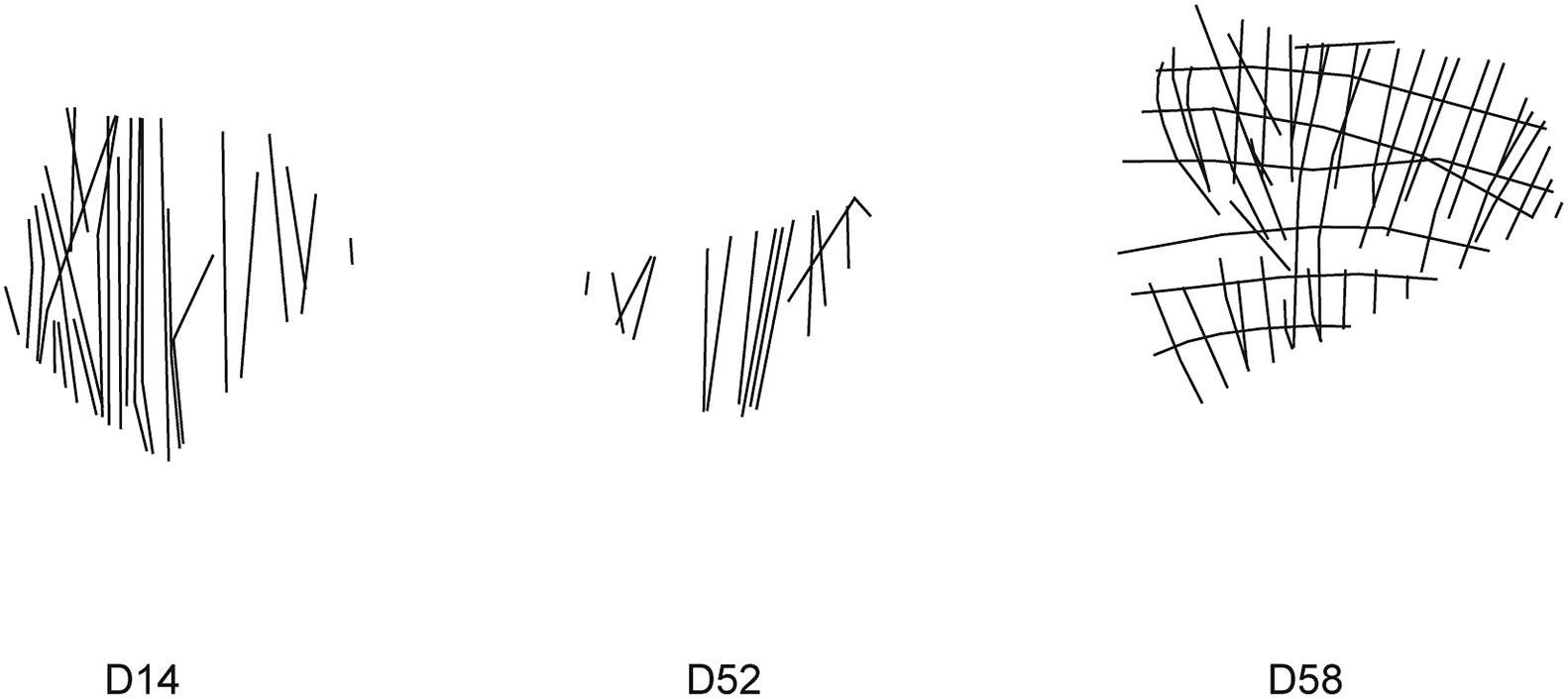
These engraved ostrich eggshells stand among the earliest material records of organized graphic representation. Their grids, hatched bands, and diamonds reveal a stable internal logic shared within these communities. Careful measurement and statistical analysis show that late Middle Stone Age groups arranged visual forms according to clear geometric principles long before the appearance of writing or agriculture.













Disclaimer: This website is a science-focused magazine that welcomes both academic and non-academic audiences. Comments are written by users and may include personal opinions or unverified claims. They do not necessarily reflect the views of our editorial team or rely on scientific evidence.
Comment Policy: We kindly ask all commenters to engage respectfully. Comments that contain offensive, insulting, degrading, discriminatory, or racist content will be automatically removed.