
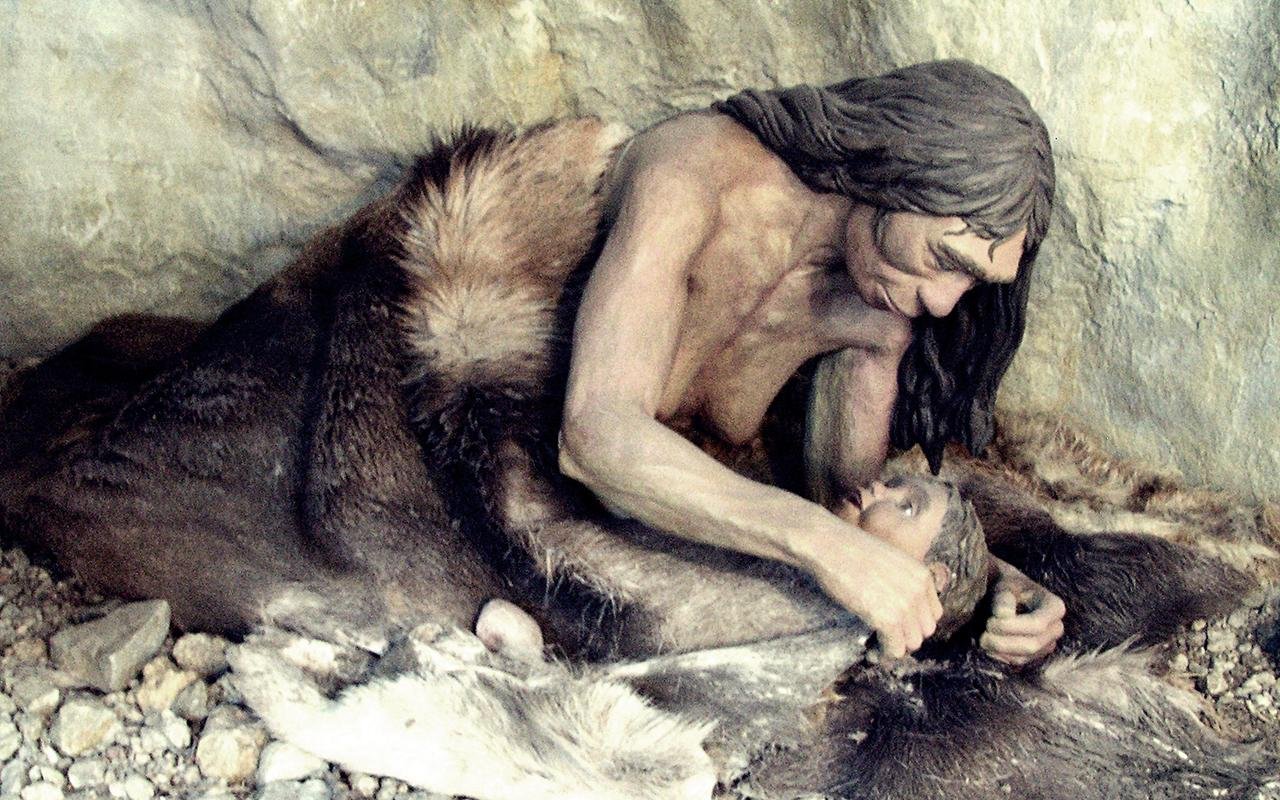
A team of neonatologists and obstetricians has proposed a new explanation for the disappearance of Neanderthals. In a study published January 30 in the Journal of Reproductive Immunology, the authors argue that preeclampsia and eclampsia, serious complications of pregnancy unique to humans, might have reduced Neanderthal reproductive success and increased maternal deaths.
Preeclampsia affects 2 to 8 percent of pregnancies worldwide. Eclampsia, defined by seizures during pregnancy or shortly after birth, develops in about 1 percent of pregnancies without treatment. Today, preeclampsia contributes to more than 70,000 maternal deaths and roughly 500,000 perinatal deaths each year. In countries with modern obstetric care, early diagnosis has lowered maternal mortality. For most of human history, medical care was absent.
These disorders appear to stem from problems in placental development. In early pregnancy, specialized placental cells invade the mother’s uterine arteries and remodel them to supply enough blood to the fetus. In humans, this invasion runs deep. Researchers link this pattern to the high energy demands of large fetal brains. When the process remains shallow or incomplete, the placenta struggles to deliver oxygen and nutrients. The mother’s blood pressure rises, organs such as the kidneys and liver come under strain, and fetal growth restriction often follows.
Early-onset preeclampsia, which leads to delivery before 34 weeks, seems tied to failures in maternal immune tolerance to paternal antigens. First pregnancies and pregnancies with a new partner show a higher risk. Scientists also propose that humans evolved a protective mechanism that separates many cases of fetal growth restriction from severe maternal disease. Without such protection, estimates suggest preeclampsia rates might reach 10 to 20 percent, with eclampsia affecting up to 4 to 5 percent of pregnancies.

The study authors suggest Neanderthals shared deep hemochorial placentation but lacked this protective adaptation. Genetic differences involving immune interactions at the maternal-fetal interface have been proposed, although the new paper did not test specific Neanderthal genes. If Neanderthals faced higher rates of severe preeclampsia, small and dispersed populations could have struggled to recover from repeated maternal and fetal losses.

Eclampsia holds a long place in human history. Written records from around 3000 BCE describe convulsions in pregnant women in sources from India, China, Egypt, and later Greece and Rome. For centuries, observers attributed such seizures to supernatural forces. In the seventeenth century, physicians noted that first-time mothers faced greater risk. The only definitive treatment, still used today, is delivery of the placenta.
Paleoanthropologists remain cautious. Neanderthals persisted for more than 300,000 years across Eurasia. Critics note the absence of direct evidence showing higher rates of preeclampsia in Neanderthals compared with early Homo sapiens. Genetic studies also reveal interbreeding among Neanderthals, Denisovans, and modern humans, which could mean shared biological traits rather than stark differences.
The hypothesis adds a medical dimension to debates about Neanderthal extinction. Climate change, competition with Homo sapiens, small population size, and inbreeding have all been discussed. Whether pregnancy-related mortality played a measurable role awaits further genetic and archaeological evidence.













Disclaimer: This website is a science-focused magazine that welcomes both academic and non-academic audiences. Comments are written by users and may include personal opinions or unverified claims. They do not necessarily reflect the views of our editorial team or rely on scientific evidence.
Comment Policy: We kindly ask all commenters to engage respectfully. Comments that contain offensive, insulting, degrading, discriminatory, or racist content will be automatically removed.