
A metal detectorist in Essex found a small medieval seal matrix with a much older Roman gemstone at its center. The object came from farmland near Gosfield, north of Braintree, in September 2024. Experts with the Portable Antiquities Scheme later studied the piece and confirmed a mix of materials and dates.
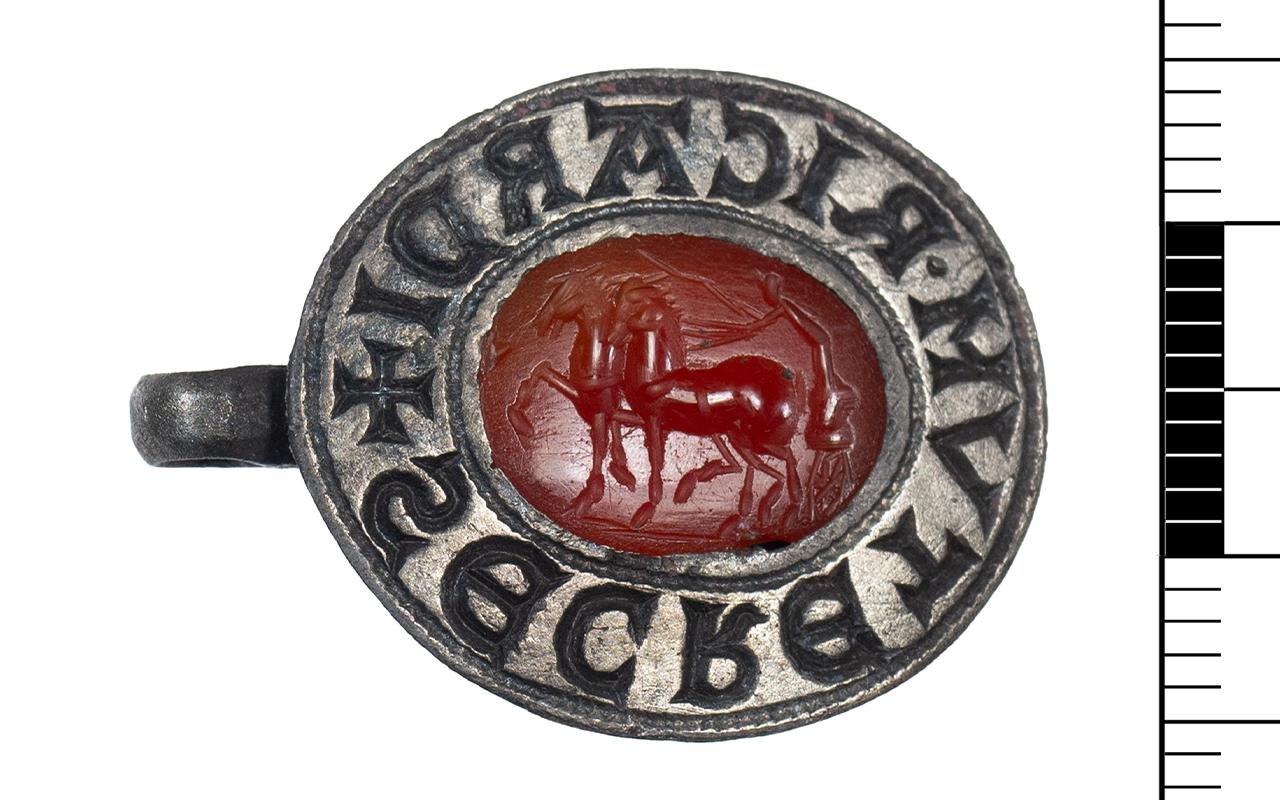
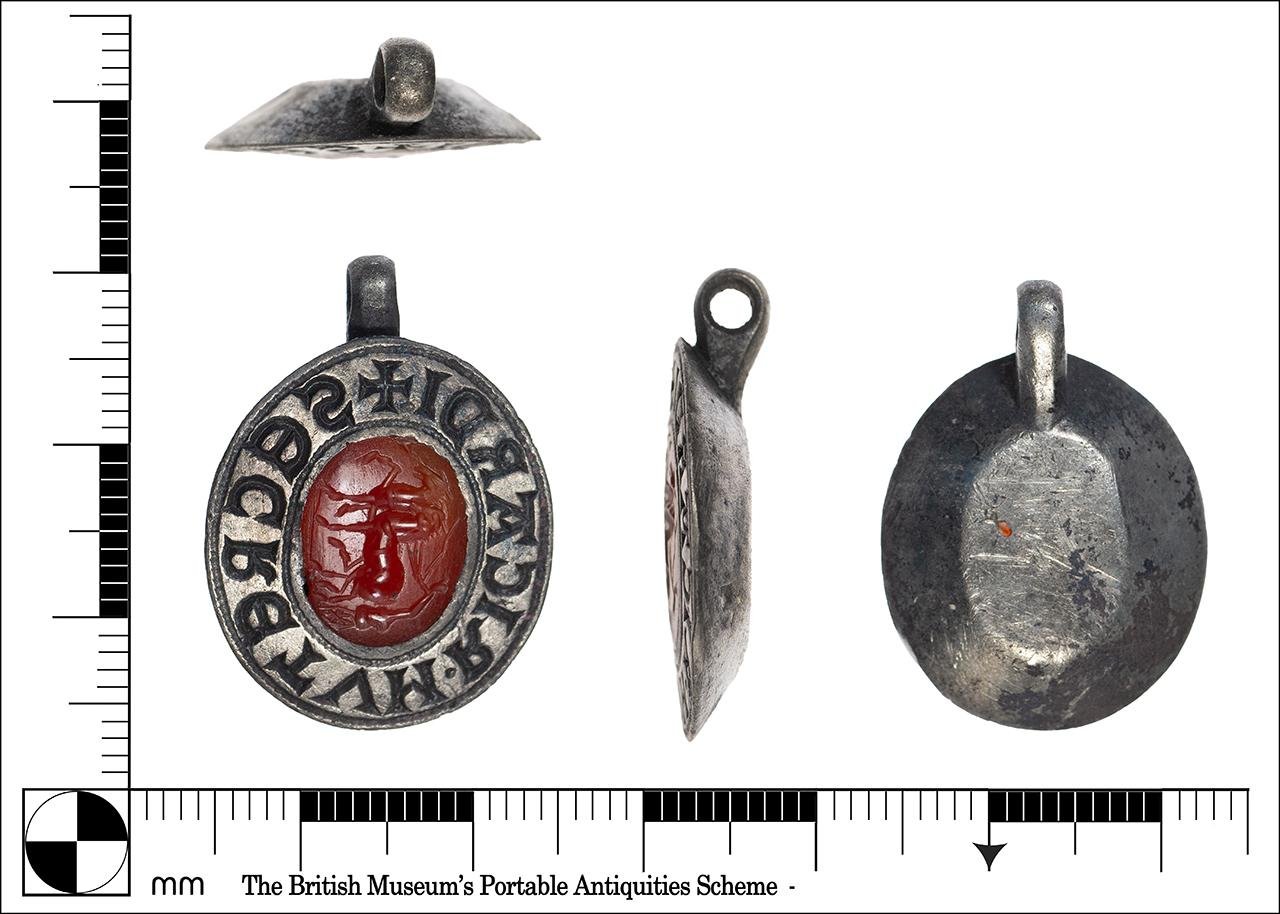
The seal measures about 27.5 millimeters long and weighs 6.44 grams. A loop at one end shows the owner wore the seal as a pendant rather than a ring. The body consists of silver. Around the oval bezel, an inscription appears in mirror image so a wax impression reads correctly. The text reads “SECRETVM.RICARDI,” which translates as Richard’s secret. A small cross pattée also appears beside the lettering, a symbol common in medieval Christian art.
At the center sits a polished carnelian intaglio carved with a racing scene. A charioteer stands in a two-horse chariot, holding reins and a whip. The style places the gemstone in the late first century BCE or early first century CE. Craftspeople engraved such scenes for rings and amulets across the Roman world. When pressed into wax, the design would produce a raised image of the race.
Researchers date the silver setting to between about 1200 and 1400. Medieval seal owners used personal matrices to secure letters and legal records. The reversed inscription and carved stone both served this function. The choice of a Roman gem suggests deliberate reuse. Imported intaglios from Italy circulated in medieval Europe, while other examples entered the market after plowing brought them to the surface in Britain.
Specialists note that objects combining parts from distant periods appear rarely in the archaeological record. The Gosfield seal shows how medieval people valued ancient materials and integrated them into new social and legal tools. The find links everyday document sealing with long-distance trade and the afterlife of Roman art.

A coroner reviewed the case under the Treasure Act of 1996 and ruled the object treasure because of its age and precious metal content. Braintree Museum has expressed interest in acquiring the seal for public display, where visitors will see both the medieval craftsmanship and the much older Roman carving in a single piece.















Disclaimer: This website is a science-focused magazine that welcomes both academic and non-academic audiences. Comments are written by users and may include personal opinions or unverified claims. They do not necessarily reflect the views of our editorial team or rely on scientific evidence.
Comment Policy: We kindly ask all commenters to engage respectfully. Comments that contain offensive, insulting, degrading, discriminatory, or racist content will be automatically removed.
Interesting educational material. Please keep it coming.