• About
  • Privacy Policy
  • Terms of Use
  • Donation
  • Contact
No Result
View All Result
Archaeology News
  • Home
  • News
    • Archaeology
    • Anthropology
    • Paleontology
  • Academic
    • Books
    • Conferences
    • Universities
  • Articles
  • VR Tours
  • Quiz & Game
  • Download
  • Encyclopedia
  • Forum
Archaeology News
No Result
View All Result
Home News Anthropology

Rich medieval Christians buried ‘closer to God’ even with leprosy or tuberculosis, archaeologists find

by Dario Radley
February 12, 2026

Medieval cemeteries in Denmark show how social rank shaped burial choices. Plots near church walls or inside church buildings cost more and signaled wealth, family ties, or religious standing. A research team used grave location as a measure of status, then compared burial placement with skeletal signs of two long-lasting infections, leprosy and tuberculosis. Both illnesses carried heavy social meaning in the Middle Ages. Leprosy often changed facial bones and limbs, which marked sufferers in daily life. Tuberculosis left subtler traces and spread through crowded living conditions.
Rich medieval Christians buried ‘closer to God’ even with leprosy or tuberculosis, archaeologists find
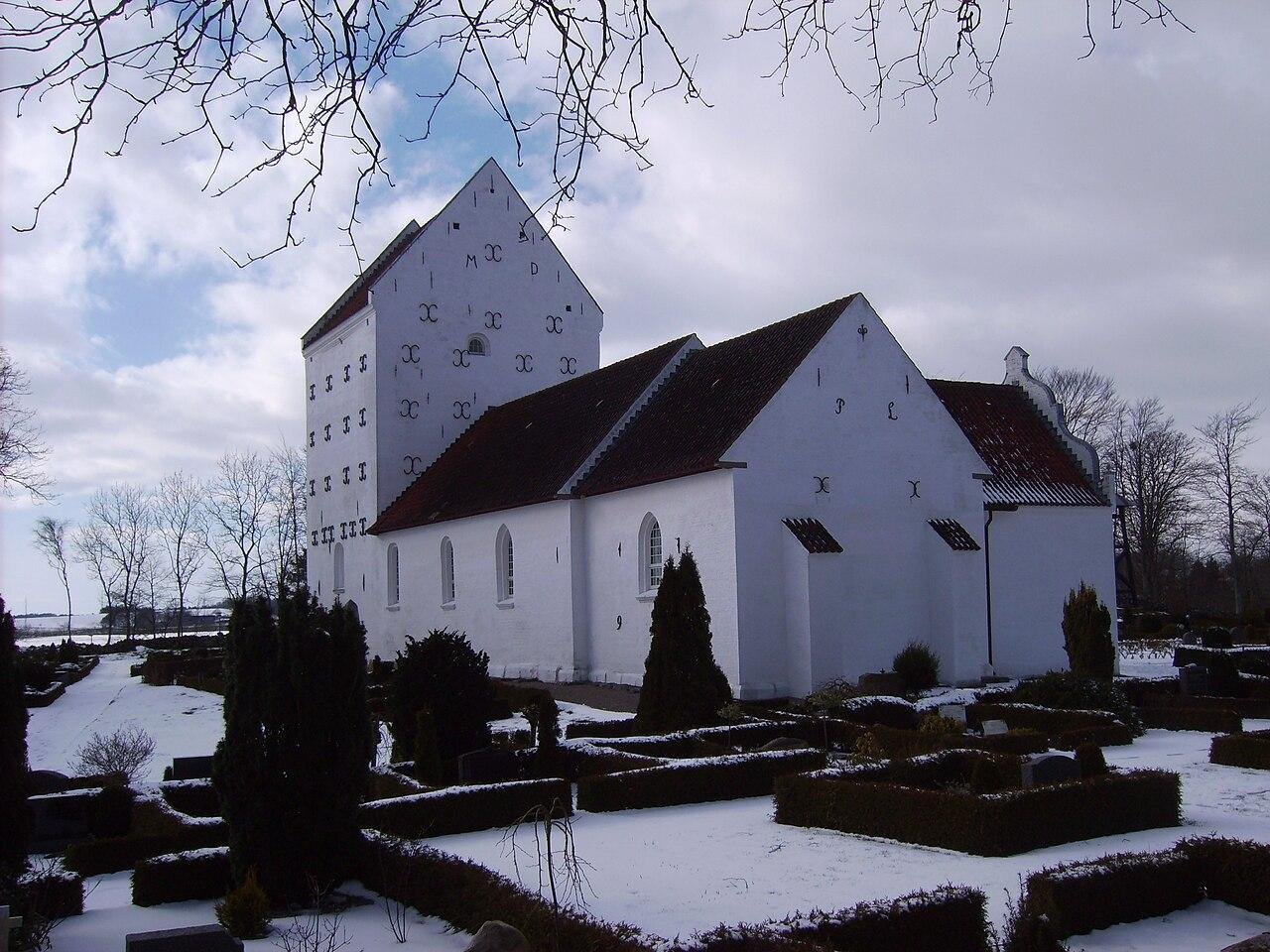
Åsted Church, a medieval stone church in Frederikshavn Municipality, Denmark. Credit: Västgöten / CC BY-SA 3.0

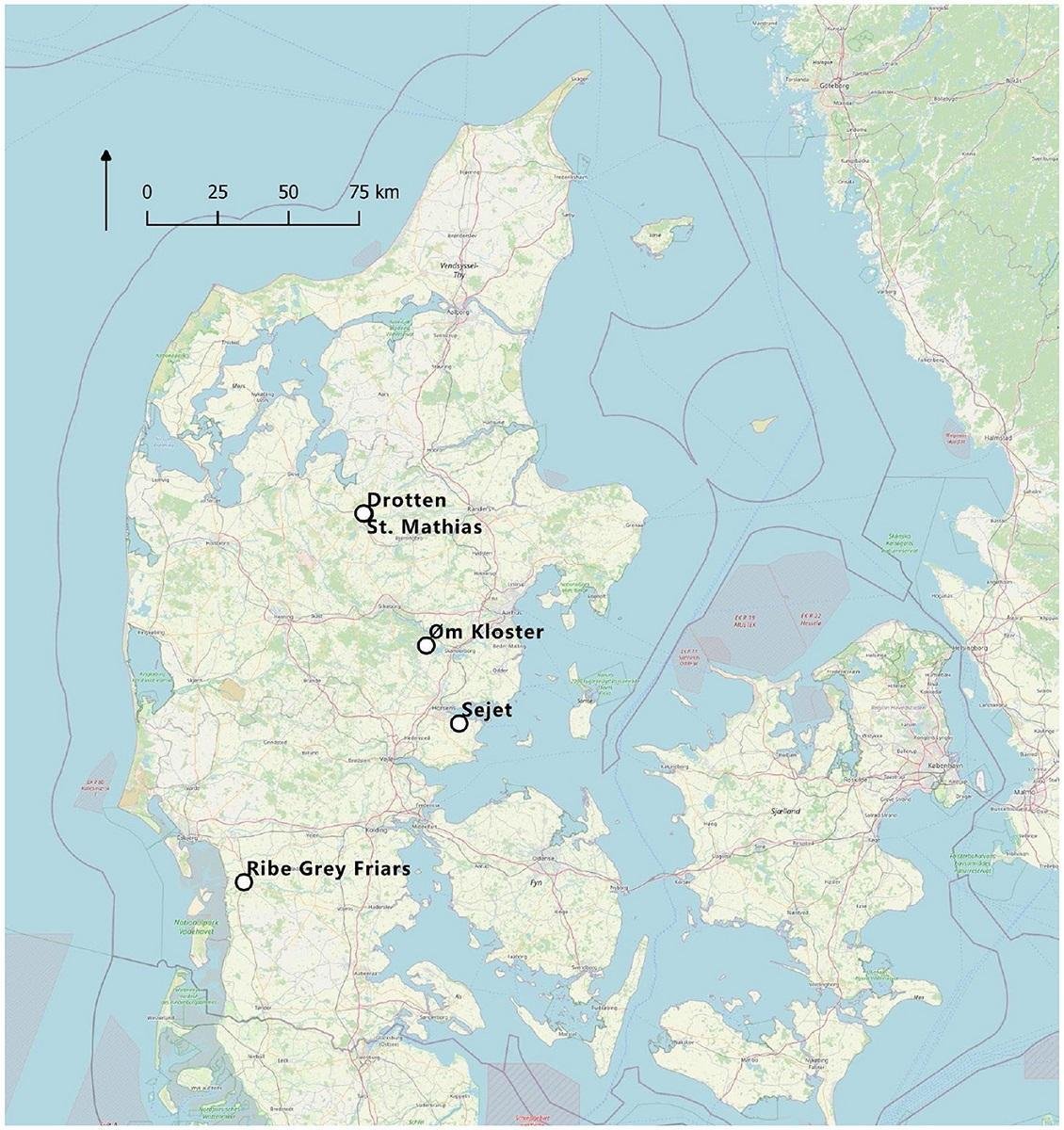
The project examined 939 adult skeletons from five cemeteries dated between about 1050 and 1536. Three sites lay in towns, two in rural parishes. Urban growth, trade, and dense housing raised disease exposure. Rural communities faced different risks linked to diet, labor, and distance from care. Researchers recorded bone damage linked to each infection, then mapped every burial across detailed cemetery plans. Statistical survival analysis estimated age at death and compared mortality patterns between infected and non-infected groups.

Grave maps showed no broad pattern of pushing sick people to poorer areas. People with visible signs of leprosy appeared in high-status plots as often as neighbors without disease. Tuberculosis showed a similar pattern. One town, Ribe, showed some separation. About one third of individuals in lower-status ground had tuberculosis, compared with around twelve percent in monastery or church burials. Researchers link this gap to different exposure or living conditions rather than stigma tied to illness.

Another urban cemetery, Drotten, told a different story. Roughly half of all burials there lay in high-status areas. More than half of those individuals showed skeletal signs of tuberculosis. Survival analysis adds an important detail. People with tuberculosis lesions tended to live longer than peers without such bone changes. Longer survival gave infection time to alter bone, which raised detection rates in skeletal remains. No survival gap appeared between people with and without leprosy lesions.
Rich medieval Christians buried ‘closer to God’ even with leprosy or tuberculosis, archaeologists find
Map of Denmark showing locations of sites contributing skeletal material to this study. Map: Credit: Edited by Dorthe Dangvared Pedersen, OpenStreetMap and QGIS / Kelmelis et al., Frontiers in Environmental Archaeology (2026)

Findings challenge common images of medieval fear and exclusion. Burial close to sacred space often depended more on wealth, family networks, or donations to a church than on visible disease. Leprosaria, or leprosy hospitals outside towns, still influenced burial patterns in some regions. Few clear leprosy cases appeared in certain urban cemeteries, which suggests separate burial grounds linked to those institutions.
RelatedStories

Viking Age mass grave with dismembered bodies and trepanned giant found near Cambridge

Viking Age mass grave with dismembered bodies and trepanned giant found near Cambridge

February 11, 2026
Lost infant burial grounds in Ireland rediscovered through folklore and archaeology study

Lost infant burial grounds in Ireland rediscovered through folklore and archaeology study

February 7, 2026

Researchers note limits in skeletal diagnosis. Some infected people died before bone changed, which hides disease in burial samples. Future work using ancient DNA could refine infection rates and trace transmission patterns. Even with those limits, cemetery evidence from Denmark points to communities where sickness did not automatically lead to social rejection in death.

More information: Kelmelis, S., Kristensen, V. R., Larsen, L. A., Knudsen, M., Mollerup, L., Seeberg, L., & Pedersen, D. D. (2026). Closer to godliness: a contextual study of osteoarchaeological and spatial patterns of diseased individuals in medieval Danish cemeteries. Frontiers in Environmental Archaeology, 4(1699370). doi:10.3389/fearc.2025.1699370
Share1Tweet1ShareShareSend

You May Also Like...

oldest Mithraic sanctuary in Bavaria discovered in Regensburg’s Roman old town
Archaeology

Oldest Mithraic sanctuary in Bavaria discovered in Regensburg’s Roman old town

February 12, 2026
Why bison hunters abandoned a long-used site 1,100 years ago due to severe droughts
Archaeology

Why bison hunters abandoned a long-used site 1,100 years ago due to severe droughts

February 11, 2026
Rare 3rd century terracotta female head discovered at Magna Roman Fort near Hadrian’s Wall
Archaeology

Rare 3rd century terracotta female head discovered at Magna Roman Fort near Hadrian’s Wall

February 11, 2026
Viking Age mass grave with dismembered bodies and trepanned giant found near Cambridge
Anthropology

Viking Age mass grave with dismembered bodies and trepanned giant found near Cambridge

February 11, 2026
Defensive ditch and dense Neolithic activity identified at Gawroniec Hill flint settlement in Poland
Archaeology

Defensive ditch and dense Neolithic activity identified at Gawroniec Hill flint settlement in Poland

February 10, 2026
Iron Age severed head ritual identified among new Iberian groups in Spain
Anthropology

Iron Age decapitation ritual identified among new Iberian groups in Spain

February 10, 2026

Comments 0

  1. Editorial Team says:
    1 second ago

    Disclaimer: This website is a science-focused magazine that welcomes both academic and non-academic audiences. Comments are written by users and may include personal opinions or unverified claims. They do not necessarily reflect the views of our editorial team or rely on scientific evidence.

    Comment Policy: We kindly ask all commenters to engage respectfully. Comments that contain offensive, insulting, degrading, discriminatory, or racist content will be automatically removed.

    Reply

Leave a Reply Cancel reply

Your email address will not be published. Required fields are marked *

Follow us


Instagram
244K

Facebook
118K

Threads
45K

LinkedIn
14K

Twitter
6K

YouTube
1K
  • Trending
  • Comments
  • Latest
Shipwreck Salvage. Credit: rawpixel.com / Public Domain

2,000-year-old shipwreck discovered off Turkish coast with remarkably preserved stacked ceramics

July 2, 2025
Viking age DNA reveals 9,000-year-old HIV-resistant gene originating near the Black Sea

Viking age DNA reveals 9,000-year-old HIV-resistant gene originating near the Black Sea

May 18, 2025
A new study suggests the mysterious Voynich Manuscript may be a medieval cipher

A new study suggests the mysterious Voynich Manuscript may be a medieval cipher

January 3, 2026
Moses may be named in ancient Egyptian mine inscriptions, sparking debate over earliest biblical references

Moses may be named in ancient Egyptian mine inscriptions, sparking debate over earliest biblical references

July 31, 2025
Mystery of Armenia’s 6,000-year-old dragon stones solved

Mystery of Armenia’s 6,000-year-old dragon stones solved

September 23, 2025
3D analysis reveals Shroud of Turin image likely came from sculpture, not Jesus’ body

3D analysis reveals Shroud of Turin image likely came from sculpture, not Jesus’ body

Moses may be named in ancient Egyptian mine inscriptions, sparking debate over earliest biblical references

Moses may be named in ancient Egyptian mine inscriptions, sparking debate over earliest biblical references

$1 million prize offered to decipher 5,300-year-old Indus Valley script

$1 million prize offered to decipher 5,300-year-old Indus Valley script

Oldest ever genetic data from a human relative found in 2-million-year-old fossilized teeth

Oldest ever genetic data from a human relative found in 2-million-year-old fossilized teeth

Exceptionally large Roman shoes discovered at Magna fort near Hadrian’s Wall

Exceptionally large Roman shoes discovered at Magna fort near Hadrian’s Wall

oldest Mithraic sanctuary in Bavaria discovered in Regensburg’s Roman old town

Oldest Mithraic sanctuary in Bavaria discovered in Regensburg’s Roman old town

February 12, 2026
Rich medieval Christians buried ‘closer to God’ even with leprosy or tuberculosis, archaeologists find

Rich medieval Christians buried ‘closer to God’ even with leprosy or tuberculosis, archaeologists find

February 12, 2026
Why bison hunters abandoned a long-used site 1,100 years ago due to severe droughts

Why bison hunters abandoned a long-used site 1,100 years ago due to severe droughts

February 11, 2026
Rare 3rd century terracotta female head discovered at Magna Roman Fort near Hadrian’s Wall

Rare 3rd century terracotta female head discovered at Magna Roman Fort near Hadrian’s Wall

February 11, 2026
Viking Age mass grave with dismembered bodies and trepanned giant found near Cambridge

Viking Age mass grave with dismembered bodies and trepanned giant found near Cambridge

February 11, 2026

Archaeology News online magazine

Archaeology News is an international online magazine that covers all aspects of archaeology.


Categories

  • Academics
    • Books
    • Conferences
    • Universities
  • Articles
  • Download
  • Game
  • News
    • Anthropology
    • Archaeology
    • Paleontology
  • Quiz
  • Tours

Subscribe to our newsletter

© 2024 - Archaeology News Online Magazine. All Rights Reserved.

  • About
  • Privacy Policy
  • Terms of Use
  • Donation
  • Contact

Welcome Back!

Login to your account below

Forgotten Password? Sign Up

Create New Account!

Fill the forms below to register

All fields are required. Log In

Retrieve your password

Please enter your username or email address to reset your password.

Log In

Add New Playlist

Manage Consent
To provide the best experiences, we use technologies like cookies to store and/or access device information. Consenting to these technologies will allow us to process data such as browsing behavior or unique IDs on this site. Not consenting or withdrawing consent, may adversely affect certain features and functions.
Functional Always active
The technical storage or access is strictly necessary for the legitimate purpose of enabling the use of a specific service explicitly requested by the subscriber or user, or for the sole purpose of carrying out the transmission of a communication over an electronic communications network.
Preferences
The technical storage or access is necessary for the legitimate purpose of storing preferences that are not requested by the subscriber or user.
Statistics
The technical storage or access that is used exclusively for statistical purposes. The technical storage or access that is used exclusively for anonymous statistical purposes. Without a subpoena, voluntary compliance on the part of your Internet Service Provider, or additional records from a third party, information stored or retrieved for this purpose alone cannot usually be used to identify you.
Marketing
The technical storage or access is required to create user profiles to send advertising, or to track the user on a website or across several websites for similar marketing purposes.
  • Manage options
  • Manage services
  • Manage {vendor_count} vendors
  • Read more about these purposes
View preferences
  • {title}
  • {title}
  • {title}
  • Home
  • News
    • Archaeology
    • Anthropology
    • Paleontology
  • Academic
    • Books
    • Conferences
    • Universities
  • Articles
  • VR Tours
  • Quiz & Game
  • Download
  • Encyclopedia
  • Forum

About  .  Contact  .  Donation

© 2024 - Archaeology News Online Magazine. All Rights Reserved