
Construction linked to the future MiQua Jewish Museum in Cologne has brought to light a group of Roman structures preserved in rare condition. The work focuses on an underground visitor passage beneath Rathausplatz, in the heart of the city’s historic center. Deep trenches cut through layers that usually vanish during later building phases. In this case, Roman deposits remained sealed beneath ancient backfills along the former slope of the Rhine.
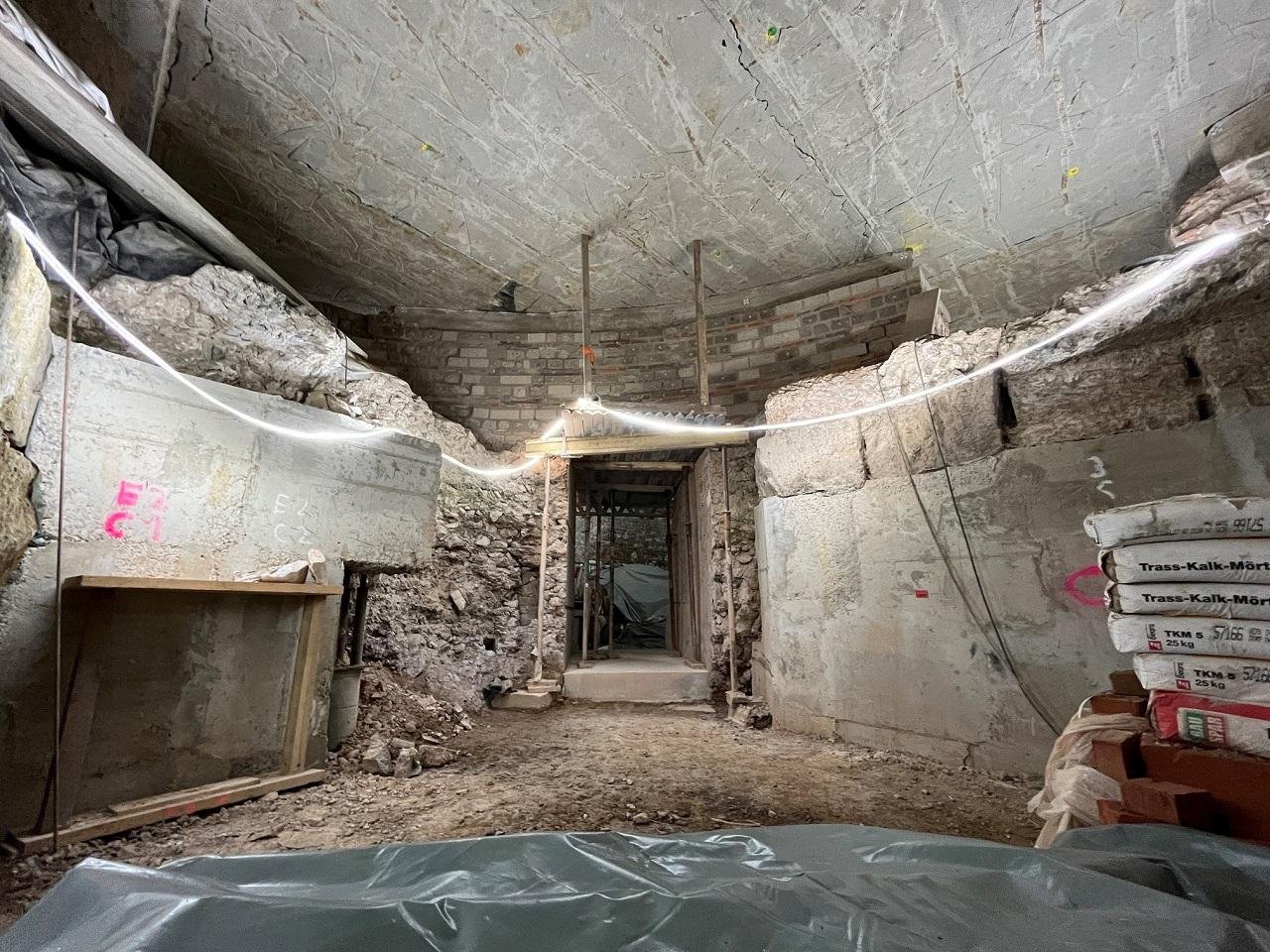
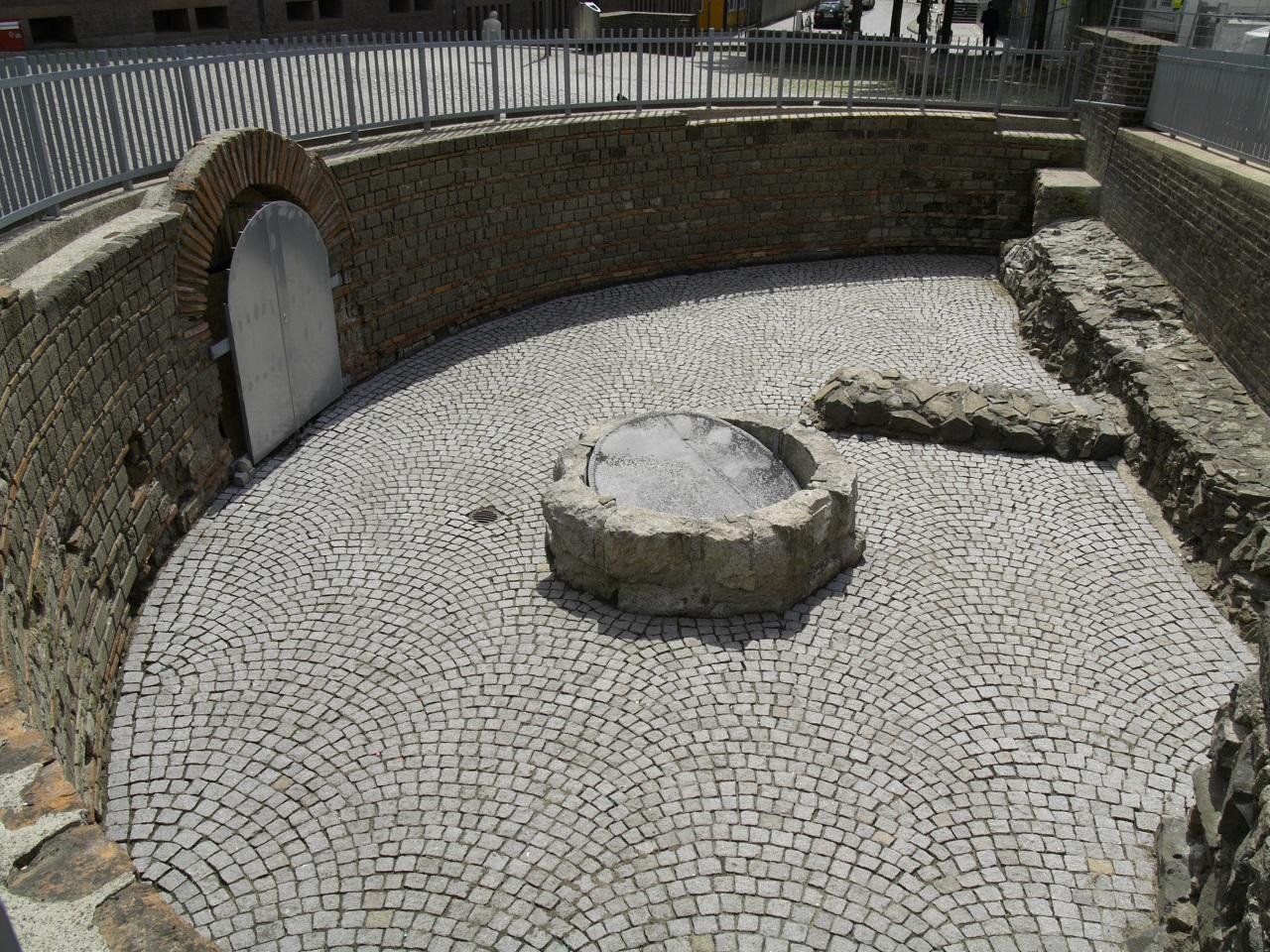
Archaeologists from the Römisch-Germanisches Museum reexamined the apse of a large basilica built in the 4th century. On the surface, the area appeared as a shallow dip in the square. Once excavation exposed a cross-section, the scale became clear. The apse foundation measures up to four meters thick.
Analysis of the masonry showed a method different from standard Roman concrete. Builders arranged layers of tuff, basalt, and limestone in regular courses. They bonded the stones with a dense mortar rich in crushed brick and gravel. This mixture formed a compact mass that survived intact. Preservation did not result from material strength alone. In Late Roman times, workers raised the ground level with large deposits of earth to reshape the steep riverbank. Those fills sealed the lower parts of the structure and shielded them from later demolition.
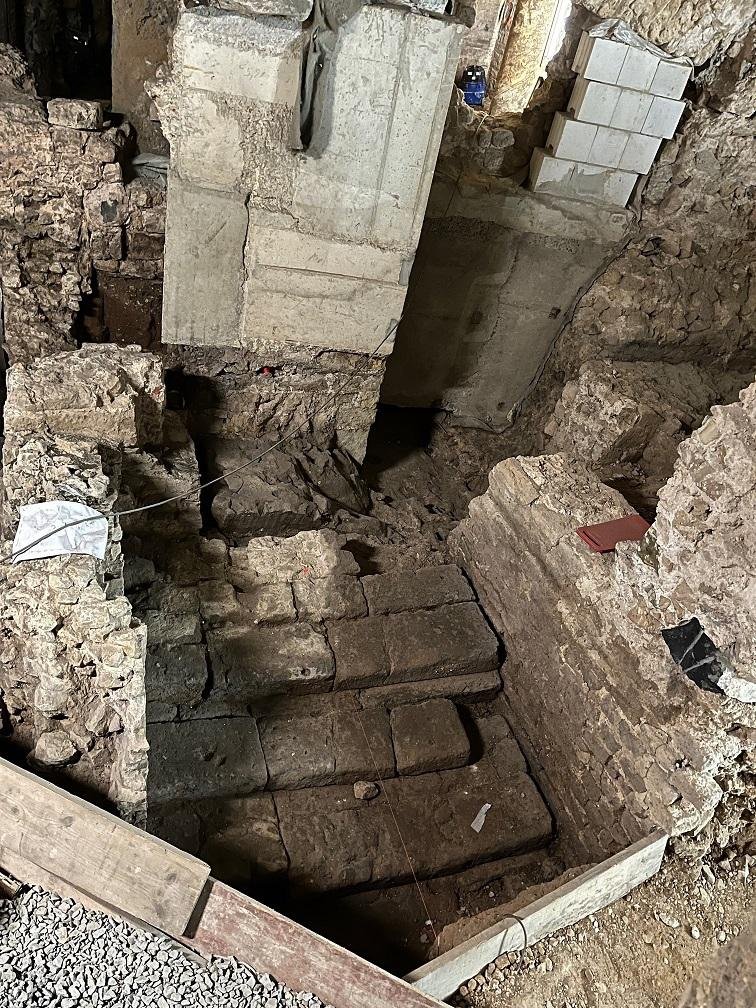
Excavation also uncovered a staircase from the late 1st century. Staircases rarely survive in Cologne because most Roman remains consist only of foundations. Here, the topography played a key role. The praetorium, the governor’s palace, stood near a sharp drop toward the Rhine. Builders installed stone steps to connect an upper section of the complex with a much lower level closer to the river. The exact start and end points remain unknown, yet the preserved stretch shows how movement through the palace adapted to the terrain. Early burial under Roman backfill protected the steps from reuse or stone robbing in the Middle Ages.
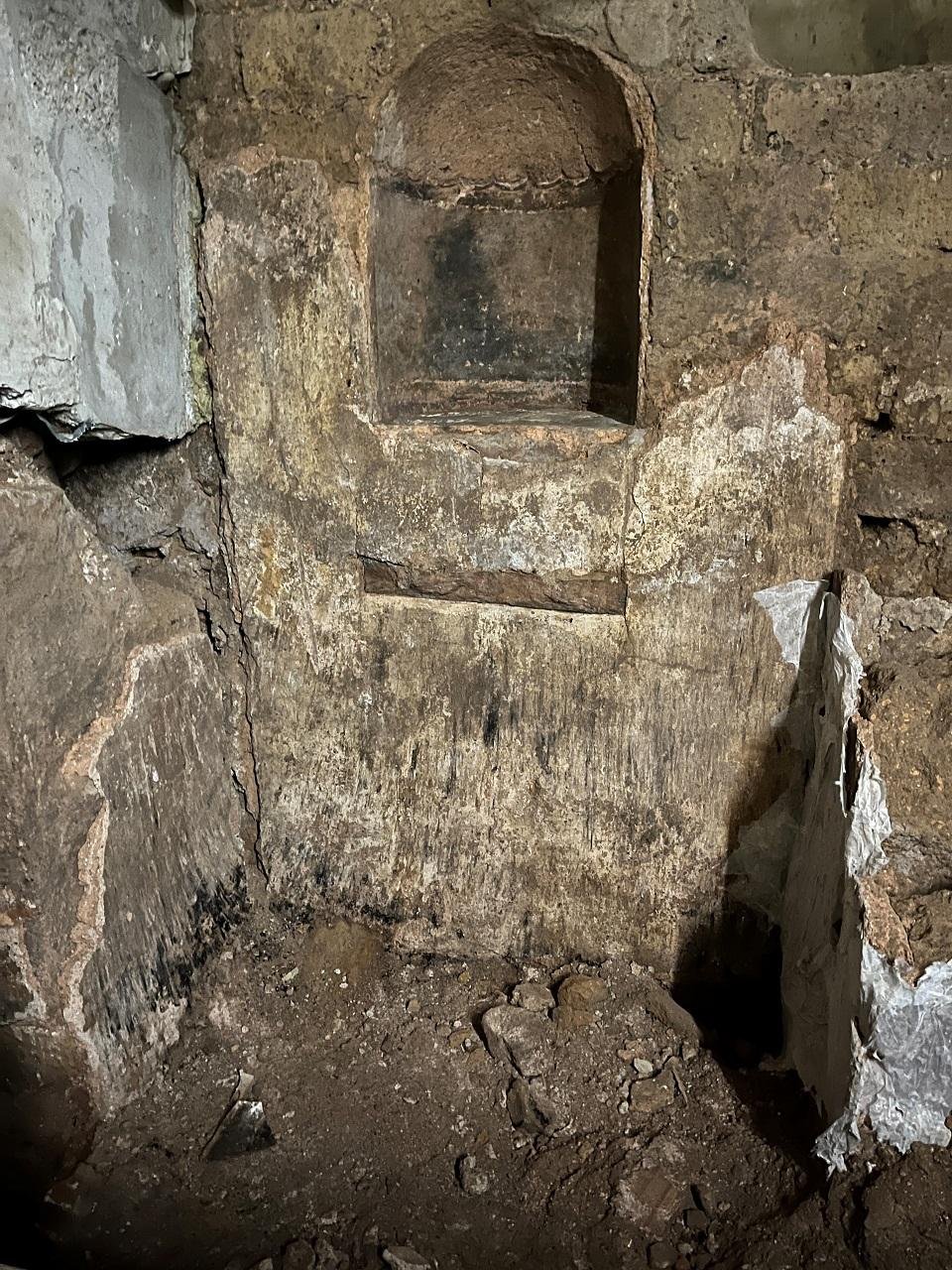
The most unusual find lies within a 2nd-century room of the praetorium. Archaeologists identified a lararium, a small household altar dedicated to the Lares, protective spirits of the home. Examples of such altars appear frequently in Pompeii and other Vesuvian cities. North of the Alps, finds of this type are almost unknown.
The Cologne lararium consists of a niche set into a wall. Inside, traces of painted plaster survive. Nail holes above and beside the opening mark where garlands or ribbons once hung during rituals. A break line beneath the niche indicates the original position of an altar plate used for offerings of food or objects. Excavators recovered this plate and plan to reinstall it during restoration. Projections along the sides of the niche suggest a framed architectural design, which would have given the altar a defined visual focus within the room.
These discoveries expand knowledge of the praetorium complex and daily life in Roman Cologne. Deep excavation for the new museum route exposed architectural elements rarely preserved in urban contexts. The finds will form part of the future exhibition, offering visitors direct access to structures that lay hidden for centuries beneath the modern city.
More information: City of Cologne










Disclaimer: This website is a science-focused magazine that welcomes both academic and non-academic audiences. Comments are written by users and may include personal opinions or unverified claims. They do not necessarily reflect the views of our editorial team or rely on scientific evidence.
Comment Policy: We kindly ask all commenters to engage respectfully. Comments that contain offensive, insulting, degrading, discriminatory, or racist content will be automatically removed.