• About
  • Privacy Policy
  • Terms of Use
  • Donation
  • Contact
No Result
View All Result
Archaeology News
  • Home
  • News
    • Archaeology
    • Anthropology
    • Paleontology
  • Academic
    • Books
    • Conferences
    • Universities
  • Articles
  • VR Tours
  • Quiz & Game
  • Download
  • Encyclopedia
  • Forum
Archaeology News
No Result
View All Result
Home News Anthropology

First known tuberculosis cases in Neanderthals revealed in Subalyuk Cave, Hungary

by Dario Radley
February 3, 2024

A recent DNA analysis of Neanderthal bones from Central Europe dating back around 35,000 years has revealed evidence of tuberculosis (TB). This marks the first identification of TB in Neanderthals, sparking inquiries into its potential role in their extinction. Two separate research studies, published in the journal Tuberculosis in December 2023, shed light on the findings.

Scientists discover oldest known human viruses in 50,000-year-old Neanderthal remains
Scientists discover oldest known human viruses in 50,000-year-old Neanderthal remains. Credit: Paul Hudson, Flickr

The Neanderthal remains were originally discovered in 1932 in Subalyuk Cave, located in the Bükk Mountains of northern Hungary. The cave, significant for its use by both animals and humans over centuries, housed the skeletal remains of a female adult and a child aged around 3 to 4 years at the time of death. Carbon dating conducted in early 2023 confirmed that the child died approximately 33,000 to 34,000 years ago, while the adult passed away earlier, around 37,000 to 38,000 years ago.

The significance of the Subalyuk individuals lies not only in their relatively recent dates of death, coinciding with the Neanderthal extinction, but also in the distinct evidence of skeletal infection found on both. The skeletal changes, identified as lytic lesions reflecting bone loss, were observed in the spine of the adult and the interior of the child’s skull. These lesions strongly indicated a diagnosis of tuberculosis, according to György Pálfi and his team from the University of Szeged in Hungary.

To validate this diagnosis, Oona Lee and her research team from the University of Birmingham in the U.K. conducted DNA analysis on bone samples from the two Neanderthal skeletons. The results were positive for the presence of Mycobacterium tuberculosis DNA, confirming the tuberculosis diagnosis. Spoligotyping, a method used to identify gene sequences of TB in a sample, supported the diagnosis for the child. Additionally, lipid biomarker analysis suggested that both Neanderthals had tuberculosis.

First known tuberculosis cases in Neanderthals revealed in Subalyuk Cave, Hungary
The skull of the Neanderthal child found at Subalyuk Cave in Hungary, as shown at the David H. Koch Hall of Human Origins at the Smithsonian Natural History Museum in the United States. Credit: Ryan Somma; Wikimedia Commons

“Based on both the morphological observations and their biomolecular support, we can conclude that tuberculosis was present in Central Europe during the Late Pleistocene, approximately 36-39 thousand years ago,” noted Pálfi and colleagues in one of the studies.

RelatedStories

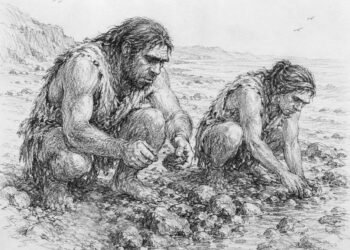
Neanderthals gathered shellfish like modern humans 115,000 years ago, study finds

Neanderthals gathered shellfish like modern humans 115,000 years ago, study finds

May 21, 2026
Oldest known dental treatment found in 59,000-year-old Neanderthal tooth from Siberia

Oldest known dental treatment found in 59,000-year-old Neanderthal tooth from Siberia

May 14, 2026

The discovery of tuberculosis in Neanderthals has raised questions about the origin of the disease in these ancient hominins. Filipek, a researcher, cautioned that comprehensive nondestructive analysis should be prioritized, considering the rarity of Neanderthal material. The hypothesis proposed by Lee and her colleagues is that Neanderthals may have contracted TB from large animals, particularly bison, which showed evidence of TB across ancient Europe. This transmission could have occurred as Neanderthals hunted and consumed these animals, posing a dual threat through both direct health risks and the decimation of prey animal populations.

Furthermore, the researchers speculate that TB might have contributed to the extinction of Neanderthals. They suggest that this hypothesis should be thoroughly investigated in future research.

More information:
Pálfi, G., Molnár, E., Bereczki, Z., Coqueugniot, H., Dutour, O., Tillier, A.-M., … Pap, I. (2023). Re-examination of the Subalyuk Neanderthal remains uncovers signs of probable TB infection (Subalyuk Cave, Hungary). Tuberculosis, 143, 102419. doi:10.1016/j.tube.2023.102419

Lee OY, Wu HHT, Besra GS, Minnikin DE, Jaeger HY, Maixner F, Zink A, Gasparik M, Pap I, Bereczki Z, Pálfi G. (2023). Sensitive lipid biomarker detection for tuberculosis in late Neanderthal skeletons from Subalyuk Cave, Hungary. Tuberculosis,143S, 102420. doi: 10.1016/j.tube.2023.102420

Share:

Share on Facebook Share on X (Twitter) Share on LinkedIn Share on Pinterest Share on WhatsApp Share on Email

You May Also Like...

Nondestructive DNA sampling uncovers 1,300 years of history preserved in ancient parchments
Archaeology

Nondestructive DNA sampling uncovers 1,300 years of history preserved in ancient parchments

May 22, 2026
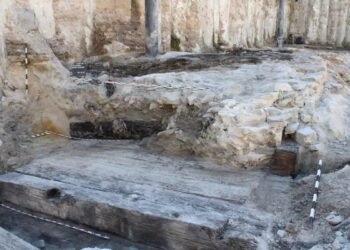
2,300-year-old Iron Age riverside structure discovered beneath German city astonishes archaeologists
Archaeology

2,300-year-old Iron Age riverside structure discovered beneath German city

May 22, 2026
100 Abbasid-era gold jewelry pieces found at ancient Dariyah site in Saudi Arabia
Archaeology

100 Abbasid-era gold jewelry pieces found at ancient Dariyah site in Saudi Arabia

May 22, 2026
Neanderthals gathered shellfish like modern humans 115,000 years ago, study finds
Anthropology

Neanderthals gathered shellfish like modern humans 115,000 years ago, study finds

May 21, 2026
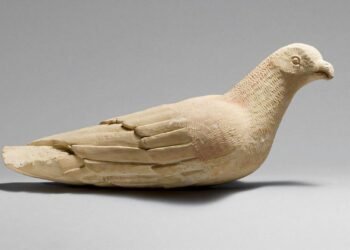
Ancient pigeons were already living alongside humans 3,400 years ago, study finds
Archaeology

Ancient pigeons were already living alongside humans 3,400 years ago, study finds

May 21, 2026
Ancient Venetic sanctuary with rare inscriptions unearthed beneath road project in Italy
Archaeology

Ancient Venetic sanctuary with rare inscriptions unearthed beneath road project in Italy

May 21, 2026

Follow us


Instagram
242K

Facebook
117K

Threads
46K

LinkedIn
14K

Twitter
6K

YouTube
1K
Nondestructive DNA sampling uncovers 1,300 years of history preserved in ancient parchments

Nondestructive DNA sampling uncovers 1,300 years of history preserved in ancient parchments

May 22, 2026
2,300-year-old Iron Age riverside structure discovered beneath German city astonishes archaeologists

2,300-year-old Iron Age riverside structure discovered beneath German city

May 22, 2026
100 Abbasid-era gold jewelry pieces found at ancient Dariyah site in Saudi Arabia

100 Abbasid-era gold jewelry pieces found at ancient Dariyah site in Saudi Arabia

May 22, 2026
Neanderthals gathered shellfish like modern humans 115,000 years ago, study finds

Neanderthals gathered shellfish like modern humans 115,000 years ago, study finds

May 21, 2026

Archaeology News online magazine

Archaeology News is an international online magazine that covers all aspects of archaeology.


Categories

  • Academics
    • Books
    • Conferences
    • Universities
  • Articles
  • Download
  • Game
  • News
    • Anthropology
    • Archaeology
    • Paleontology
  • Quiz
  • Tours

Subscribe to our newsletter

© 2024 - Archaeology News Online Magazine. All Rights Reserved.

  • About
  • Privacy Policy
  • Terms of Use
  • Donation
  • Contact

Manage Consent
To provide the best experiences, we use technologies like cookies to store and/or access device information. Consenting to these technologies will allow us to process data such as browsing behavior or unique IDs on this site. Not consenting or withdrawing consent, may adversely affect certain features and functions.
Functional Always active
The technical storage or access is strictly necessary for the legitimate purpose of enabling the use of a specific service explicitly requested by the subscriber or user, or for the sole purpose of carrying out the transmission of a communication over an electronic communications network.
Preferences
The technical storage or access is necessary for the legitimate purpose of storing preferences that are not requested by the subscriber or user.
Statistics
The technical storage or access that is used exclusively for statistical purposes. The technical storage or access that is used exclusively for anonymous statistical purposes. Without a subpoena, voluntary compliance on the part of your Internet Service Provider, or additional records from a third party, information stored or retrieved for this purpose alone cannot usually be used to identify you.
Marketing
The technical storage or access is required to create user profiles to send advertising, or to track the user on a website or across several websites for similar marketing purposes.
  • Manage options
  • Manage services
  • Manage {vendor_count} vendors
  • Read more about these purposes
View preferences
  • {title}
  • {title}
  • {title}
  • Home
  • News
    • Archaeology
    • Anthropology
    • Paleontology
  • Academic
    • Books
    • Conferences
    • Universities
  • Articles
  • VR Tours
  • Quiz & Game
  • Download
  • Encyclopedia
  • Forum

About  .  Contact  .  Donation

© 2024 - Archaeology News Online Magazine. All Rights Reserved