• About
  • Privacy Policy
  • Terms of Use
  • Donation
  • Contact
No Result
View All Result
Archaeology News
  • Home
  • News
    • Archaeology
    • Anthropology
    • Paleontology
  • Academic
    • Books
    • Conferences
    • Universities
  • Articles
  • VR Tours
  • Quiz & Game
  • Download
  • Encyclopedia
  • Forum
Archaeology News
No Result
View All Result
Home News Archaeology

Discovery of military officer’s tomb in Pompeii sheds light on the history of Spain

by Dario Radley
July 18, 2024

The tomb of a distinguished military officer from the time of Emperor Augustus has been unearthed in Pompeii. The discovery occurred during the construction of a functional air chamber designed to evacuate moisture from the underground spaces of the San Paolino building, which now houses the new library of the Pompeii Archaeological Park.
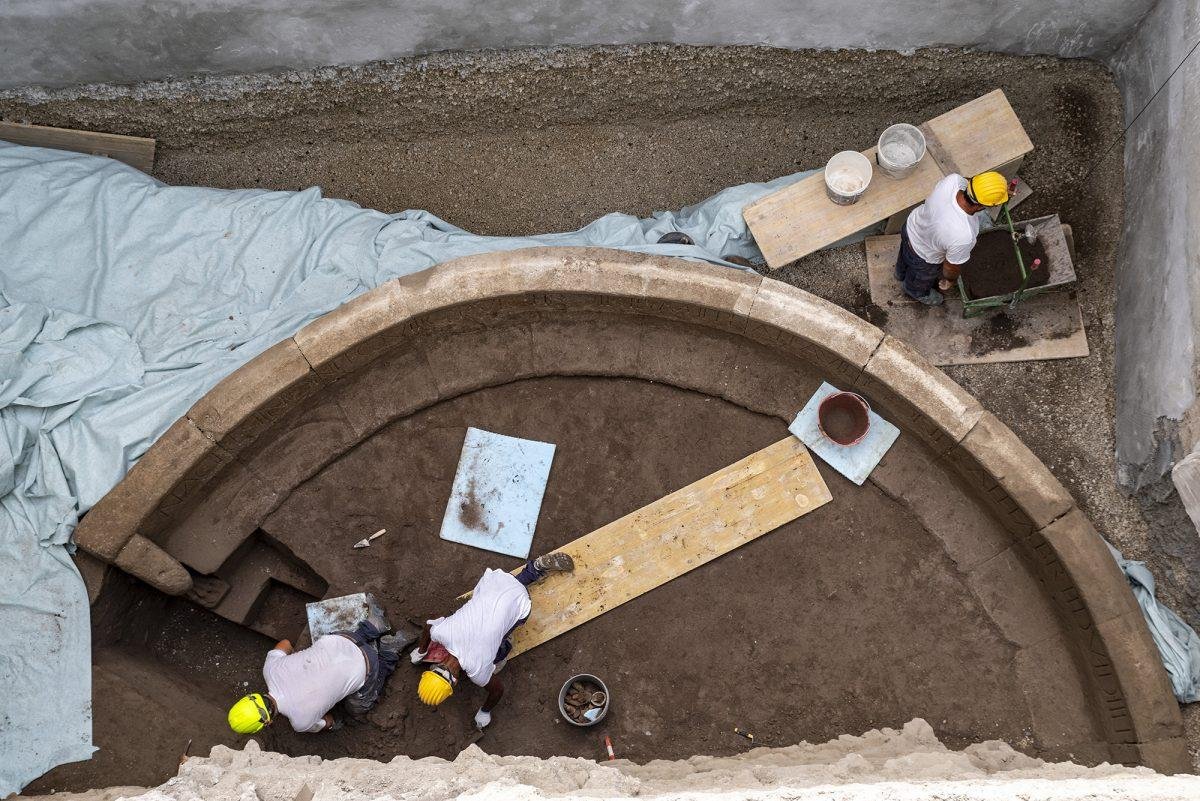
Discovery of military officer’s tomb in Pompeii sheds light on the history of Spain
Courtesy of the Archaeological Park of Pompeii

The tomb’s discovery was announced in the E-Journal of Pompeii Excavations. Notable scholars, including Maria Chiara Scappaticcio, Full Professor of Latin Language and Literature at the University of Naples Federico II, and Alberto Dalla Rosa, Full Professor of Roman History at Université Bordeaux Montaigne, contributed to the reading and interpretation of the inscription found on the tomb.

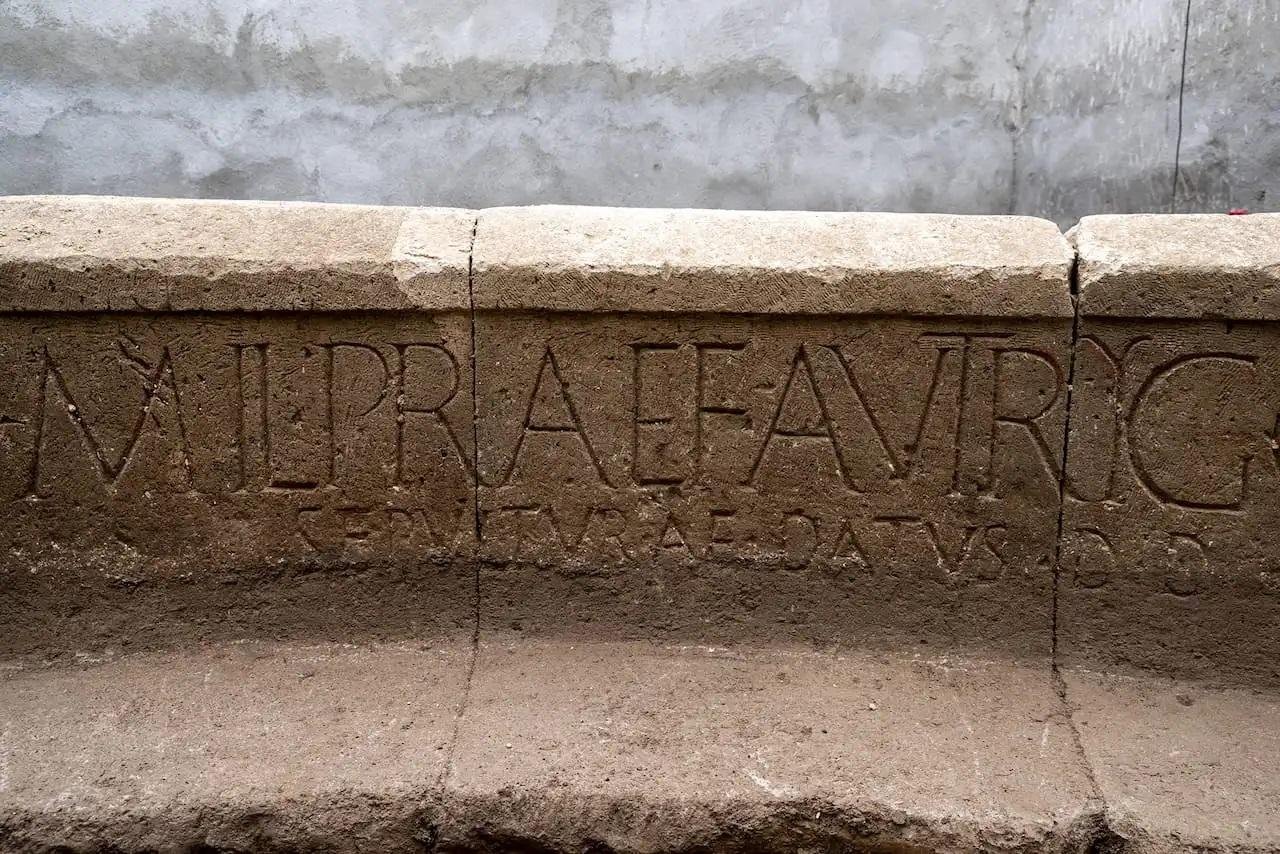
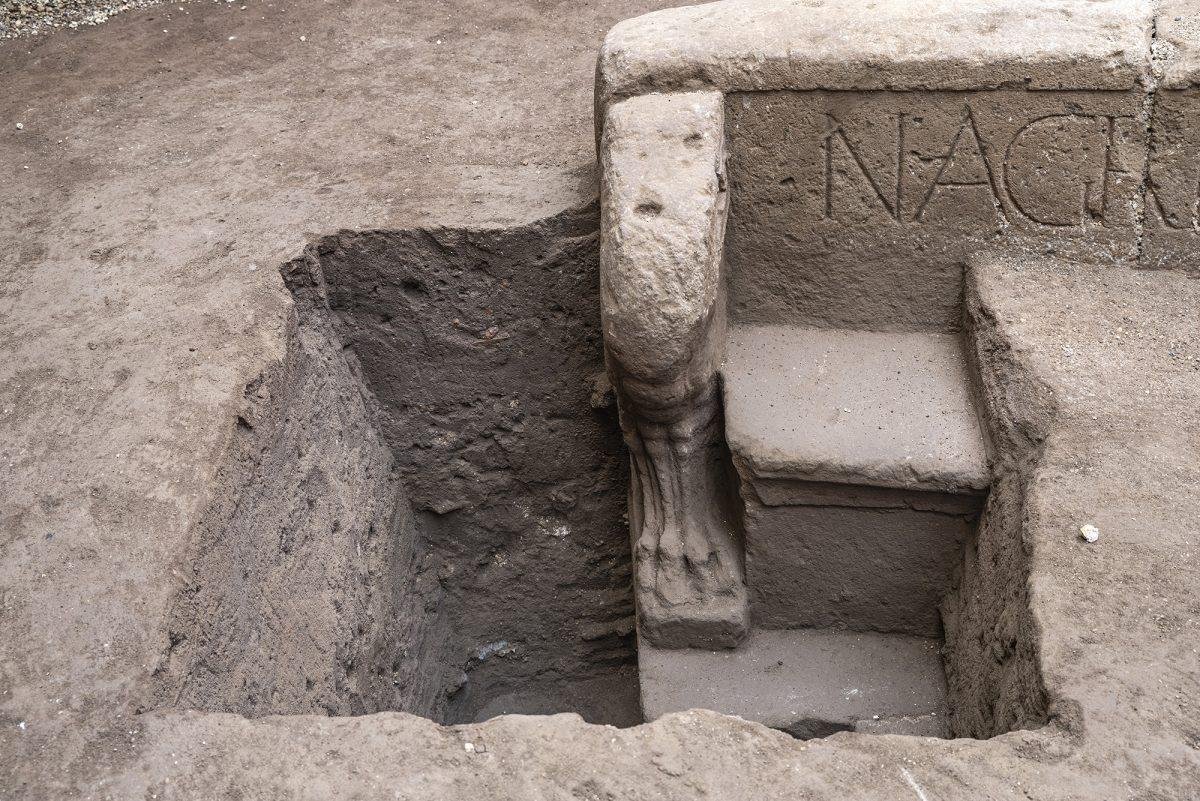
The tomb belonged to Numerius Agrestinus, a highly respected figure in ancient Pompeii. The inscription on the tomb provided significant details about his life and career, revealing a man who held several prestigious titles and roles. It reads:

“N(umerius) AGRESTINUS N(umerius) F(ilius) EQUITUS PULCHER TRIB(unus) MIL(itum) PRAEF(ectus) AUTRYGON(um) PRAEF(ectus) FABR(um) II D(uum)V(irus) I(ure) D(icundo) ITER(um) LOCUS SEPULTURAE DATUS D(ecreto) D(ecurionum)”
Discovery of military officer’s tomb in Pompeii sheds light on the history of Spain
Courtesy of the Archaeological Park of Pompeii

Translated, it honors Numerius Agrestinus, the son of Numerius, who was a Just Knight, military tribune, prefect of the Autrygoni, prefect of engineers, and twice held the position of Duumvir by jurisdiction. His burial place was granted by decree of the city council. This inscription, beautifully carved in regular letters, even retained remnants of the original red paint inside.

RelatedStories

Archaeologists uncover 2,000-year-old workshops and Roman necropolis in Egypt’s western Nile Delta

Archaeologists uncover 2,000-year-old workshops and Roman necropolis in Egypt’s western Nile Delta

December 31, 2025
2,000-year-old ritual bath (mikveh) discovered beneath Jerusalem’s Western Wall reveals daily life before the Roman destruction

2,000-year-old ritual bath (mikveh) discovered beneath Jerusalem’s Western Wall reveals daily life before the Roman destruction

December 30, 2025

One of the remarkable aspects of this find is that Numerius Agrestinus is also known from another funerary inscription located in the Porta Nocera necropolis. There, his wife, Veia Barchilla, had erected a cylindrical monument for herself and her husband. This suggests that only later did the council of decurions decide to honor Numerius Agrestinus with a monument on public land.
Discovery of military officer’s tomb in Pompeii sheds light on the history of Spain
Courtesy of the Archaeological Park of Pompeii

The title “praefectus Autrygonum” adds a unique element to the historical understanding of the period. The Autrigones were a people from the northern regions of the Iberian Peninsula, where Augustus conducted the Cantabrian wars between 29 and 19 BCE to complete the conquest of Hispania. This previously unattested title helps to shed light on the organization of Roman power during a transitional phase from the Republican to the imperial model.
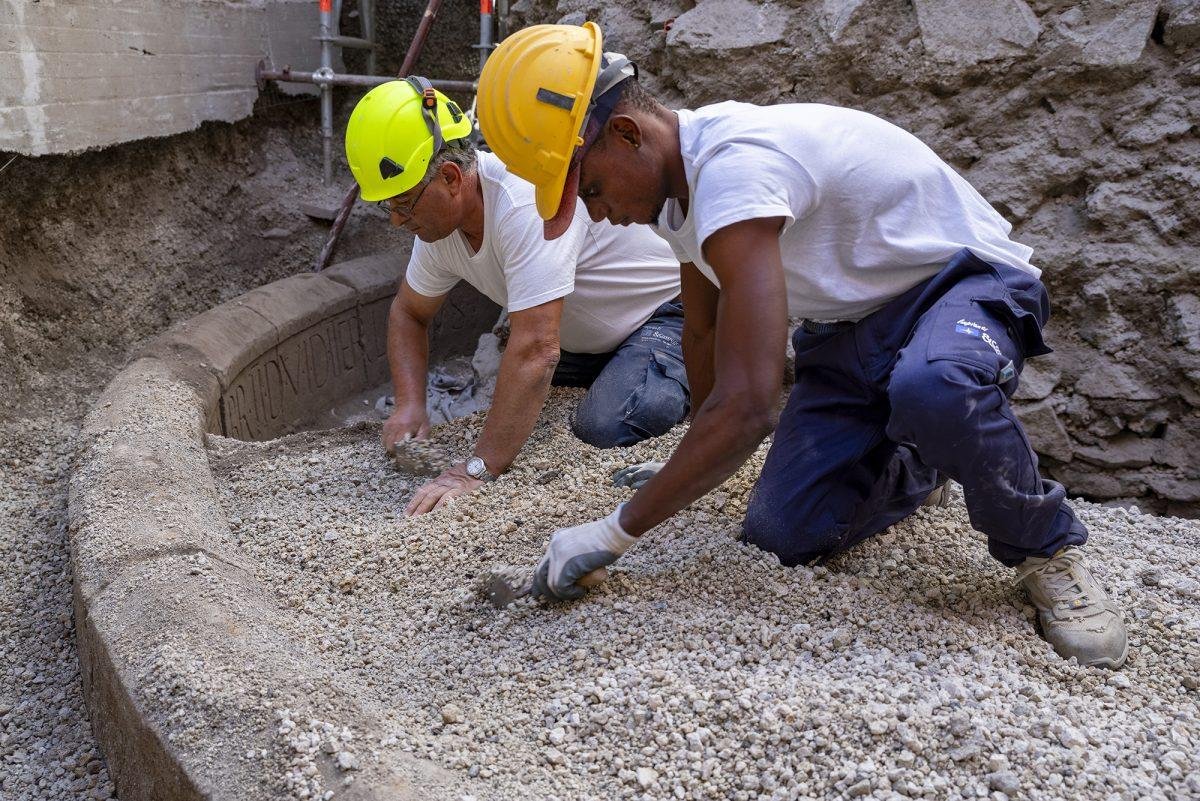
Discovery of military officer’s tomb in Pompeii sheds light on the history of Spain
Courtesy of the Archaeological Park of Pompeii

Massimo Osanna, the Director General of Museums stated: “The discovery of the tomb of Numerius Agrestinus represents a new and important result of a project related to the restructuring of State buildings in the San Paolino area, which already in 2017, as part of the Great Pompeii Project, brought to light extraordinary findings.”
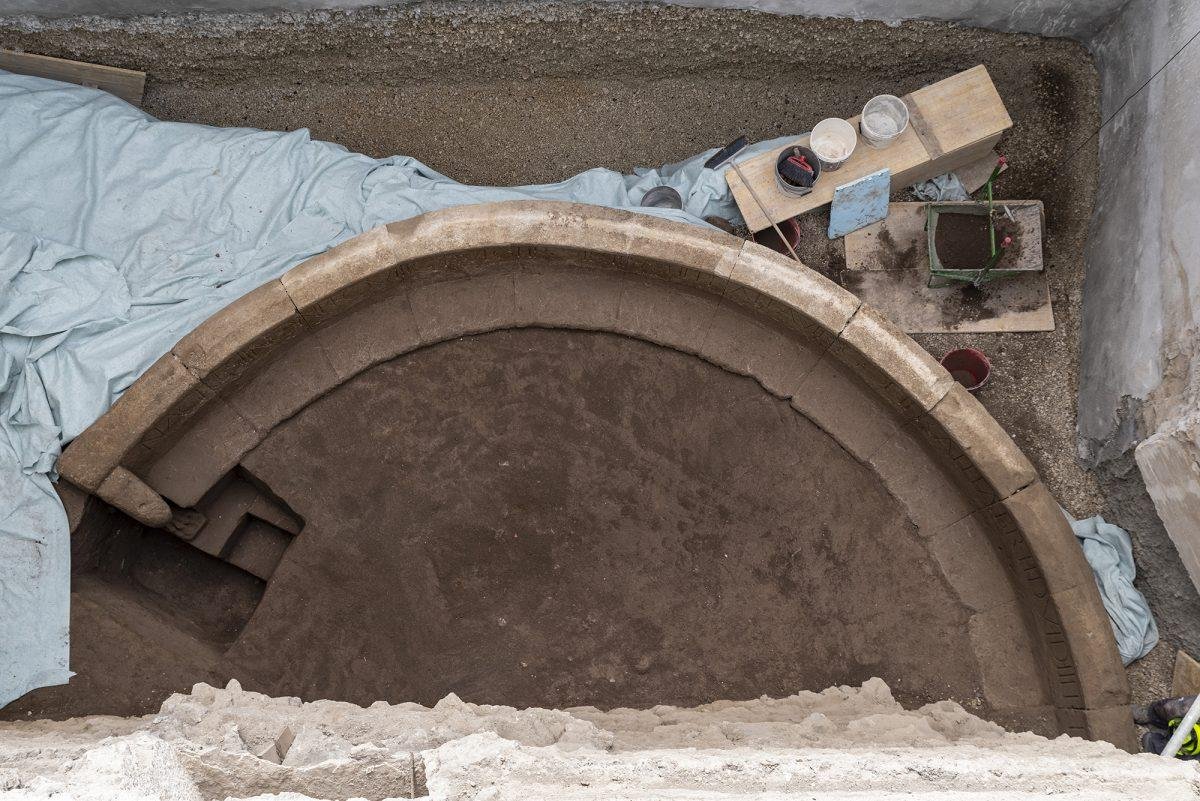
Discovery of military officer’s tomb in Pompeii sheds light on the history of Spain
Courtesy of the Archaeological Park of Pompeii

Gabriel Zuchtriegel, the Director of the Pompeii Archaeological Park, said: “We see here the network of power that connected the elites of the empire, whose members were asked to commit themselves in conflict areas, with the promise of economic rewards but above all of social prestige in their community of residence,” he explained.

Zuchtriegel pointed out that holding the highest magistracy in Pompeii, the duumvirate, twice, and being honored with a funerary monument on public land, are expressions of recognition and loyalty to someone who had fought on the front lines for the empire’s cause. “The unexpected discovery of this monument is yet another example of how in Pompeii, protection, research, and enhancement are closely intertwined,” he added.


Share2Tweet1ShareShareSend

You May Also Like...

1130 depiction of Saxons, Jutes, and Angles crossing the sea to Britain. Credit: Wikimedia / CC BY-SA 4.0. Roots of medieval migration into England uncovered by large-scale bioarchaeological study
Anthropology

Roots of medieval migration into England uncovered by large-scale bioarchaeological study

January 6, 2026
Rare Celtic gold coins found in Swiss bog may reveal ancient ritual offerings
Archaeology

Rare Celtic gold coins found in Swiss bog may reveal ancient ritual offerings

January 5, 2026
Rare medieval gold ring unearthed in Tønsberg
Archaeology

Rare medieval gold ring unearthed in Tønsberg reveals beliefs and craftsmanship of its time

January 5, 2026
Ancient herpesvirus genomes reveal a 2,500-year history of human infection
Anthropology

Ancient herpesvirus genomes reveal a 2,500-year history of human infection

January 4, 2026
A new study suggests the mysterious Voynich Manuscript may be a medieval cipher
Archaeology

A new study suggests the mysterious Voynich Manuscript may be a medieval cipher

January 3, 2026
Inside scoop: the 2,500-year history of ice-cream
Archaeology

Inside scoop: the 2,500-year history of ice-cream

January 3, 2026

Follow us


Instagram
244K

Facebook
118K

Threads
45K

LinkedIn
14K

Twitter
6K

YouTube
1K
  • Trending
  • Comments
  • Latest
Shipwreck Salvage. Credit: rawpixel.com / Public Domain

2,000-year-old shipwreck discovered off Turkish coast with remarkably preserved stacked ceramics

July 2, 2025
Viking age DNA reveals 9,000-year-old HIV-resistant gene originating near the Black Sea

Viking age DNA reveals 9,000-year-old HIV-resistant gene originating near the Black Sea

May 18, 2025
A new study suggests the mysterious Voynich Manuscript may be a medieval cipher

A new study suggests the mysterious Voynich Manuscript may be a medieval cipher

January 3, 2026
Moses may be named in ancient Egyptian mine inscriptions, sparking debate over earliest biblical references

Moses may be named in ancient Egyptian mine inscriptions, sparking debate over earliest biblical references

July 31, 2025
Mystery of Armenia’s 6,000-year-old dragon stones solved

Mystery of Armenia’s 6,000-year-old dragon stones solved

September 23, 2025
3D analysis reveals Shroud of Turin image likely came from sculpture, not Jesus’ body

3D analysis reveals Shroud of Turin image likely came from sculpture, not Jesus’ body

Moses may be named in ancient Egyptian mine inscriptions, sparking debate over earliest biblical references

Moses may be named in ancient Egyptian mine inscriptions, sparking debate over earliest biblical references

$1 million prize offered to decipher 5,300-year-old Indus Valley script

$1 million prize offered to decipher 5,300-year-old Indus Valley script

Oldest ever genetic data from a human relative found in 2-million-year-old fossilized teeth

Oldest ever genetic data from a human relative found in 2-million-year-old fossilized teeth

Exceptionally large Roman shoes discovered at Magna fort near Hadrian’s Wall

Exceptionally large Roman shoes discovered at Magna fort near Hadrian’s Wall

1130 depiction of Saxons, Jutes, and Angles crossing the sea to Britain. Credit: Wikimedia / CC BY-SA 4.0. Roots of medieval migration into England uncovered by large-scale bioarchaeological study

Roots of medieval migration into England uncovered by large-scale bioarchaeological study

January 6, 2026
Rare Celtic gold coins found in Swiss bog may reveal ancient ritual offerings

Rare Celtic gold coins found in Swiss bog may reveal ancient ritual offerings

January 5, 2026
Rare medieval gold ring unearthed in Tønsberg

Rare medieval gold ring unearthed in Tønsberg reveals beliefs and craftsmanship of its time

January 5, 2026
Ancient herpesvirus genomes reveal a 2,500-year history of human infection

Ancient herpesvirus genomes reveal a 2,500-year history of human infection

January 4, 2026
A new study suggests the mysterious Voynich Manuscript may be a medieval cipher

A new study suggests the mysterious Voynich Manuscript may be a medieval cipher

January 3, 2026

Archaeology News online magazine

Archaeology News is an international online magazine that covers all aspects of archaeology.


Categories

  • Academics
    • Books
    • Conferences
    • Universities
  • Articles
  • Download
  • Game
  • News
    • Anthropology
    • Archaeology
    • Paleontology
  • Quiz
  • Tours

Subscribe to our newsletter

© 2024 - Archaeology News Online Magazine. All Rights Reserved.

  • About
  • Privacy Policy
  • Terms of Use
  • Donation
  • Contact

Welcome Back!

Login to your account below

Forgotten Password? Sign Up

Create New Account!

Fill the forms below to register

All fields are required. Log In

Retrieve your password

Please enter your username or email address to reset your password.

Log In

Add New Playlist

Manage Consent
To provide the best experiences, we use technologies like cookies to store and/or access device information. Consenting to these technologies will allow us to process data such as browsing behavior or unique IDs on this site. Not consenting or withdrawing consent, may adversely affect certain features and functions.
Functional Always active
The technical storage or access is strictly necessary for the legitimate purpose of enabling the use of a specific service explicitly requested by the subscriber or user, or for the sole purpose of carrying out the transmission of a communication over an electronic communications network.
Preferences
The technical storage or access is necessary for the legitimate purpose of storing preferences that are not requested by the subscriber or user.
Statistics
The technical storage or access that is used exclusively for statistical purposes. The technical storage or access that is used exclusively for anonymous statistical purposes. Without a subpoena, voluntary compliance on the part of your Internet Service Provider, or additional records from a third party, information stored or retrieved for this purpose alone cannot usually be used to identify you.
Marketing
The technical storage or access is required to create user profiles to send advertising, or to track the user on a website or across several websites for similar marketing purposes.
  • Manage options
  • Manage services
  • Manage {vendor_count} vendors
  • Read more about these purposes
View preferences
  • {title}
  • {title}
  • {title}
  • Home
  • News
    • Archaeology
    • Anthropology
    • Paleontology
  • Academic
    • Books
    • Conferences
    • Universities
  • Articles
  • VR Tours
  • Quiz & Game
  • Download
  • Encyclopedia
  • Forum

About  .  Contact  .  Donation

© 2024 - Archaeology News Online Magazine. All Rights Reserved