• About
  • Privacy Policy
  • Terms of Use
  • Donation
  • Contact
No Result
View All Result
Archaeology News
  • Home
  • News
    • Archaeology
    • Anthropology
    • Paleontology
  • Academic
    • Books
    • Conferences
    • Universities
  • Articles
  • VR Tours
  • Quiz & Game
  • Download
  • Encyclopedia
  • Forum
Archaeology News
No Result
View All Result
Home News Archaeology

Stunning Bronze Age burial chamber unearthed on Dartmoor

by Dario Radley
August 23, 2024

Archaeologists from the Dartmoor National Park Authority have unearthed a Bronze Age burial chamber, known as a cist, on Cut Hill, an isolated hill within the park. This remarkable find could provide new insights into life on Dartmoor nearly 4,000 years ago.
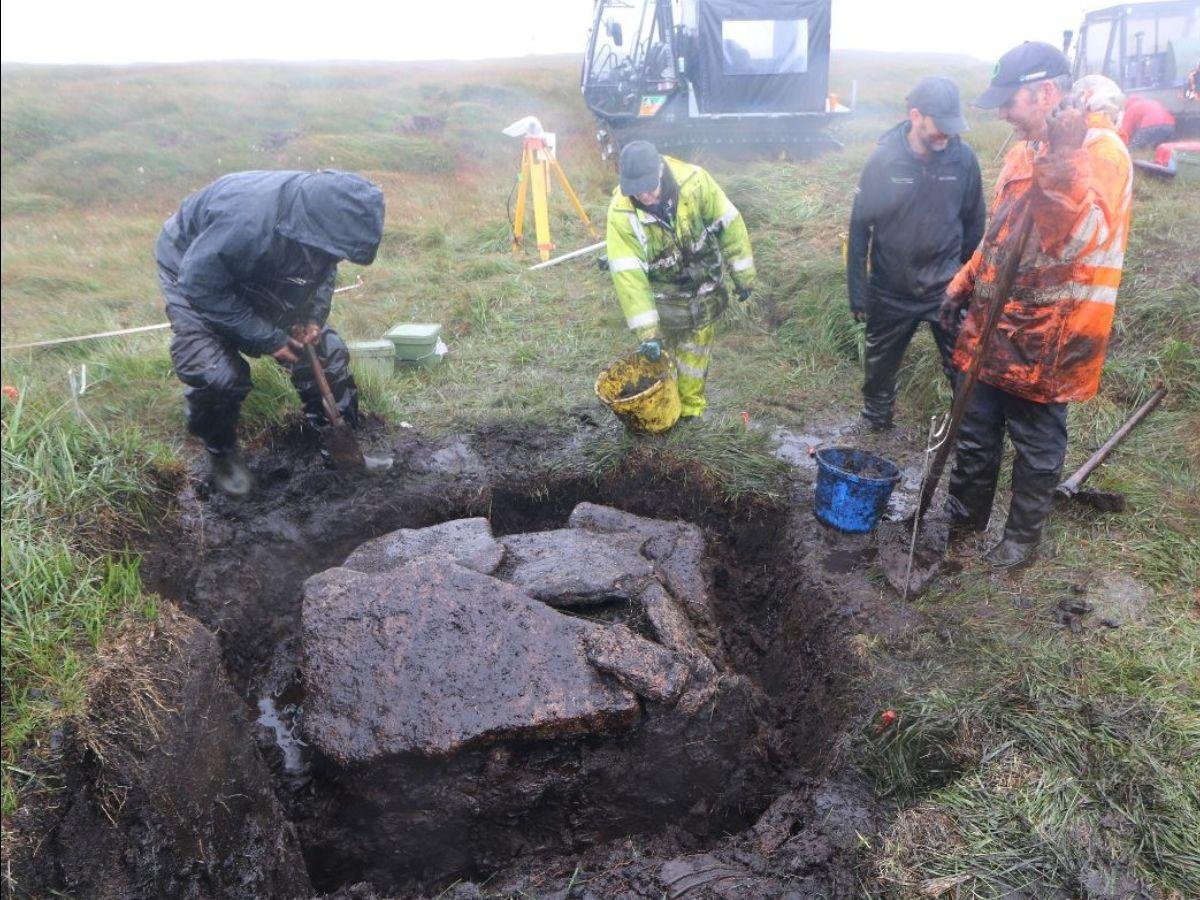
Stunning Bronze Age burial chamber unearthed on Dartmoor
The burial cist is believed to be almost 4,000 years old. Credit: Alec Collyer

The burial chamber, constructed from stone slabs, was discovered following reports of a feature becoming visible in the peat. Archaeologist Dr. Lee Bray, who led the excavation, described the moment the team opened the cist as awe-inspiring. “We were all pretty speechless when we lifted the capstone and looked inside,” he said. “Not only is the cist bigger than we expected, but it contained multiple pieces of wood that appear to have been deliberately shaped and cut. This prompts more questions: could the wood have been an object that was dismantled and deliberately placed inside the grave? If so, what was it and who did it belong to?”

The chamber measures approximately one meter square and was topped with three large granite capstones. Inside, alongside the wooden fragments, archaeologists discovered various other materials that have yet to be identified. Radiocarbon dating of charcoal found within the cist suggests that it dates back to around 1800 BCE, making it nearly 3,900 years old.

The discovery has striking similarities to the 2011 excavation of a cist at Whitehorse Hill, also on Dartmoor, which contained the cremated remains of a young adult along with a range of artifacts, including a bearskin pelt, textiles, and a necklace made of beads crafted from materials like clay, shale, tin, and amber.

Like the Whitehorse Hill cist, the Cut Hill chamber was found in a boggy area, a location that, due to its waterlogged conditions, is excellent for preserving organic materials. “Bogs are oxygen-free, and their tannin-rich environment prevents decay, making them ideal for preserving ancient remains,” explained Ralph Fyfe, Professor in Geospatial Information at the University of Plymouth, who has been involved in both the Whitehorse Hill and Cut Hill excavations.


RelatedStories

How ancient communities adapted their diets and farming strategies in prehistoric Poland

How ancient communities adapted their diets and farming strategies in prehistoric Poland

February 26, 2026
Oldest indigo-dyed textiles and nålbinding technique found in Bronze Age Anatolia

Oldest indigo-dyed textiles and nålbinding technique found in Bronze Age Anatolia

February 21, 2026

The Cut Hill cist is more than twice the size of the one found at Whitehorse Hill, suggesting the possibility of uncovering even more artifacts. Dr. Bray emphasized the meticulous care needed in the excavation process: “The volume of material under the wood reaches a depth of about 30cm, so there’s every chance it contains objects or artifacts we can’t see yet. The next stage is for micro-excavations to determine what’s in there. It’s very detailed work that’ll take time to complete, but we’re all very excited about it.”

This discovery is part of a larger project involving a collaboration of experts from various institutions, including the Cornwall Archaeological Unit, the University of Leicester, and the University of Plymouth.

Looking ahead, the team plans to conduct further micro-excavations and analyses at the Wiltshire Conservation and Museums Advisory Service, where the cist has been moved. As Andy Jones from the Cornwall Archaeological Unit noted, “The current excavations have the potential to yield similarly exciting results, which will help us understand how people lived and died on Dartmoor nearly 4,000 years ago.”


Dartmoor National Park Authority

Share1Tweet1ShareShareSend

You May Also Like...

Lost medieval hillfort discovered in Poland’s Włodawa Forest reveals 244 artifacts from the 10th–13th centuries
Archaeology

Medieval hillfort discovered in Poland’s Włodawa Forest reveals 244 artifacts from the 10th–13th centuries

February 27, 2026
Male Neanderthals and female Homo sapiens shaped ancient interbreeding in the modern human genome, study finds
Anthropology

Male Neanderthals and female humans shaped modern DNA through ancient interbreeding, study finds

February 27, 2026
Medieval monastery remains discovered beneath Borken’s historic center in Germany
Archaeology

Medieval monastery remains discovered beneath Borken’s historic center in Germany

February 26, 2026
How ancient communities adapted their diets and farming strategies in prehistoric Poland
Anthropology

How ancient communities adapted their diets and farming strategies in prehistoric Poland

February 26, 2026
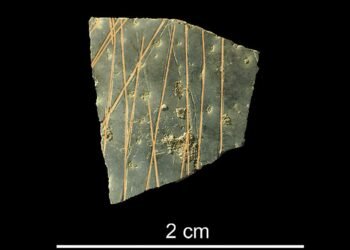
60,000-year-old ostrich eggshell engravings reveal humanity’s earliest geometric designs
Archaeology

60,000-year-old ostrich eggshell engravings reveal humanity’s earliest geometric designs

February 26, 2026
Mesolithic burials in Sweden show ancient fur and feather headgear uncovered by new microscopic analysis
Anthropology

Mesolithic burials in Sweden show ancient fur and feather headgear uncovered by new microscopic analysis

February 25, 2026

Comments 1

  1. Editorial Team says:
    1 second ago

    Disclaimer: This website is a science-focused magazine that welcomes both academic and non-academic audiences. Comments are written by users and may include personal opinions or unverified claims. They do not necessarily reflect the views of our editorial team or rely on scientific evidence.

    Comment Policy: We kindly ask all commenters to engage respectfully. Comments that contain offensive, insulting, degrading, discriminatory, or racist content will be automatically removed.

  2. Ana Hezeltine says:
    2 years ago

    Wonderful articles thank you

Follow us


Instagram
244K

Facebook
118K

Threads
46K

LinkedIn
14K

Twitter
6K

YouTube
1K
  • Trending
  • Comments
  • Latest
Shipwreck Salvage. Credit: rawpixel.com / Public Domain

2,000-year-old shipwreck discovered off Turkish coast with remarkably preserved stacked ceramics

July 2, 2025
Viking age DNA reveals 9,000-year-old HIV-resistant gene originating near the Black Sea

Viking age DNA reveals 9,000-year-old HIV-resistant gene originating near the Black Sea

May 18, 2025
A new study suggests the mysterious Voynich Manuscript may be a medieval cipher

A new study suggests the mysterious Voynich Manuscript may be a medieval cipher

January 3, 2026
Moses may be named in ancient Egyptian mine inscriptions, sparking debate over earliest biblical references

Moses may be named in ancient Egyptian mine inscriptions, sparking debate over earliest biblical references

July 31, 2025
Mystery of Armenia’s 6,000-year-old dragon stones solved

Mystery of Armenia’s 6,000-year-old dragon stones solved

September 23, 2025
3D analysis reveals Shroud of Turin image likely came from sculpture, not Jesus’ body

3D analysis reveals Shroud of Turin image likely came from sculpture, not Jesus’ body

Moses may be named in ancient Egyptian mine inscriptions, sparking debate over earliest biblical references

Moses may be named in ancient Egyptian mine inscriptions, sparking debate over earliest biblical references

$1 million prize offered to decipher 5,300-year-old Indus Valley script

$1 million prize offered to decipher 5,300-year-old Indus Valley script

Oldest ever genetic data from a human relative found in 2-million-year-old fossilized teeth

Oldest ever genetic data from a human relative found in 2-million-year-old fossilized teeth

Exceptionally large Roman shoes discovered at Magna fort near Hadrian’s Wall

Exceptionally large Roman shoes discovered at Magna fort near Hadrian’s Wall

Lost medieval hillfort discovered in Poland’s Włodawa Forest reveals 244 artifacts from the 10th–13th centuries

Medieval hillfort discovered in Poland’s Włodawa Forest reveals 244 artifacts from the 10th–13th centuries

February 27, 2026
Male Neanderthals and female Homo sapiens shaped ancient interbreeding in the modern human genome, study finds

Male Neanderthals and female humans shaped modern DNA through ancient interbreeding, study finds

February 27, 2026
Medieval monastery remains discovered beneath Borken’s historic center in Germany

Medieval monastery remains discovered beneath Borken’s historic center in Germany

February 26, 2026
How ancient communities adapted their diets and farming strategies in prehistoric Poland

How ancient communities adapted their diets and farming strategies in prehistoric Poland

February 26, 2026
60,000-year-old ostrich eggshell engravings reveal humanity’s earliest geometric designs

60,000-year-old ostrich eggshell engravings reveal humanity’s earliest geometric designs

February 26, 2026

Archaeology News online magazine

Archaeology News is an international online magazine that covers all aspects of archaeology.


Categories

  • Academics
    • Books
    • Conferences
    • Universities
  • Articles
  • Download
  • Game
  • News
    • Anthropology
    • Archaeology
    • Paleontology
  • Quiz
  • Tours

Subscribe to our newsletter

© 2024 - Archaeology News Online Magazine. All Rights Reserved.

  • About
  • Privacy Policy
  • Terms of Use
  • Donation
  • Contact

Manage Consent
To provide the best experiences, we use technologies like cookies to store and/or access device information. Consenting to these technologies will allow us to process data such as browsing behavior or unique IDs on this site. Not consenting or withdrawing consent, may adversely affect certain features and functions.
Functional Always active
The technical storage or access is strictly necessary for the legitimate purpose of enabling the use of a specific service explicitly requested by the subscriber or user, or for the sole purpose of carrying out the transmission of a communication over an electronic communications network.
Preferences
The technical storage or access is necessary for the legitimate purpose of storing preferences that are not requested by the subscriber or user.
Statistics
The technical storage or access that is used exclusively for statistical purposes. The technical storage or access that is used exclusively for anonymous statistical purposes. Without a subpoena, voluntary compliance on the part of your Internet Service Provider, or additional records from a third party, information stored or retrieved for this purpose alone cannot usually be used to identify you.
Marketing
The technical storage or access is required to create user profiles to send advertising, or to track the user on a website or across several websites for similar marketing purposes.
  • Manage options
  • Manage services
  • Manage {vendor_count} vendors
  • Read more about these purposes
View preferences
  • {title}
  • {title}
  • {title}
  • Home
  • News
    • Archaeology
    • Anthropology
    • Paleontology
  • Academic
    • Books
    • Conferences
    • Universities
  • Articles
  • VR Tours
  • Quiz & Game
  • Download
  • Encyclopedia
  • Forum

About  .  Contact  .  Donation

© 2024 - Archaeology News Online Magazine. All Rights Reserved