• About
  • Privacy Policy
  • Terms of Use
  • Donation
  • Contact
No Result
View All Result
Archaeology News
  • Home
  • News
    • Archaeology
    • Anthropology
    • Paleontology
  • Academic
    • Books
    • Conferences
    • Universities
  • Articles
  • VR Tours
  • Quiz & Game
  • Download
  • Encyclopedia
  • Forum
Archaeology News
No Result
View All Result
Home News Archaeology

Oldest indigo-dyed textiles and nålbinding technique found in Bronze Age Anatolia

by Dario Radley
February 21, 2026

Excavations at Beycesultan Höyük in western Turkey have produced two small pieces of fabric from the Bronze Age. They were found between 2016 and 2018 in layers damaged by fire. The settlement lies near modern Çivril in Denizli Province and dates to the Middle and Late Bronze Age. The study, led by Assoc. Prof. Dr. Çiğdem Maner of Koç University, appeared in the journal Antiquity.
Oldest indigo-dyed textiles and nålbinding technique found in Bronze Age Anatolia
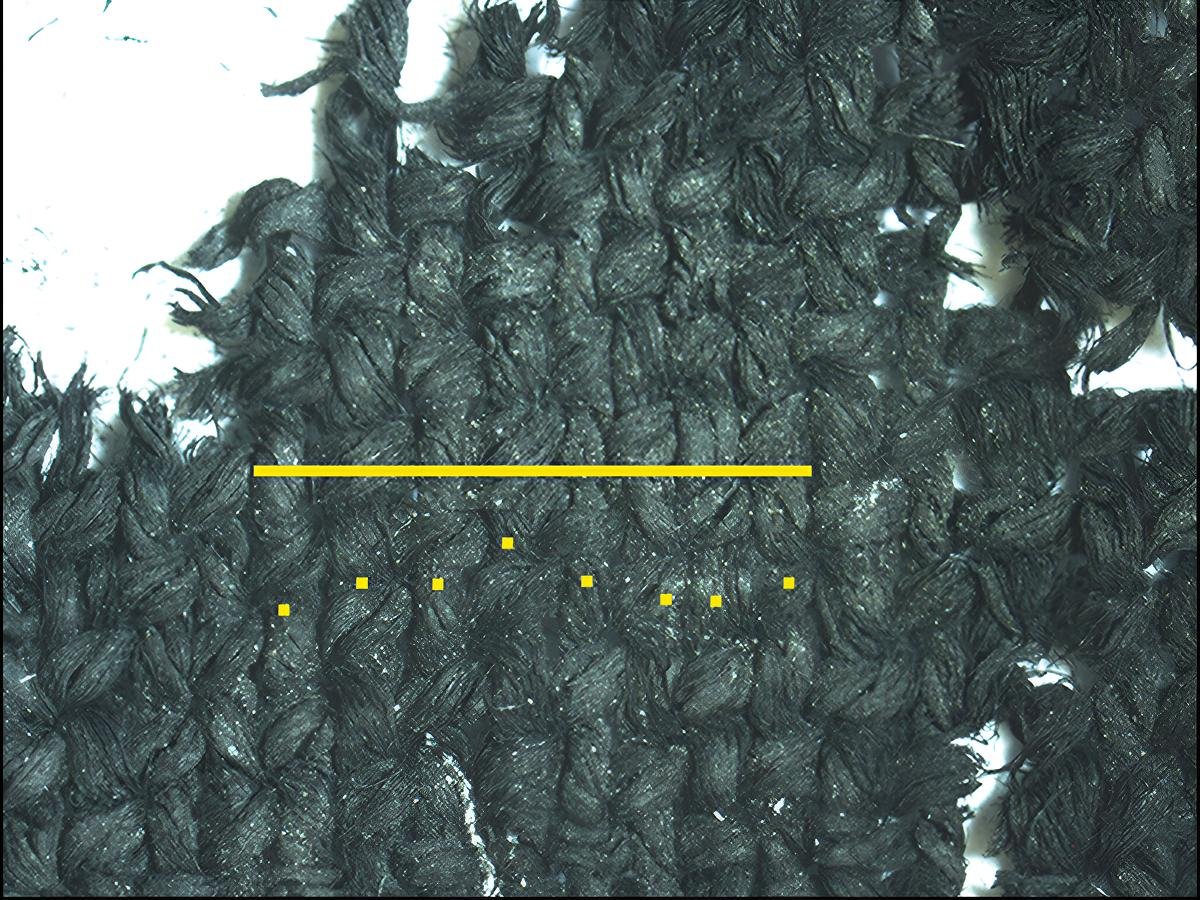
Optical microscope image of Tx2 (C; yellow scale bar = 5436.690μm). Credit: images courtesy of the Datu Lab / Maner et al., Antiquity (2025)

Textiles rarely survive in Anatolia. Humid soil destroys organic material over time. Earlier excavations at Beycesultan uncovered large buildings burned in antiquity, yet almost no fabric remained. Fire carbonized these two fragments and helped preserve them for nearly four thousand years.

The earlier fragment, known as Tx1, dates to about 1915 to 1745 BCE. Radiocarbon samples place the cloth in the period of the Old Assyrian trading colonies. Under the microscope, researchers saw loops formed with a single needle. This method, called nålbinding, differs from loom weaving. Instead of interlacing warp and weft threads, the maker formed loops by hand with one needle and a length of yarn. No previous example of this technique has been identified in Anatolia or the wider Near East.

Laboratory tests showed the fiber came from hemp. Chemical analysis detected indigotin, the compound responsible for blue dye. The source was likely woad, a plant native to Anatolia. This fragment now stands as the earliest known blue-dyed textile from Bronze Age Anatolia.
Oldest indigo-dyed textiles and nålbinding technique found in Bronze Age Anatolia
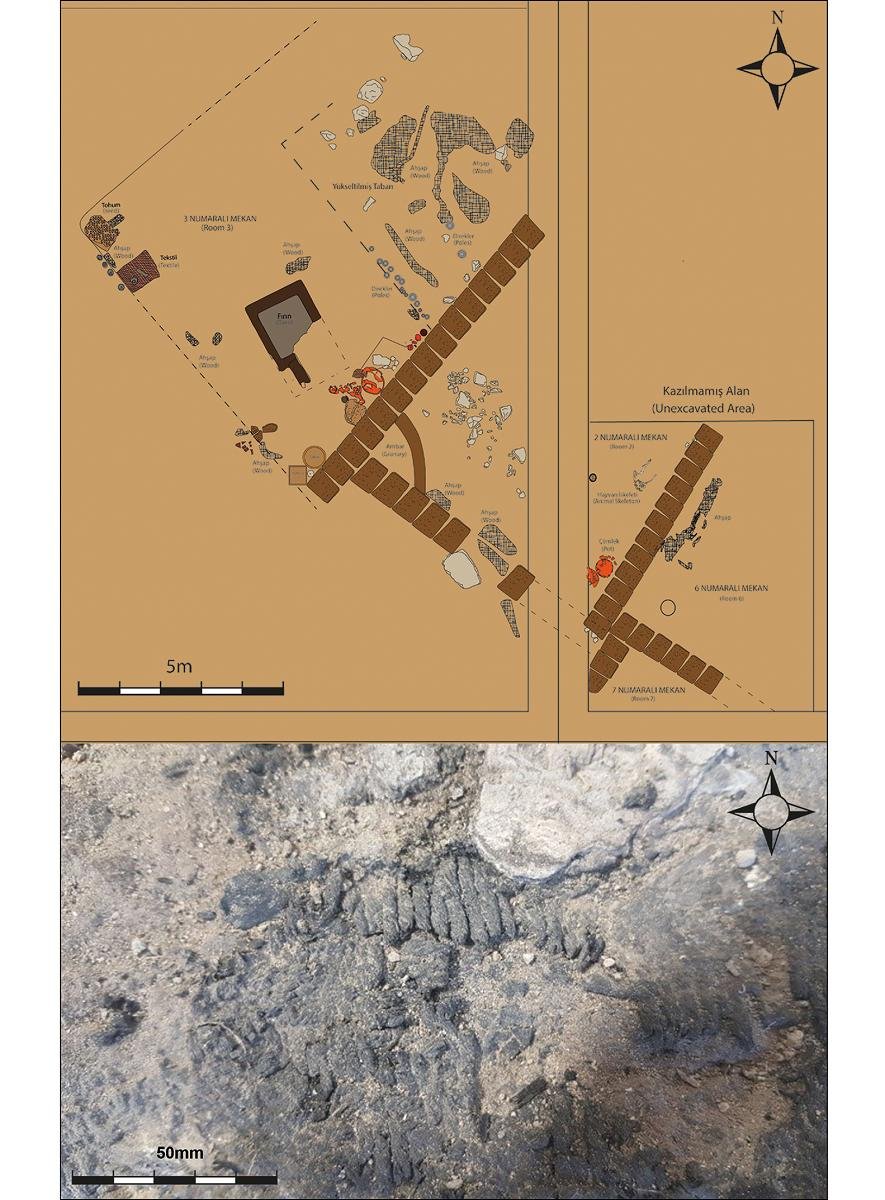
Site plan showing the location of Tx1 in Room 3 of the Middle Bronze Age house (above) and an excavation photograph showing Tx1 in situ (below). Credit: photograph courtesy of the Beycesultan archive; figure: Maner et al., Antiquity (2025)

The second piece, Tx2, dates to around 1700 to 1595 BCE, during the Old Hittite period. This cloth has a plain tabby weave, produced on a loom. The fiber again proved to be hemp. Plain tabby textiles appear rarely in Bronze Age contexts across Anatolia, Mesopotamia, and the Caucasus. The find supports the use of a warp-weighted loom at Beycesultan.

RelatedStories

Rare Bronze Age burial in Sweden reveals unusual pair of Wendel neck rings and complex ritual landscape near Norrköping

Rare Bronze Age burial in Sweden reveals unusual pair of Wendel neck rings and complex ritual landscape near Norrköping

May 12, 2026
Rare Bronze Age hoard of 18 bronze anklets and bracelets uncovered in Poland

Rare Bronze Age hoard of 18 bronze anklets and bracelets uncovered in Poland

May 10, 2026

Both fragments came from rooms filled with textile tools. Excavators recovered spindle whorls in different sizes, loom weights, and needles. A disk-shaped stone weight lay directly on top of the indigo-dyed cloth. Postholes in the same space mark where a loom once stood. These finds point to organized production rather than casual repair work.

Written records from the Old Assyrian and Hittite periods describe large-scale textile manufacture and trade. Tablets list wool, dyed garments, and taxes paid in cloth. Blue fabrics appear among goods associated with elite households and royal exchange. Similar blue textiles have been recovered from high-status burials in Egypt and appear in Aegean wall paintings.

No cuneiform tablets have been found at Beycesultan, and the ancient name of the settlement remains unknown. The scale of its buildings and the concentration of tools suggest a center with regional influence. The two fragments show that local producers worked with hemp, applied complex techniques such as nålbinding, and used plant-based dyes to create high-value textiles alongside everyday cloth.
More information: Maner, Ç., Abay, E., Karadağ, R., & Torgan Güzel, E. (2025). Untwisting Beycesultan Höyük: the earliest evidence for nålbinding and indigo-dyed textiles in Anatolia. Antiquity, 99(403), 118–134. doi:10.15184/aqy.2024.194
Share60Tweet38Share11ShareSend

You May Also Like...

280 ancient stone burial monuments found in Sudan reveal lost cattle-herding culture in the Sahara
Archaeology

280 ancient stone burial monuments found in Sudan reveal lost cattle-herding culture in the Sahara

May 13, 2026
Rare Bronze Age burial in Sweden reveals unusual pair of Wendel neck rings and complex ritual landscape near Norrköping
Archaeology

Rare Bronze Age burial in Sweden reveals unusual pair of Wendel neck rings and complex ritual landscape near Norrköping

May 12, 2026
Kasta Tomb in Amphipolis fully revealed as restoration uncovers largest burial mound in Macedonia
Archaeology

Kasta Tomb in Amphipolis fully revealed as restoration uncovers largest burial mound in Macedonia

May 12, 2026
Rare Roman villa threatened by farming damage reveals rare mosaic and bathhouse remains in Devon
Archaeology

Rare Roman villa threatened by farming damage reveals rare mosaic and bathhouse remains in Devon

May 12, 2026
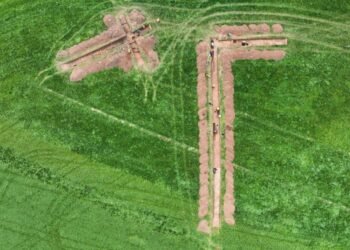
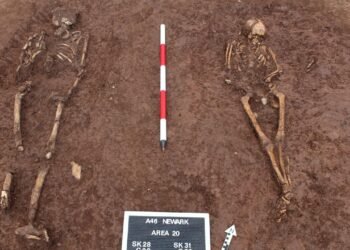
Ancient burials, Roman well, and Anglo-Saxon house uncovered during A46 Newark bypass excavations
Anthropology

Ancient burials, Roman well, and Anglo-Saxon house uncovered during A46 Newark bypass excavations

May 12, 2026
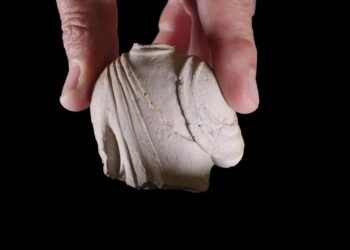
8-year-old boy finds 1,700-year-old Roman statuette fragment in Ramon Crater
Archaeology

8-year-old boy finds 1,700-year-old Roman statuette fragment in Ramon Crater

May 11, 2026

Comments 1

  1. Editorial Team says:
    1 second ago

    Disclaimer: This website is a science-focused magazine that welcomes both academic and non-academic audiences. Comments are written by users and may include personal opinions or unverified claims. They do not necessarily reflect the views of our editorial team or rely on scientific evidence.

    Comment Policy: We kindly ask all commenters to engage respectfully. Comments that contain offensive, insulting, degrading, discriminatory, or racist content will be automatically removed.

    Reply
  2. Amy Jo Parr says:
    3 months ago

    Nice work! Hope the weaver survived to weave another day..

    Reply

Leave a Reply Cancel reply

Your email address will not be published. Required fields are marked *

Follow us


Instagram
242K

Facebook
117K

Threads
46K

LinkedIn
14K

Twitter
6K

YouTube
1K
  • Trending
  • Comments
  • Latest
Shipwreck Salvage. Credit: rawpixel.com / Public Domain

2,000-year-old shipwreck discovered off Turkish coast with remarkably preserved stacked ceramics

July 2, 2025
A new study suggests the mysterious Voynich Manuscript may be a medieval cipher

A new study suggests the mysterious Voynich Manuscript may be a medieval cipher

January 3, 2026
Viking age DNA reveals 9,000-year-old HIV-resistant gene originating near the Black Sea

Viking age DNA reveals 9,000-year-old HIV-resistant gene originating near the Black Sea

May 18, 2025
3D analysis reveals Shroud of Turin image likely came from sculpture, not Jesus’ body

3D analysis reveals Shroud of Turin image likely came from sculpture, not Jesus’ body

August 3, 2025
Moses may be named in ancient Egyptian mine inscriptions, sparking debate over earliest biblical references

Moses may be named in ancient Egyptian mine inscriptions, sparking debate over earliest biblical references

July 31, 2025
3D analysis reveals Shroud of Turin image likely came from sculpture, not Jesus’ body

3D analysis reveals Shroud of Turin image likely came from sculpture, not Jesus’ body

Moses may be named in ancient Egyptian mine inscriptions, sparking debate over earliest biblical references

Moses may be named in ancient Egyptian mine inscriptions, sparking debate over earliest biblical references

$1 million prize offered to decipher 5,300-year-old Indus Valley script

$1 million prize offered to decipher 5,300-year-old Indus Valley script

Oldest ever genetic data from a human relative found in 2-million-year-old fossilized teeth

Oldest ever genetic data from a human relative found in 2-million-year-old fossilized teeth

Exceptionally large Roman shoes discovered at Magna fort near Hadrian’s Wall

Exceptionally large Roman shoes discovered at Magna fort near Hadrian’s Wall

280 ancient stone burial monuments found in Sudan reveal lost cattle-herding culture in the Sahara

280 ancient stone burial monuments found in Sudan reveal lost cattle-herding culture in the Sahara

May 13, 2026
Rare Bronze Age burial in Sweden reveals unusual pair of Wendel neck rings and complex ritual landscape near Norrköping

Rare Bronze Age burial in Sweden reveals unusual pair of Wendel neck rings and complex ritual landscape near Norrköping

May 12, 2026
Kasta Tomb in Amphipolis fully revealed as restoration uncovers largest burial mound in Macedonia

Kasta Tomb in Amphipolis fully revealed as restoration uncovers largest burial mound in Macedonia

May 12, 2026
Rare Roman villa threatened by farming damage reveals rare mosaic and bathhouse remains in Devon

Rare Roman villa threatened by farming damage reveals rare mosaic and bathhouse remains in Devon

May 12, 2026
Ancient burials, Roman well, and Anglo-Saxon house uncovered during A46 Newark bypass excavations

Ancient burials, Roman well, and Anglo-Saxon house uncovered during A46 Newark bypass excavations

May 12, 2026

Archaeology News online magazine

Archaeology News is an international online magazine that covers all aspects of archaeology.


Categories

  • Academics
    • Books
    • Conferences
    • Universities
  • Articles
  • Download
  • Game
  • News
    • Anthropology
    • Archaeology
    • Paleontology
  • Quiz
  • Tours

Subscribe to our newsletter

© 2024 - Archaeology News Online Magazine. All Rights Reserved.

  • About
  • Privacy Policy
  • Terms of Use
  • Donation
  • Contact

Manage Consent
To provide the best experiences, we use technologies like cookies to store and/or access device information. Consenting to these technologies will allow us to process data such as browsing behavior or unique IDs on this site. Not consenting or withdrawing consent, may adversely affect certain features and functions.
Functional Always active
The technical storage or access is strictly necessary for the legitimate purpose of enabling the use of a specific service explicitly requested by the subscriber or user, or for the sole purpose of carrying out the transmission of a communication over an electronic communications network.
Preferences
The technical storage or access is necessary for the legitimate purpose of storing preferences that are not requested by the subscriber or user.
Statistics
The technical storage or access that is used exclusively for statistical purposes. The technical storage or access that is used exclusively for anonymous statistical purposes. Without a subpoena, voluntary compliance on the part of your Internet Service Provider, or additional records from a third party, information stored or retrieved for this purpose alone cannot usually be used to identify you.
Marketing
The technical storage or access is required to create user profiles to send advertising, or to track the user on a website or across several websites for similar marketing purposes.
  • Manage options
  • Manage services
  • Manage {vendor_count} vendors
  • Read more about these purposes
View preferences
  • {title}
  • {title}
  • {title}
  • Home
  • News
    • Archaeology
    • Anthropology
    • Paleontology
  • Academic
    • Books
    • Conferences
    • Universities
  • Articles
  • VR Tours
  • Quiz & Game
  • Download
  • Encyclopedia
  • Forum

About  .  Contact  .  Donation

© 2024 - Archaeology News Online Magazine. All Rights Reserved