• About
  • Privacy Policy
  • Terms of Use
  • Donation
  • Contact
No Result
View All Result
Archaeology News
  • Home
  • News
    • Archaeology
    • Anthropology
    • Paleontology
  • Academic
    • Books
    • Conferences
    • Universities
  • Articles
  • VR Tours
  • Quiz & Game
  • Download
  • Encyclopedia
  • Forum
Archaeology News
No Result
View All Result
Home News Archaeology

8,000-year-old dwelling found in Serbia belonged to Europe’s first sedentary farmers

by Dario Radley
October 23, 2024

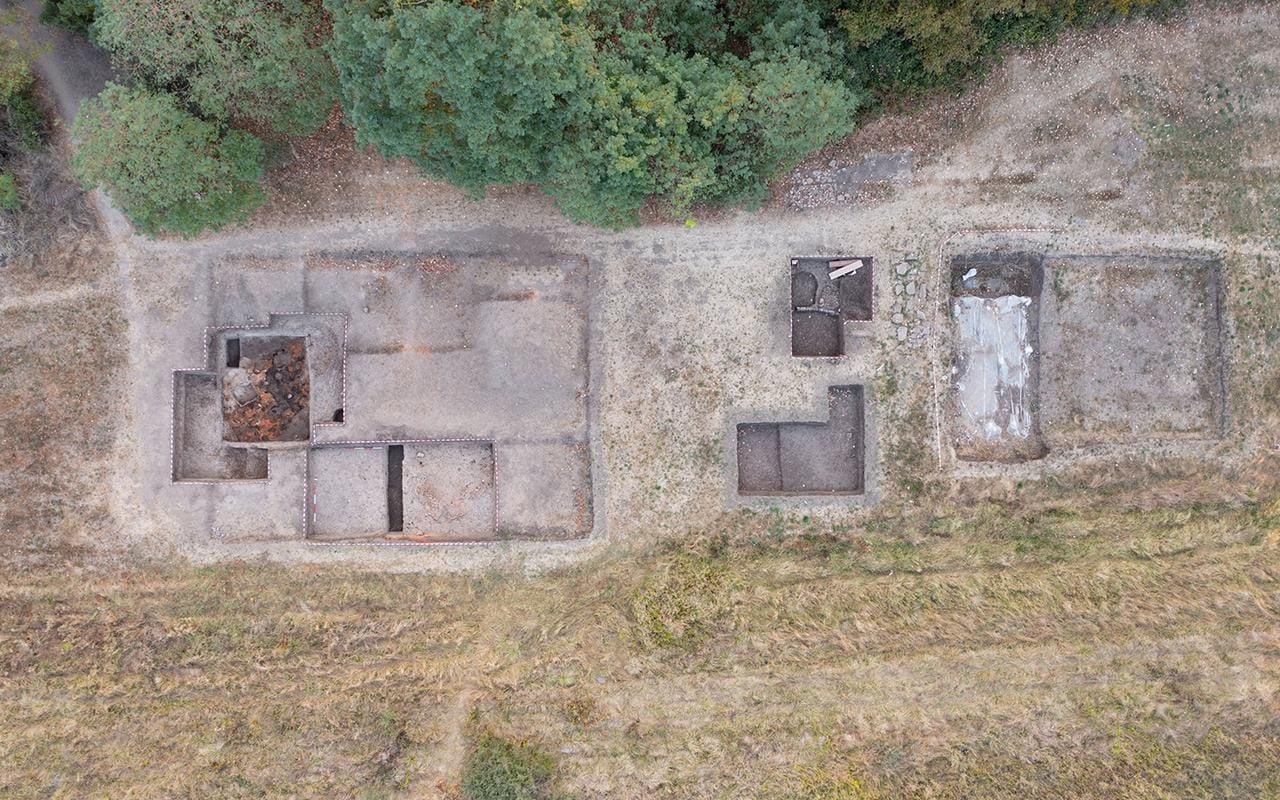
A team of Austrian and Serbian archaeologists, led by the Austrian Academy of Sciences (ÖAW), has unearthed an 8,000-year-old rectangular dwelling in Svinjarička Čuka, an area associated with the Starčevo culture, one of Europe’s earliest farming societies.
8,000-year-old dwelling found in Serbia belonged to Europe's first sedentary farmers
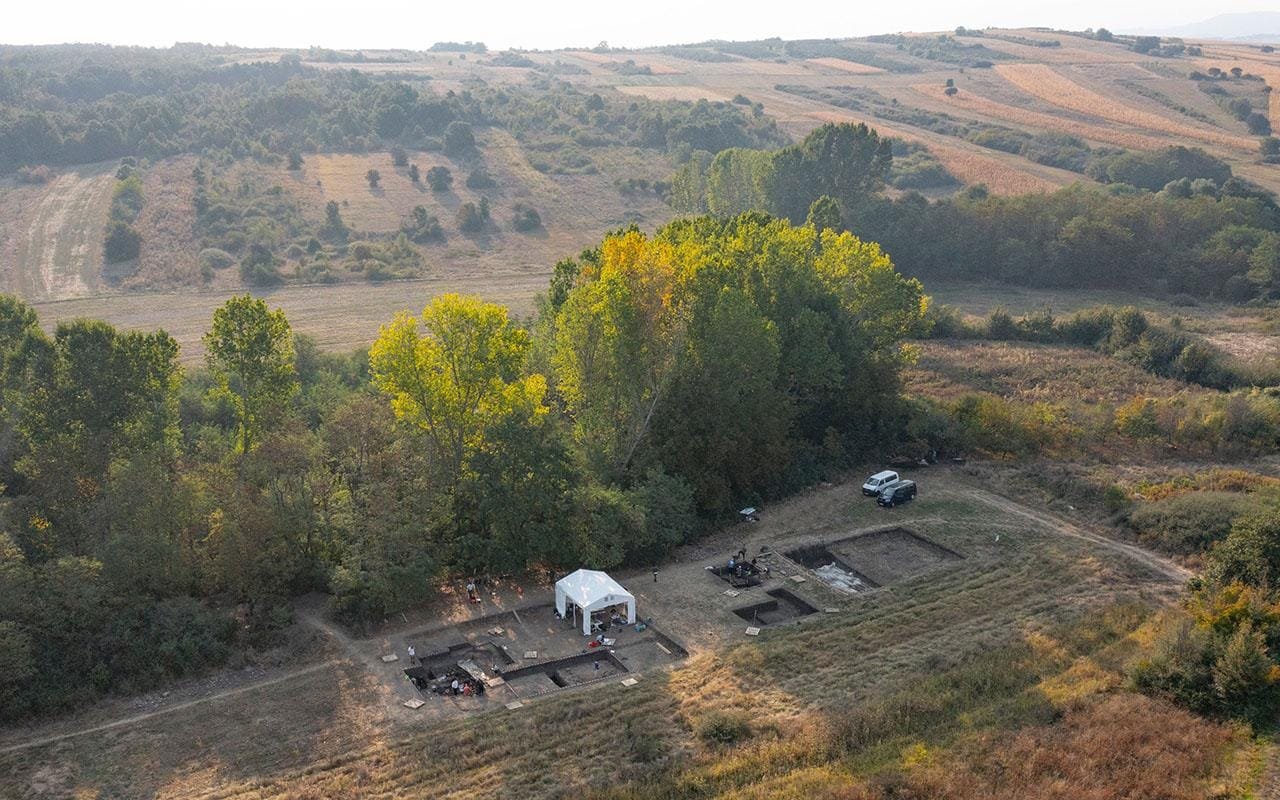
The excavation sections after completion of the excavations in 2024 on the river terrace of Svinjarička Čuka, Serbia. Credit: M. Börner / ÖAI / ÖAW

The Starčevo culture, which thrived between 6200 and 4500 BCE, is part of the larger Starčevo-Körös-Criş cultural complex and played a pivotal role in the spread of agriculture from Anatolia to Europe. The discovery challenges long-standing theories about the early settlers of Europe, previously thought to have lived nomadic or semi-nomadic lifestyles.

“The discoveries at Svinjarička Čuka provide groundbreaking insights that challenge previous models on settlement development in the Balkans,” said Barbara Horejs, archaeologist and scientific director of the Austrian Archaeological Institute at the ÖAW. Previous assumptions that these early groups were nomadic or seasonally sedentary were based on the widespread presence of pits thought to represent temporary shelters. However, this new discovery suggests otherwise.
8,000-year-old dwelling found in Serbia belonged to Europe's first sedentary farmers
The Svinjarička Čuka site during the 2024 excavations. Credit: M. Börner / ÖAI / ÖAW

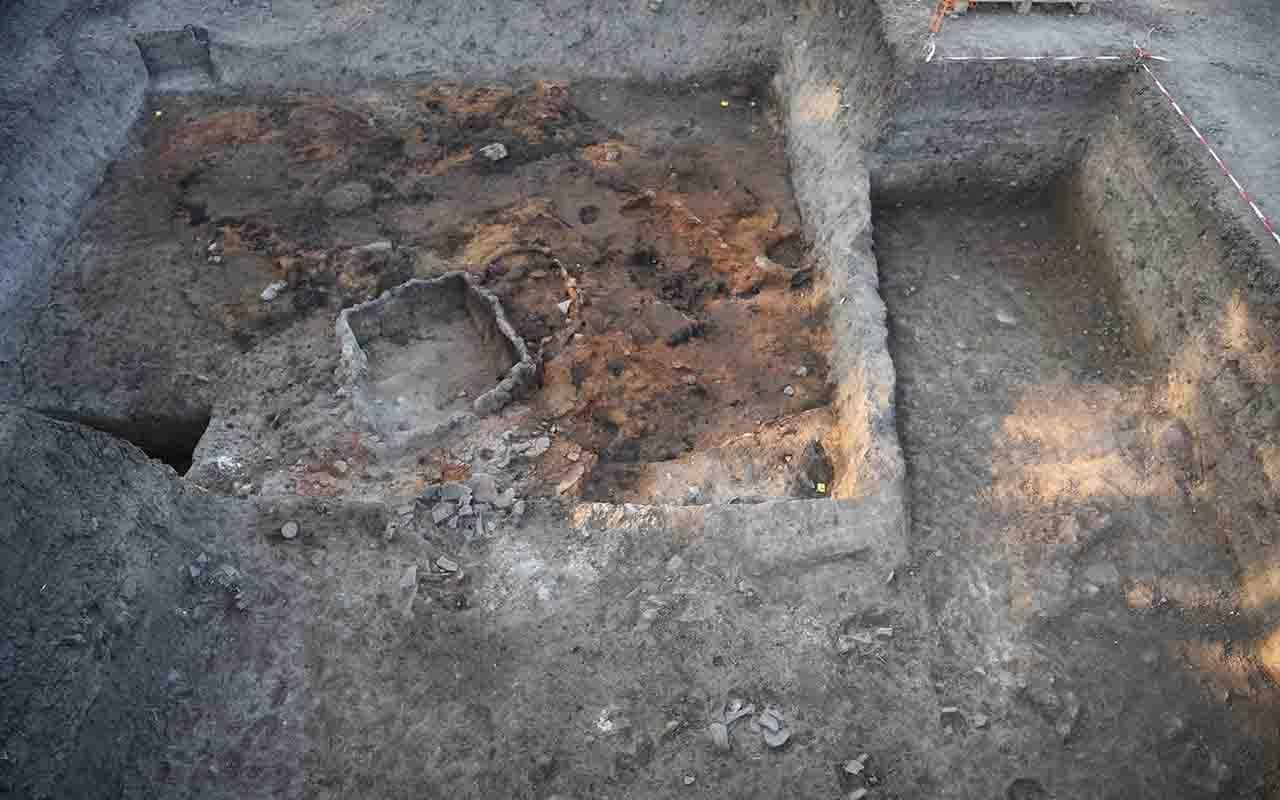
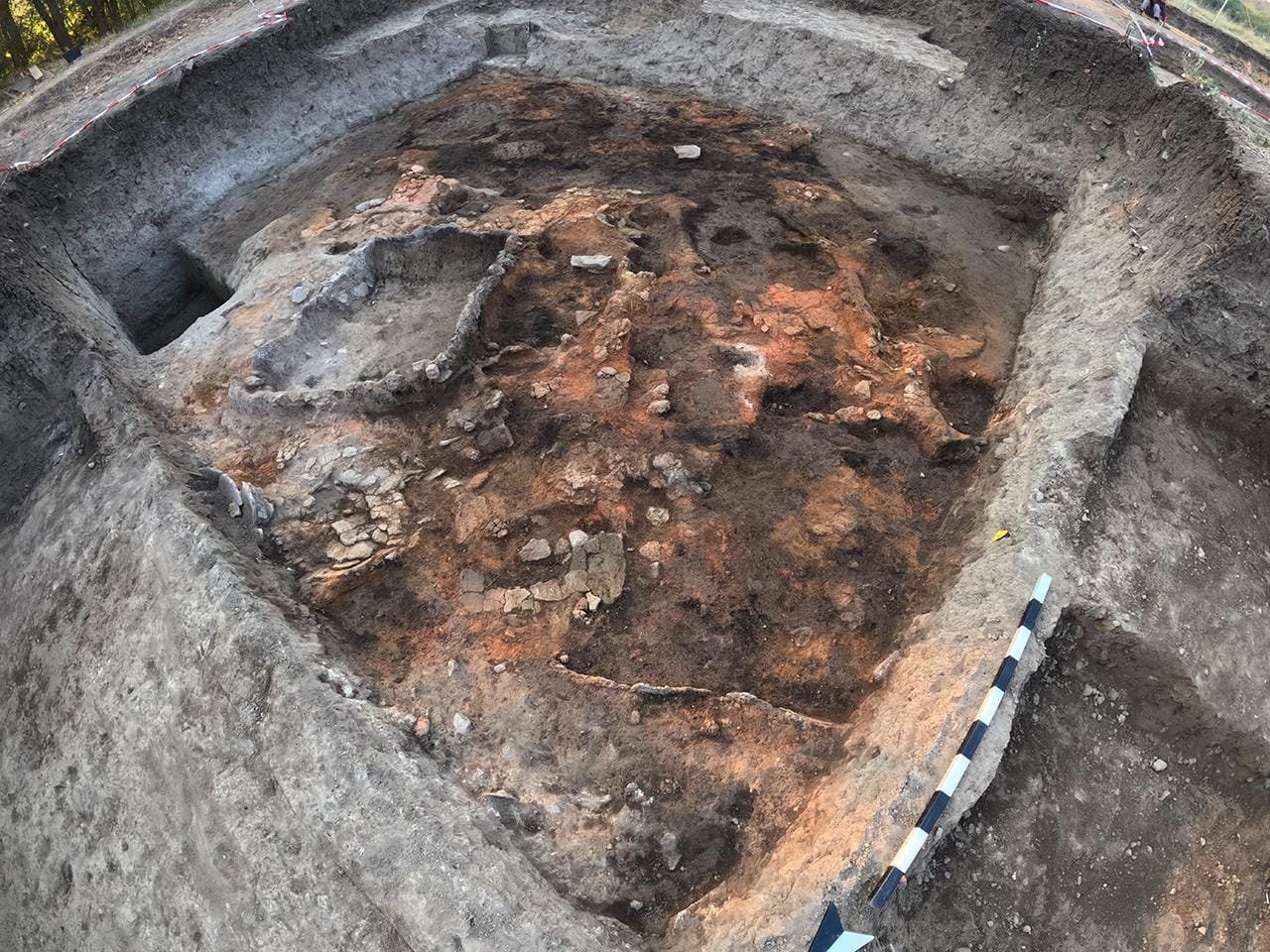
The dwelling, constructed from wickerwork reinforced with wooden posts, was exceptionally well-preserved due to a fire. The partially collapsed and burned elements of the structure revealed overlapping floors, tools, and scattered vessels, both inside the house and in the outdoor area. More importantly, designated areas for food storage, such as grain and seeds, were found, indicating that these early farming communities were not merely transient but had developed a stable, sedentary lifestyle.
8,000-year-old dwelling found in Serbia belonged to Europe's first sedentary farmers
Burnt remains of a house of Neolithic pioneers around 8000 years ago in Svinjarička Čuka. Credit: F. Ostmann / ÖAI / ÖAW

“Instead of small, nomadic groups or only seasonally settled communities, the Neolithic pioneers in the Balkans built stable houses with provisions for food storage,” Horejs added. This suggests a more permanent, agrarian society than previously thought, with advanced systems for grain storage and food supplies, integral to their survival and development.


RelatedStories

Nondestructive DNA sampling uncovers 1,300 years of history preserved in ancient parchments

Nondestructive DNA sampling uncovers 1,300 years of history preserved in ancient parchments

May 22, 2026
6,000-year-old necropolis in Spain rewrites origins of Europe’s first megalithic tombs

6,000-year-old necropolis in Spain rewrites origins of Europe’s first megalithic tombs

May 18, 2026

The site, which has been under excavation since 2018, also holds multiple phases of settlement dating back to the early and middle Neolithic periods. This has provided researchers with a wealth of information about the Starčevo culture, believed to be the earliest Neolithic communities in the Balkans. However, new questions have also emerged from these discoveries, such as the geographic and cultural origins of these settlers and their potential interactions with local hunter-gatherer groups. “The geographical and cultural origin of these groups, as well as their possible interaction with regional hunter-gatherers, are still open questions that are now being further investigated,” said Horejs.
8,000-year-old dwelling found in Serbia belonged to Europe's first sedentary farmers
The long rectangular burnt house with remains of built installations for food storage and numerous storage vessels in situ. Credit: F. Ostmann / ÖAI / ÖAW

To further understand the significance of these findings, the research team is employing advanced microarchaeological methods. These include sediment analysis, the study of botanical and zoological remains, and chemical soil analysis. These techniques are providing new data on the use of early Neolithic houses, human-animal coexistence, and how these farming societies managed their resources.

Academia Austríaca de las Ciencias (ÖAW)

Share:

Share on Facebook Share on X (Twitter) Share on LinkedIn Share on Pinterest Share on WhatsApp Share on Email

You May Also Like...

100,000-year-old Homo sapiens bones from Ethiopia may preserve earliest evidence of human cremation
Anthropology

100,000-year-old Homo sapiens bones from Ethiopia may preserve earliest evidence of human cremation

May 24, 2026
Ancient Peruvian hairless dogs buried with Wari elites 1,200 years ago
Archaeology

Ancient Peruvian hairless dogs buried with Wari elites 1,200 years ago

May 24, 2026
4,000-year-old Mohenjo-daro study finds ancient city grew more equal over time
Archaeology

4,000-year-old Mohenjo-daro study finds ancient city grew more equal over time

May 24, 2026
Bronze Age towers in Sardinia remained centers of worship and ritual in the Iron Age
Archaeology

Bronze Age towers in Sardinia remained centers of worship and ritual in the Iron Age

May 23, 2026
Rare 19th-century bone dental bridge found in Portugal points to early cosmetic tooth replacement
Anthropology

Rare 19th-century bone dental bridge found in Portugal points to early cosmetic tooth replacement

May 23, 2026
Medieval well hidden beneath Sheffield Castle surveyed with drone technology
Archaeology

Medieval well hidden beneath Sheffield Castle surveyed with drone technology

May 23, 2026

Follow us


Instagram
242K

Facebook
117K

Threads
46K

LinkedIn
14K

Twitter
6K

YouTube
1K
100,000-year-old Homo sapiens bones from Ethiopia may preserve earliest evidence of human cremation

100,000-year-old Homo sapiens bones from Ethiopia may preserve earliest evidence of human cremation

May 24, 2026
Ancient Peruvian hairless dogs buried with Wari elites 1,200 years ago

Ancient Peruvian hairless dogs buried with Wari elites 1,200 years ago

May 24, 2026
4,000-year-old Mohenjo-daro study finds ancient city grew more equal over time

4,000-year-old Mohenjo-daro study finds ancient city grew more equal over time

May 24, 2026
Bronze Age towers in Sardinia remained centers of worship and ritual in the Iron Age

Bronze Age towers in Sardinia remained centers of worship and ritual in the Iron Age

May 23, 2026

Archaeology News online magazine

Archaeology News is an international online magazine that covers all aspects of archaeology.


Categories

  • Academics
    • Books
    • Conferences
    • Universities
  • Articles
  • Download
  • Game
  • News
    • Anthropology
    • Archaeology
    • Paleontology
  • Quiz
  • Tours

Subscribe to our newsletter

© 2024 - Archaeology News Online Magazine. All Rights Reserved.

  • About
  • Privacy Policy
  • Terms of Use
  • Donation
  • Contact

Manage Consent
To provide the best experiences, we use technologies like cookies to store and/or access device information. Consenting to these technologies will allow us to process data such as browsing behavior or unique IDs on this site. Not consenting or withdrawing consent, may adversely affect certain features and functions.
Functional Always active
The technical storage or access is strictly necessary for the legitimate purpose of enabling the use of a specific service explicitly requested by the subscriber or user, or for the sole purpose of carrying out the transmission of a communication over an electronic communications network.
Preferences
The technical storage or access is necessary for the legitimate purpose of storing preferences that are not requested by the subscriber or user.
Statistics
The technical storage or access that is used exclusively for statistical purposes. The technical storage or access that is used exclusively for anonymous statistical purposes. Without a subpoena, voluntary compliance on the part of your Internet Service Provider, or additional records from a third party, information stored or retrieved for this purpose alone cannot usually be used to identify you.
Marketing
The technical storage or access is required to create user profiles to send advertising, or to track the user on a website or across several websites for similar marketing purposes.
  • Manage options
  • Manage services
  • Manage {vendor_count} vendors
  • Read more about these purposes
View preferences
  • {title}
  • {title}
  • {title}
  • Home
  • News
    • Archaeology
    • Anthropology
    • Paleontology
  • Academic
    • Books
    • Conferences
    • Universities
  • Articles
  • VR Tours
  • Quiz & Game
  • Download
  • Encyclopedia
  • Forum

About  .  Contact  .  Donation

© 2024 - Archaeology News Online Magazine. All Rights Reserved