• About
  • Privacy Policy
  • Terms of Use
  • Donation
  • Contact
No Result
View All Result
Archaeology News
  • Home
  • News
    • Archaeology
    • Anthropology
    • Paleontology
  • Academic
    • Books
    • Conferences
    • Universities
  • Articles
  • VR Tours
  • Quiz & Game
  • Download
  • Encyclopedia
  • Forum
Archaeology News
No Result
View All Result
Home News Archaeology

Neolithic ‘sun stones’ sacrificed in Denmark to revive the sun after volcanic eruption

by Dario Radley
January 16, 2025

Around 4,900 years ago, Neolithic communities on the Danish island of Bornholm ritually buried hundreds of engraved stones, so-called “sun stones,” in a remarkable act to counter drastic climate changes caused by a massive volcanic eruption. The eruption was identified in ice cores by the Niels Bohr Institute at the University of Copenhagen as having caused a period of cold and darkness and severely affecting early agricultural societies.
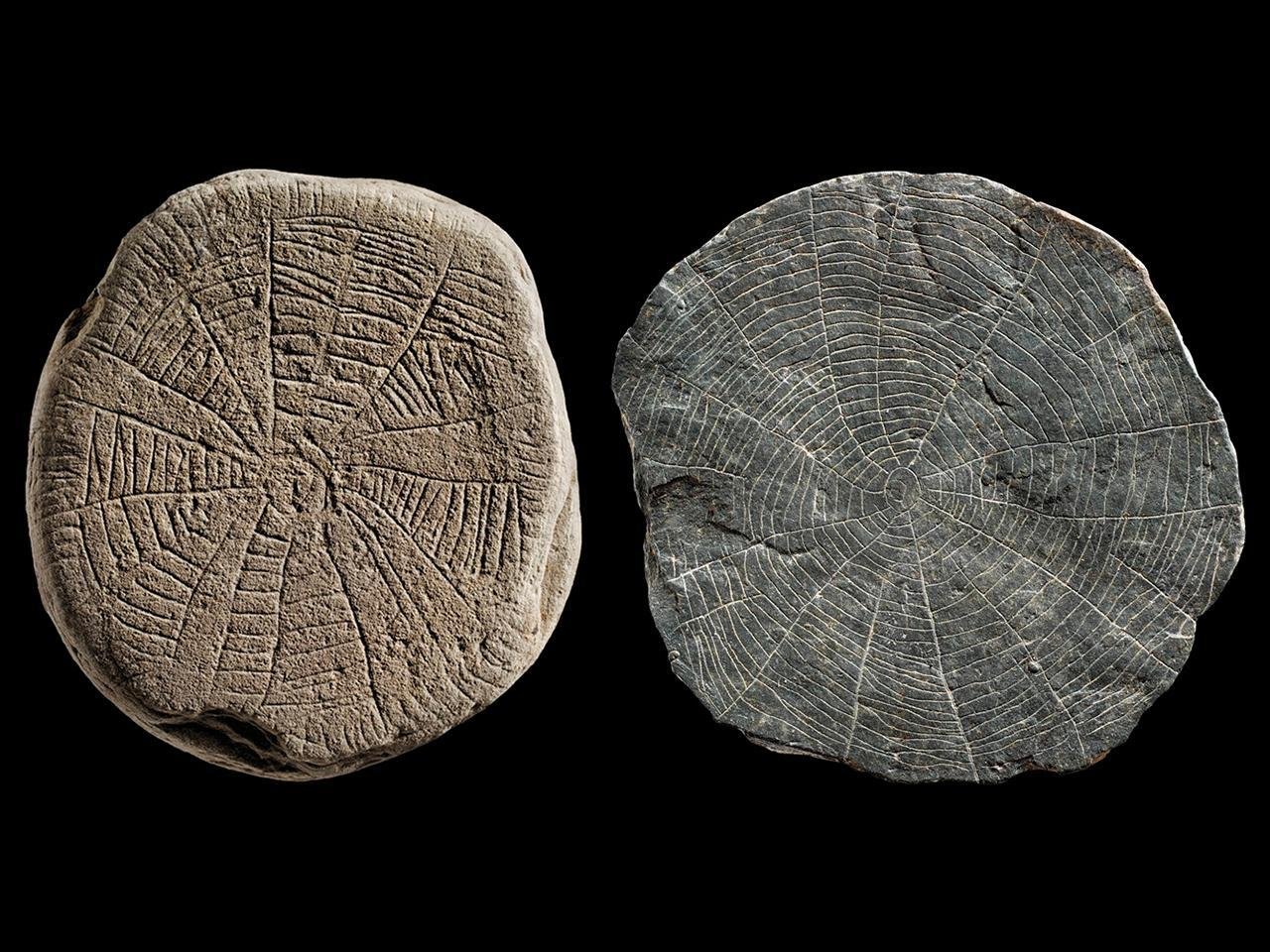
Neolithic 'sun stones' sacrificed in Denmark to revive the sun after volcanic eruption
Plaques with solar motifs discovered in Vasagård, Denmark. Credit: John Lee, The National Museum of Denmark (Published in Antiquity under a CC BY 4.0 license. Used here with attribution for educational and informational purposes.)

The volcanic event, which occurred around 2900 BCE, spewed large amounts of sulfur into the atmosphere, forming a haze that blocked sunlight. This, in turn, caused temperatures to fall and significantly reduced sunlight—a challenge that led to crop failure and proved to be an existential threat, particularly to Neolithic farmers. Researchers compared its effects to a later eruption in 43 BCE, which caused agricultural collapse and famine across the Mediterranean.

More than 600 sun stones have been unearthed during archaeological excavations at Vasagård on Bornholm. These flat stones were made of shale, often carrying patterns and motifs related to the sun—symbolically associated with fertility and cosmic equilibrium. Animal bones and pieces of broken earthenware accompanied these stones, along with flint tools, in ceremonial ditches. Dr. Rune Iversen from the University of Copenhagen suggests that the sacrifices were likely intended to restore sunlight and ensure agricultural prosperity.

Scientific evidence closely aligns with the timing of these sacrifices. Ice cores from both Greenland and Antarctica show a significant sulfur signature around 2900 BCE, indicating the volcanic eruption. Other evidence comes from the sediment layers of lakes in Germany and dendrochronological studies from the U.S., which confirm a period of low sunlight and an extremely unfavorable climate.
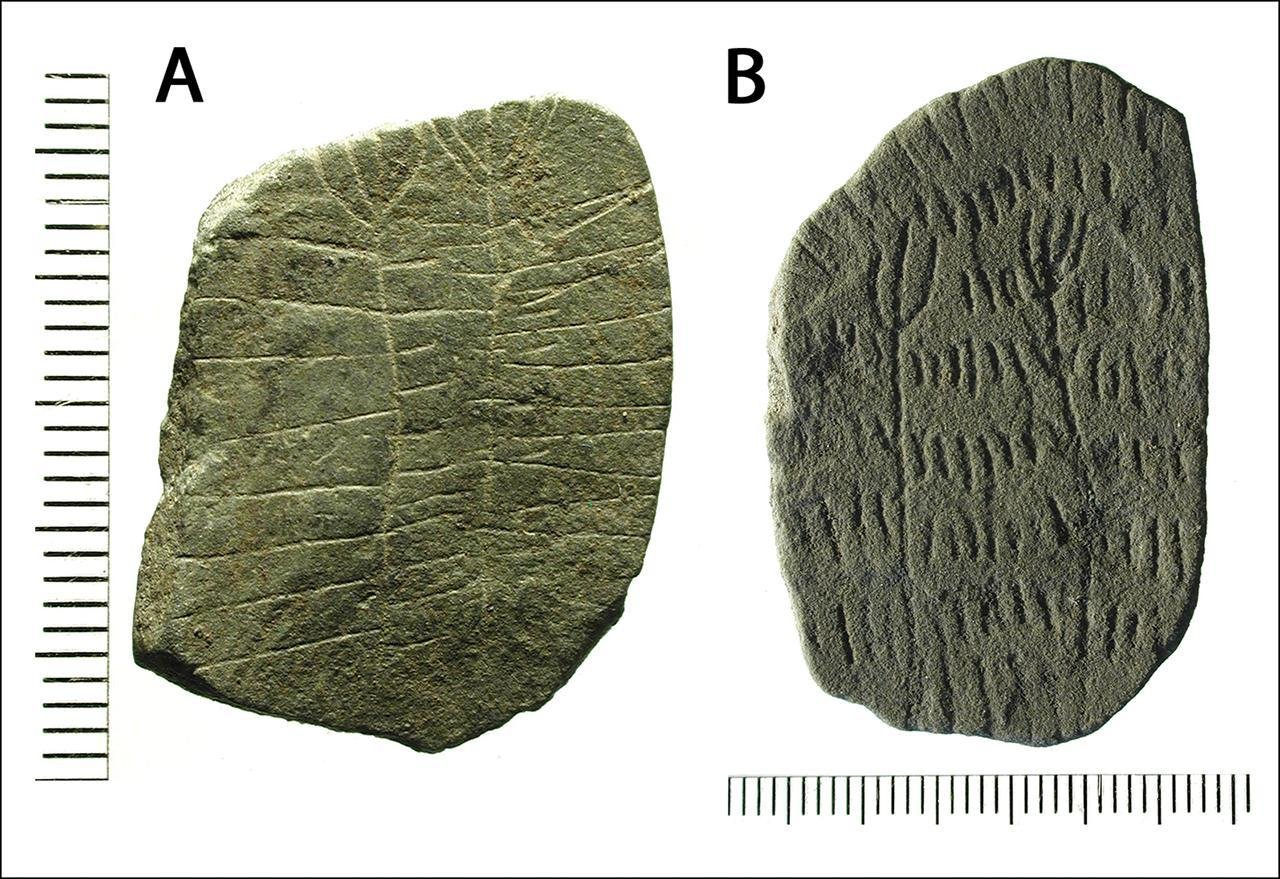
Neolithic 'sun stones' sacrificed in Denmark to revive the sun after volcanic eruption
Plaques with field and plant motifs. Credit: René Laursen, Bornholms Museum. (Published in Antiquity under a CC BY 4.0 license. Used here with attribution for educational and informational purposes.) 

This era was marked by widespread upheaval in Northern Europe. DNA analyses of human remains also showed that plague infections contributed to the environmental catastrophes. The Funnel Beaker culture was already in decline during this period and was replaced by new traditions. The ritual ditches for sun stone sacrifices in Vasagård were gradually replaced by a wooden palisade and circular cult houses, reflecting changes in social and religious life.

RelatedStories

Rare medieval gold ring unearthed in Tønsberg

Rare medieval gold ring unearthed in Tønsberg reveals beliefs and craftsmanship of its time

January 5, 2026
World’s largest late medieval cog discovered sunken in the Øresund Strait

World’s largest late medieval cog discovered sunken in the Øresund Strait

January 2, 2026

The ritual significance of sun stones mirrors other ancient solar veneration practices, such as the construction of Stonehenge in England. Vasagård’s alignment with solstices underscores its role as a center of sun worship. Visitors to the National Museum of Denmark can view several of these enigmatic artifacts, which represent some of the earliest evidence of solar-focused rituals in Scandinavia.

More information: Iversen R, Nielsen PO, Sørensen LV, et al. (2025). Sun stones and the darkened sun: Neolithic miniature art from the island of Bornholm, Denmark. Antiquity. 1-17. doi:10.15184/aqy.2024.217
Share23Tweet14Share4ShareSend

You May Also Like...

430,000-year-old well-preserved wooden tools are the oldest ever found
Archaeology

430,000-year-old well-preserved wooden tools are the oldest ever found

January 26, 2026
Study finds dog meat was consumed at Iron Age feasts in ancient Bulgaria
Archaeology

Study finds dog meat was consumed at Iron Age feasts in ancient Bulgaria

January 26, 2026
South African San rock art shows evidence of trance dances and initiation rituals
Archaeology

South African San rock art shows evidence of trance dances and initiation rituals

January 25, 2026
Rare 10th-century bronze wheel cross found in Brandenburg reveals early Christian influence among Slavic populations
Archaeology

Rare 10th-century bronze wheel cross found in Brandenburg reveals early Christian influence among Slavic populations

January 25, 2026
Large Roman cemetery excavation at Brougham reveals diverse burial practices on Britain’s northern frontier
Archaeology

Large Roman cemetery excavation at Brougham reveals diverse burial practices on Britain’s northern frontier

January 24, 2026
5,500-year-old human skeleton in Colombia reveals earliest evidence of syphilis in the Americas
Anthropology

5,500-year-old human skeleton in Colombia reveals earliest evidence of syphilis in the Americas

January 23, 2026

Follow us


Instagram
244K

Facebook
118K

Threads
45K

LinkedIn
14K

Twitter
6K

YouTube
1K
  • Trending
  • Comments
  • Latest
Shipwreck Salvage. Credit: rawpixel.com / Public Domain

2,000-year-old shipwreck discovered off Turkish coast with remarkably preserved stacked ceramics

July 2, 2025
Viking age DNA reveals 9,000-year-old HIV-resistant gene originating near the Black Sea

Viking age DNA reveals 9,000-year-old HIV-resistant gene originating near the Black Sea

May 18, 2025
A new study suggests the mysterious Voynich Manuscript may be a medieval cipher

A new study suggests the mysterious Voynich Manuscript may be a medieval cipher

January 3, 2026
Moses may be named in ancient Egyptian mine inscriptions, sparking debate over earliest biblical references

Moses may be named in ancient Egyptian mine inscriptions, sparking debate over earliest biblical references

July 31, 2025
Mystery of Armenia’s 6,000-year-old dragon stones solved

Mystery of Armenia’s 6,000-year-old dragon stones solved

September 23, 2025
3D analysis reveals Shroud of Turin image likely came from sculpture, not Jesus’ body

3D analysis reveals Shroud of Turin image likely came from sculpture, not Jesus’ body

Moses may be named in ancient Egyptian mine inscriptions, sparking debate over earliest biblical references

Moses may be named in ancient Egyptian mine inscriptions, sparking debate over earliest biblical references

$1 million prize offered to decipher 5,300-year-old Indus Valley script

$1 million prize offered to decipher 5,300-year-old Indus Valley script

Oldest ever genetic data from a human relative found in 2-million-year-old fossilized teeth

Oldest ever genetic data from a human relative found in 2-million-year-old fossilized teeth

Exceptionally large Roman shoes discovered at Magna fort near Hadrian’s Wall

Exceptionally large Roman shoes discovered at Magna fort near Hadrian’s Wall

430,000-year-old well-preserved wooden tools are the oldest ever found

430,000-year-old well-preserved wooden tools are the oldest ever found

January 26, 2026
Study finds dog meat was consumed at Iron Age feasts in ancient Bulgaria

Study finds dog meat was consumed at Iron Age feasts in ancient Bulgaria

January 26, 2026
South African San rock art shows evidence of trance dances and initiation rituals

South African San rock art shows evidence of trance dances and initiation rituals

January 25, 2026
Rare 10th-century bronze wheel cross found in Brandenburg reveals early Christian influence among Slavic populations

Rare 10th-century bronze wheel cross found in Brandenburg reveals early Christian influence among Slavic populations

January 25, 2026
Large Roman cemetery excavation at Brougham reveals diverse burial practices on Britain’s northern frontier

Large Roman cemetery excavation at Brougham reveals diverse burial practices on Britain’s northern frontier

January 24, 2026

Archaeology News online magazine

Archaeology News is an international online magazine that covers all aspects of archaeology.


Categories

  • Academics
    • Books
    • Conferences
    • Universities
  • Articles
  • Download
  • Game
  • News
    • Anthropology
    • Archaeology
    • Paleontology
  • Quiz
  • Tours

Subscribe to our newsletter

© 2024 - Archaeology News Online Magazine. All Rights Reserved.

  • About
  • Privacy Policy
  • Terms of Use
  • Donation
  • Contact

Welcome Back!

Login to your account below

Forgotten Password? Sign Up

Create New Account!

Fill the forms below to register

All fields are required. Log In

Retrieve your password

Please enter your username or email address to reset your password.

Log In

Add New Playlist

Manage Consent
To provide the best experiences, we use technologies like cookies to store and/or access device information. Consenting to these technologies will allow us to process data such as browsing behavior or unique IDs on this site. Not consenting or withdrawing consent, may adversely affect certain features and functions.
Functional Always active
The technical storage or access is strictly necessary for the legitimate purpose of enabling the use of a specific service explicitly requested by the subscriber or user, or for the sole purpose of carrying out the transmission of a communication over an electronic communications network.
Preferences
The technical storage or access is necessary for the legitimate purpose of storing preferences that are not requested by the subscriber or user.
Statistics
The technical storage or access that is used exclusively for statistical purposes. The technical storage or access that is used exclusively for anonymous statistical purposes. Without a subpoena, voluntary compliance on the part of your Internet Service Provider, or additional records from a third party, information stored or retrieved for this purpose alone cannot usually be used to identify you.
Marketing
The technical storage or access is required to create user profiles to send advertising, or to track the user on a website or across several websites for similar marketing purposes.
  • Manage options
  • Manage services
  • Manage {vendor_count} vendors
  • Read more about these purposes
View preferences
  • {title}
  • {title}
  • {title}
  • Home
  • News
    • Archaeology
    • Anthropology
    • Paleontology
  • Academic
    • Books
    • Conferences
    • Universities
  • Articles
  • VR Tours
  • Quiz & Game
  • Download
  • Encyclopedia
  • Forum

About  .  Contact  .  Donation

© 2024 - Archaeology News Online Magazine. All Rights Reserved