• About
  • Privacy Policy
  • Terms of Use
  • Donation
  • Contact
No Result
View All Result
Archaeology News
  • Home
  • News
    • Archaeology
    • Anthropology
    • Paleontology
  • Academic
    • Books
    • Conferences
    • Universities
  • Articles
  • VR Tours
  • Quiz & Game
  • Download
  • Encyclopedia
  • Forum
Archaeology News
No Result
View All Result
Home News Archaeology

Excavations in Gloucestershire uncover Roman roadside settlement

by Dario Radley
January 15, 2025

A major archaeological dig in Gloucestershire, undertaken as part of the A417 Missing Link road improvement scheme, has revealed a Roman settlement that provides a window into life almost 2,000 years ago. The discoveries have been hailed as having exceeded all expectations.
Excavations in Gloucestershire uncover Roman roadside settlement
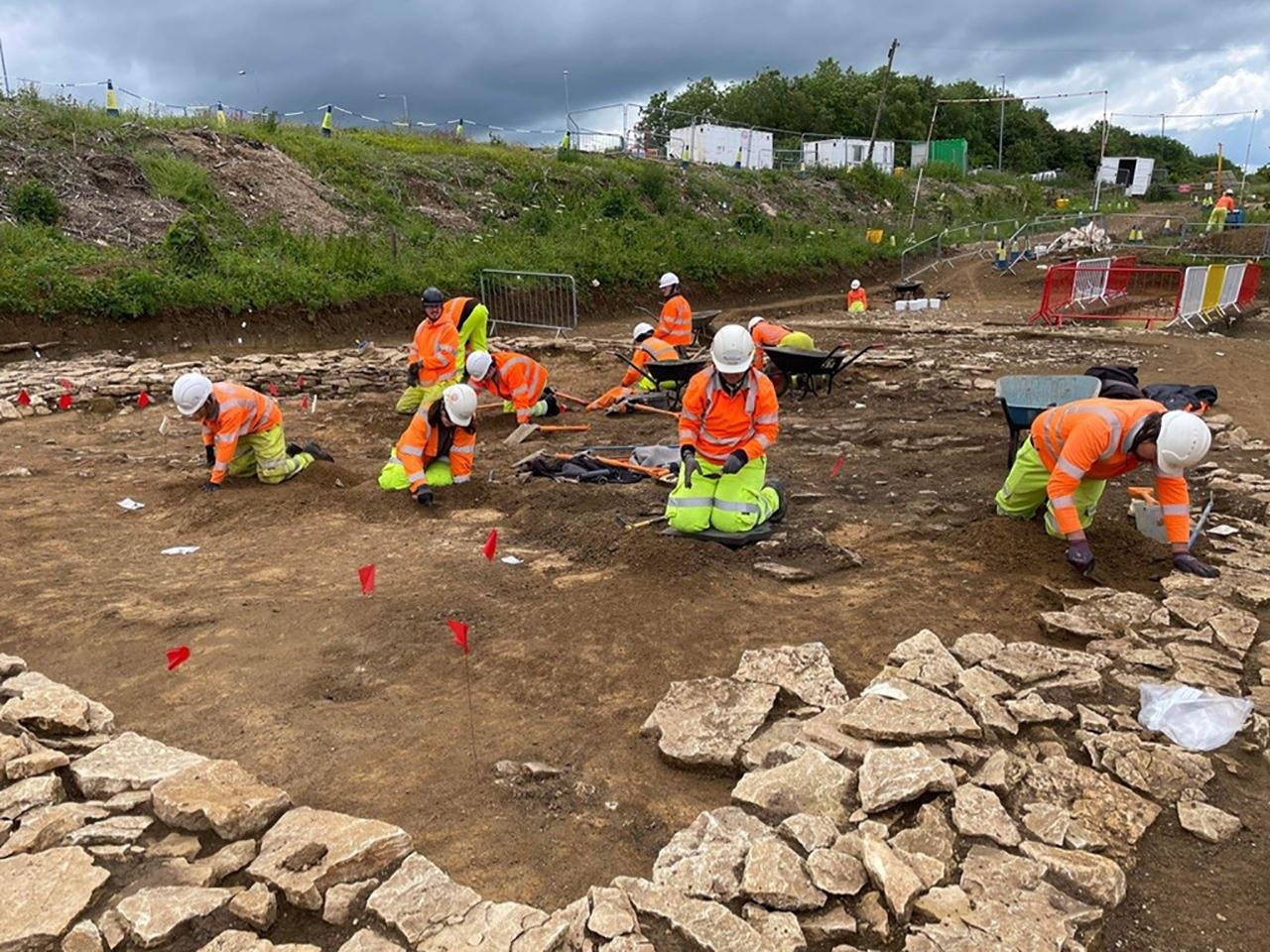
The excavation took place over an 8-hectare area within the 40-hectare development zone. Credit: National Highways

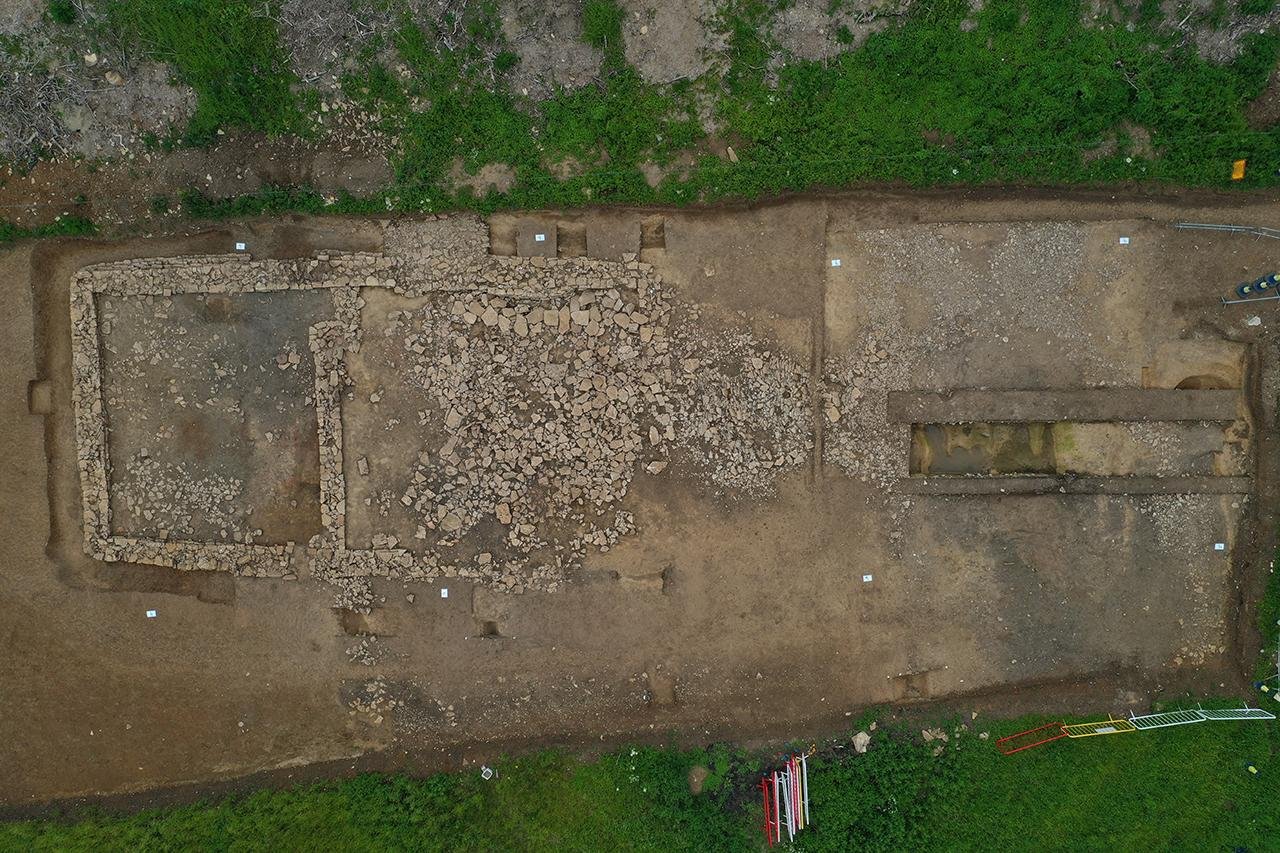
The excavation, carried out by Oxford Cotswold Archaeology and supported by National Highways, took place over an 8-hectare area within the 40-hectare development zone. The settlement lay alongside Ermin Street, one of the main Roman roads linking major towns such as Cirencester and Gloucester.

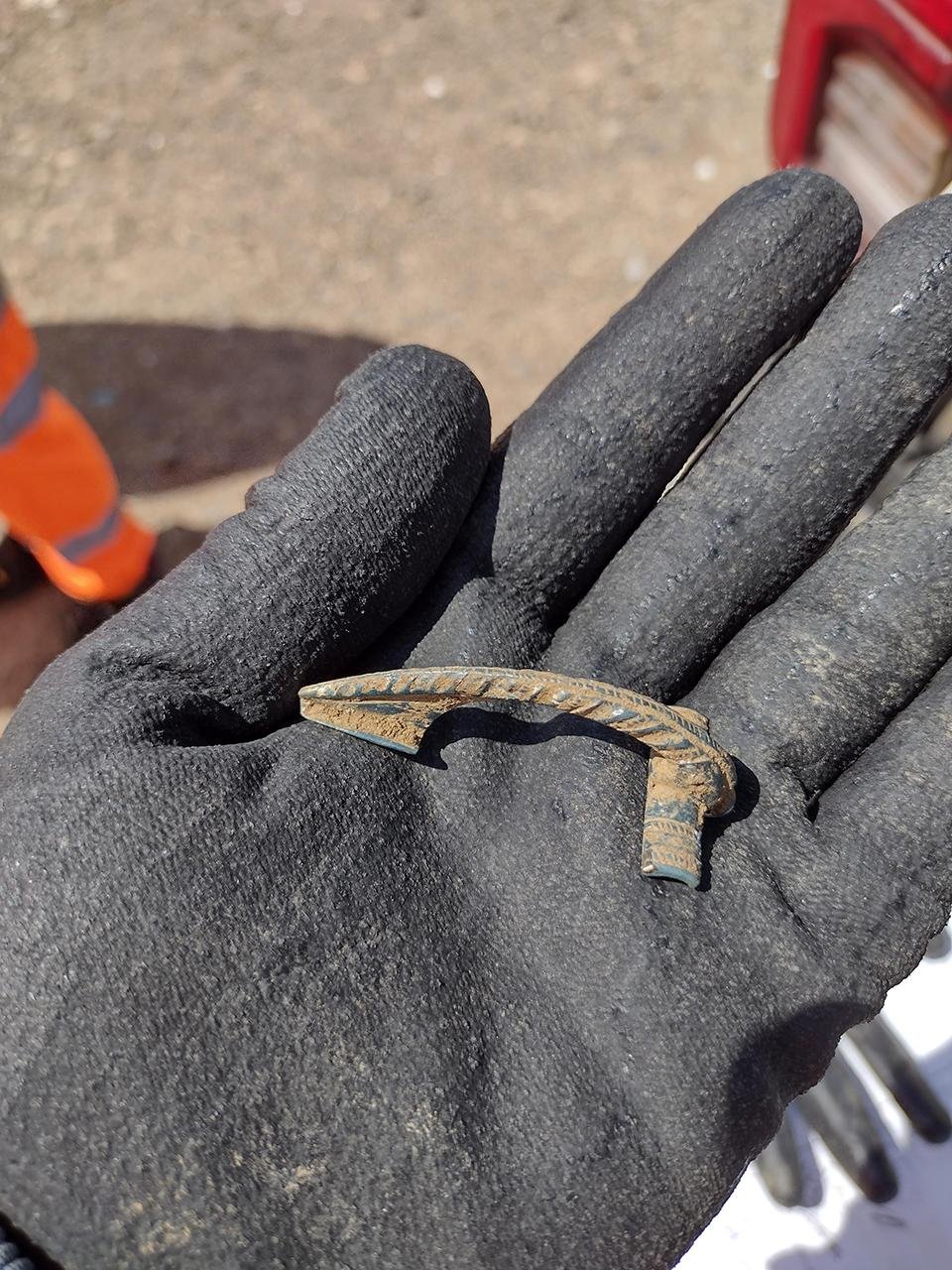
The team of 70 archaeologists uncovered numerous artifacts and features, including wells, ovens, and agricultural structures. Most remarkably, these included 460 Roman coins, 15 brooches, and more than 420 kilograms of pottery and animal bone. These findings provide a vivid picture of life, trade, and the settlement’s pivotal role as a busy roadside hub.

“Our Roman settlement site was one of the standout areas of our work on the A417 project,” said Alex Thomson, Project Manager for Oxford Cotswold Archaeology. “Being able to look at a Roman roadside settlement in such extensive detail is a rare opportunity. It’s clear that the structures we’ve recorded helped serve the passing trade on a busy Roman highway; it really could be a 2000-year-old service station!”
Excavations in Gloucestershire uncover Roman roadside settlement
Drone view of the Roman settlement in Gloucestershire, UK. Credit: National Highways

Gloucestershire was at the forefront of Roman expansion into Britain following the invasion in 43 CE. The Romans quickly laid a network of roads, facilitating the spread of their influence and the development of significant settlements.


RelatedStories

Drone surveys reveal Roman forum and previously unknown monumental theater at Fioccaglia

Drone surveys reveal Roman forum and previously unknown monumental theater at Fioccaglia

February 15, 2026
Rare Roman staircase and unique lararium discovered beneath Cologne’s MiQua Jewish Museum site

Rare Roman staircase and unique lararium discovered beneath Cologne’s MiQua Jewish Museum site

February 13, 2026

Archaeology Project Manager for National Highways, Jim Keyte, said: “Exploring the traces left by our ancestors provides a unique opportunity to contribute to the story of the Cotswolds and leave a lasting legacy of knowledge for the local community.”
Excavations in Gloucestershire uncover Roman roadside settlement
Fifteen brooches, 460 Roman coins, and more than 420 kilograms of pottery and animal bones were discovered. Credit: National Highways

The project has been undertaken in collaboration with Gloucestershire County Council, Historic England, and Kier, contractors for the A417 Missing Link scheme.

Steve Foxley, Project Director for the A417 Missing Link, said: “While this landscape-led scheme is focused on building a road that is fit for the future, it’s important not to forget the past and it’s been an absolute pleasure to piece together Gloucestershire’s history as part of this important upgrade.”

The findings from the excavation will be cataloged and displayed in local museums, enriching public understanding of the region’s history.

More information: Oxford Cotswold Archaeology / National Highways

Share3Tweet2ShareShareSend

You May Also Like...

Chalcolithic cornets at Teleilat Ghassul reveal ritual lamp use in Jordan’s prehistoric communities
Archaeology

Chalcolithic cornets at Teleilat Ghassul reveal ritual lamp use in Jordan’s prehistoric communities

February 16, 2026
DNA study reveals 3,000 years of genetic stability in Europe’s Low Countries before Bell Beaker expansion
Anthropology

DNA study reveals 3,000 years of genetic stability in Europe’s Low Countries before Bell Beaker expansion

February 16, 2026
Second Temple period stone vessel workshop unearthed on Mount Scopus after antiquities theft arrests
Archaeology

Second Temple period stone vessel workshop unearthed on Mount Scopus after antiquities theft arrests

February 16, 2026
10,000 years of rock art discovered at Umm Arak Plateau in Egypt’s southern Sinai
Archaeology

10,000 years of rock art discovered at Umm Arak Plateau in Egypt’s southern Sinai

February 15, 2026
Drone surveys reveal Roman forum and previously unknown monumental theater at Fioccaglia
Archaeology

Drone surveys reveal Roman forum and previously unknown monumental theater at Fioccaglia

February 15, 2026
Earliest known burial in Northern Britain identified as young girl through DNA analysis
Anthropology

Earliest known burial in Northern Britain identified as young girl through DNA analysis

February 14, 2026

Comments 1

  1. Editorial Team says:
    1 second ago

    Disclaimer: This website is a science-focused magazine that welcomes both academic and non-academic audiences. Comments are written by users and may include personal opinions or unverified claims. They do not necessarily reflect the views of our editorial team or rely on scientific evidence.

    Comment Policy: We kindly ask all commenters to engage respectfully. Comments that contain offensive, insulting, degrading, discriminatory, or racist content will be automatically removed.

  2. Don Sena says:
    1 year ago

    Rome is everywhere, in the clock (from their immediate descendants), the calendar and the alphabet. It has even left us their concepts of a tripartite government (separation of powers with checks and balances);, as well as
    civil and highway engineering;
    dinnerware (knife, spoon & fork);
    newspaper journalism;
    social welfare;
    an early version of modern medicine that included anesthesia and battlefield surgery;
    a well-developed system of law; and, of course,
    the arts.
    Most importantly, though, they innovated what we all appreciate the most, the *bikini* swimsuit, as we can now see in those fantastic mosaics of bikinied Italian girls merrily tossing a beach ball around, as well as bikinied female gymnasts performing in the Roman circuses.

Follow us


Instagram
244K

Facebook
118K

Threads
45K

LinkedIn
14K

Twitter
6K

YouTube
1K
  • Trending
  • Comments
  • Latest
Shipwreck Salvage. Credit: rawpixel.com / Public Domain

2,000-year-old shipwreck discovered off Turkish coast with remarkably preserved stacked ceramics

July 2, 2025
Viking age DNA reveals 9,000-year-old HIV-resistant gene originating near the Black Sea

Viking age DNA reveals 9,000-year-old HIV-resistant gene originating near the Black Sea

May 18, 2025
A new study suggests the mysterious Voynich Manuscript may be a medieval cipher

A new study suggests the mysterious Voynich Manuscript may be a medieval cipher

January 3, 2026
Moses may be named in ancient Egyptian mine inscriptions, sparking debate over earliest biblical references

Moses may be named in ancient Egyptian mine inscriptions, sparking debate over earliest biblical references

July 31, 2025
Mystery of Armenia’s 6,000-year-old dragon stones solved

Mystery of Armenia’s 6,000-year-old dragon stones solved

September 23, 2025
3D analysis reveals Shroud of Turin image likely came from sculpture, not Jesus’ body

3D analysis reveals Shroud of Turin image likely came from sculpture, not Jesus’ body

Moses may be named in ancient Egyptian mine inscriptions, sparking debate over earliest biblical references

Moses may be named in ancient Egyptian mine inscriptions, sparking debate over earliest biblical references

$1 million prize offered to decipher 5,300-year-old Indus Valley script

$1 million prize offered to decipher 5,300-year-old Indus Valley script

Oldest ever genetic data from a human relative found in 2-million-year-old fossilized teeth

Oldest ever genetic data from a human relative found in 2-million-year-old fossilized teeth

Exceptionally large Roman shoes discovered at Magna fort near Hadrian’s Wall

Exceptionally large Roman shoes discovered at Magna fort near Hadrian’s Wall

Chalcolithic cornets at Teleilat Ghassul reveal ritual lamp use in Jordan’s prehistoric communities

Chalcolithic cornets at Teleilat Ghassul reveal ritual lamp use in Jordan’s prehistoric communities

February 16, 2026
DNA study reveals 3,000 years of genetic stability in Europe’s Low Countries before Bell Beaker expansion

DNA study reveals 3,000 years of genetic stability in Europe’s Low Countries before Bell Beaker expansion

February 16, 2026
Second Temple period stone vessel workshop unearthed on Mount Scopus after antiquities theft arrests

Second Temple period stone vessel workshop unearthed on Mount Scopus after antiquities theft arrests

February 16, 2026
10,000 years of rock art discovered at Umm Arak Plateau in Egypt’s southern Sinai

10,000 years of rock art discovered at Umm Arak Plateau in Egypt’s southern Sinai

February 15, 2026
Drone surveys reveal Roman forum and previously unknown monumental theater at Fioccaglia

Drone surveys reveal Roman forum and previously unknown monumental theater at Fioccaglia

February 15, 2026

Archaeology News online magazine

Archaeology News is an international online magazine that covers all aspects of archaeology.


Categories

  • Academics
    • Books
    • Conferences
    • Universities
  • Articles
  • Download
  • Game
  • News
    • Anthropology
    • Archaeology
    • Paleontology
  • Quiz
  • Tours

Subscribe to our newsletter

© 2024 - Archaeology News Online Magazine. All Rights Reserved.

  • About
  • Privacy Policy
  • Terms of Use
  • Donation
  • Contact

Manage Consent
To provide the best experiences, we use technologies like cookies to store and/or access device information. Consenting to these technologies will allow us to process data such as browsing behavior or unique IDs on this site. Not consenting or withdrawing consent, may adversely affect certain features and functions.
Functional Always active
The technical storage or access is strictly necessary for the legitimate purpose of enabling the use of a specific service explicitly requested by the subscriber or user, or for the sole purpose of carrying out the transmission of a communication over an electronic communications network.
Preferences
The technical storage or access is necessary for the legitimate purpose of storing preferences that are not requested by the subscriber or user.
Statistics
The technical storage or access that is used exclusively for statistical purposes. The technical storage or access that is used exclusively for anonymous statistical purposes. Without a subpoena, voluntary compliance on the part of your Internet Service Provider, or additional records from a third party, information stored or retrieved for this purpose alone cannot usually be used to identify you.
Marketing
The technical storage or access is required to create user profiles to send advertising, or to track the user on a website or across several websites for similar marketing purposes.
  • Manage options
  • Manage services
  • Manage {vendor_count} vendors
  • Read more about these purposes
View preferences
  • {title}
  • {title}
  • {title}
  • Home
  • News
    • Archaeology
    • Anthropology
    • Paleontology
  • Academic
    • Books
    • Conferences
    • Universities
  • Articles
  • VR Tours
  • Quiz & Game
  • Download
  • Encyclopedia
  • Forum

About  .  Contact  .  Donation

© 2024 - Archaeology News Online Magazine. All Rights Reserved