• About
  • Privacy Policy
  • Terms of Use
  • Donation
  • Contact
No Result
View All Result
Archaeology News
  • Home
  • News
    • Archaeology
    • Anthropology
    • Paleontology
  • Academic
    • Books
    • Conferences
    • Universities
  • Articles
  • VR Tours
  • Quiz & Game
  • Download
  • Encyclopedia
  • Forum
Archaeology News
No Result
View All Result
Home News Archaeology

New study uncovers how the Temple of Venus has survived nearly 2,000 years

by Dario Radley
November 22, 2025

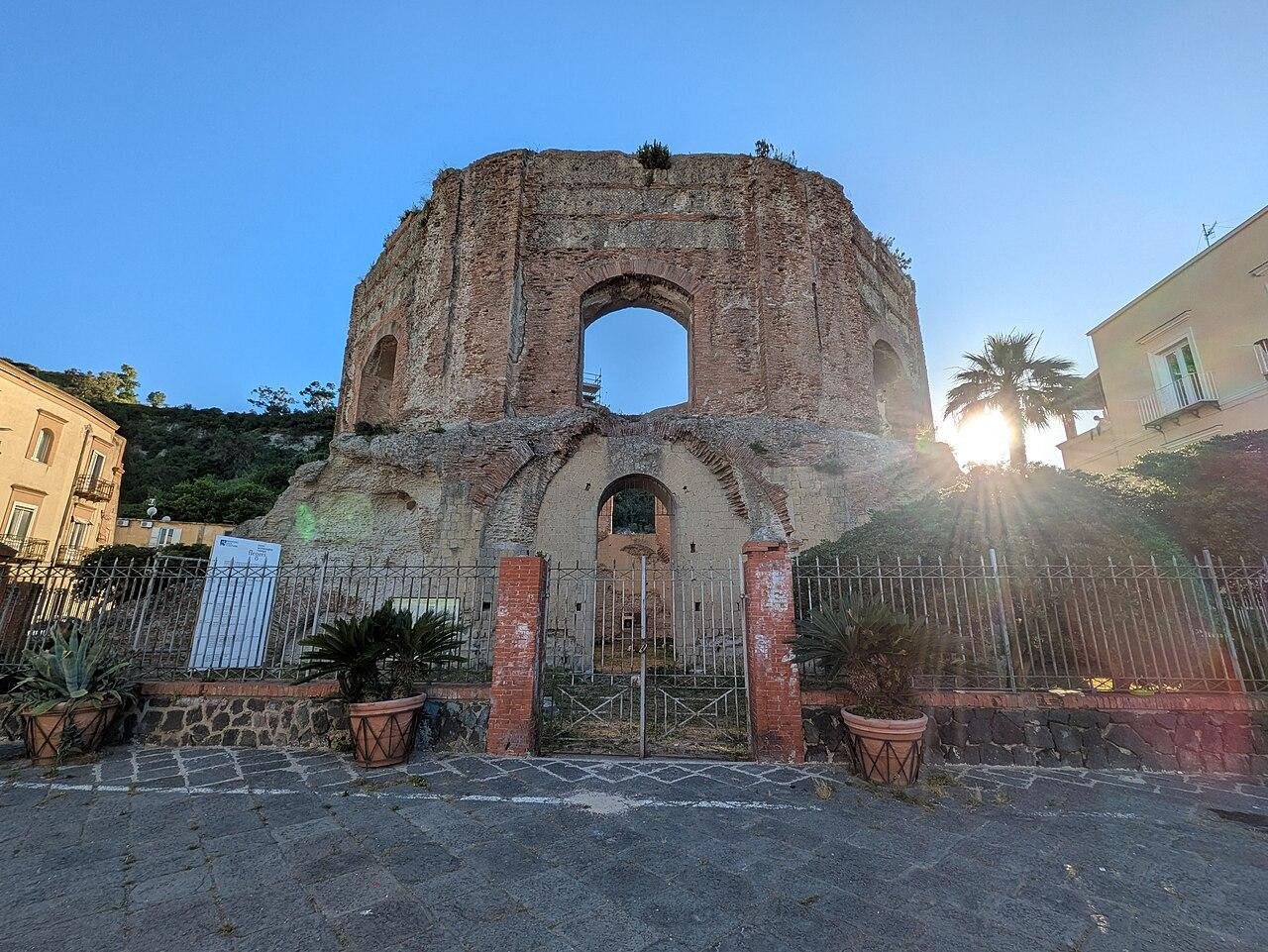
A new multidisciplinary study shines fresh light on how Roman builders achieved the remarkable strength and longevity of the Temple of Venus, a striking architectural landmark in the volcanic landscape of the Phlegraean Fields in southern Italy. Once the grand bathing pool of Baiae’s imperial thermal complex, it now lies about six meters below the modern ground surface, a victim of centuries of bradyseism. Yet despite this geological instability, the building’s core remains impressively intact, an endurance scientists have long sought to understand.
New study uncovers how the Temple of Venus has survived nearly 2,000 years
Temple of Venus in the Phlegrean Fields. Credit: Accurimbono / CC BY-SA 4.0

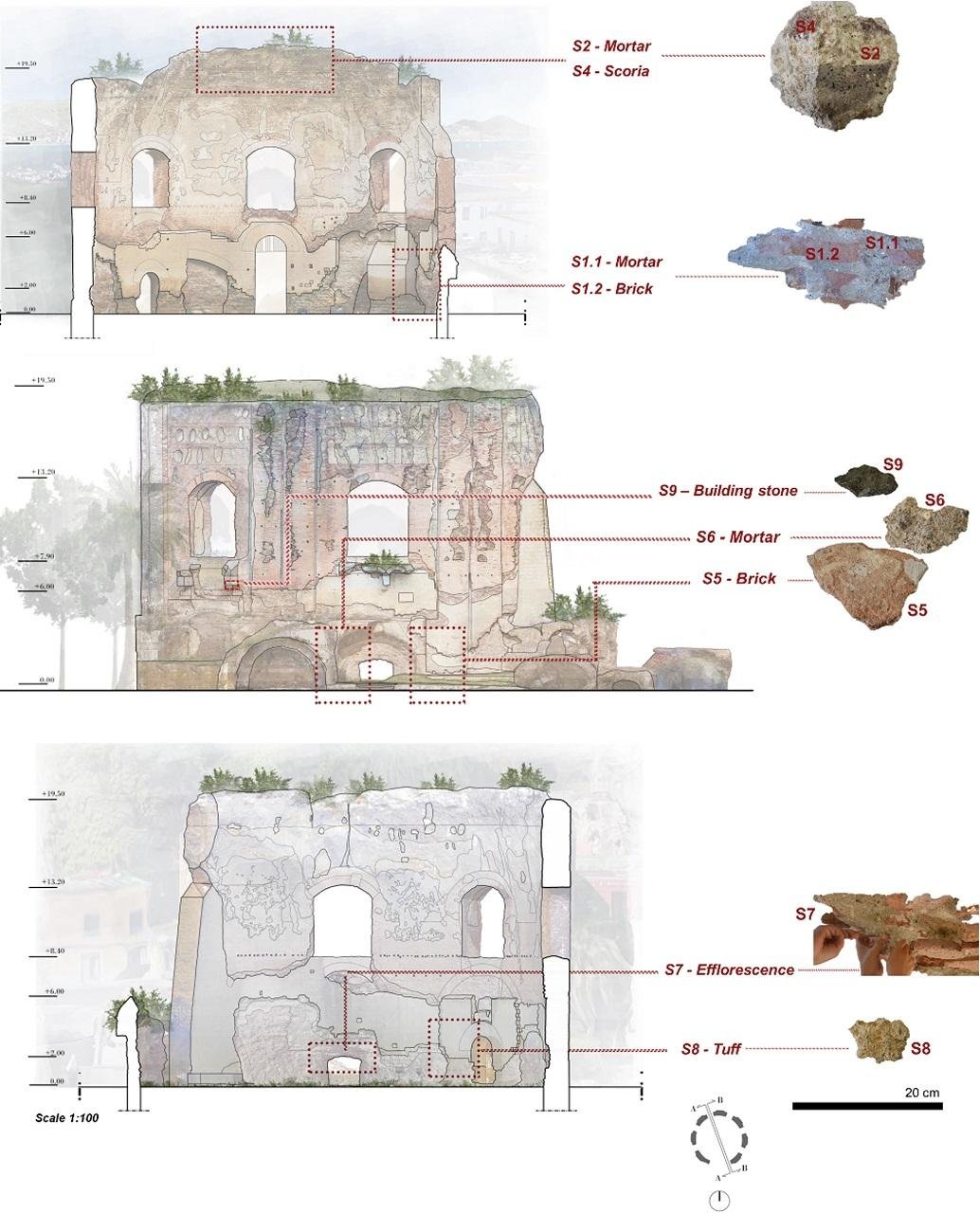
Researchers conducted a detailed material analysis of the temple that was published in Geoheritage. They studied nine small samples from key parts of the monument, including different mortars, brick fragments, volcanic scoria, tuff, lava stone, and a salt efflorescence deposit. By means of petrographic microscopy and X-ray diffraction, the team was able to reconstruct the composition and behavior of the materials selected by the Roman engineers almost 1,900 years ago.

Their studies show a highly developed building technique. The mortars are lime-based, but their remarkable durability comes from volcanic aggregates originating from the Neapolitan Yellow Tuff, a material the Romans knew produced powerful hydraulic reactions with lime and water. Microscopic features such as carbonation patterns and reaction rims surrounding pumice grains confirm that these mortars continued to strengthen long after being laid. Occasional pockets of unreacted lime point to imperfect mixing but do not diminish the overall resilience of the material.

The bricks also display a purposeful mixture of components. They contain silico-clastic sediments and volcanic inclusions in a mixture that could be from naturally transported clays or could have been added intentionally to improve strength and firing performance. Their mineral composition, such as quartz, mica, and iron oxides, explains the reddish color of the bricks and their moderate firing temperature.
New study uncovers how the Temple of Venus has survived nearly 2,000 years
Sketch of the Temple of Venus (Antonini 2021), showing the locations of the nine investigated samples. Credit: C. Rispoli et al., Geoheritage (2025); CC BY 4.0

One of the most revealing discoveries involves the lightweight volcanic scoria used in the upper sections of the temple. The mineralogical signatures, including the presence of leucite, indicate that it came not from the local volcanic field but rather from nearby Mount Vesuvius. Its utilization demonstrates that the Roman builders selectively imported specialized resources when the structural demands required lightening the components in order to reduce stress on the dome and supporting walls.

RelatedStories

Roman cup found in Spain reveals new link to Hadrian’s Wall and Roman soldiers

Roman cup found in Spain reveals new link to Hadrian’s Wall and Roman soldiers

April 29, 2026
AI reconstructs face of Pompeii victim killed in Mount Vesuvius eruption

AI reconstructs face of Pompeii victim killed in Mount Vesuvius eruption

April 28, 2026

Other materials, including local tuff enriched with zeolites and lava stone with a trachytic texture, tie the temple to the geology of the Phlegraean Fields. Meanwhile, the salt crust found on the structure is simply halite, a sign of moisture-driven deterioration that will need to be considered in future conservation efforts.

In all, the study demonstrates the technical skill behind one of the most distinctive monuments in Baiae, constructed in the 2nd century CE under Emperor Hadrian. The octagonal exterior with a circular interior and an umbrella-like dome was made possible by profound, empirical knowledge of geomaterials and their interactions.
More information: Rispoli, C., Montesano, G., Antonini, R. et al. (2025). Innovative Roman Building: Geomaterials, Construction Technology and Architecture of the Roman Temple of Venus (Phlegraean Fields, Italy). Geoheritage 17, 163. doi:10.1007/s12371-025-01208-z
Share156Tweet98Share27ShareSend

You May Also Like...

Roman cup found in Spain reveals new link to Hadrian’s Wall and Roman soldiers
Archaeology

Roman cup found in Spain reveals new link to Hadrian’s Wall and Roman soldiers

April 29, 2026
How Nile River stability shaped the rise of ancient Napata in Sudan’s Kushite kingdom
Archaeology

How Nile River stability shaped the rise of ancient Napata in Sudan’s Kushite kingdom

April 28, 2026
AI reconstructs face of Pompeii victim killed in Mount Vesuvius eruption
Archaeology

AI reconstructs face of Pompeii victim killed in Mount Vesuvius eruption

April 28, 2026
Ancient Roman toilets in Bulgaria reveal early spread of intestinal parasites
Anthropology

Ancient Roman toilets in Bulgaria reveal early spread of intestinal parasites

April 28, 2026
Ancient Roman shipwreck reveals hidden secrets of waterproofing and Mediterranean repairs
Archaeology

Ancient Roman shipwreck reveals hidden secrets of waterproofing and Mediterranean repairs

April 27, 2026
42 lost pages of Codex H recovered, revealing early New Testament structure and scribal practices
Archaeology

42 lost pages of Codex H recovered, revealing early New Testament structure and scribal practices

April 26, 2026

Comments 2

  1. Editorial Team says:
    1 second ago

    Disclaimer: This website is a science-focused magazine that welcomes both academic and non-academic audiences. Comments are written by users and may include personal opinions or unverified claims. They do not necessarily reflect the views of our editorial team or rely on scientific evidence.

    Comment Policy: We kindly ask all commenters to engage respectfully. Comments that contain offensive, insulting, degrading, discriminatory, or racist content will be automatically removed.

    Reply
  2. Susan laird says:
    5 months ago

    In newzealand i was lucky to see 3 pyramids. I recovered shells from them. No one is onterested in l9oking at them. Are you interestedthey are on a farm away from roads. Have you gpt anyone who is interested

    Reply
  3. Richard E Taylor says:
    5 months ago

    Interesting

    Reply

Leave a Reply Cancel reply

Your email address will not be published. Required fields are marked *

Follow us


Instagram
244K

Facebook
118K

Threads
46K

LinkedIn
14K

Twitter
6K

YouTube
1K
  • Trending
  • Comments
  • Latest
Shipwreck Salvage. Credit: rawpixel.com / Public Domain

2,000-year-old shipwreck discovered off Turkish coast with remarkably preserved stacked ceramics

July 2, 2025
A new study suggests the mysterious Voynich Manuscript may be a medieval cipher

A new study suggests the mysterious Voynich Manuscript may be a medieval cipher

January 3, 2026
Viking age DNA reveals 9,000-year-old HIV-resistant gene originating near the Black Sea

Viking age DNA reveals 9,000-year-old HIV-resistant gene originating near the Black Sea

May 18, 2025
3D analysis reveals Shroud of Turin image likely came from sculpture, not Jesus’ body

3D analysis reveals Shroud of Turin image likely came from sculpture, not Jesus’ body

August 3, 2025
Moses may be named in ancient Egyptian mine inscriptions, sparking debate over earliest biblical references

Moses may be named in ancient Egyptian mine inscriptions, sparking debate over earliest biblical references

July 31, 2025
3D analysis reveals Shroud of Turin image likely came from sculpture, not Jesus’ body

3D analysis reveals Shroud of Turin image likely came from sculpture, not Jesus’ body

Moses may be named in ancient Egyptian mine inscriptions, sparking debate over earliest biblical references

Moses may be named in ancient Egyptian mine inscriptions, sparking debate over earliest biblical references

$1 million prize offered to decipher 5,300-year-old Indus Valley script

$1 million prize offered to decipher 5,300-year-old Indus Valley script

Oldest ever genetic data from a human relative found in 2-million-year-old fossilized teeth

Oldest ever genetic data from a human relative found in 2-million-year-old fossilized teeth

Exceptionally large Roman shoes discovered at Magna fort near Hadrian’s Wall

Exceptionally large Roman shoes discovered at Magna fort near Hadrian’s Wall

Roman cup found in Spain reveals new link to Hadrian’s Wall and Roman soldiers

Roman cup found in Spain reveals new link to Hadrian’s Wall and Roman soldiers

April 29, 2026
How Nile River stability shaped the rise of ancient Napata in Sudan’s Kushite kingdom

How Nile River stability shaped the rise of ancient Napata in Sudan’s Kushite kingdom

April 28, 2026
AI reconstructs face of Pompeii victim killed in Mount Vesuvius eruption

AI reconstructs face of Pompeii victim killed in Mount Vesuvius eruption

April 28, 2026
Ancient Roman toilets in Bulgaria reveal early spread of intestinal parasites

Ancient Roman toilets in Bulgaria reveal early spread of intestinal parasites

April 28, 2026
Ancient Roman shipwreck reveals hidden secrets of waterproofing and Mediterranean repairs

Ancient Roman shipwreck reveals hidden secrets of waterproofing and Mediterranean repairs

April 27, 2026

Archaeology News online magazine

Archaeology News is an international online magazine that covers all aspects of archaeology.


Categories

  • Academics
    • Books
    • Conferences
    • Universities
  • Articles
  • Download
  • Game
  • News
    • Anthropology
    • Archaeology
    • Paleontology
  • Quiz
  • Tours

Subscribe to our newsletter

© 2024 - Archaeology News Online Magazine. All Rights Reserved.

  • About
  • Privacy Policy
  • Terms of Use
  • Donation
  • Contact

Manage Consent
To provide the best experiences, we use technologies like cookies to store and/or access device information. Consenting to these technologies will allow us to process data such as browsing behavior or unique IDs on this site. Not consenting or withdrawing consent, may adversely affect certain features and functions.
Functional Always active
The technical storage or access is strictly necessary for the legitimate purpose of enabling the use of a specific service explicitly requested by the subscriber or user, or for the sole purpose of carrying out the transmission of a communication over an electronic communications network.
Preferences
The technical storage or access is necessary for the legitimate purpose of storing preferences that are not requested by the subscriber or user.
Statistics
The technical storage or access that is used exclusively for statistical purposes. The technical storage or access that is used exclusively for anonymous statistical purposes. Without a subpoena, voluntary compliance on the part of your Internet Service Provider, or additional records from a third party, information stored or retrieved for this purpose alone cannot usually be used to identify you.
Marketing
The technical storage or access is required to create user profiles to send advertising, or to track the user on a website or across several websites for similar marketing purposes.
  • Manage options
  • Manage services
  • Manage {vendor_count} vendors
  • Read more about these purposes
View preferences
  • {title}
  • {title}
  • {title}
  • Home
  • News
    • Archaeology
    • Anthropology
    • Paleontology
  • Academic
    • Books
    • Conferences
    • Universities
  • Articles
  • VR Tours
  • Quiz & Game
  • Download
  • Encyclopedia
  • Forum

About  .  Contact  .  Donation

© 2024 - Archaeology News Online Magazine. All Rights Reserved