• About
  • Privacy Policy
  • Terms of Use
  • Donation
  • Contact
No Result
View All Result
Archaeology News
  • Home
  • News
    • Archaeology
    • Anthropology
    • Paleontology
  • Academic
    • Books
    • Conferences
    • Universities
  • Articles
  • VR Tours
  • Quiz & Game
  • Download
  • Encyclopedia
  • Forum
Archaeology News
No Result
View All Result
Home News Archaeology

500-year-old Transylvanian diaries reveal how the Little Ice Age shaped life and death

by Dario Radley
February 12, 2025

Researchers in Romania have delved into centuries-old documents to grasp how climate fluctuations in the 16th century impacted Transylvania, an area that’s now part of Romania. The research, which uses various old sources like diaries, travel notes, and monastery records, looks at the big shifts in weather during this time and how they changed human societies. The study, published on February 12 in Frontiers in Climate, shows how these climate changes had an impact on agriculture, public health, and the stability of society in the area.
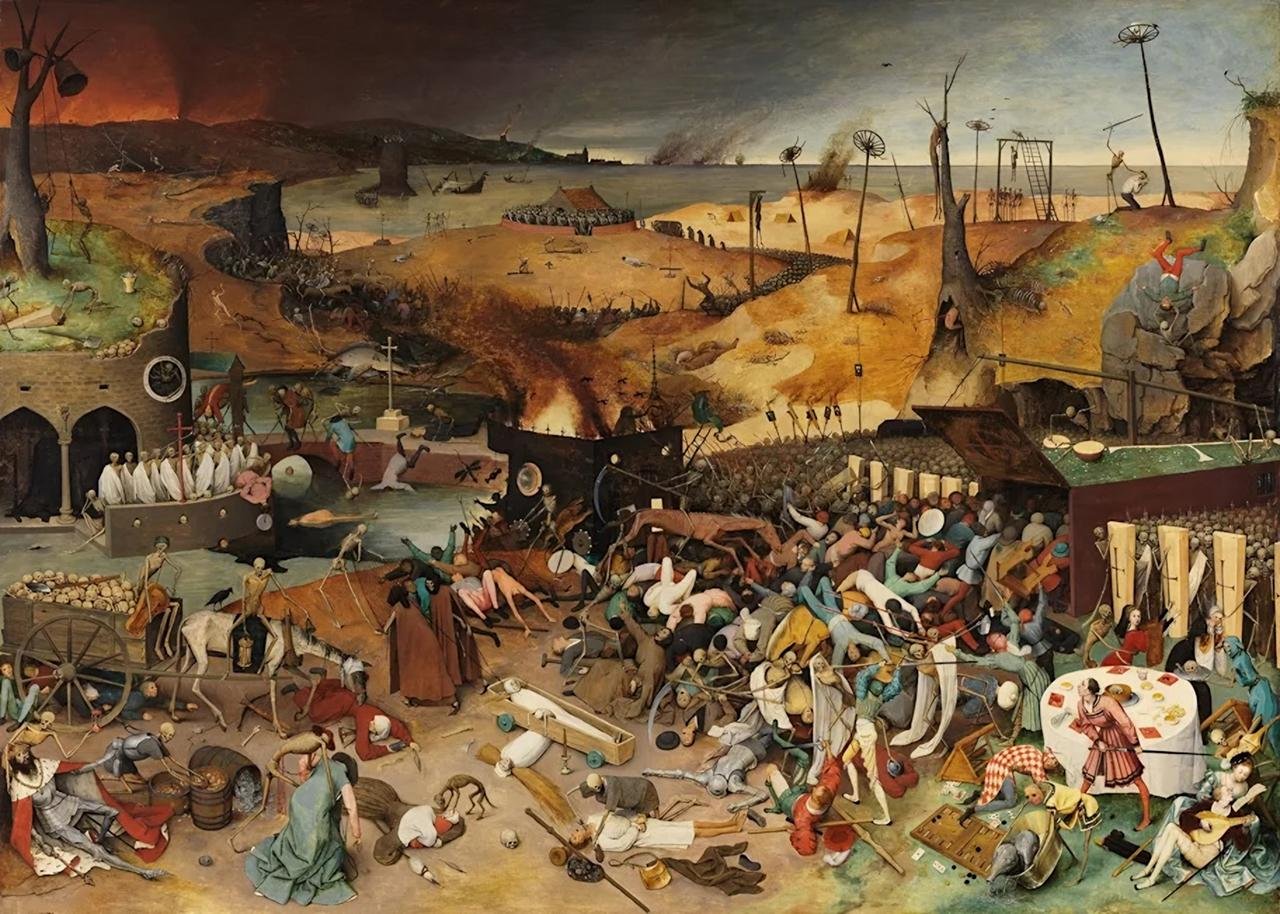
500-year-old Transylvanian diaries reveal how the Little Ice Age shaped life and death
The Triumph of Death by Pieter Bruegel the Elder, circa 1562. Credit: Felton Davis/flickr, CC BY 2.0

The Little Ice Age, spanning approximately from 1300 to 1850 CE, is frequently linked with widespread famines, social upheaval, and the spread of diseases. Although scientific techniques such as ice core analyses and sediment samples have yielded significant information about the climate during this period, examining “society’s archive”—the written records of everyday people—provides a distinctive human-centered viewpoint.

Tudor Caciora, a geographer from the University of Oradea and co-author of the study, said: “Studying climate records from society’s archive is as crucial as analyzing natural proxies,” Caciora explained. “It provides a human-centric perspective on past climatic events.”

The documents indicate that Transylvania experienced remarkably high temperatures and drought conditions during the first half of the 16th century. An account describes the summer of 1540 when “The springs dried up, and the rivers dwindled to mere trickles. Livestock fell in the fields, and the air was thick with despair as the people gathered in processions, praying for rain,” said Caciora. “This vivid account underscores the emotional and spiritual dimensions of living through climatic extremes.”
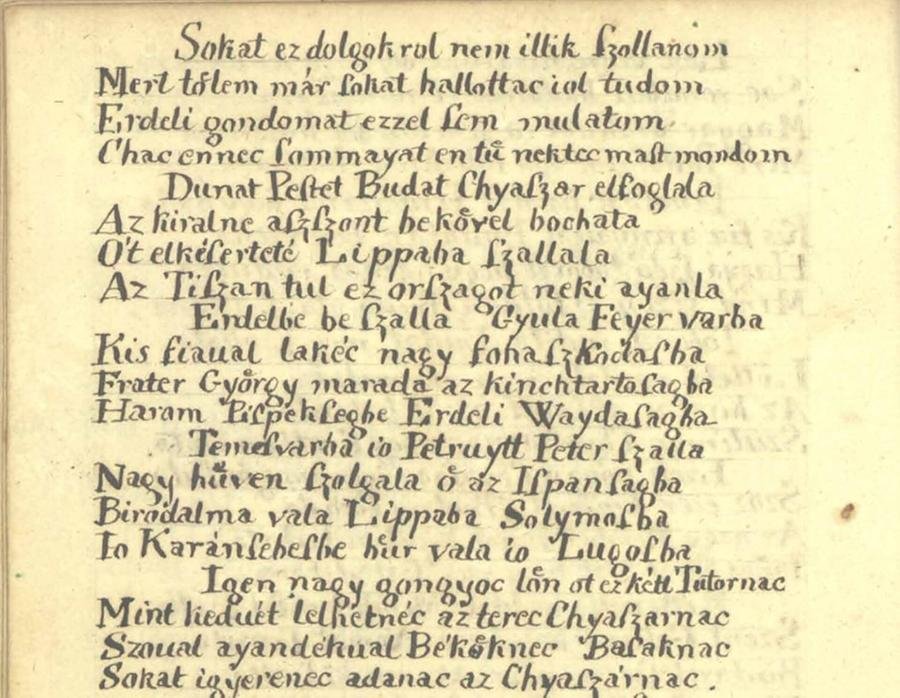
500-year-old Transylvanian diaries reveal how the Little Ice Age shaped life and death
Sources included diaries, travel notes, parish or monastery registers, and other written documents. Credit: Gaceu et al., 2024.

Conversely, towards the latter part of the century, weather patterns shifted dramatically; heavy rains and flooding became increasingly common throughout the 1590s. These extreme climatic events coincided with a marked intensification of the Little Ice Age across Europe. However, it appears that Transylvania’s climate diverged from prevailing trends observed elsewhere on the continent.


RelatedStories

Why bison hunters abandoned a long-used site 1,100 years ago due to severe droughts

Why bison hunters abandoned a long-used site 1,100 years ago due to severe droughts

February 11, 2026
Early human innovation in southern Africa tied to mobility and social networks rather than climate alone, new study shows

Early human innovation in southern Africa tied to mobility and social networks rather than climate alone, new study shows

February 6, 2026

While significant cooling affected many Western European regions during this epoch, Transylvania saw more frequent hot weather than cold, which indicates that the region may have experienced the effects of the Little Ice Age later than other areas. Later documents corroborate this theory by detailing accounts of severe winters and cold waves experienced subsequently.
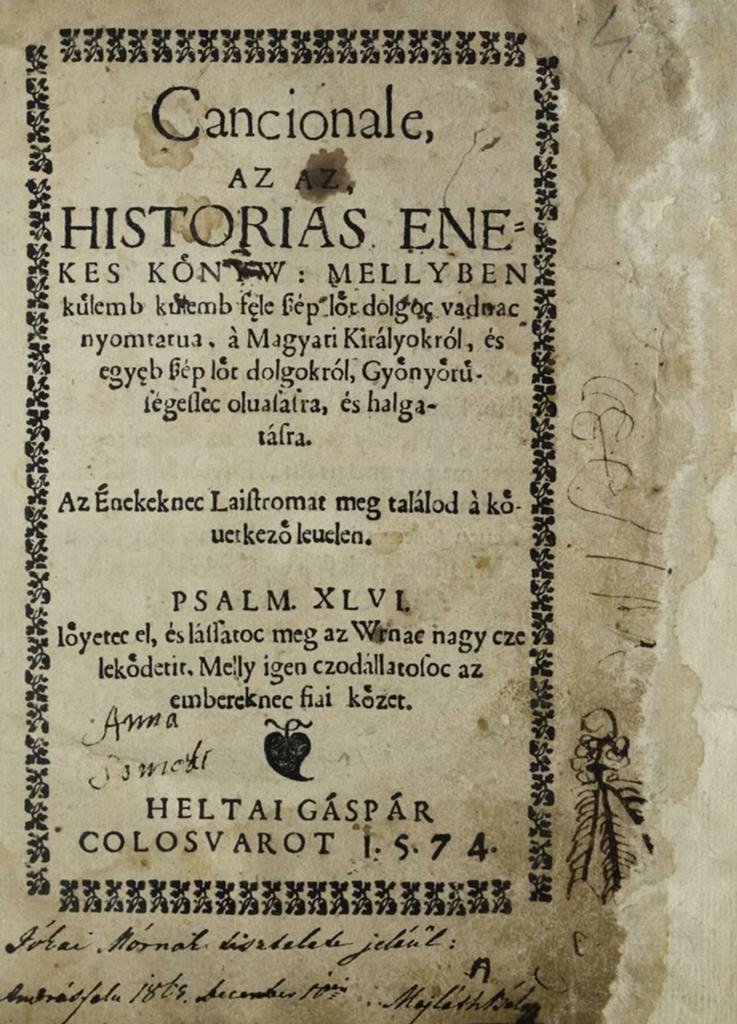
500-year-old Transylvanian diaries reveal how the Little Ice Age shaped life and death
The ‘society’s archive’—contains reports and observations about local climates in bygone centuries. Credit: Gaceu et al., 2024.

The impacts of these weather fluctuations were far-reaching. Climatic instability was conducive to a range of catastrophic events: the Black Death, recurring famines, and locust invasions. The social and economic consequences of these disasters were profound, but they inspired innovation. According to Caciora, “Towns might have adopted flood-resistant infrastructure or migrated to more favorable areas. The challenges might also have spurred technological innovations, such as improved irrigation systems or storage facilities.”

While the findings from these historical texts provided great insight into their investigation, the study acknowledges several limitations. Literacy was not widespread, and those records that exist are often fragmented, subjective, and localized. For instance, they did not cover some years in the 16th century because there were no records. Nevertheless, the study demonstrates how crucial climate change can be in driving human history.


More information: Gaceu, O. R., Caciora, T., Baias, Ștefan, Morar, C., Dudaș, M., Stupariu, M., & Maxim, M. (2025). Reconstruction of climatic events from the 16th century in Transylvania: interdisciplinary analysis based on historical sources. Frontiers in Climate, 6, 1507143. doi:10.3389/fclim.2024.1507143
Share4Tweet3Share1ShareSend

You May Also Like...

2,000-year-old human and animal footprints discovered at Lunan Bay, Scotland
Archaeology

2,000-year-old human and animal footprints discovered at Lunan Bay, Scotland

February 20, 2026
The “Princess” of Bagicz re-dated: tree rings resolve the mystery of a rare Roman-era log coffin
Anthropology

The “Princess” of Bagicz re-dated: tree rings resolve the mystery of a rare Roman-era log coffin

February 20, 2026
1.77-million-year-old Homo erectus skulls in China show early humans reached Asia sooner than believed
Anthropology

1.77-million-year-old Homo erectus skulls in China show early humans reached Asia sooner than believed

February 19, 2026
Hidden 17th-century bastion fort discovered in Świerże, eastern Poland
Archaeology

Hidden 17th-century bastion fort discovered in Świerże, eastern Poland

February 19, 2026
Seabird guano fueled the rise of Peru’s Chincha Kingdom, isotope study finds
Archaeology

Seabird guano fueled the rise of Peru’s Chincha Kingdom, isotope study finds

February 19, 2026
Historic cannon unearthed during Hull’s Queen’s Gardens restoration in the UK
Archaeology

Historic cannon unearthed during Hull’s Queen’s Gardens restoration in England

February 18, 2026

Follow us


Instagram
244K

Facebook
118K

Threads
45K

LinkedIn
14K

Twitter
6K

YouTube
1K
  • Trending
  • Comments
  • Latest
Shipwreck Salvage. Credit: rawpixel.com / Public Domain

2,000-year-old shipwreck discovered off Turkish coast with remarkably preserved stacked ceramics

July 2, 2025
Viking age DNA reveals 9,000-year-old HIV-resistant gene originating near the Black Sea

Viking age DNA reveals 9,000-year-old HIV-resistant gene originating near the Black Sea

May 18, 2025
A new study suggests the mysterious Voynich Manuscript may be a medieval cipher

A new study suggests the mysterious Voynich Manuscript may be a medieval cipher

January 3, 2026
Moses may be named in ancient Egyptian mine inscriptions, sparking debate over earliest biblical references

Moses may be named in ancient Egyptian mine inscriptions, sparking debate over earliest biblical references

July 31, 2025
Mystery of Armenia’s 6,000-year-old dragon stones solved

Mystery of Armenia’s 6,000-year-old dragon stones solved

September 23, 2025
3D analysis reveals Shroud of Turin image likely came from sculpture, not Jesus’ body

3D analysis reveals Shroud of Turin image likely came from sculpture, not Jesus’ body

Moses may be named in ancient Egyptian mine inscriptions, sparking debate over earliest biblical references

Moses may be named in ancient Egyptian mine inscriptions, sparking debate over earliest biblical references

$1 million prize offered to decipher 5,300-year-old Indus Valley script

$1 million prize offered to decipher 5,300-year-old Indus Valley script

Oldest ever genetic data from a human relative found in 2-million-year-old fossilized teeth

Oldest ever genetic data from a human relative found in 2-million-year-old fossilized teeth

Exceptionally large Roman shoes discovered at Magna fort near Hadrian’s Wall

Exceptionally large Roman shoes discovered at Magna fort near Hadrian’s Wall

2,000-year-old human and animal footprints discovered at Lunan Bay, Scotland

2,000-year-old human and animal footprints discovered at Lunan Bay, Scotland

February 20, 2026
The “Princess” of Bagicz re-dated: tree rings resolve the mystery of a rare Roman-era log coffin

The “Princess” of Bagicz re-dated: tree rings resolve the mystery of a rare Roman-era log coffin

February 20, 2026
1.77-million-year-old Homo erectus skulls in China show early humans reached Asia sooner than believed

1.77-million-year-old Homo erectus skulls in China show early humans reached Asia sooner than believed

February 19, 2026
Hidden 17th-century bastion fort discovered in Świerże, eastern Poland

Hidden 17th-century bastion fort discovered in Świerże, eastern Poland

February 19, 2026
Seabird guano fueled the rise of Peru’s Chincha Kingdom, isotope study finds

Seabird guano fueled the rise of Peru’s Chincha Kingdom, isotope study finds

February 19, 2026

Archaeology News online magazine

Archaeology News is an international online magazine that covers all aspects of archaeology.


Categories

  • Academics
    • Books
    • Conferences
    • Universities
  • Articles
  • Download
  • Game
  • News
    • Anthropology
    • Archaeology
    • Paleontology
  • Quiz
  • Tours

Subscribe to our newsletter

© 2024 - Archaeology News Online Magazine. All Rights Reserved.

  • About
  • Privacy Policy
  • Terms of Use
  • Donation
  • Contact

Manage Consent
To provide the best experiences, we use technologies like cookies to store and/or access device information. Consenting to these technologies will allow us to process data such as browsing behavior or unique IDs on this site. Not consenting or withdrawing consent, may adversely affect certain features and functions.
Functional Always active
The technical storage or access is strictly necessary for the legitimate purpose of enabling the use of a specific service explicitly requested by the subscriber or user, or for the sole purpose of carrying out the transmission of a communication over an electronic communications network.
Preferences
The technical storage or access is necessary for the legitimate purpose of storing preferences that are not requested by the subscriber or user.
Statistics
The technical storage or access that is used exclusively for statistical purposes. The technical storage or access that is used exclusively for anonymous statistical purposes. Without a subpoena, voluntary compliance on the part of your Internet Service Provider, or additional records from a third party, information stored or retrieved for this purpose alone cannot usually be used to identify you.
Marketing
The technical storage or access is required to create user profiles to send advertising, or to track the user on a website or across several websites for similar marketing purposes.
  • Manage options
  • Manage services
  • Manage {vendor_count} vendors
  • Read more about these purposes
View preferences
  • {title}
  • {title}
  • {title}
  • Home
  • News
    • Archaeology
    • Anthropology
    • Paleontology
  • Academic
    • Books
    • Conferences
    • Universities
  • Articles
  • VR Tours
  • Quiz & Game
  • Download
  • Encyclopedia
  • Forum

About  .  Contact  .  Donation

© 2024 - Archaeology News Online Magazine. All Rights Reserved