• About
  • Privacy Policy
  • Terms of Use
  • Donation
  • Contact
No Result
View All Result
Archaeology News
  • Home
  • News
    • Archaeology
    • Anthropology
    • Paleontology
  • Academic
    • Books
    • Conferences
    • Universities
  • Articles
  • VR Tours
  • Quiz & Game
  • Download
  • Encyclopedia
  • Forum
Archaeology News
No Result
View All Result
Home News Archaeology

3,000-year-old hymn reveals musical links across Bronze Age civilizations from India to the Mediterranean

by Dario Radley
August 16, 2025

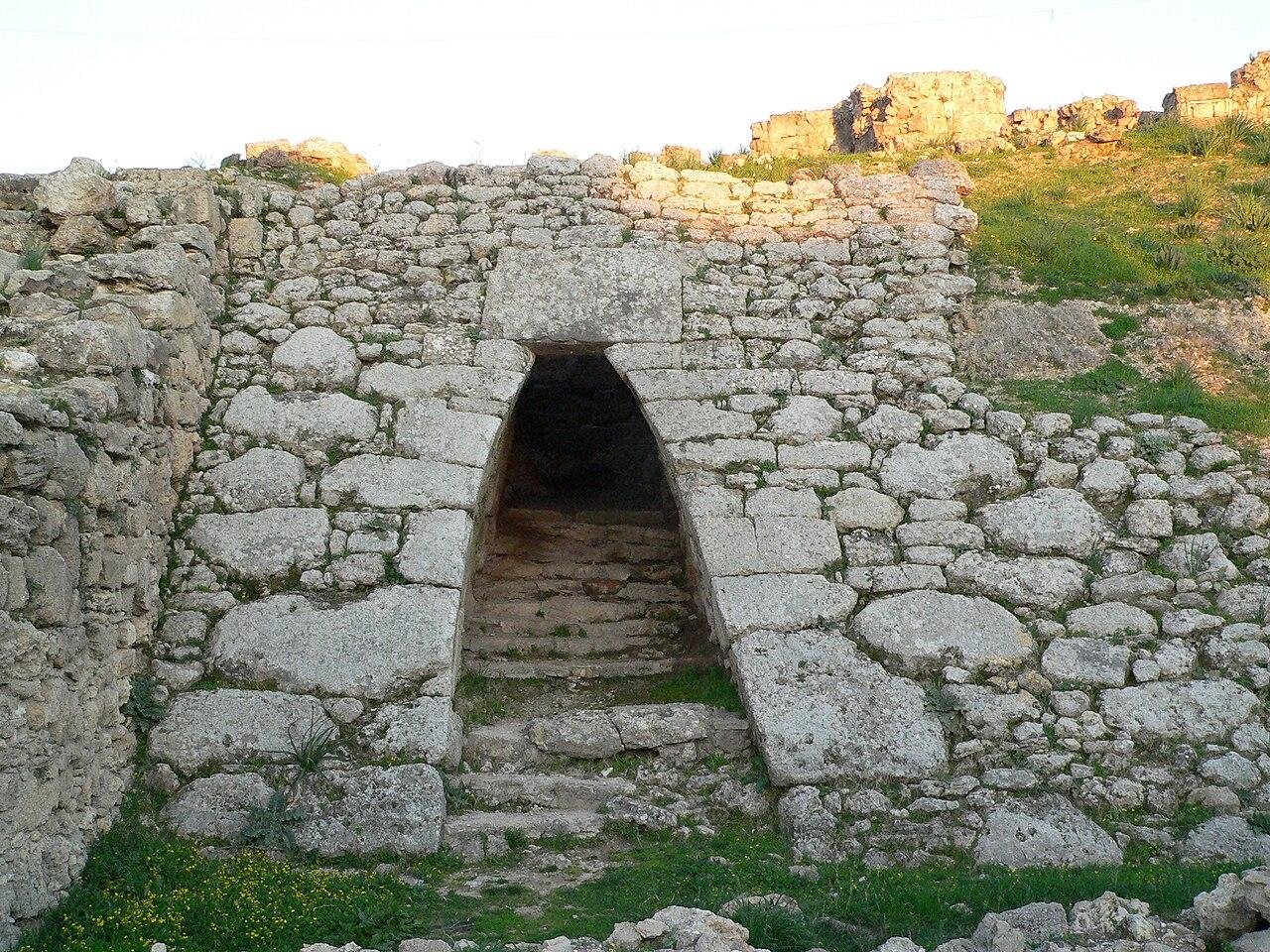
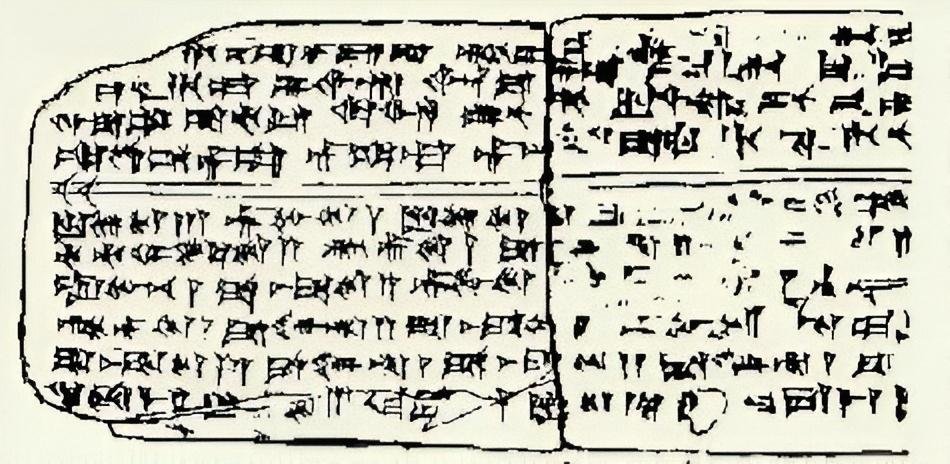
More than 3,000 years ago, in the port city of Ugarit on the eastern coast of the Mediterranean, the scribes inscribed a song in the Hurrian language on a clay tablet. The Hymn to Nikkal is the earliest known musical score found to date. A recent study suggests that this brief composition could be of unprecedented importance: evidence of a shared global musical culture in the Bronze Age.
3,000-year-old hymn reveals musical links across Bronze Age civilizations from India to the Mediterranean
An entrance to the royal palace at Ugarit, where the oldest song in the world was found. Credit: Disdero / CC BY 3.0

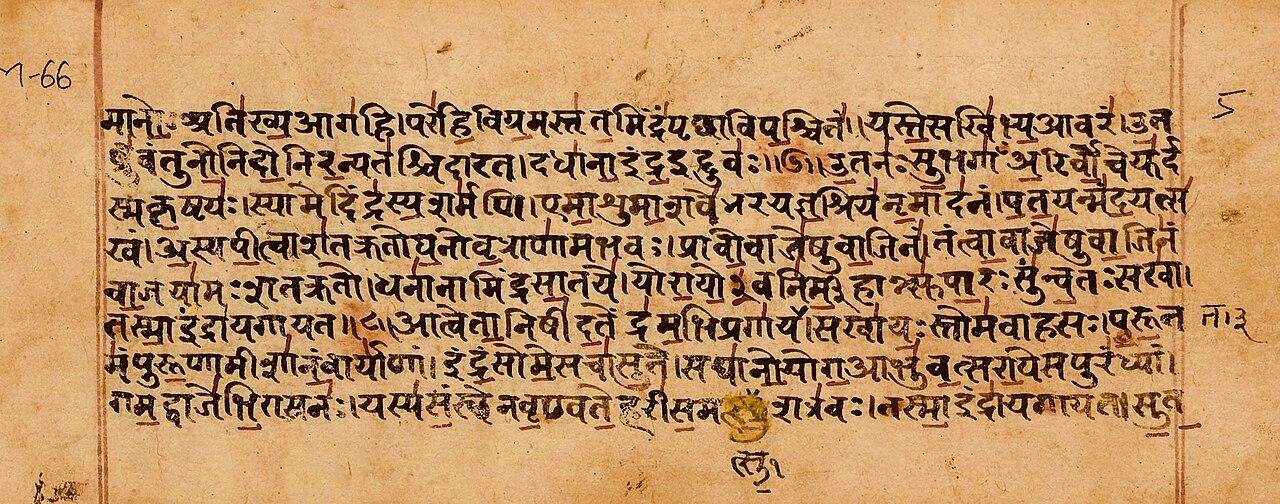
The study, conducted by University of California, Santa Barbara’s Dan C. Baciu, and published on the Preprints.org server, compares the Hymn to Nikkal with the Rig Veda, one of the oldest Indian sacred texts. Using computer-assisted rhythm and melody mapping, Baciu’s study demonstrated astonishing parallels between the two pieces. Baciu explained that one in five Rig Veda verses ends with the same cadence as the Hymn to Nikkal. The odds of this occurring by accident are less than one in a million.

Cadences—repeated melodic or rhythmic units—act as musical punctuation, marking verse endings. Two cadences dominate in the Hymn to Nikkal: one simple and heartbeat-like, and one more intricate. These same two models are used in the Rig Veda, with one most frequently ending verses and the other linked closely to the Triṣṭubh meter, according to Baciu. This duality of the simple and the complex, he argues, is a deliberate artistic choice.

What astonished researchers is not only the shared rhythm but also the echoed melodic tendencies. Ancient commentators on the Rig Veda described its melodies as mounting upon accented syllables and falling thereafter—a structure also found in the Ugaritic hymn. When reconstructed digitally, the two pieces resonated with such similar characteristics that their kinship became unmistakable.
3,000-year-old hymn reveals musical links across Bronze Age civilizations from India to the Mediterranean
A drawing of one side of the tablet on which the Hymn to Nikkal is inscribed. Public domain

The discovery opens questions about the ways in which music was spread over long distances in ancient times. Situated at the crossroads of Near Eastern and Mediterranean trade, Ugarit connected Mesopotamian and Anatolian cultures. The Mitanni kingdom is referred to by historians as a probable cultural bridge between Ugarit and India. This Hurrian-occupied Bronze Age state, linked with Indo-European-speaking communities, would have been the channel through which Vedic traditions and musical forms were exchanged.

RelatedStories

Scientists uncover Ireland’s largest prehistoric hillfort settlement, reshaping views of Bronze Age society

Scientists uncover Ireland’s largest prehistoric hillfort settlement, reshaping views of Bronze Age society

January 1, 2026
A 4,000-year-old sheep may reveal how the Bronze Age plague spread across Eurasia

A 4,000-year-old sheep may reveal how the Bronze Age plague spread across Eurasia

December 28, 2025

“The Mitanni left us two gifts,” Baciu wrote. “One is the earliest evidence of Vedic culture outside India. The other is this hymn, which demonstrates how music was able to unite civilizations.”
3,000-year-old hymn reveals musical links across Bronze Age civilizations from India to the Mediterranean
The Rigveda Samhita, dated to 1500–1200 BCE. Credit: Ms Sarah Welch / CC BY-SA 4.0

The implications go far beyond the interest of historians. The study suggests that music—more ephemeral than stone monuments or royal decrees—spread faster and more enduringly than political alliances. As kingdoms came and went, treaties dissolved, rhythms endured. Indeed, the same cadence patterns emerged centuries later in Greek lyric poetry, most famously in Sappho’s works, and much later in European literature, echoing even in the verses of German poet Friedrich Hölderlin in 1801.

The Rig Veda itself, even now recited by more than a billion Hindus at weddings and rituals, has maintained musicality with remarkable fidelity. Though accents have evolved over millennia, its cadences remain recognizable. This consistency shows how oral traditions preserved not only words but also musical structures with remarkable precision.

Baciu’s research suggests that music may have been the first global language, spreading more easily than armies or trade caravans.

Concepts of a global musical culture challenge classic notions of isolated civilizations. They also resonate with present-day questions regarding the unity of culture in divided times. Just as Ugarit’s rhythms linked India, the Caucasus, and the Mediterranean over mountains and deserts, music today still has the power to transcend borders.

While scholars caution that more evidence is needed—the presence of prehistoric musical scores is rare—the Hymn to Nikkal presents a tantalizing vision of a Bronze Age world where people, thousands of miles away from each other, may have traded not just goods but songs.

More information: Dan C. Baciu. (2025). In the Beginning was Music! Direct Evidence for Global Musical Connections in the Bronze Age. Preprints. doi.org/10.20944/preprints202506.1669.v2
Share474Tweet296Share83ShareSend

You May Also Like...

60,000-year-old poison arrows from South Africa reveal the world’s earliest poisoned weapons and advanced hunting techniques
Archaeology

60,000-year-old poison arrows from South Africa reveal the world’s earliest poisoned weapons and advanced hunting techniques

January 8, 2026
Inscribed clay cylinders reveal Nebuchadnezzar II’s restoration of the Kish Ziggurat
Archaeology

Inscribed clay cylinders reveal Nebuchadnezzar II’s restoration of the Kish Ziggurat

January 7, 2026
Rare Late Roman mosaic with Solomon’s Knot discovered beneath modern İzmir
Archaeology

Rare Late Roman mosaic with Solomon’s Knot discovered beneath modern İzmir

January 7, 2026
1130 depiction of Saxons, Jutes, and Angles crossing the sea to Britain. Credit: Wikimedia / CC BY-SA 4.0. Roots of medieval migration into England uncovered by large-scale bioarchaeological study
Anthropology

Roots of medieval migration into England uncovered by large-scale bioarchaeological study

January 6, 2026
Rare Celtic gold coins found in Swiss bog may reveal ancient ritual offerings
Archaeology

Rare Celtic gold coins found in Swiss bog may reveal ancient ritual offerings

January 5, 2026
Rare medieval gold ring unearthed in Tønsberg
Archaeology

Rare medieval gold ring unearthed in Tønsberg reveals beliefs and craftsmanship of its time

January 5, 2026

Comments 3

  1. Editorial Team says:
    1 second ago

    Disclaimer: This website is a science-focused magazine that welcomes both academic and non-academic audiences. Comments are written by users and may include personal opinions or unverified claims. They do not necessarily reflect the views of our editorial team or rely on scientific evidence.

    Comment Policy: We kindly ask all commenters to engage respectfully. Comments that contain offensive, insulting, degrading, discriminatory, or racist content will be automatically removed.

    Reply
  2. Sharon Blue Campbell says:
    5 months ago

    I am a music aficionado (but not a musician) and this is the most beautiful and beautifully rendered composition I have ever heard and had the pleasure to enjoy. It is not easy to uplift a song/hymm from the heart to the soul but Dan Baciu has accomplished the sacred in a memorable experience.
    Thank you so much!
    P.S. Is it possible to purchase the audio version?

    Reply
  3. DR B R MANJUNATH says:
    5 months ago

    This can also means that the Rigveda composers’ancestors came to India fm Mittani

    Reply
  4. Kamala Karu says:
    5 months ago

    Greeks to Cholas perhaps. Cholas never failed to honour musics.

    Reply

Leave a Reply Cancel reply

Your email address will not be published. Required fields are marked *

Follow us


Instagram
244K

Facebook
118K

Threads
45K

LinkedIn
14K

Twitter
6K

YouTube
1K
  • Trending
  • Comments
  • Latest
Shipwreck Salvage. Credit: rawpixel.com / Public Domain

2,000-year-old shipwreck discovered off Turkish coast with remarkably preserved stacked ceramics

July 2, 2025
Viking age DNA reveals 9,000-year-old HIV-resistant gene originating near the Black Sea

Viking age DNA reveals 9,000-year-old HIV-resistant gene originating near the Black Sea

May 18, 2025
A new study suggests the mysterious Voynich Manuscript may be a medieval cipher

A new study suggests the mysterious Voynich Manuscript may be a medieval cipher

January 3, 2026
Moses may be named in ancient Egyptian mine inscriptions, sparking debate over earliest biblical references

Moses may be named in ancient Egyptian mine inscriptions, sparking debate over earliest biblical references

July 31, 2025
Mystery of Armenia’s 6,000-year-old dragon stones solved

Mystery of Armenia’s 6,000-year-old dragon stones solved

September 23, 2025
3D analysis reveals Shroud of Turin image likely came from sculpture, not Jesus’ body

3D analysis reveals Shroud of Turin image likely came from sculpture, not Jesus’ body

Moses may be named in ancient Egyptian mine inscriptions, sparking debate over earliest biblical references

Moses may be named in ancient Egyptian mine inscriptions, sparking debate over earliest biblical references

$1 million prize offered to decipher 5,300-year-old Indus Valley script

$1 million prize offered to decipher 5,300-year-old Indus Valley script

Oldest ever genetic data from a human relative found in 2-million-year-old fossilized teeth

Oldest ever genetic data from a human relative found in 2-million-year-old fossilized teeth

Exceptionally large Roman shoes discovered at Magna fort near Hadrian’s Wall

Exceptionally large Roman shoes discovered at Magna fort near Hadrian’s Wall

60,000-year-old poison arrows from South Africa reveal the world’s earliest poisoned weapons and advanced hunting techniques

60,000-year-old poison arrows from South Africa reveal the world’s earliest poisoned weapons and advanced hunting techniques

January 8, 2026
Inscribed clay cylinders reveal Nebuchadnezzar II’s restoration of the Kish Ziggurat

Inscribed clay cylinders reveal Nebuchadnezzar II’s restoration of the Kish Ziggurat

January 7, 2026
Rare Late Roman mosaic with Solomon’s Knot discovered beneath modern İzmir

Rare Late Roman mosaic with Solomon’s Knot discovered beneath modern İzmir

January 7, 2026
1130 depiction of Saxons, Jutes, and Angles crossing the sea to Britain. Credit: Wikimedia / CC BY-SA 4.0. Roots of medieval migration into England uncovered by large-scale bioarchaeological study

Roots of medieval migration into England uncovered by large-scale bioarchaeological study

January 6, 2026
Rare Celtic gold coins found in Swiss bog may reveal ancient ritual offerings

Rare Celtic gold coins found in Swiss bog may reveal ancient ritual offerings

January 5, 2026

Archaeology News online magazine

Archaeology News is an international online magazine that covers all aspects of archaeology.


Categories

  • Academics
    • Books
    • Conferences
    • Universities
  • Articles
  • Download
  • Game
  • News
    • Anthropology
    • Archaeology
    • Paleontology
  • Quiz
  • Tours

Subscribe to our newsletter

© 2024 - Archaeology News Online Magazine. All Rights Reserved.

  • About
  • Privacy Policy
  • Terms of Use
  • Donation
  • Contact

Welcome Back!

Login to your account below

Forgotten Password? Sign Up

Create New Account!

Fill the forms below to register

All fields are required. Log In

Retrieve your password

Please enter your username or email address to reset your password.

Log In

Add New Playlist

Manage Consent
To provide the best experiences, we use technologies like cookies to store and/or access device information. Consenting to these technologies will allow us to process data such as browsing behavior or unique IDs on this site. Not consenting or withdrawing consent, may adversely affect certain features and functions.
Functional Always active
The technical storage or access is strictly necessary for the legitimate purpose of enabling the use of a specific service explicitly requested by the subscriber or user, or for the sole purpose of carrying out the transmission of a communication over an electronic communications network.
Preferences
The technical storage or access is necessary for the legitimate purpose of storing preferences that are not requested by the subscriber or user.
Statistics
The technical storage or access that is used exclusively for statistical purposes. The technical storage or access that is used exclusively for anonymous statistical purposes. Without a subpoena, voluntary compliance on the part of your Internet Service Provider, or additional records from a third party, information stored or retrieved for this purpose alone cannot usually be used to identify you.
Marketing
The technical storage or access is required to create user profiles to send advertising, or to track the user on a website or across several websites for similar marketing purposes.
  • Manage options
  • Manage services
  • Manage {vendor_count} vendors
  • Read more about these purposes
View preferences
  • {title}
  • {title}
  • {title}
  • Home
  • News
    • Archaeology
    • Anthropology
    • Paleontology
  • Academic
    • Books
    • Conferences
    • Universities
  • Articles
  • VR Tours
  • Quiz & Game
  • Download
  • Encyclopedia
  • Forum

About  .  Contact  .  Donation

© 2024 - Archaeology News Online Magazine. All Rights Reserved