• About
  • Privacy Policy
  • Terms of Use
  • Donation
  • Contact
No Result
View All Result
Archaeology News
  • Home
  • News
    • Archaeology
    • Anthropology
    • Paleontology
  • Academic
    • Books
    • Conferences
    • Universities
  • Articles
  • VR Tours
  • Quiz & Game
  • Download
  • Encyclopedia
  • Forum
Archaeology News
No Result
View All Result
Home News Archaeology

3,000-year-old Bronze Age daggers unearthed in a German cornfield

by Dario Radley
March 31, 2025

Two well-preserved daggers from the Bronze Age have been discovered in a field in the municipality of Kutenholz, Lower Saxony, Germany.
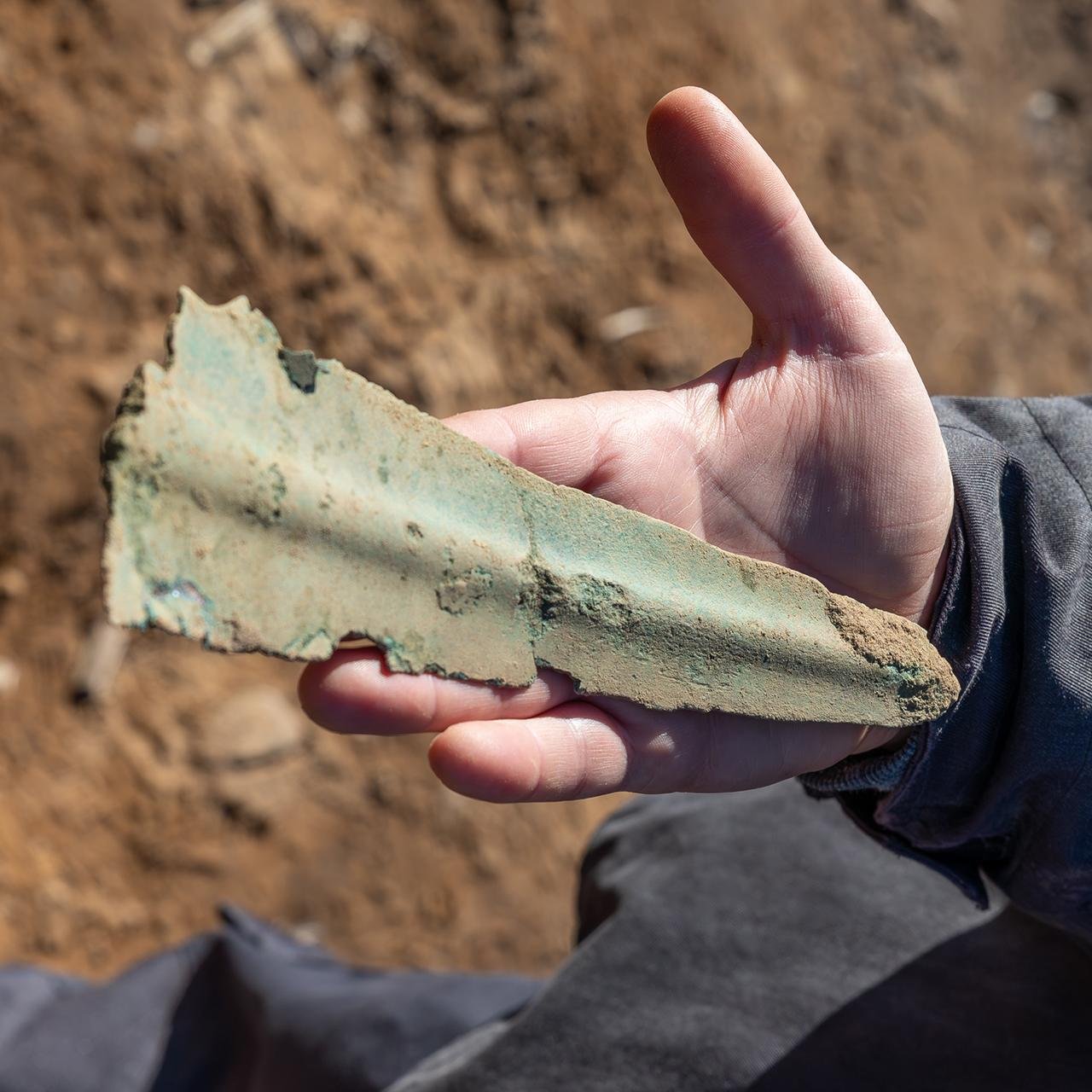
3,000-year-old Bronze Age daggers unearthed in a German cornfield
As old as the Nebra Sky Disk: one of the bronze blades found in Kutenholz. Credit: Stade District/Christian Schmidt

The over 3,000-year-old artifacts are among the earliest Bronze Age findings in the region. Their discovery has provided new insights into the ritual practices of ancient communities in the eastern part of Central Europe.

The initial sign of the finding came in 2017 when metal detectorist Frank Hoferichter detected bronze pieces in the field. In collaboration with district archaeologist Daniel Nösler, Hoferichter assisted researchers in returning to the site to explore the discovery in more detail.

Researchers from the University of Hamburg have been conducting geomagnetic surveys of the field since 2023, allowing them to detect subterranean anomalies without digging. The surveys indicated the presence of large buried objects and therefore the archaeologists dug further.

3,000-year-old Bronze Age daggers unearthed in a German cornfield
Archaeology professor Mörtz and his team have combined the most recent finds with those from 2017 at the Hamburg Institute: a bronze blade and middle section. Credit: University of Hamburg

Excavation revealed the two buried daggers at a depth of 30 centimeters (around 11 inches). The researchers were surprised that the artifacts remained in good condition despite the fact that the land had been utilized for agricultural purposes for years.

RelatedStories

60,000-year-old poison arrows from South Africa reveal the world’s earliest poisoned weapons and advanced hunting techniques

60,000-year-old poison arrows from South Africa reveal the world’s earliest poisoned weapons and advanced hunting techniques

January 8, 2026
Scientists uncover Ireland’s largest prehistoric hillfort settlement, reshaping views of Bronze Age society

Scientists uncover Ireland’s largest prehistoric hillfort settlement, reshaping views of Bronze Age society

January 1, 2026

“It is a stroke of luck that the daggers were not destroyed at such a shallow depth in the area, which has been cultivated with agricultural equipment for years,” district archaeologist Daniel Nösler said in a statement published by Stade district officials.
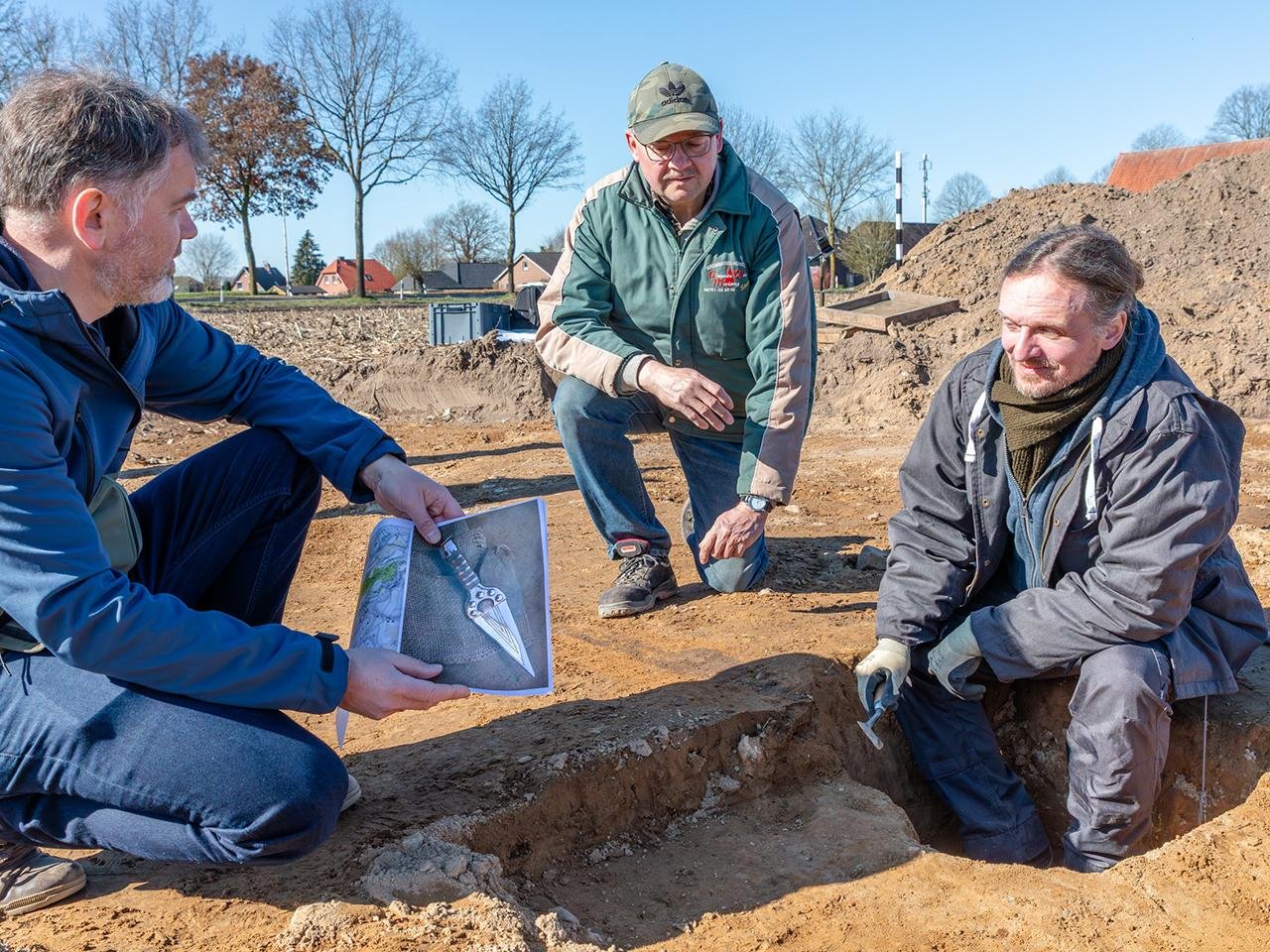
3,000-year-old Bronze Age daggers unearthed in a German cornfield
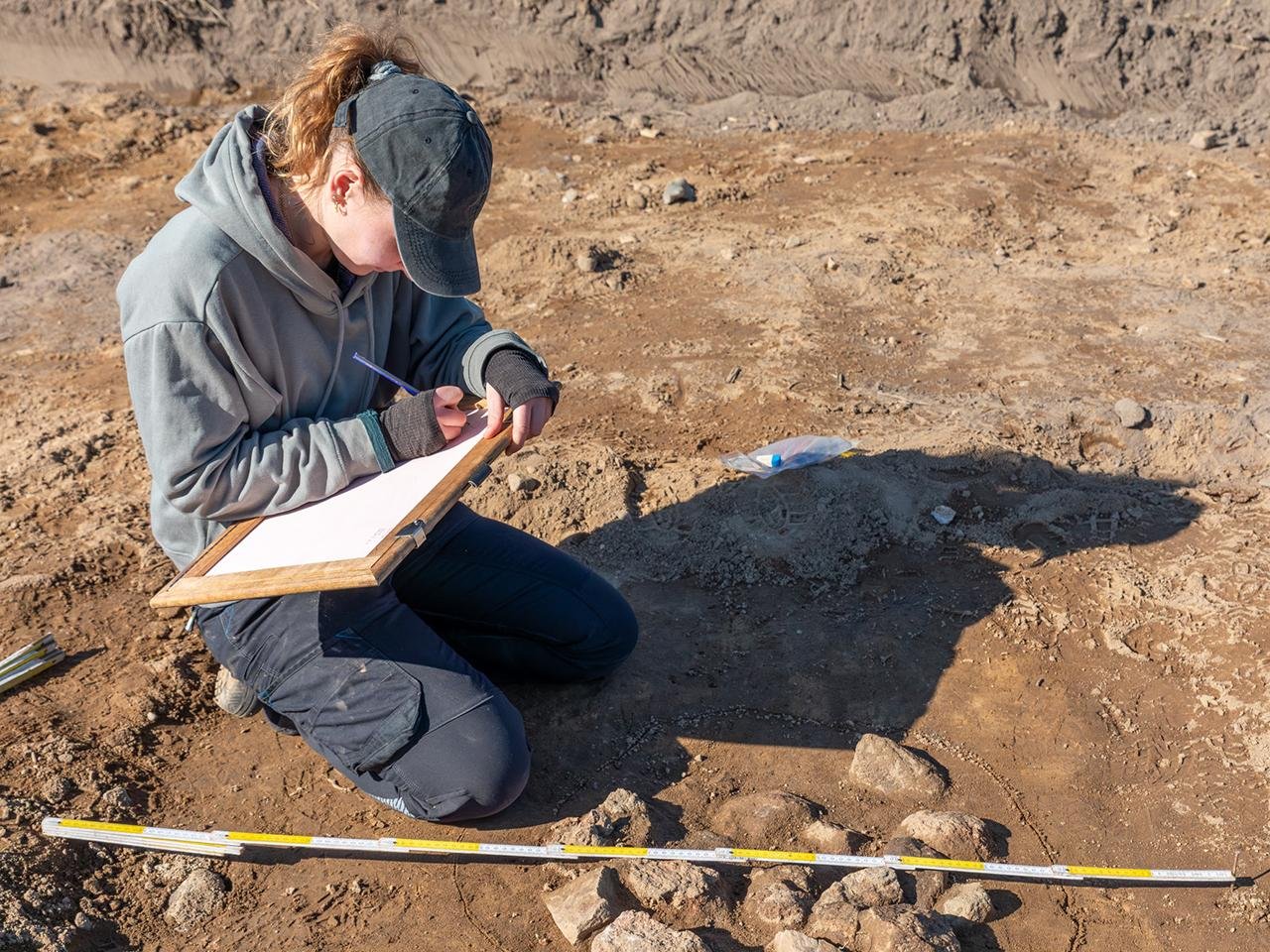
This is what the original daggers might have looked like: District archaeologist Daniel Nösler, metal detectorist Frank Hoferichter, and Professor Tobias Mörtz at the site near Kutenholz. Credit: Stade District/Christian Schmidt
3,000-year-old Bronze Age daggers unearthed in a German cornfield
On the Geest hill near Kutenholz, the scientists discovered further archaeological finds: Melike Fidan documents a stone setting. Credit: Stade District/Christian Schmidt

The daggers, crafted from bronze—a copper-tin alloy—date from around 1500 BCE, which places them around the same time as the renowned Nebra Sky Disk. Experts believe the blades were attached to wooden handles, which have long since decayed.

Professor Tobias Mörtz, a specialist in Bronze Age weapon deposits at the University of Hamburg, said the daggers were likely buried in the ground as ritual offerings and not used in combat. “The daggers likely had ritual significance with a religious or ideological background,” he said.
3,000-year-old Bronze Age daggers unearthed in a German cornfield
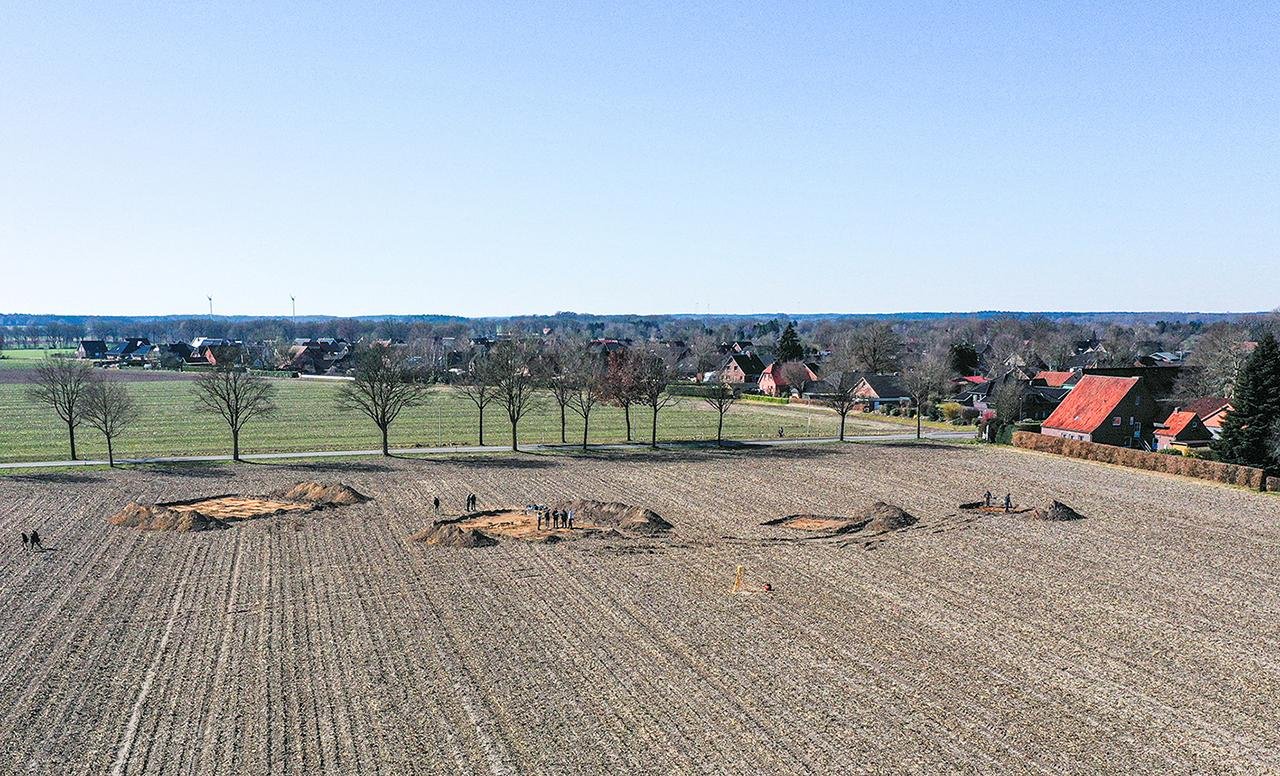
The dagger discovery sites and other archaeological investigation sites on a 28-meter-high hill near Kutenholz. Credit: Franz Kraus, Archaeology Group Stade

Interestingly, the two blades stood vertically at the highest elevation of the Kutenholz area, 28 meters above sea level. One dagger was discovered standing upright, and the other was slightly tilted, perhaps displaced by centuries of plowing. The absence of human graves or other artifacts nearby supports the theory that the daggers were symbolic or ceremonial, rather than grave goods or practical weapons.

The artifacts were transferred to the University of Hamburg for examination and restoration. Researchers expect future research to reveal more about the religious and cultural practices of Bronze Age societies in the region.

Source: Stade District Service Portal
Share3Tweet2ShareShareSend

You May Also Like...

430,000-year-old well-preserved wooden tools are the oldest ever found
Archaeology

430,000-year-old well-preserved wooden tools are the oldest ever found

January 26, 2026
Study finds dog meat was consumed at Iron Age feasts in ancient Bulgaria
Archaeology

Study finds dog meat was consumed at Iron Age feasts in ancient Bulgaria

January 26, 2026
South African San rock art shows evidence of trance dances and initiation rituals
Archaeology

South African San rock art shows evidence of trance dances and initiation rituals

January 25, 2026
Rare 10th-century bronze wheel cross found in Brandenburg reveals early Christian influence among Slavic populations
Archaeology

Rare 10th-century bronze wheel cross found in Brandenburg reveals early Christian influence among Slavic populations

January 25, 2026
Large Roman cemetery excavation at Brougham reveals diverse burial practices on Britain’s northern frontier
Archaeology

Large Roman cemetery excavation at Brougham reveals diverse burial practices on Britain’s northern frontier

January 24, 2026
5,500-year-old human skeleton in Colombia reveals earliest evidence of syphilis in the Americas
Anthropology

5,500-year-old human skeleton in Colombia reveals earliest evidence of syphilis in the Americas

January 23, 2026

Follow us


Instagram
244K

Facebook
118K

Threads
45K

LinkedIn
14K

Twitter
6K

YouTube
1K
  • Trending
  • Comments
  • Latest
Shipwreck Salvage. Credit: rawpixel.com / Public Domain

2,000-year-old shipwreck discovered off Turkish coast with remarkably preserved stacked ceramics

July 2, 2025
Viking age DNA reveals 9,000-year-old HIV-resistant gene originating near the Black Sea

Viking age DNA reveals 9,000-year-old HIV-resistant gene originating near the Black Sea

May 18, 2025
A new study suggests the mysterious Voynich Manuscript may be a medieval cipher

A new study suggests the mysterious Voynich Manuscript may be a medieval cipher

January 3, 2026
Moses may be named in ancient Egyptian mine inscriptions, sparking debate over earliest biblical references

Moses may be named in ancient Egyptian mine inscriptions, sparking debate over earliest biblical references

July 31, 2025
Mystery of Armenia’s 6,000-year-old dragon stones solved

Mystery of Armenia’s 6,000-year-old dragon stones solved

September 23, 2025
3D analysis reveals Shroud of Turin image likely came from sculpture, not Jesus’ body

3D analysis reveals Shroud of Turin image likely came from sculpture, not Jesus’ body

Moses may be named in ancient Egyptian mine inscriptions, sparking debate over earliest biblical references

Moses may be named in ancient Egyptian mine inscriptions, sparking debate over earliest biblical references

$1 million prize offered to decipher 5,300-year-old Indus Valley script

$1 million prize offered to decipher 5,300-year-old Indus Valley script

Oldest ever genetic data from a human relative found in 2-million-year-old fossilized teeth

Oldest ever genetic data from a human relative found in 2-million-year-old fossilized teeth

Exceptionally large Roman shoes discovered at Magna fort near Hadrian’s Wall

Exceptionally large Roman shoes discovered at Magna fort near Hadrian’s Wall

430,000-year-old well-preserved wooden tools are the oldest ever found

430,000-year-old well-preserved wooden tools are the oldest ever found

January 26, 2026
Study finds dog meat was consumed at Iron Age feasts in ancient Bulgaria

Study finds dog meat was consumed at Iron Age feasts in ancient Bulgaria

January 26, 2026
South African San rock art shows evidence of trance dances and initiation rituals

South African San rock art shows evidence of trance dances and initiation rituals

January 25, 2026
Rare 10th-century bronze wheel cross found in Brandenburg reveals early Christian influence among Slavic populations

Rare 10th-century bronze wheel cross found in Brandenburg reveals early Christian influence among Slavic populations

January 25, 2026
Large Roman cemetery excavation at Brougham reveals diverse burial practices on Britain’s northern frontier

Large Roman cemetery excavation at Brougham reveals diverse burial practices on Britain’s northern frontier

January 24, 2026

Archaeology News online magazine

Archaeology News is an international online magazine that covers all aspects of archaeology.


Categories

  • Academics
    • Books
    • Conferences
    • Universities
  • Articles
  • Download
  • Game
  • News
    • Anthropology
    • Archaeology
    • Paleontology
  • Quiz
  • Tours

Subscribe to our newsletter

© 2024 - Archaeology News Online Magazine. All Rights Reserved.

  • About
  • Privacy Policy
  • Terms of Use
  • Donation
  • Contact

Welcome Back!

Login to your account below

Forgotten Password? Sign Up

Create New Account!

Fill the forms below to register

All fields are required. Log In

Retrieve your password

Please enter your username or email address to reset your password.

Log In

Add New Playlist

Manage Consent
To provide the best experiences, we use technologies like cookies to store and/or access device information. Consenting to these technologies will allow us to process data such as browsing behavior or unique IDs on this site. Not consenting or withdrawing consent, may adversely affect certain features and functions.
Functional Always active
The technical storage or access is strictly necessary for the legitimate purpose of enabling the use of a specific service explicitly requested by the subscriber or user, or for the sole purpose of carrying out the transmission of a communication over an electronic communications network.
Preferences
The technical storage or access is necessary for the legitimate purpose of storing preferences that are not requested by the subscriber or user.
Statistics
The technical storage or access that is used exclusively for statistical purposes. The technical storage or access that is used exclusively for anonymous statistical purposes. Without a subpoena, voluntary compliance on the part of your Internet Service Provider, or additional records from a third party, information stored or retrieved for this purpose alone cannot usually be used to identify you.
Marketing
The technical storage or access is required to create user profiles to send advertising, or to track the user on a website or across several websites for similar marketing purposes.
  • Manage options
  • Manage services
  • Manage {vendor_count} vendors
  • Read more about these purposes
View preferences
  • {title}
  • {title}
  • {title}
  • Home
  • News
    • Archaeology
    • Anthropology
    • Paleontology
  • Academic
    • Books
    • Conferences
    • Universities
  • Articles
  • VR Tours
  • Quiz & Game
  • Download
  • Encyclopedia
  • Forum

About  .  Contact  .  Donation

© 2024 - Archaeology News Online Magazine. All Rights Reserved