• About
  • Privacy Policy
  • Terms of Use
  • Donation
  • Contact
No Result
View All Result
Archaeology News
  • Home
  • News
    • Archaeology
    • Anthropology
    • Paleontology
  • Academic
    • Books
    • Conferences
    • Universities
  • Articles
  • VR Tours
  • Quiz & Game
  • Download
  • Encyclopedia
  • Forum
Archaeology News
No Result
View All Result
Home News Archaeology

Rare 10th-century bronze wheel cross found in Brandenburg reveals early Christian influence among Slavic populations

by Dario Radley
January 25, 2026

Archaeologists in Brandenburg, Germany, have uncovered a bronze wheel cross dating to the 10th or 11th century CE in the Havelland region. The artifact was discovered during a metal-detecting survey conducted by volunteer heritage conservator Juliane Rangnow. Alongside the cross, the survey yielded coins, fragments of partially gilded jewelry, and iron weapons from the same period.
Rare 10th-century bronze wheel cross found in Brandenburg reveals early Christian influence among Slavic populations
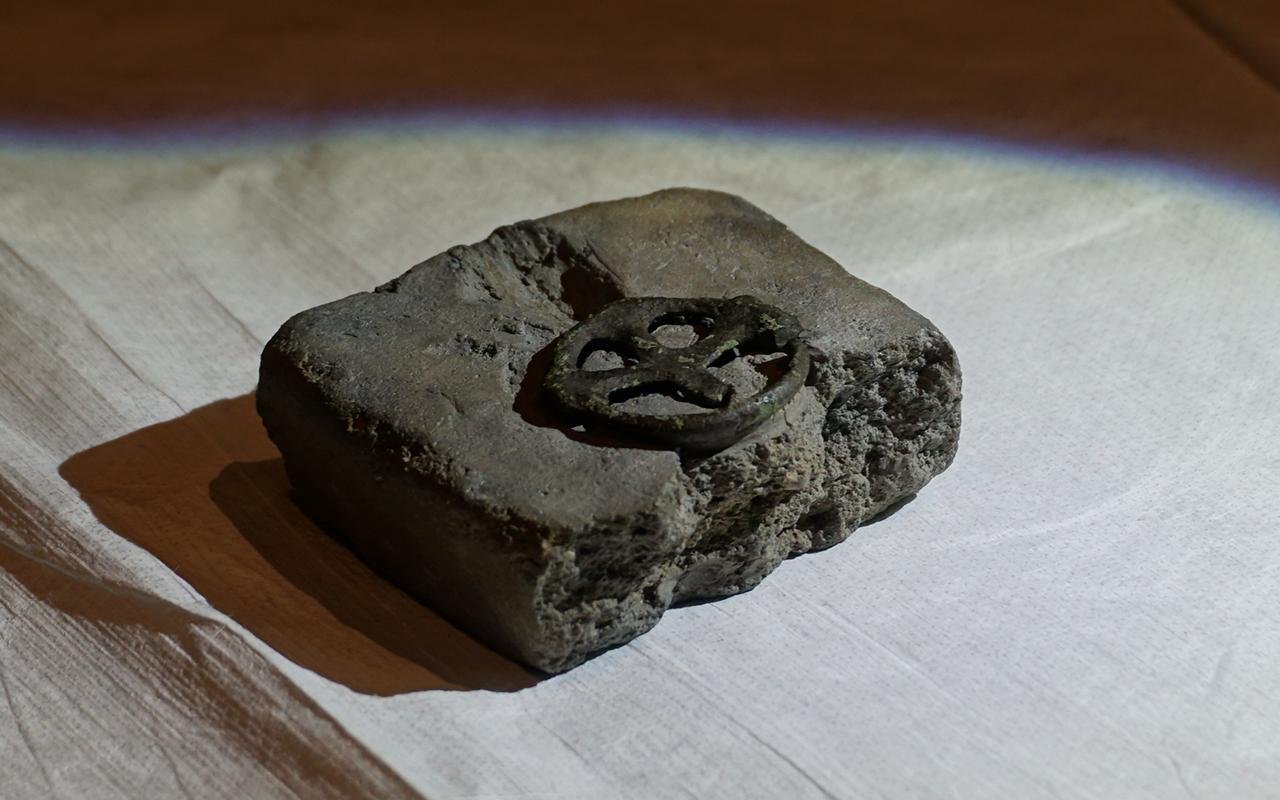
Bronze wheel cross in the mold from the Spandau hillfort. Credit: Brandenburg State Office for Monument Preservation and Archaeological State Museum (BLDAM), Lukas Goldmann.

The cross belongs to a type known as a “wheel cross,” distinguished by a ring connecting its arms and a stylized depiction of Christ. Analysis at the Brandenburg State Archaeological Museum confirmed that the cross corresponds precisely to a mold found in 1983 at the Slavic hillfort of Berlin-Spandau, commonly referred to as the “Spandau Cross.” This mold, recovered near the remains of an early wooden church, represents one of the earliest pieces of evidence for Christian symbolism in the area between the Elbe and Oder rivers. Prior to this discovery, no cast made from this mold had been identified.

Measurements and comparisons carried out at the Brandenburg State Archaeological Museum and the Museum of Prehistory and Early History in Berlin verified that the Havelland cross and the Spandau mold belong together. The artifact provides tangible evidence for early Christianization among Slavic populations east of the Elbe, illustrating the region’s cultural exchanges during the 10th century. At that time, the area now comprising Berlin and Brandenburg was influenced by the East Frankish Kingdom.
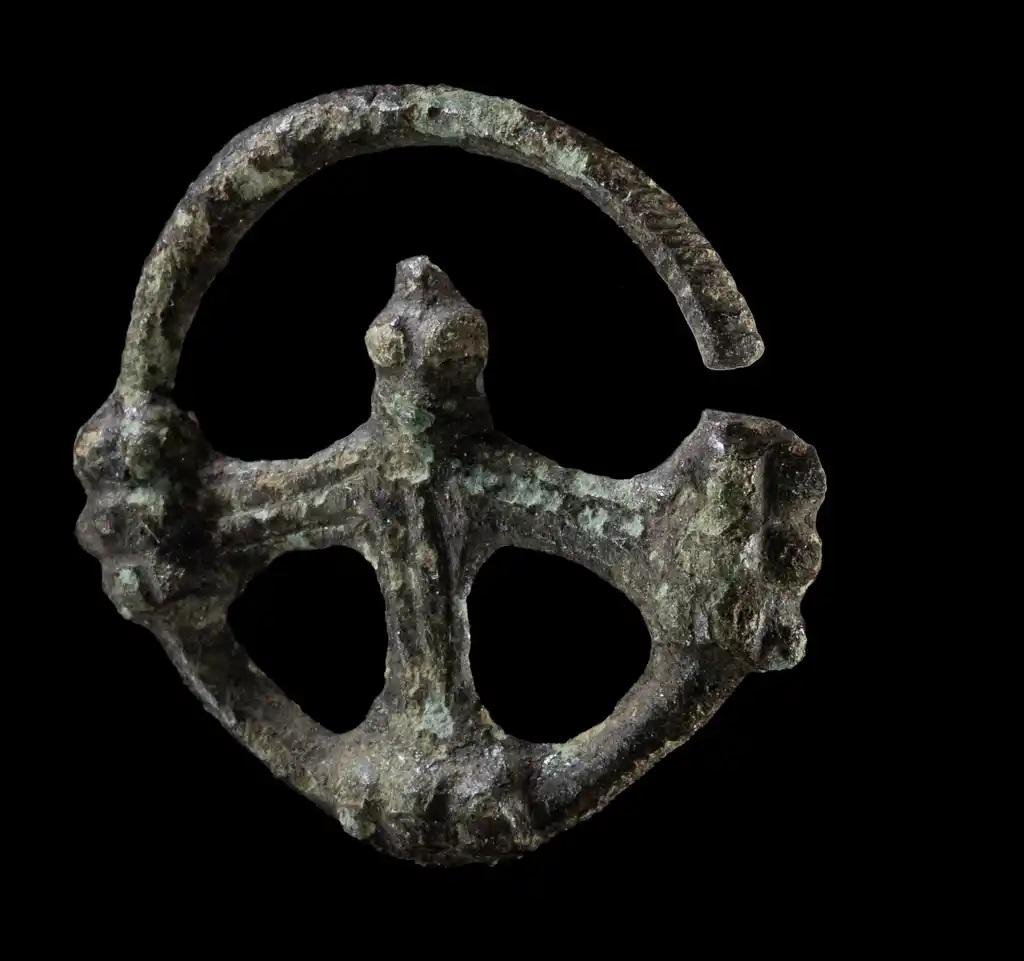
Rare 10th-century bronze wheel cross found in Brandenburg reveals early Christian influence among Slavic populations
Bronze wheel cross from western Havelland. Credit: Brandenburg State Office for Monument Preservation and Archaeological State Museum (BLDAM), Gabriel Graf.

Although political and religious changes were introduced by new elites, the Slavic inhabitants largely resisted Christian conversion, culminating in the Lutizen Revolt of 983, which restored local political and religious autonomy for roughly 150 years. Sustained Christianization occurred only after the 12th century, following full integration into the Margraviate of Brandenburg.
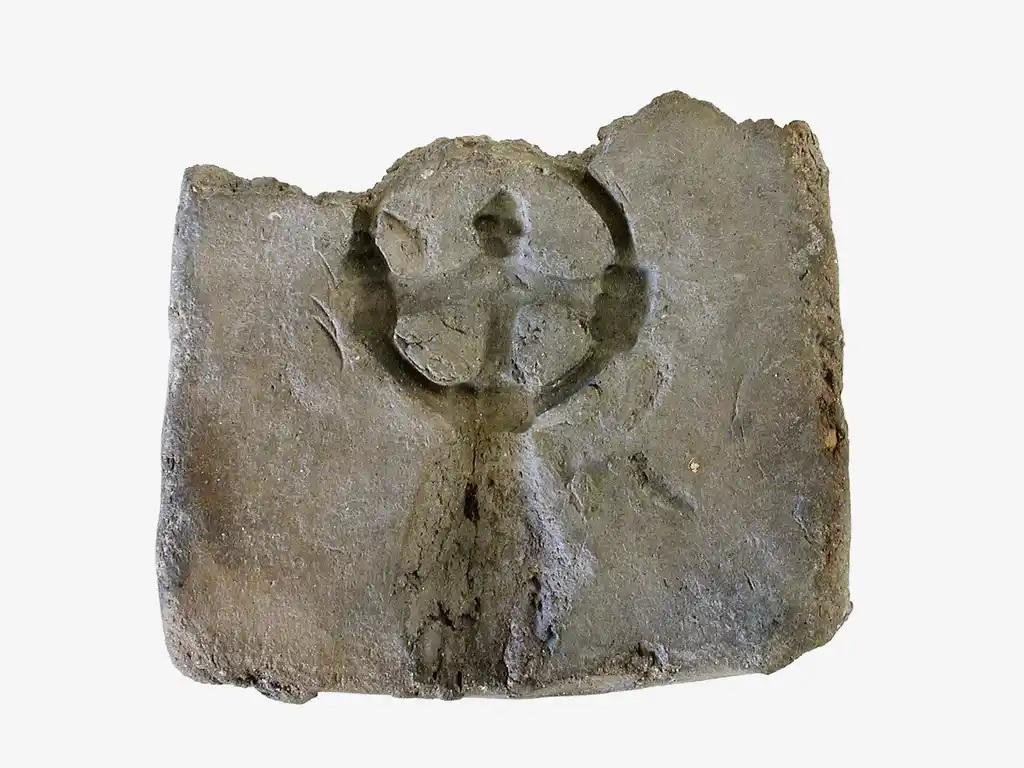
Rare 10th-century bronze wheel cross found in Brandenburg reveals early Christian influence among Slavic populations
Mold of the wheel cross from the Berlin-Spandau hillfort. Credit: National Museums in Berlin, Museum of Prehistory and Early History, Claudia Plamp.

The Havelland cross also highlights the contributions of volunteer heritage conservators. Brandenburg currently hosts around 350 officially trained volunteers who work closely with professional archaeologists at the Brandenburg State Office for Monument Preservation and the Archaeological State Museum. Their efforts help document and preserve a landscape containing over 40,000 known archaeological sites, ranging from Neanderthal flint tools dating to approximately 130,000 years ago to 20th-century relics such as an escape tunnel under former GDR border fortifications. Since 2022, BLDAM has assigned a staff member specifically to support and advise volunteers.

RelatedStories

Medieval monastery remains discovered beneath Borken’s historic center in Germany

Medieval monastery remains discovered beneath Borken’s historic center in Germany

February 26, 2026
Rich medieval Christians buried ‘closer to God’ even with leprosy or tuberculosis, archaeologists find

Rich medieval Christians buried ‘closer to God’ even with leprosy or tuberculosis, archaeologists find

February 12, 2026

The cross and the original mold will be displayed together at the Archaeological State Museum Brandenburg in Brandenburg an der Havel from January 24 to March 11, 2026. This find not only advances understanding of early Christianization in northeastern Germany but also demonstrates the value of systematic volunteer participation in preserving and interpreting regional cultural heritage.

More information: BLDAM
Share101Tweet63Share18ShareSend

You May Also Like...

Roman cemetery in Egypt reveals golden tongues, mummies, and rare Iliad papyrus
Anthropology

Roman cemetery in Egypt reveals golden tongues, mummies, and rare Iliad papyrus

April 19, 2026
Basel plague study finds young workers had highest death rates in 17th century outbreak
Anthropology

Basel plague study finds young workers had highest death rates in 17th century outbreak

April 17, 2026
Ancient DNA reveals male lineage and family ties in Neolithic Scotland tombs
Anthropology

Ancient DNA reveals male lineage and family ties in Neolithic Scotland tombs

April 16, 2026
Council houses reveal shift from royal rule to collective governance in Terminal Classic Maya society
Archaeology

Council houses reveal shift from royal rule to collective governance in Terminal Classic Maya society

April 11, 2026
Bronze Age loom found inside ancient Spanish home reveals early textile production
Archaeology

Bronze Age loom found inside ancient Spanish home reveals early textile production

April 8, 2026
Pompeii ash analysis reveals Romans burned wine and imported frankincense in household rituals
Archaeology

Pompeii ash analysis reveals Romans burned wine and imported frankincense in household rituals

April 3, 2026

Comments 0

  1. Editorial Team says:
    1 second ago

    Disclaimer: This website is a science-focused magazine that welcomes both academic and non-academic audiences. Comments are written by users and may include personal opinions or unverified claims. They do not necessarily reflect the views of our editorial team or rely on scientific evidence.

    Comment Policy: We kindly ask all commenters to engage respectfully. Comments that contain offensive, insulting, degrading, discriminatory, or racist content will be automatically removed.

    Reply

Leave a Reply Cancel reply

Your email address will not be published. Required fields are marked *

Follow us


Instagram
244K

Facebook
118K

Threads
46K

LinkedIn
14K

Twitter
6K

YouTube
1K
  • Trending
  • Comments
  • Latest
Shipwreck Salvage. Credit: rawpixel.com / Public Domain

2,000-year-old shipwreck discovered off Turkish coast with remarkably preserved stacked ceramics

July 2, 2025
Viking age DNA reveals 9,000-year-old HIV-resistant gene originating near the Black Sea

Viking age DNA reveals 9,000-year-old HIV-resistant gene originating near the Black Sea

May 18, 2025
A new study suggests the mysterious Voynich Manuscript may be a medieval cipher

A new study suggests the mysterious Voynich Manuscript may be a medieval cipher

January 3, 2026
3D analysis reveals Shroud of Turin image likely came from sculpture, not Jesus’ body

3D analysis reveals Shroud of Turin image likely came from sculpture, not Jesus’ body

August 3, 2025
Moses may be named in ancient Egyptian mine inscriptions, sparking debate over earliest biblical references

Moses may be named in ancient Egyptian mine inscriptions, sparking debate over earliest biblical references

July 31, 2025
3D analysis reveals Shroud of Turin image likely came from sculpture, not Jesus’ body

3D analysis reveals Shroud of Turin image likely came from sculpture, not Jesus’ body

Moses may be named in ancient Egyptian mine inscriptions, sparking debate over earliest biblical references

Moses may be named in ancient Egyptian mine inscriptions, sparking debate over earliest biblical references

$1 million prize offered to decipher 5,300-year-old Indus Valley script

$1 million prize offered to decipher 5,300-year-old Indus Valley script

Oldest ever genetic data from a human relative found in 2-million-year-old fossilized teeth

Oldest ever genetic data from a human relative found in 2-million-year-old fossilized teeth

Exceptionally large Roman shoes discovered at Magna fort near Hadrian’s Wall

Exceptionally large Roman shoes discovered at Magna fort near Hadrian’s Wall

Roman cemetery in Egypt reveals golden tongues, mummies, and rare Iliad papyrus

Roman cemetery in Egypt reveals golden tongues, mummies, and rare Iliad papyrus

April 19, 2026
Basel plague study finds young workers had highest death rates in 17th century outbreak

Basel plague study finds young workers had highest death rates in 17th century outbreak

April 17, 2026
Ancient DNA reveals male lineage and family ties in Neolithic Scotland tombs

Ancient DNA reveals male lineage and family ties in Neolithic Scotland tombs

April 16, 2026
Council houses reveal shift from royal rule to collective governance in Terminal Classic Maya society

Council houses reveal shift from royal rule to collective governance in Terminal Classic Maya society

April 11, 2026
Bronze Age loom found inside ancient Spanish home reveals early textile production

Bronze Age loom found inside ancient Spanish home reveals early textile production

April 8, 2026

Archaeology News online magazine

Archaeology News is an international online magazine that covers all aspects of archaeology.


Categories

  • Academics
    • Books
    • Conferences
    • Universities
  • Articles
  • Download
  • Game
  • News
    • Anthropology
    • Archaeology
    • Paleontology
  • Quiz
  • Tours

Subscribe to our newsletter

© 2024 - Archaeology News Online Magazine. All Rights Reserved.

  • About
  • Privacy Policy
  • Terms of Use
  • Donation
  • Contact

Manage Consent
To provide the best experiences, we use technologies like cookies to store and/or access device information. Consenting to these technologies will allow us to process data such as browsing behavior or unique IDs on this site. Not consenting or withdrawing consent, may adversely affect certain features and functions.
Functional Always active
The technical storage or access is strictly necessary for the legitimate purpose of enabling the use of a specific service explicitly requested by the subscriber or user, or for the sole purpose of carrying out the transmission of a communication over an electronic communications network.
Preferences
The technical storage or access is necessary for the legitimate purpose of storing preferences that are not requested by the subscriber or user.
Statistics
The technical storage or access that is used exclusively for statistical purposes. The technical storage or access that is used exclusively for anonymous statistical purposes. Without a subpoena, voluntary compliance on the part of your Internet Service Provider, or additional records from a third party, information stored or retrieved for this purpose alone cannot usually be used to identify you.
Marketing
The technical storage or access is required to create user profiles to send advertising, or to track the user on a website or across several websites for similar marketing purposes.
  • Manage options
  • Manage services
  • Manage {vendor_count} vendors
  • Read more about these purposes
View preferences
  • {title}
  • {title}
  • {title}
  • Home
  • News
    • Archaeology
    • Anthropology
    • Paleontology
  • Academic
    • Books
    • Conferences
    • Universities
  • Articles
  • VR Tours
  • Quiz & Game
  • Download
  • Encyclopedia
  • Forum

About  .  Contact  .  Donation

© 2024 - Archaeology News Online Magazine. All Rights Reserved