
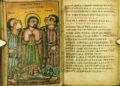
An international team led by researchers at the University of Glasgow has recovered 42 lost pages from Codex H, a sixth century manuscript of the New Testament. The codex preserves the Letters of St Paul and has long held a key place in the study of early Christian texts. Its history took a dramatic turn in the 13th century, when monks at the Great Lavra Monastery on Mount Athos took the manuscript apart and reused its parchment as binding material for other books. Over time, the surviving pieces spread across libraries in Italy, Greece, Russia, Ukraine, and France, while many pages seemed lost beyond recovery.
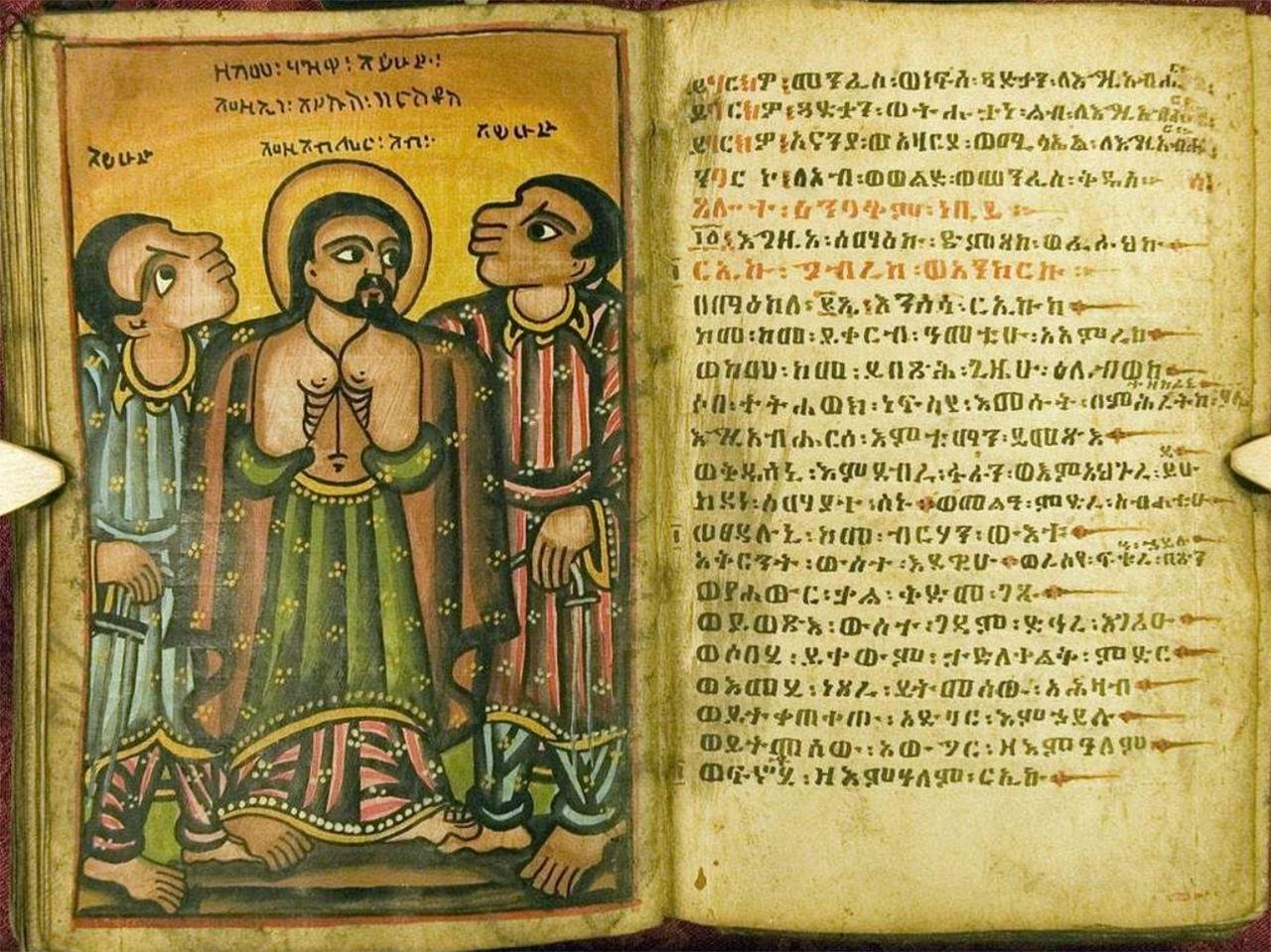
The recent work focused on faint traces left behind during the manuscript’s reuse. When the original pages were re-inked in the Middle Ages, the newer ink created subtle mirror impressions on adjacent sheets. These marks, often invisible to the naked eye, preserved fragments of text in reverse. Researchers worked with the Early Manuscripts Electronic Library and applied multispectral imaging to capture these traces under different wavelengths of light. This method revealed layers of writing hidden within the parchment and allowed the team to reconstruct text that no longer survives in physical form.
Each photographed page produced more than one layer of readable material. In some cases, several pages of content emerged from a single leaf. To confirm the age of the parchment, specialists in Paris carried out radiocarbon analysis. The results supported a sixth century date, aligning with earlier scholarly assessments of Codex H.
The recovered material does not introduce unknown biblical passages. Instead, it provides detailed evidence of how these texts were organized and read in early Christian communities. Among the most notable findings are early chapter lists for Paul’s letters. These lists differ from the divisions used in modern Bibles, showing that the structure of these texts changed over time. The manuscript also contains elements of the Euthalian apparatus, a system of notes and cross references that guided readers through the text and offered historical context.
Marks left by scribes add another layer of information. Corrections, annotations, and layout choices reveal how individuals engaged with the text in the sixth century. These details show that copying scripture involved active reading and interpretation rather than simple reproduction. The physical condition of the manuscript also reflects medieval practices. Parchment was valuable, and damaged or outdated books were often dismantled and reused, even when they held religious significance.


This work shows how modern imaging methods extend the study of ancient texts. By combining technical analysis with traditional scholarship, researchers have restored a portion of a manuscript that shaped early Christian reading practices. The recovered pages offer a clearer view of how the New Testament circulated and changed across centuries.
The results have been published in a digital edition available to both scholars and the public, along with a forthcoming print volume.
More information: University of Glasgow / Codex H














Disclaimer: This website is a science-focused magazine that welcomes both academic and non-academic audiences. Comments are written by users and may include personal opinions or unverified claims. They do not necessarily reflect the views of our editorial team or rely on scientific evidence.
Comment Policy: We kindly ask all commenters to engage respectfully. Comments that contain offensive, insulting, degrading, discriminatory, or racist content will be automatically removed.