
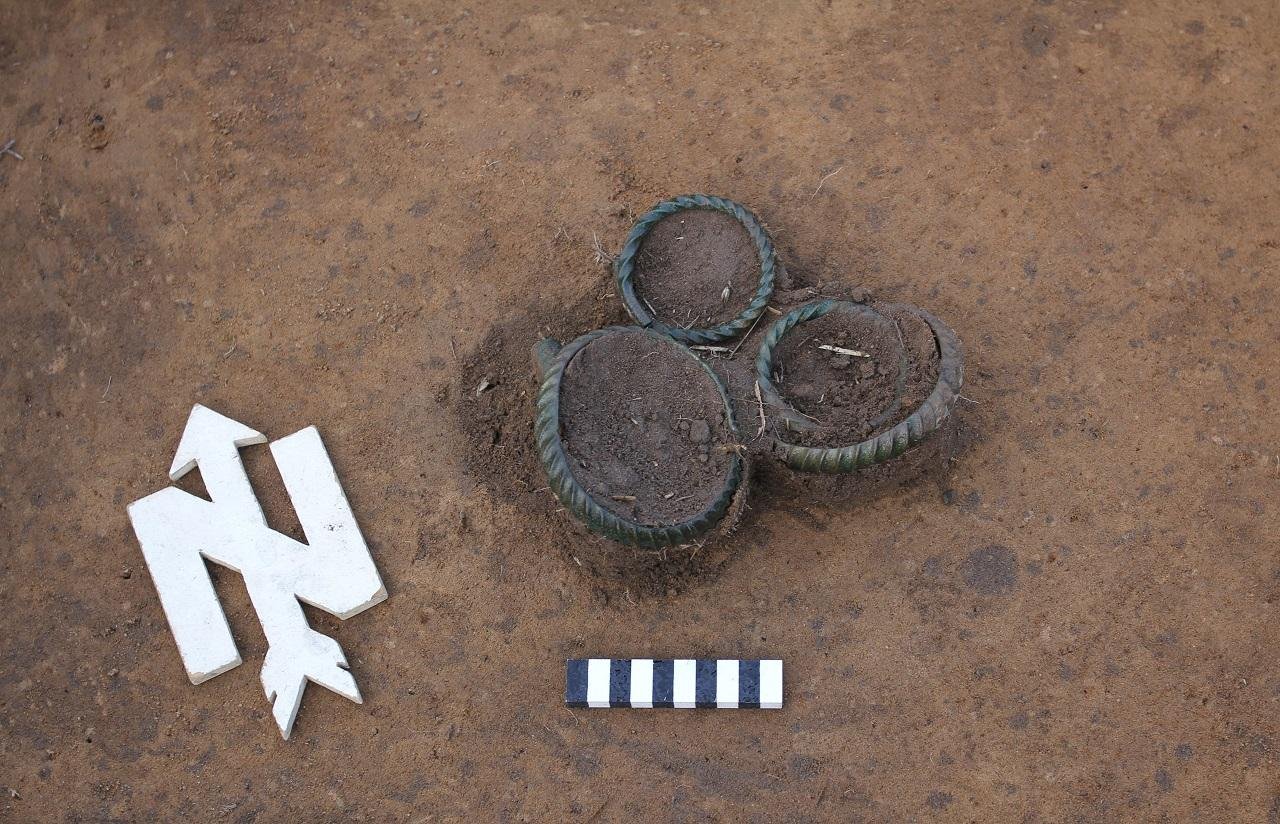
A group of bronze rings from the Late Bronze Age has been recovered near Wilschdorf, on the northwestern edge of Dresden. The objects came to light after a licensed volunteer detectorist, Ronald Meißner, reported the find to the State Office for Archaeology of Saxony. He left the pieces in place until a professional team arrived to excavate the site.
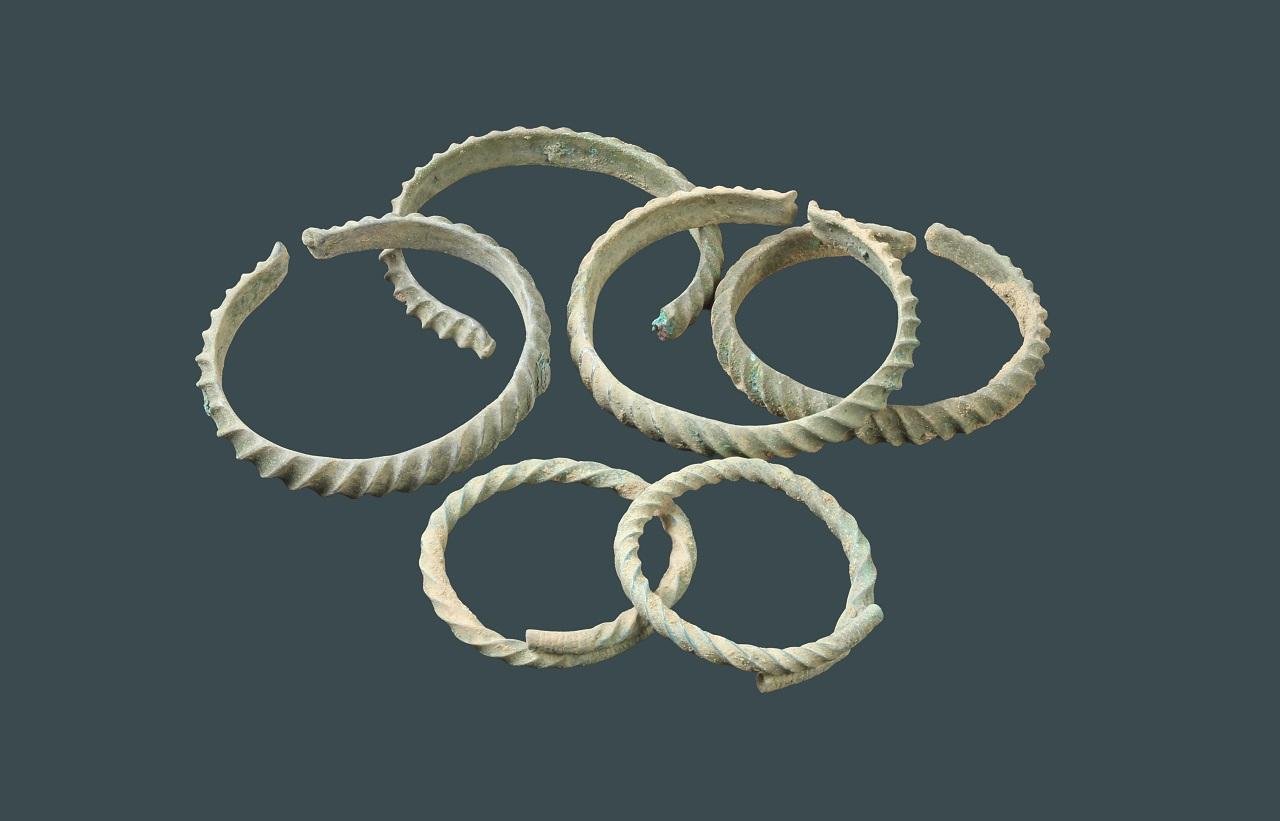
The hoard includes six complete rings and one fragment, with a total weight of 837.2 grams. Based on their form and decoration, archaeologists date the objects to around 1300 to 1100 BCE. Two of the rings are twisted arm rings, shaped in a spiral with overlapping ends. Their terminals are straight and carry small engraved circles. The other four are open leg rings, marked by diagonal ribs on the outer surface and smoother interiors.
Objects like these appear across Central Europe and formed part of personal dress during the Late Bronze Age. Their design and material point to both practical use and social meaning. Bronze items often signaled status, especially in communities where access to metal depended on trade and local resources.
The arrangement of the rings suggests intentional burial. Archaeologists describe such finds as hoards, groups of objects placed together in the ground. Similar deposits have been recorded across the region, often with repeated patterns in their composition. The rings from Wilschdorf fit this pattern, with no sign of damage or hurried concealment.
There is little evidence that these objects were hidden during a crisis. Instead, many researchers link such deposits to ritual activity. The repeated discovery of similar hoards across wide areas points to shared practices. The exact purpose remains unclear, though the consistent placement and selection of items suggest a defined tradition.

The find also reflects wider changes during the Bronze Age. Control over metal sources and trade routes shaped new forms of authority. Objects made from bronze carried value beyond their function, tied to both economy and social identity.
The rings are now undergoing cleaning and documentation. Specialists will study their form and compare them with other finds from Saxony and beyond. This work will help refine the timeline of the Late Bronze Age in the region and place the hoard within a broader archaeological context.
More information: Landesamt für Archäologie Sachsen












Disclaimer: This website is a science-focused magazine that welcomes both academic and non-academic audiences. Comments are written by users and may include personal opinions or unverified claims. They do not necessarily reflect the views of our editorial team or rely on scientific evidence.
Comment Policy: We kindly ask all commenters to engage respectfully. Comments that contain offensive, insulting, degrading, discriminatory, or racist content will be automatically removed.