• About
  • Privacy Policy
  • Terms of Use
  • Donation
  • Contact
No Result
View All Result
Archaeology News
  • Home
  • News
    • Archaeology
    • Anthropology
    • Paleontology
  • Academic
    • Books
    • Conferences
    • Universities
  • Articles
  • VR Tours
  • Quiz & Game
  • Download
  • Encyclopedia
  • Forum
Archaeology News
No Result
View All Result
Home News Anthropology

Ancient DNA reveals male lineage and family ties in Neolithic Scotland tombs

by Dario Radley
April 16, 2026

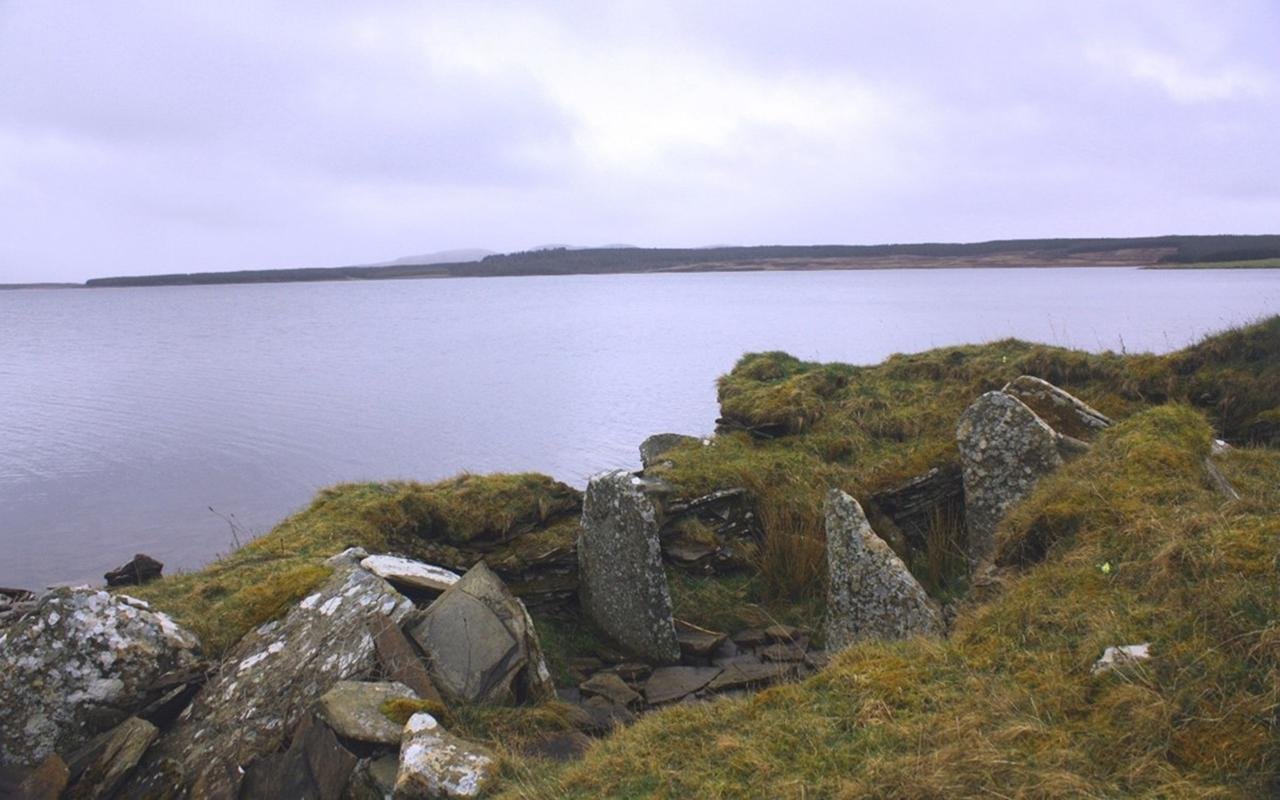
New research from northern Scotland brings fresh detail to how early farming groups organized family ties and burial practices. Scientists studied ancient DNA from people buried in chambered tombs in Caithness and the Orkney Islands, dating from about 3800 to 3200 BCE. When the genetic results were compared with tomb layouts and locations, a clear pattern appeared. Many of those buried together shared close biological relationships, often through the male line.
Ancient DNA reveals male lineage and family ties in Neolithic Scotland tombs
One of the tombs at Loch Calder, in the Scottish Highlands. Credit: Professor Vicki Cummings

The data show repeated links between men across several generations. In some cases, three to five generations of related males were identified within the same burial networks. These findings point to a strong focus on paternal descent. Men linked through a common ancestor were placed in the same tomb or in nearby structures, which kept family lines visible across time.

Tomb placement adds another layer to this pattern. In Caithness, new tombs were often built close to older ones. Over time, these clusters formed groups of monuments tied to related families. The arrangement created a lasting record of descent within the landscape. In Orkney, a different pattern appears. New tombs and houses were sometimes set farther away from earlier sites. This shift suggests a different way of expressing relationships between groups, even though the architectural style remained similar across both regions.

The genetic evidence also shows links between mainland Scotland and the islands. Two women buried in Orkney shared close genetic ties with individuals from mainland tombs. Their presence points to movement between communities and to social connections across the sea. While male lines stand out in the genetic record, these female links show a broader network of kinship.
Ancient DNA reveals male lineage and family ties in Neolithic Scotland tombs
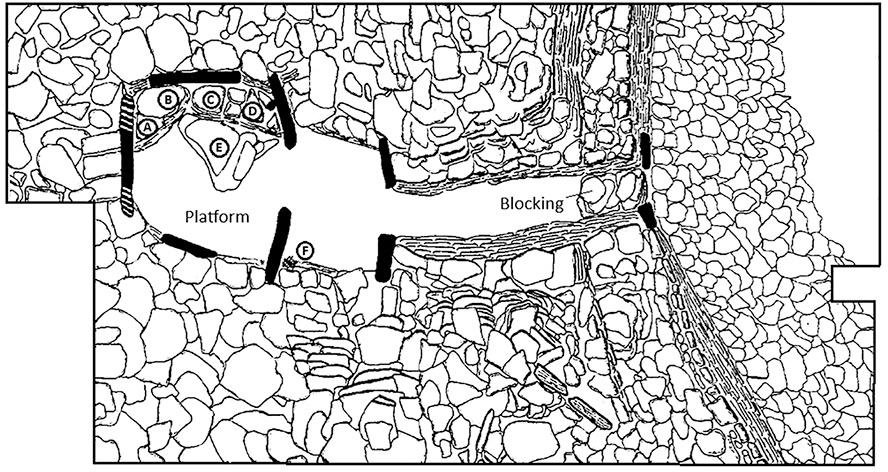
Plan of the north chamber of Tulloch of Assery A, Caithness showing the location of bone groups A–F. Credit: authors, after Corcoran 1967 / Antiquity

Archaeology helps explain how these communities used tombs. The structures served as more than burial places. Their design and placement marked family identity and connection to earlier generations. Some tombs appear tied to long memories of descent, passed down through oral traditions and reinforced by repeated use of the same sites.

RelatedStories

Male Neanderthals and female Homo sapiens shaped ancient interbreeding in the modern human genome, study finds

Male Neanderthals and female humans shaped modern DNA through ancient interbreeding, study finds

February 27, 2026
How ancient communities adapted their diets and farming strategies in prehistoric Poland

How ancient communities adapted their diets and farming strategies in prehistoric Poland

February 26, 2026

Across northern Scotland, early Neolithic groups shared similar ideas about kinship. At the same time, local differences shaped how these ideas appeared in daily life. In Caithness, families stayed close to earlier burial grounds. In Orkney, new spaces were chosen while older ties remained in memory and practice. Over several centuries, these choices formed a landscape where family history took visible form in stone and burial.
More information: Cummings, V., Fowler, C., Olalde, I., Cuthbert, S., & Reich, D. (2026). Building tombs and entombing the dead as technologies of descent and affinity in Neolithic northern Scotland. Antiquity, 100(410), 324–339. doi:10.15184/aqy.2026.10291
ShareTweetShareShareSend

You May Also Like...

Basel plague study finds young workers had highest death rates in 17th century outbreak
Anthropology

Basel plague study finds young workers had highest death rates in 17th century outbreak

April 17, 2026
Council houses reveal shift from royal rule to collective governance in Terminal Classic Maya society
Archaeology

Council houses reveal shift from royal rule to collective governance in Terminal Classic Maya society

April 11, 2026
Lost medieval hillfort discovered in Poland’s Włodawa Forest reveals 244 artifacts from the 10th–13th centuries
Archaeology

Medieval hillfort discovered in Poland’s Włodawa Forest reveals 244 artifacts from the 10th–13th centuries

February 27, 2026
Male Neanderthals and female Homo sapiens shaped ancient interbreeding in the modern human genome, study finds
Anthropology

Male Neanderthals and female humans shaped modern DNA through ancient interbreeding, study finds

February 27, 2026
Medieval monastery remains discovered beneath Borken’s historic center in Germany
Archaeology

Medieval monastery remains discovered beneath Borken’s historic center in Germany

February 26, 2026
How ancient communities adapted their diets and farming strategies in prehistoric Poland
Anthropology

How ancient communities adapted their diets and farming strategies in prehistoric Poland

February 26, 2026

Comments 0

  1. Editorial Team says:
    1 second ago

    Disclaimer: This website is a science-focused magazine that welcomes both academic and non-academic audiences. Comments are written by users and may include personal opinions or unverified claims. They do not necessarily reflect the views of our editorial team or rely on scientific evidence.

    Comment Policy: We kindly ask all commenters to engage respectfully. Comments that contain offensive, insulting, degrading, discriminatory, or racist content will be automatically removed.

    Reply

Leave a Reply Cancel reply

Your email address will not be published. Required fields are marked *

Follow us


Instagram
244K

Facebook
118K

Threads
46K

LinkedIn
14K

Twitter
6K

YouTube
1K
  • Trending
  • Comments
  • Latest
Shipwreck Salvage. Credit: rawpixel.com / Public Domain

2,000-year-old shipwreck discovered off Turkish coast with remarkably preserved stacked ceramics

July 2, 2025
Viking age DNA reveals 9,000-year-old HIV-resistant gene originating near the Black Sea

Viking age DNA reveals 9,000-year-old HIV-resistant gene originating near the Black Sea

May 18, 2025
A new study suggests the mysterious Voynich Manuscript may be a medieval cipher

A new study suggests the mysterious Voynich Manuscript may be a medieval cipher

January 3, 2026
3D analysis reveals Shroud of Turin image likely came from sculpture, not Jesus’ body

3D analysis reveals Shroud of Turin image likely came from sculpture, not Jesus’ body

August 3, 2025
Moses may be named in ancient Egyptian mine inscriptions, sparking debate over earliest biblical references

Moses may be named in ancient Egyptian mine inscriptions, sparking debate over earliest biblical references

July 31, 2025
3D analysis reveals Shroud of Turin image likely came from sculpture, not Jesus’ body

3D analysis reveals Shroud of Turin image likely came from sculpture, not Jesus’ body

Moses may be named in ancient Egyptian mine inscriptions, sparking debate over earliest biblical references

Moses may be named in ancient Egyptian mine inscriptions, sparking debate over earliest biblical references

$1 million prize offered to decipher 5,300-year-old Indus Valley script

$1 million prize offered to decipher 5,300-year-old Indus Valley script

Oldest ever genetic data from a human relative found in 2-million-year-old fossilized teeth

Oldest ever genetic data from a human relative found in 2-million-year-old fossilized teeth

Exceptionally large Roman shoes discovered at Magna fort near Hadrian’s Wall

Exceptionally large Roman shoes discovered at Magna fort near Hadrian’s Wall

Basel plague study finds young workers had highest death rates in 17th century outbreak

Basel plague study finds young workers had highest death rates in 17th century outbreak

April 17, 2026
Ancient DNA reveals male lineage and family ties in Neolithic Scotland tombs

Ancient DNA reveals male lineage and family ties in Neolithic Scotland tombs

April 16, 2026
Council houses reveal shift from royal rule to collective governance in Terminal Classic Maya society

Council houses reveal shift from royal rule to collective governance in Terminal Classic Maya society

April 11, 2026
Lost medieval hillfort discovered in Poland’s Włodawa Forest reveals 244 artifacts from the 10th–13th centuries

Medieval hillfort discovered in Poland’s Włodawa Forest reveals 244 artifacts from the 10th–13th centuries

February 27, 2026
Male Neanderthals and female Homo sapiens shaped ancient interbreeding in the modern human genome, study finds

Male Neanderthals and female humans shaped modern DNA through ancient interbreeding, study finds

February 27, 2026

Archaeology News online magazine

Archaeology News is an international online magazine that covers all aspects of archaeology.


Categories

  • Academics
    • Books
    • Conferences
    • Universities
  • Articles
  • Download
  • Game
  • News
    • Anthropology
    • Archaeology
    • Paleontology
  • Quiz
  • Tours

Subscribe to our newsletter

© 2024 - Archaeology News Online Magazine. All Rights Reserved.

  • About
  • Privacy Policy
  • Terms of Use
  • Donation
  • Contact

Manage Consent
To provide the best experiences, we use technologies like cookies to store and/or access device information. Consenting to these technologies will allow us to process data such as browsing behavior or unique IDs on this site. Not consenting or withdrawing consent, may adversely affect certain features and functions.
Functional Always active
The technical storage or access is strictly necessary for the legitimate purpose of enabling the use of a specific service explicitly requested by the subscriber or user, or for the sole purpose of carrying out the transmission of a communication over an electronic communications network.
Preferences
The technical storage or access is necessary for the legitimate purpose of storing preferences that are not requested by the subscriber or user.
Statistics
The technical storage or access that is used exclusively for statistical purposes. The technical storage or access that is used exclusively for anonymous statistical purposes. Without a subpoena, voluntary compliance on the part of your Internet Service Provider, or additional records from a third party, information stored or retrieved for this purpose alone cannot usually be used to identify you.
Marketing
The technical storage or access is required to create user profiles to send advertising, or to track the user on a website or across several websites for similar marketing purposes.
  • Manage options
  • Manage services
  • Manage {vendor_count} vendors
  • Read more about these purposes
View preferences
  • {title}
  • {title}
  • {title}
  • Home
  • News
    • Archaeology
    • Anthropology
    • Paleontology
  • Academic
    • Books
    • Conferences
    • Universities
  • Articles
  • VR Tours
  • Quiz & Game
  • Download
  • Encyclopedia
  • Forum

About  .  Contact  .  Donation

© 2024 - Archaeology News Online Magazine. All Rights Reserved