
A middle-aged woman buried in an early medieval cemetery in northeastern Italy is changing what researchers know about violence in Langobard society. Her skull carries two severe injuries, a blade wound and a crushing blow. Both healed before her death. The case marks the first direct archaeological evidence of interpersonal violence in a Langobard woman.
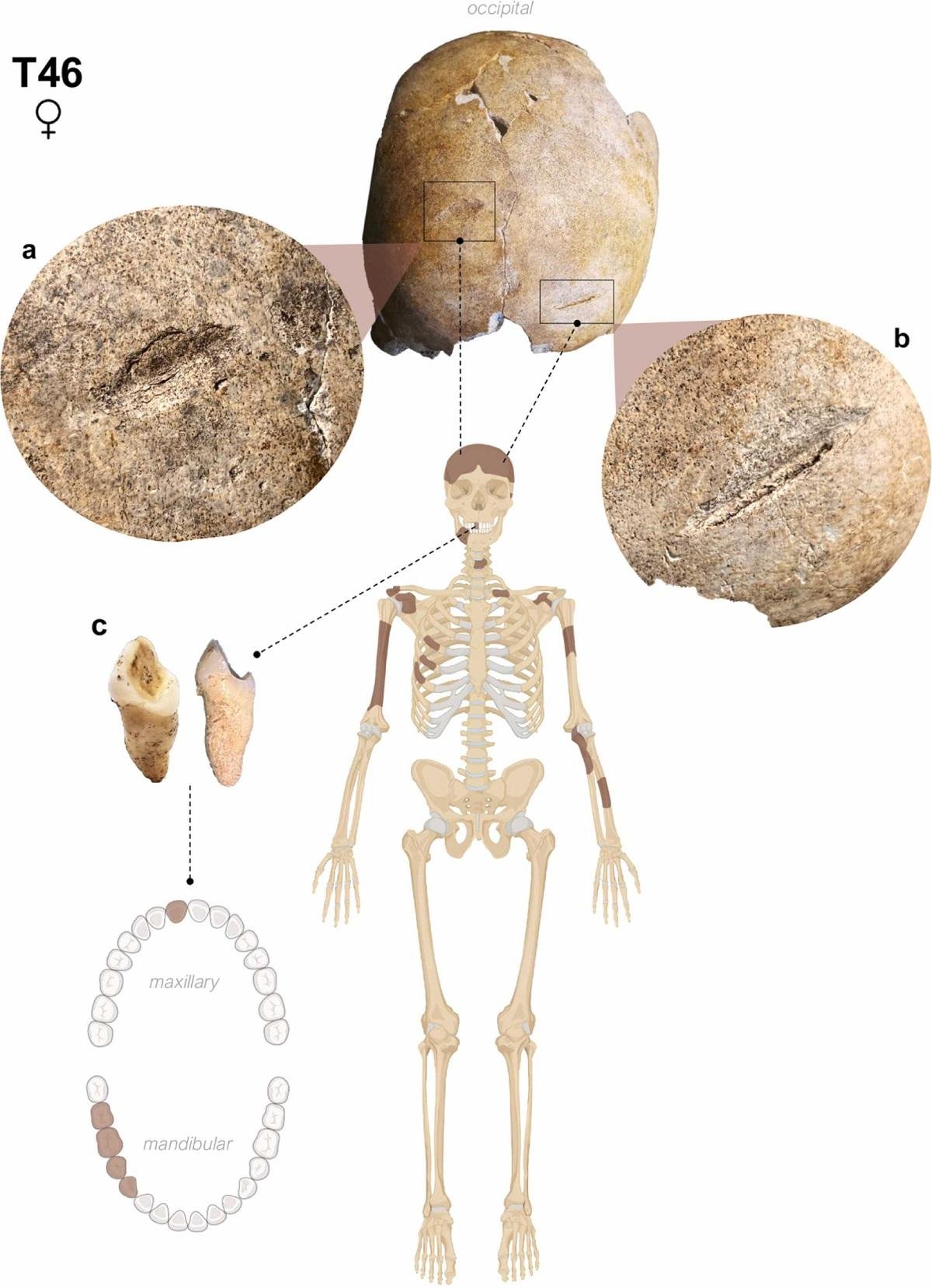
Researchers identified the woman, known as T46, from the Ferrovia cemetery in Cividale del Friuli. She lived between 590 and 630 CE, during the Langobard period in Italy. The study appeared in the International Journal of Paleopathology.
The Langobards built a reputation as a warrior society. Graves from Italy and former Langobard territories in present-day Hungary often contain weapons, including swords and knives. Human remains with violent injuries appear in these cemeteries as well. Until now, those injuries belonged only to men.
The lack of female cases always raised questions. Langobard legal texts include several references to violence involving women. Some laws deal with attacks against women. Others mention women entering fights. One legal passage even refers to men sending women into conflict in their place.
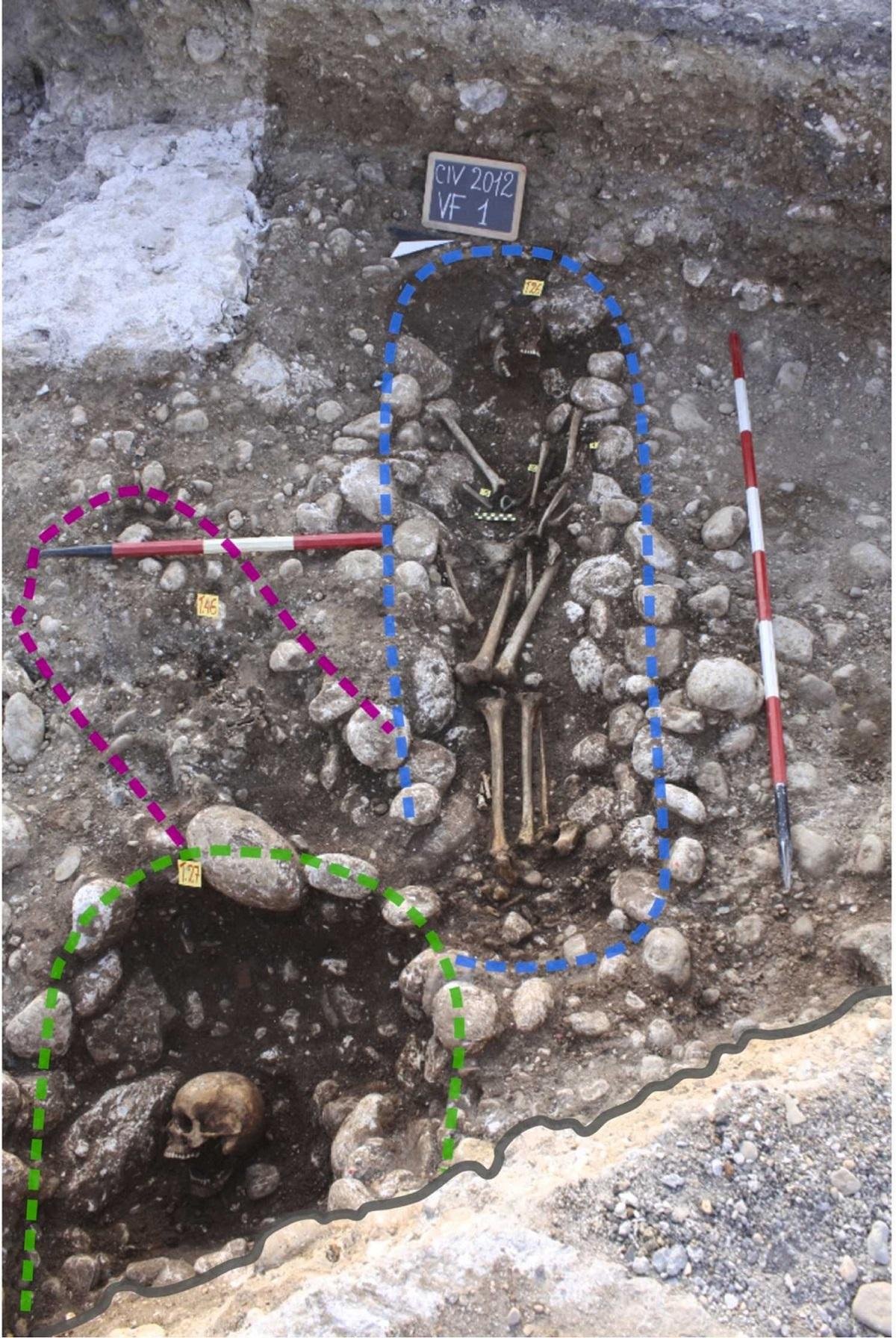
T46 came to light during an emergency excavation in 2012, after redevelopment work began in the area. Archaeologists found her remains in poor condition. Later burials had cut through the grave, leaving parts of the skeleton broken and incomplete.
Researchers could not rely on bone structure alone to determine sex. Instead, they turned to protein analysis. The results confirmed the individual was female.
Her skull preserved clear signs of trauma. One injury appeared as a narrow cut on the left side of the forehead. The shape and direction of the wound point to a sharp weapon striking from the front and above. Researchers suggest a blade similar to a scramasax, a long knife linked with Germanic groups.
A second injury caused a crushing fracture. A hard, flat object, possibly a stone, likely produced the blow. The damaged area later developed signs of infection. Recovery was far from easy.
She survived.
Both wounds healed during her lifetime. Bone growth around the injuries shows she lived for years after the violent encounter. Survival after such trauma suggests long-term care and social support from people around her.
To place the case in context, the research team reviewed other Langobard examples of cranial trauma. They identified 33 individuals from sites in Italy and Hungary with similar head injuries. Every one of those individuals was male.
Why does T46 stand alone?
Researchers point to several possibilities. Women likely appeared less often in raids and armed clashes, situations more likely to leave marks on bone. Violence against women often affected soft tissue. Bruises, cuts, and internal injuries rarely survive in the archaeological record.
The authors note limits to the study. The skeleton suffered heavy damage after burial. Soft tissue injuries leave no trace in bone. Interpreting violence from skull injuries alone leaves gaps in the story.
Even so, T46 adds an important piece to research on Langobard life. Her injuries show female experiences of violence existed within this society, even if archaeology rarely preserves such evidence.
Future work will examine larger groups of individuals and combine skeletal analysis with molecular methods, isotopes, and genetic data. Researchers hope those studies will reveal whether T46 represents an isolated case from one cemetery or part of a wider pattern across Langobard communities.

Disclaimer: This website is a science-focused magazine that welcomes both academic and non-academic audiences. Comments are written by users and may include personal opinions or unverified claims. They do not necessarily reflect the views of our editorial team or rely on scientific evidence.
Comment Policy: We kindly ask all commenters to engage respectfully. Comments that contain offensive, insulting, degrading, discriminatory, or racist content will be automatically removed.