
A nearly complete skeleton of a young tapir found in northeastern Spain is giving researchers a rare look at the early life of a species that lived almost four million years ago. The fossil, uncovered at the Camp dels Ninots site in Girona, belongs to a tapir around one year old and stands as the most complete juvenile tapir skeleton known from Europe.
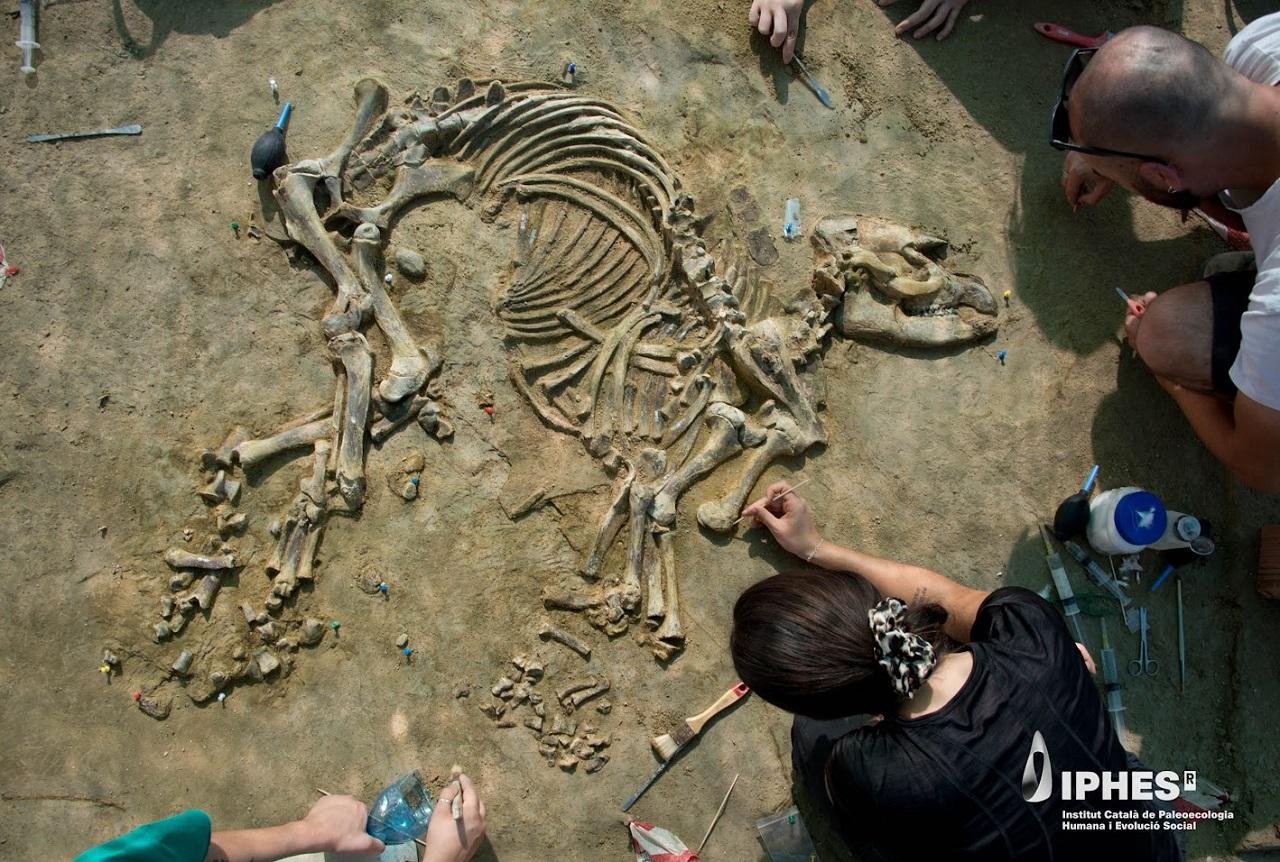
The find comes from ongoing excavations led by IPHES-CERCA at Camp dels Ninots, a fossil site known for its rich Pliocene record. The skeleton was preserved largely intact, with bones still in anatomical position. Such preservation is uncommon in paleontology, especially for very young animals.
The new specimen adds to a growing collection of tapir fossils from the site. Researchers have now recovered seven individuals representing different ages and sexes. Few fossil localities in the world contain so many complete skeletons from a single extinct tapir species. The collection has turned Camp dels Ninots into a key reference point for studying Tapirus arvernensis, among the last tapir species to live in Europe.
Adult tapirs recovered from the site were large herbivores with strong bodies similar in size to living tapirs. Their anatomy resembles modern species found in the forests of South America and Southeast Asia. The presence of adults, juveniles, and younger individuals from the same species is allowing scientists to piece together a fuller picture of growth, development, and variation within the population.
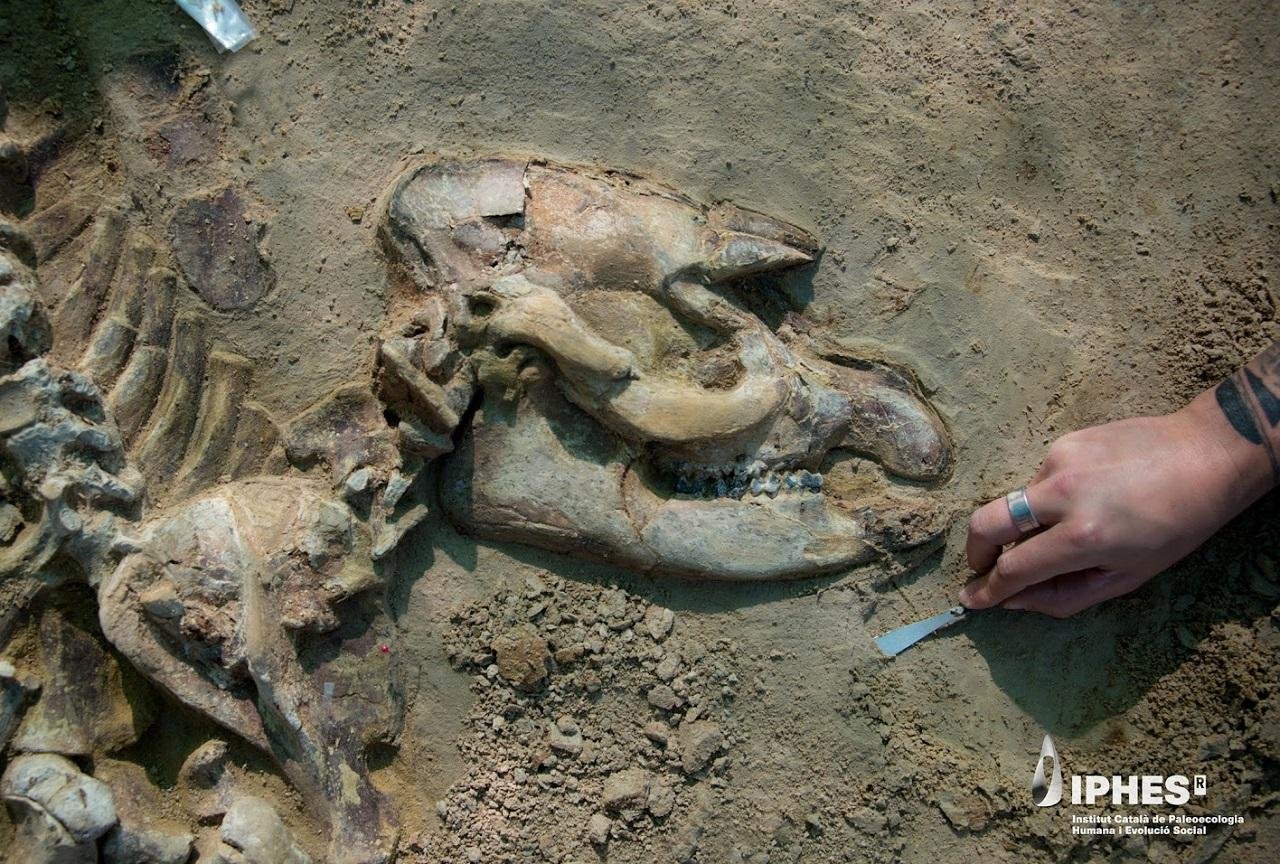
Young animals rarely enter the fossil record in such good condition. For researchers, this skeleton offers an unusual chance to study skeletal growth and the biological changes that occurred during the earliest stages of life. By comparing animals of different ages, scientists hope to reconstruct how European Pliocene tapirs developed from infancy to adulthood.
Excavation work at the site is still underway and will continue through mid-June. This year’s campaign involves around sixteen specialists from fields including geology, paleontology, biology, archaeology, conservation, and restoration. Graduate students from the Universitat Rovira i Virgili are also taking part.
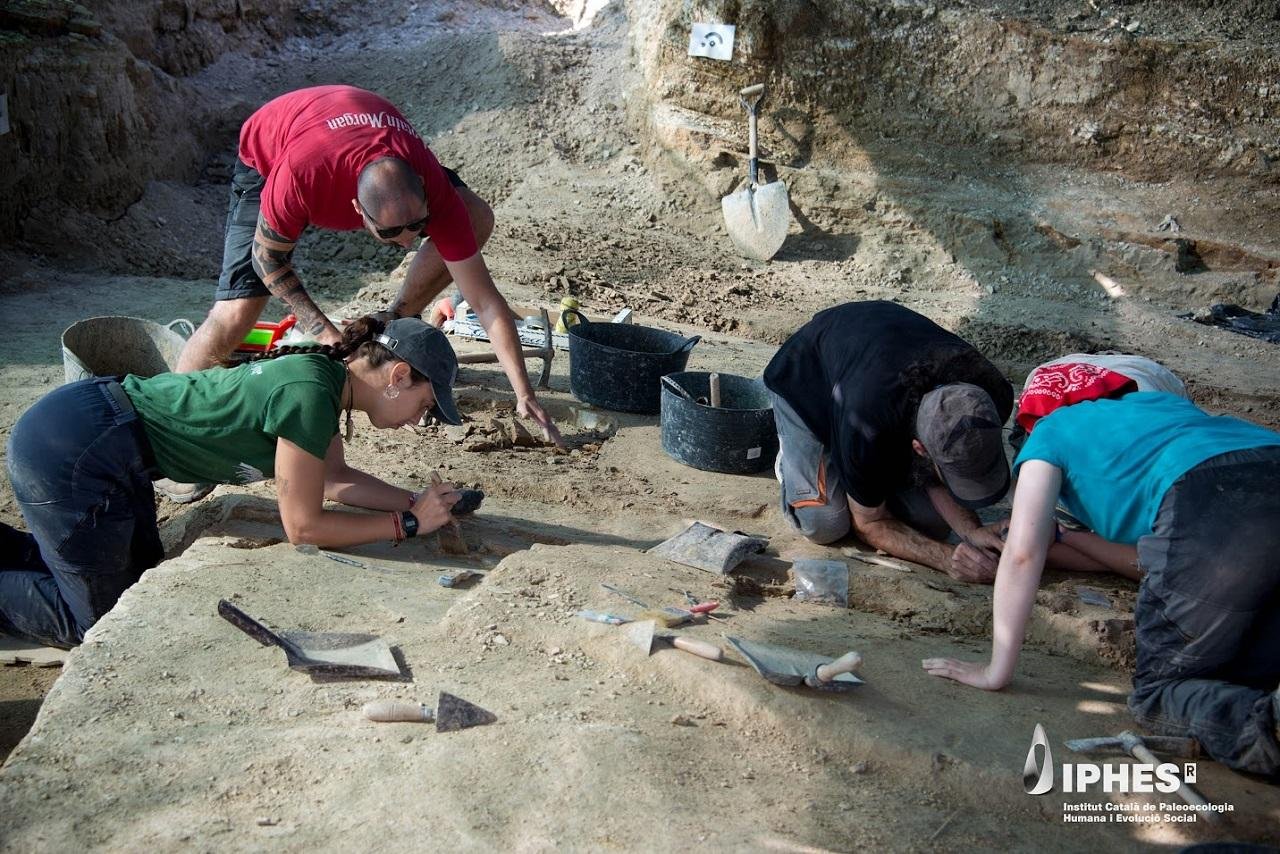
The team has fully exposed the skeleton and carried out conservation work directly at the excavation area. Researchers are documenting the fossil through detailed three-dimensional recording and precise spatial mapping. They are also collecting sediment samples to study the environmental setting and the processes that led to fossil preservation. Once fieldwork ends, the fossil will undergo a careful extraction process lasting several days before transfer to IPHES-CERCA laboratories.
Camp dels Ninots formed inside a maar volcano during the Pliocene. Over time, the volcanic crater filled with water and became a lake where sediments accumulated under conditions favorable for preserving organic remains. This ancient volcanic lake created an environment where entire skeletons survived with unusual completeness.
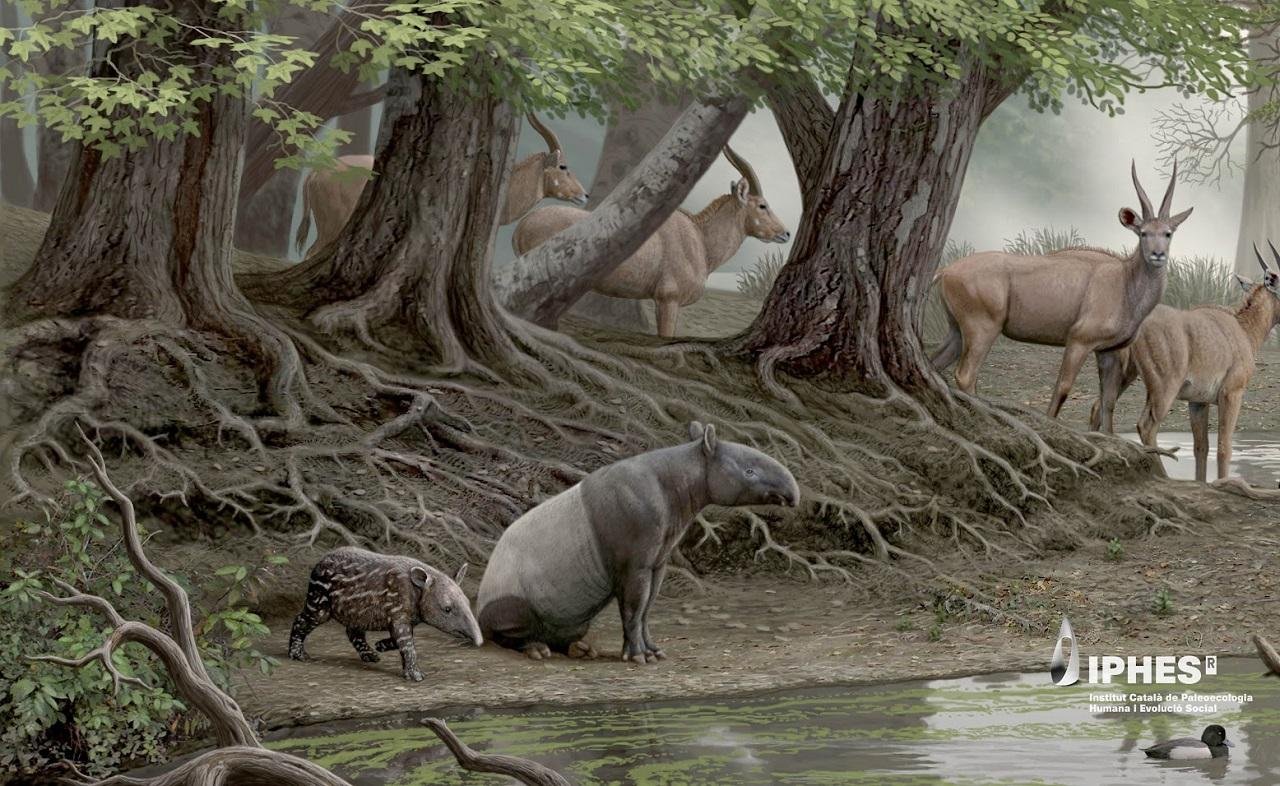
Evidence gathered in recent years suggests the tapirs from Camp dels Ninots shared close evolutionary ties with modern Asian tapirs, pointing toward an Asian ancestry for this lineage. Plant remains from the site show that a dense, humid subtropical forest once surrounded the lake. This landscape would have offered an ideal habitat for large plant-eating mammals closely associated with water.
Tapir fossils from other European sites often appear broken and scattered. At Camp dels Ninots, skeletons are frequently preserved whole or nearly whole. Researchers link this unusual state of preservation to the geological and chemical conditions of the ancient volcanic lake. The lack of damage from large scavengers also hints at sudden deaths near the lakeshore. Some scientists suspect volcanic gas emissions played a role.
The juvenile tapir adds another layer to one of the most important fossil collections of its kind. Beyond expanding the known record of European tapirs, the skeleton offers rare evidence for studying how an extinct species grew during its earliest years and how life unfolded within a Pliocene ecosystem nearly four million years ago.
More information: IPHES-CERCA



Disclaimer: This website is a science-focused magazine that welcomes both academic and non-academic audiences. Comments are written by users and may include personal opinions or unverified claims. They do not necessarily reflect the views of our editorial team or rely on scientific evidence.
Comment Policy: We kindly ask all commenters to engage respectfully. Comments that contain offensive, insulting, degrading, discriminatory, or racist content will be automatically removed.