• About
  • Privacy Policy
  • Terms of Use
  • Donation
  • Contact
No Result
View All Result
Archaeology News
  • Home
  • News
    • Archaeology
    • Anthropology
    • Paleontology
  • Academic
    • Books
    • Conferences
    • Universities
  • Articles
  • VR Tours
  • Quiz & Game
  • Download
  • Encyclopedia
  • Forum
Archaeology News
No Result
View All Result
Home News Archaeology

Lost capital of ancient kingdom unearthed in North Macedonia

by Dario Radley
April 10, 2025

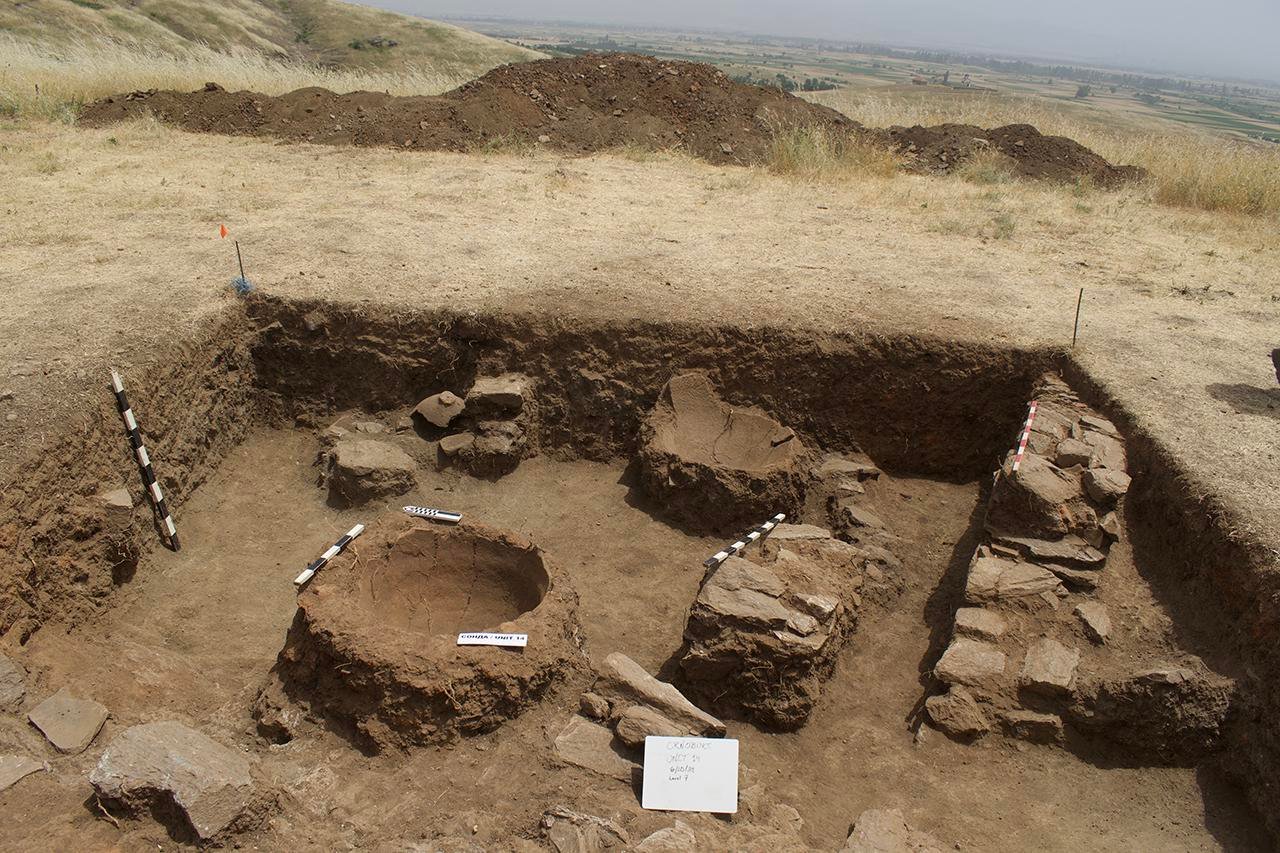
Archaeologists in North Macedonia have uncovered the remains of a possibly long-lost ancient city far more ancient and important than previously known. Found near Crnobuki village, the Gradishte archaeological site was widely believed to have been a 3rd-century BCE Macedonian outpost in the time of King Philip V. However, recent discoveries by a collaborative research team of the National Institute and Museum–Bitola and California State Polytechnic University, Humboldt (Cal Poly Humboldt) have revealed a much deeper and richer history.
Lost capital of ancient kingdom unearthed in North Macedonia
Excavation of the ancient site in Crnobuki. Photo courtesy Cal Poly Humboldt’s Cultural Resources Facility

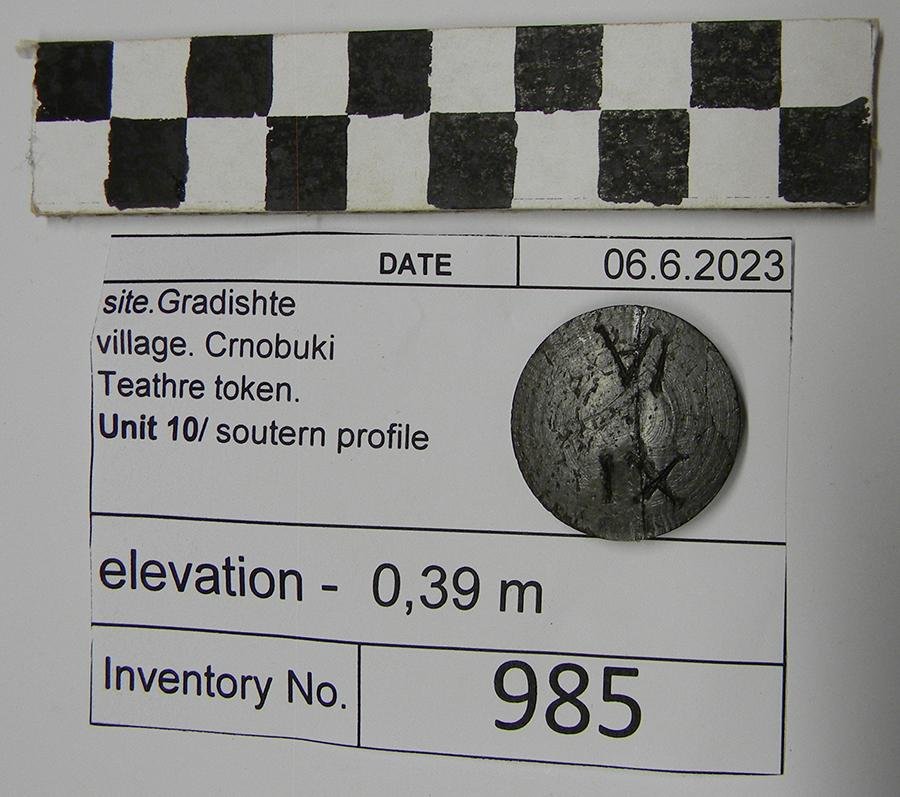
Using the assistance of modern technologies like ground-penetrating radar and LiDAR, researchers now believe the site could have been a vibrant urban center dating at least back to the Bronze Age (c. 3300–1200 BCE). Some of the most notable finds include stone axes, pottery fragments, game pieces, textile-working tools, and even a fragment of a clay theater ticket—items that suggest a rich, sophisticated society.

In 2023, the excavation took a thrilling turn when the team unearthed a coin that dates between 325 and 323 BCE, while Alexander the Great was alive. The discovery pushed the time period for peak activity at the site back to the period before, previously thought to have occurred during the reign of Philip V (221–179 BCE), by a century. Additional carbon dating of organic materials such as charcoal and bone has placed the site from circa 360 BCE to as recent as 670 CE.

“This is a once-in-a-lifetime discovery,” said Nick Angeloff, an anthropology professor and archaeologist with Cal Poly Humboldt. “It highlights the complex networks and power structures of ancient Macedonia, especially given the city’s location along trade routes to Constantinople. It’s even possible that historical figures like Octavian and Agrippa passed through the area on their way to confront Cleopatra and Mark Antony at the Battle of Actium,” added Angeloff.
Lost capital of ancient kingdom unearthed in North Macedonia
The ceramic theater token unearthed at the site. Photo courtesy of Cal Poly Humboldt’s Cultural Resources Facility.

Angeloff and his team believe the location may be Lyncus, the ancient capital of the Kingdom of Lyncestis—an autonomous Macedonian kingdom that resisted conquest until conquered by Philip II, Alexander’s father, in the fourth century BCE. It may also be the birthplace of Queen Eurydice I, Alexander the Great’s grandmother, who was politically influential and a key figure in the early formation of the Macedonian state.

RelatedStories

New study rewrites the origins of the Macedonian kingdom, dating Alexander the Great’s dynasty to the 6th century BCE

New study rewrites the origins of the Macedonian kingdom, dating Alexander the Great’s dynasty to the 6th century BCE

January 3, 2026
Scientists uncover Ireland’s largest prehistoric hillfort settlement, reshaping views of Bronze Age society

Scientists uncover Ireland’s largest prehistoric hillfort settlement, reshaping views of Bronze Age society

January 1, 2026

Engin Nasuh, curator-advisor archaeologist at the National Institute and Museum–Bitola, stressed the importance of the rediscovery of the site. He said, “We’re only beginning to scratch the surface of what we can learn about this period. I see it as a large mosaic, and our studies are just a few pebbles in that mosaic. With each subsequent study, a new pebble is placed, until one day we get the entire picture.”

Nasuh also pointed out that the Gradishte site was first mentioned in literature in 1966 but remained, for the most part, unexplored until modern times. Thanks to the College of Arts, Humanities & Social Sciences at Cal Poly Humboldt for providing funding, advanced tools have now revealed the city’s size, such as a seven-acre acropolis and what may be a Macedonian-style theater and textile workshop.

Rather than being a mere outpost, it appears the city was a focal point in Upper Macedonia that influenced trade, politics, and culture across the region. Through continuing excavations, the team of researchers is looking forward to uncovering even more information about the role this city played in the overall history of early European cultures and how they are connected to the rise of the ancient Macedonian state.

More information: Cal Poly Humboldt
Share22Tweet14Share4ShareSend

You May Also Like...

60,000-year-old poison arrows from South Africa reveal the world’s earliest poisoned weapons and advanced hunting techniques
Archaeology

60,000-year-old poison arrows from South Africa reveal the world’s earliest poisoned weapons and advanced hunting techniques

January 8, 2026
Inscribed clay cylinders reveal Nebuchadnezzar II’s restoration of the Kish Ziggurat
Archaeology

Inscribed clay cylinders reveal Nebuchadnezzar II’s restoration of the Kish Ziggurat

January 7, 2026
Rare Late Roman mosaic with Solomon’s Knot discovered beneath modern İzmir
Archaeology

Rare Late Roman mosaic with Solomon’s Knot discovered beneath modern İzmir

January 7, 2026
1130 depiction of Saxons, Jutes, and Angles crossing the sea to Britain. Credit: Wikimedia / CC BY-SA 4.0. Roots of medieval migration into England uncovered by large-scale bioarchaeological study
Anthropology

Roots of medieval migration into England uncovered by large-scale bioarchaeological study

January 6, 2026
Rare Celtic gold coins found in Swiss bog may reveal ancient ritual offerings
Archaeology

Rare Celtic gold coins found in Swiss bog may reveal ancient ritual offerings

January 5, 2026
Rare medieval gold ring unearthed in Tønsberg
Archaeology

Rare medieval gold ring unearthed in Tønsberg reveals beliefs and craftsmanship of its time

January 5, 2026

Comments 3

  1. Editorial Team says:
    1 second ago

    Disclaimer: This website is a science-focused magazine that welcomes both academic and non-academic audiences. Comments are written by users and may include personal opinions or unverified claims. They do not necessarily reflect the views of our editorial team or rely on scientific evidence.

    Comment Policy: We kindly ask all commenters to engage respectfully. Comments that contain offensive, insulting, degrading, discriminatory, or racist content will be automatically removed.

  2. KBoi says:
    9 months ago

    Did anyone not realize that it would be useful and appropriate to either include the geographical location or provide a map for this interesting, incomplete finding?

    • Archaeology News says:
      9 months ago

      Thank you for your comment. The exact location is sometimes withheld for various reasons, though the general area has been shared. If you’re a researcher and need precise location details for academic purposes, you may contact the responsible university for more details.

  3. Karen Reeve says:
    9 months ago

    Wonderful, informative, a spectacular presentation.
    Making history: I often wonder what will be left of our societies for future archeologists. Computer. Chips? Plastic products , data holders, computers, recordings of sorts. Or will they find the same artifacts as have been found, almost lasting forever, hewed from Stone .
    K. Reeve

Follow us


Instagram
244K

Facebook
118K

Threads
45K

LinkedIn
14K

Twitter
6K

YouTube
1K
  • Trending
  • Comments
  • Latest
Shipwreck Salvage. Credit: rawpixel.com / Public Domain

2,000-year-old shipwreck discovered off Turkish coast with remarkably preserved stacked ceramics

July 2, 2025
Viking age DNA reveals 9,000-year-old HIV-resistant gene originating near the Black Sea

Viking age DNA reveals 9,000-year-old HIV-resistant gene originating near the Black Sea

May 18, 2025
A new study suggests the mysterious Voynich Manuscript may be a medieval cipher

A new study suggests the mysterious Voynich Manuscript may be a medieval cipher

January 3, 2026
Moses may be named in ancient Egyptian mine inscriptions, sparking debate over earliest biblical references

Moses may be named in ancient Egyptian mine inscriptions, sparking debate over earliest biblical references

July 31, 2025
Mystery of Armenia’s 6,000-year-old dragon stones solved

Mystery of Armenia’s 6,000-year-old dragon stones solved

September 23, 2025
3D analysis reveals Shroud of Turin image likely came from sculpture, not Jesus’ body

3D analysis reveals Shroud of Turin image likely came from sculpture, not Jesus’ body

Moses may be named in ancient Egyptian mine inscriptions, sparking debate over earliest biblical references

Moses may be named in ancient Egyptian mine inscriptions, sparking debate over earliest biblical references

$1 million prize offered to decipher 5,300-year-old Indus Valley script

$1 million prize offered to decipher 5,300-year-old Indus Valley script

Oldest ever genetic data from a human relative found in 2-million-year-old fossilized teeth

Oldest ever genetic data from a human relative found in 2-million-year-old fossilized teeth

Exceptionally large Roman shoes discovered at Magna fort near Hadrian’s Wall

Exceptionally large Roman shoes discovered at Magna fort near Hadrian’s Wall

60,000-year-old poison arrows from South Africa reveal the world’s earliest poisoned weapons and advanced hunting techniques

60,000-year-old poison arrows from South Africa reveal the world’s earliest poisoned weapons and advanced hunting techniques

January 8, 2026
Inscribed clay cylinders reveal Nebuchadnezzar II’s restoration of the Kish Ziggurat

Inscribed clay cylinders reveal Nebuchadnezzar II’s restoration of the Kish Ziggurat

January 7, 2026
Rare Late Roman mosaic with Solomon’s Knot discovered beneath modern İzmir

Rare Late Roman mosaic with Solomon’s Knot discovered beneath modern İzmir

January 7, 2026
1130 depiction of Saxons, Jutes, and Angles crossing the sea to Britain. Credit: Wikimedia / CC BY-SA 4.0. Roots of medieval migration into England uncovered by large-scale bioarchaeological study

Roots of medieval migration into England uncovered by large-scale bioarchaeological study

January 6, 2026
Rare Celtic gold coins found in Swiss bog may reveal ancient ritual offerings

Rare Celtic gold coins found in Swiss bog may reveal ancient ritual offerings

January 5, 2026

Archaeology News online magazine

Archaeology News is an international online magazine that covers all aspects of archaeology.


Categories

  • Academics
    • Books
    • Conferences
    • Universities
  • Articles
  • Download
  • Game
  • News
    • Anthropology
    • Archaeology
    • Paleontology
  • Quiz
  • Tours

Subscribe to our newsletter

© 2024 - Archaeology News Online Magazine. All Rights Reserved.

  • About
  • Privacy Policy
  • Terms of Use
  • Donation
  • Contact

Welcome Back!

Login to your account below

Forgotten Password? Sign Up

Create New Account!

Fill the forms below to register

All fields are required. Log In

Retrieve your password

Please enter your username or email address to reset your password.

Log In

Add New Playlist

Manage Consent
To provide the best experiences, we use technologies like cookies to store and/or access device information. Consenting to these technologies will allow us to process data such as browsing behavior or unique IDs on this site. Not consenting or withdrawing consent, may adversely affect certain features and functions.
Functional Always active
The technical storage or access is strictly necessary for the legitimate purpose of enabling the use of a specific service explicitly requested by the subscriber or user, or for the sole purpose of carrying out the transmission of a communication over an electronic communications network.
Preferences
The technical storage or access is necessary for the legitimate purpose of storing preferences that are not requested by the subscriber or user.
Statistics
The technical storage or access that is used exclusively for statistical purposes. The technical storage or access that is used exclusively for anonymous statistical purposes. Without a subpoena, voluntary compliance on the part of your Internet Service Provider, or additional records from a third party, information stored or retrieved for this purpose alone cannot usually be used to identify you.
Marketing
The technical storage or access is required to create user profiles to send advertising, or to track the user on a website or across several websites for similar marketing purposes.
  • Manage options
  • Manage services
  • Manage {vendor_count} vendors
  • Read more about these purposes
View preferences
  • {title}
  • {title}
  • {title}
  • Home
  • News
    • Archaeology
    • Anthropology
    • Paleontology
  • Academic
    • Books
    • Conferences
    • Universities
  • Articles
  • VR Tours
  • Quiz & Game
  • Download
  • Encyclopedia
  • Forum

About  .  Contact  .  Donation

© 2024 - Archaeology News Online Magazine. All Rights Reserved