• About
  • Privacy Policy
  • Terms of Use
  • Donation
  • Contact
No Result
View All Result
Archaeology News
  • Home
  • News
    • Archaeology
    • Anthropology
    • Paleontology
  • Academic
    • Books
    • Conferences
    • Universities
  • Articles
  • VR Tours
  • Quiz & Game
  • Download
  • Encyclopedia
  • Forum
Archaeology News
No Result
View All Result
Home News Archaeology

Early humans used ochre for advanced toolmaking at Blombos Cave, study finds

by Dario Radley
July 1, 2025

A recent study led by researchers at SapienCE has revealed that ochre—previously considered primarily a symbolic pigment—played a crucial role in the production of sophisticated stone tools by early modern humans in Blombos Cave, South Africa, during the Middle Stone Age (MSA), between 90,000 and 70,000 years ago.
Early humans used ochre for advanced toolmaking at Blombos Cave, study finds
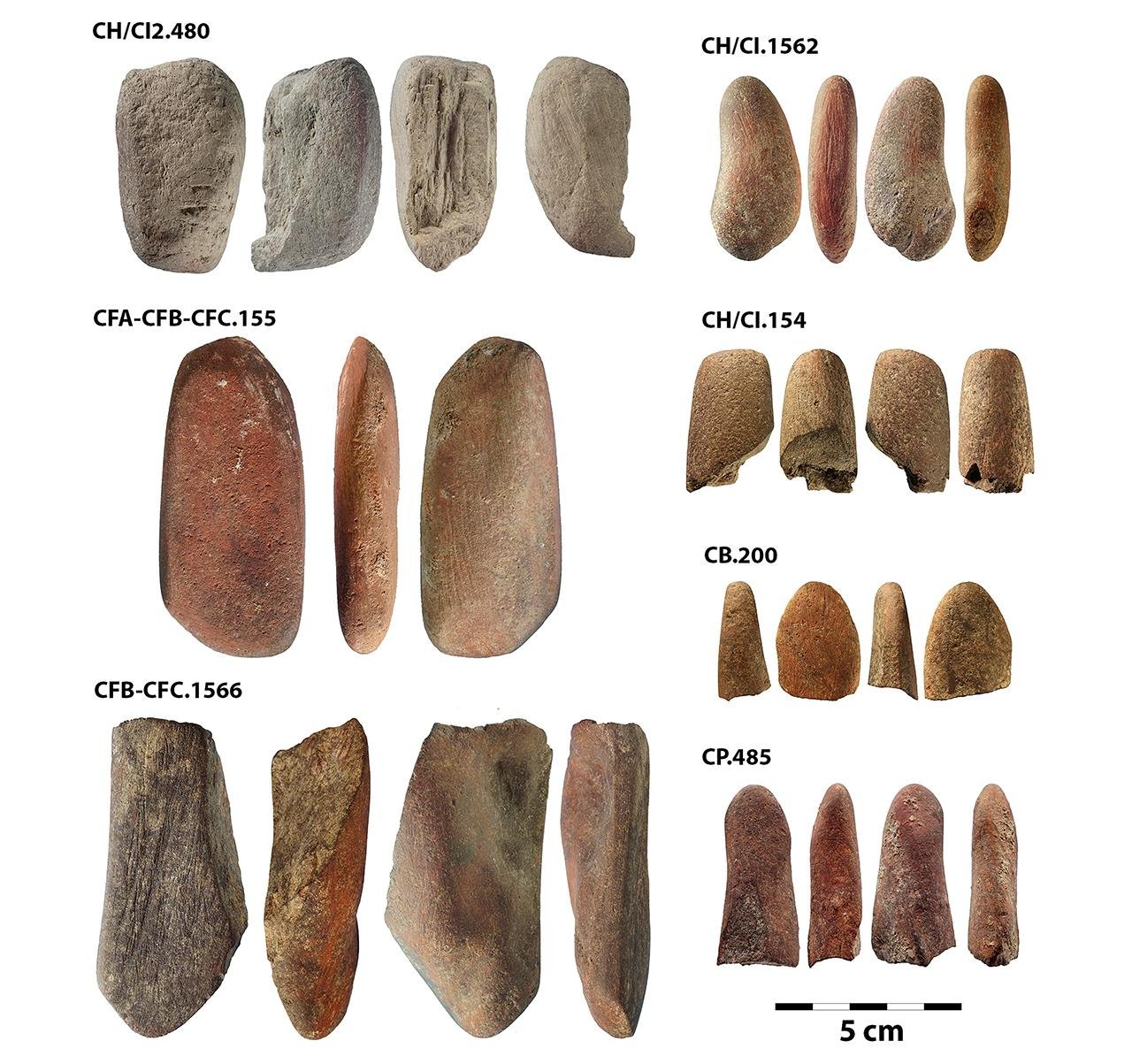
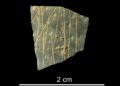
The seven ochre retouchers from the MSA layers of Blombos Cave (BBC). Credit: Velliky et al., Science Advances (2025)

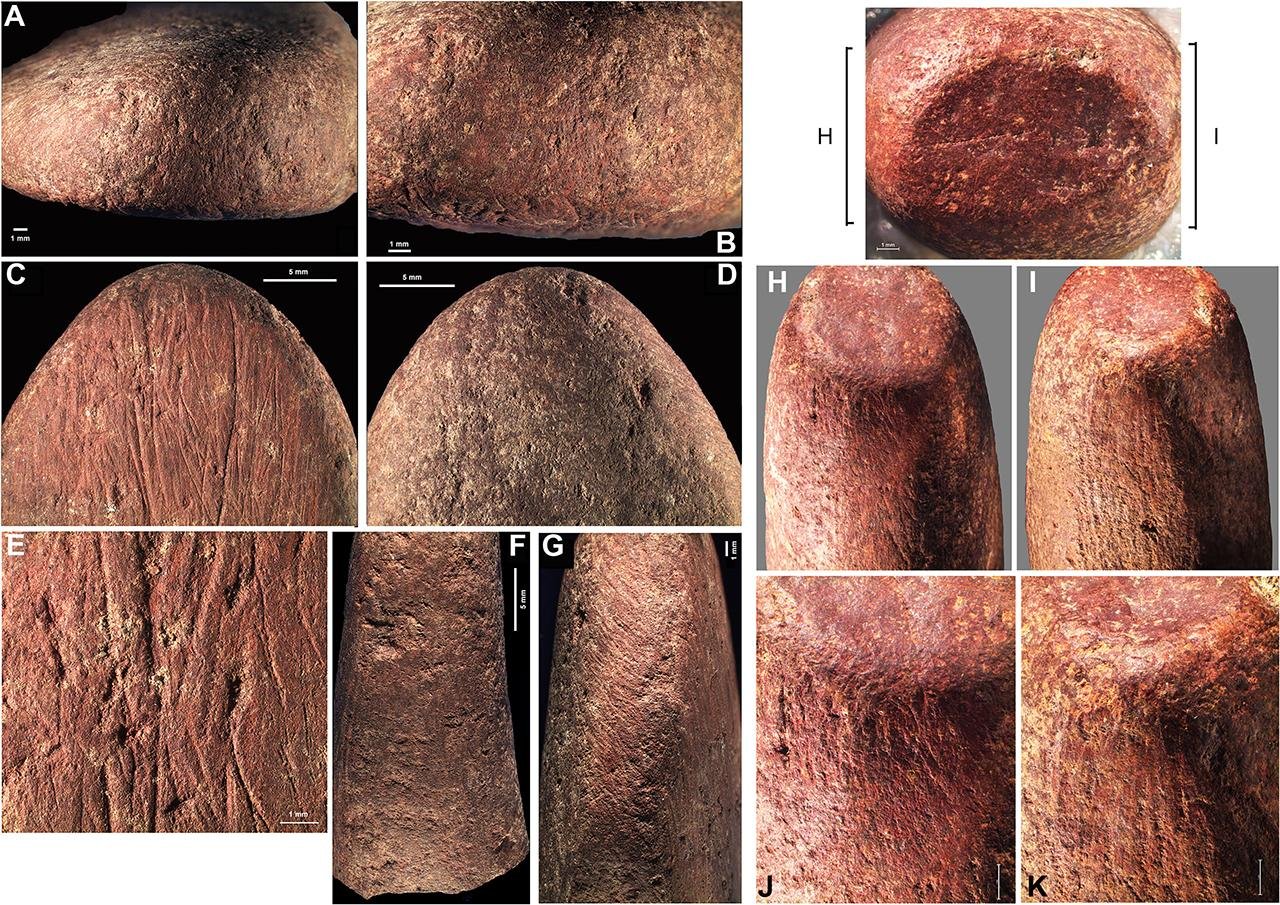
While examining previously excavated artifacts at the SapienCE laboratory in Cape Town, archaeologist Elizabeth Velliky discovered an ochre fragment bearing wear patterns distinct from the typical grinding marks used for pigment production. Intrigued, she presented the artifact to colleagues Francesco d’Errico, Karen van Niekerk, and Christopher Henshilwood. Their examination confirmed the fragment had been deliberately shaped and used in a previously undescribed way. As they continued to sort through more discoveries, further ochre artifacts with the same marks appeared—seven in total—resulting in a reassessment of the use of ochre in early human life.

Published in Science Advances, the study reports the initial direct archaeological evidence that ochre was specifically crafted into retouching tools for lithic implements. Experimental research and replication studies by d’Errico and colleagues revealed that these ochre “retouchers” were used for pressure flaking and direct percussion—advanced methods in shaping stone tools. These methods are highly dexterous and mentally demanding, especially for the production of the Still Bay points: bifacial tools renowned for their symmetry and refined forms.

Notably, the ochre artifacts show signs of rejuvenation, indicating that they were maintained in good condition over time, a characteristic typical of personal or curated tools. “The sophistication of these pressure flakers implies that they were the personal property of expert toolmakers,” d’Errico said. “They may have functioned not only as practical instruments but also as indicators of identity and technical prowess.”
Early humans used ochre for advanced toolmaking at Blombos Cave, study finds
Macro-images of use traces on some artifacts. Credit: Velliky et al., Science Advances (2025)

This discovery contradicts common assumptions that ochre’s primary role in the cultures of ancient people was symbolic—ritual, or body painting. Instead, it speaks to the pigment’s functional versatility. Earlier ethnographic and experimental studies had hinted at ochre’s use in such processes as hide tanning or hafting adhesives, but definitive archaeological evidence had remained elusive—until now.

RelatedStories

Early human innovation in southern Africa tied to mobility and social networks rather than climate alone, new study shows

Early human innovation in southern Africa tied to mobility and social networks rather than climate alone, new study shows

February 6, 2026
Neanderthals in Spain deliberately deposited animal skulls in cave, revealing symbolic behavior

Neanderthals in Spain deliberately deposited animal skulls in cave, revealing symbolic behavior

January 31, 2026

Henshilwood, director of SapienCE, emphasized the significance of the find: “We now have evidence that ochre was not only a medium for symbolic expression but also a key material in specialized tool production, reflecting a level of technological sophistication previously associated with much later periods.”

Van Niekerk, a co-author and director of the Blombos Cave excavations, commented that this discovery adds another piece of evidence to how early Homo sapiens were behaviorally modern. “This discovery will add another layer to our understanding of the behavioral modernity of early Homo sapiens in southern Africa,” she said.


More information: University of Bergen
Publication: Velliky, E. C., d’Errico, F., van Niekerk, K. L., & Henshilwood, C. S. (2025). Unveiling the multifunctional use of ochre in the Middle Stone Age: Specialized ochre retouchers from Blombos Cave. Science Advances, 11(26), eads2797. doi:10.1126/sciadv.ads2797
Share66Tweet41Share11ShareSend

You May Also Like...

Scents of ancient Egypt: tracing embalming recipes by analyzing air around mummies
Anthropology

Scents of ancient Egypt: tracing embalming recipes by analyzing air around mummies

February 6, 2026
New study reveals advanced lead pipeline system in Petra’s ancient aqueduct
Archaeology

New study reveals advanced lead pipeline system in Petra’s ancient aqueduct

February 6, 2026
Early human innovation in southern Africa tied to mobility and social networks rather than climate alone, new study shows
Archaeology

Early human innovation in southern Africa tied to mobility and social networks rather than climate alone, new study shows

February 6, 2026
LiDAR mapping reveals over 630,000 historic charcoal kiln sites across Poland’s forests
Archaeology

LiDAR mapping reveals over 630,000 historic charcoal kiln sites across Poland’s forests

February 5, 2026
CT scans of ancient Egyptian mummies reveal lifespans, health, and daily life of priests
Anthropology

CT scans of ancient Egyptian mummies reveal lifespans, health, and daily life of priests

February 4, 2026
14,000-year-old Alaska campsite helps trace how the first people arrived in North America
Archaeology

14,000-year-old Alaska campsite helps trace how the first people arrived in North America

February 4, 2026

Comments 0

  1. Editorial Team says:
    1 second ago

    Disclaimer: This website is a science-focused magazine that welcomes both academic and non-academic audiences. Comments are written by users and may include personal opinions or unverified claims. They do not necessarily reflect the views of our editorial team or rely on scientific evidence.

    Comment Policy: We kindly ask all commenters to engage respectfully. Comments that contain offensive, insulting, degrading, discriminatory, or racist content will be automatically removed.

    Reply

Leave a Reply Cancel reply

Your email address will not be published. Required fields are marked *

Follow us


Instagram
244K

Facebook
118K

Threads
45K

LinkedIn
14K

Twitter
6K

YouTube
1K
  • Trending
  • Comments
  • Latest
Shipwreck Salvage. Credit: rawpixel.com / Public Domain

2,000-year-old shipwreck discovered off Turkish coast with remarkably preserved stacked ceramics

July 2, 2025
Viking age DNA reveals 9,000-year-old HIV-resistant gene originating near the Black Sea

Viking age DNA reveals 9,000-year-old HIV-resistant gene originating near the Black Sea

May 18, 2025
A new study suggests the mysterious Voynich Manuscript may be a medieval cipher

A new study suggests the mysterious Voynich Manuscript may be a medieval cipher

January 3, 2026
Moses may be named in ancient Egyptian mine inscriptions, sparking debate over earliest biblical references

Moses may be named in ancient Egyptian mine inscriptions, sparking debate over earliest biblical references

July 31, 2025
Mystery of Armenia’s 6,000-year-old dragon stones solved

Mystery of Armenia’s 6,000-year-old dragon stones solved

September 23, 2025
3D analysis reveals Shroud of Turin image likely came from sculpture, not Jesus’ body

3D analysis reveals Shroud of Turin image likely came from sculpture, not Jesus’ body

Moses may be named in ancient Egyptian mine inscriptions, sparking debate over earliest biblical references

Moses may be named in ancient Egyptian mine inscriptions, sparking debate over earliest biblical references

$1 million prize offered to decipher 5,300-year-old Indus Valley script

$1 million prize offered to decipher 5,300-year-old Indus Valley script

Oldest ever genetic data from a human relative found in 2-million-year-old fossilized teeth

Oldest ever genetic data from a human relative found in 2-million-year-old fossilized teeth

Exceptionally large Roman shoes discovered at Magna fort near Hadrian’s Wall

Exceptionally large Roman shoes discovered at Magna fort near Hadrian’s Wall

Scents of ancient Egypt: tracing embalming recipes by analyzing air around mummies

Scents of ancient Egypt: tracing embalming recipes by analyzing air around mummies

February 6, 2026
New study reveals advanced lead pipeline system in Petra’s ancient aqueduct

New study reveals advanced lead pipeline system in Petra’s ancient aqueduct

February 6, 2026
Early human innovation in southern Africa tied to mobility and social networks rather than climate alone, new study shows

Early human innovation in southern Africa tied to mobility and social networks rather than climate alone, new study shows

February 6, 2026
LiDAR mapping reveals over 630,000 historic charcoal kiln sites across Poland’s forests

LiDAR mapping reveals over 630,000 historic charcoal kiln sites across Poland’s forests

February 5, 2026
CT scans of ancient Egyptian mummies reveal lifespans, health, and daily life of priests

CT scans of ancient Egyptian mummies reveal lifespans, health, and daily life of priests

February 4, 2026

Archaeology News online magazine

Archaeology News is an international online magazine that covers all aspects of archaeology.


Categories

  • Academics
    • Books
    • Conferences
    • Universities
  • Articles
  • Download
  • Game
  • News
    • Anthropology
    • Archaeology
    • Paleontology
  • Quiz
  • Tours

Subscribe to our newsletter

© 2024 - Archaeology News Online Magazine. All Rights Reserved.

  • About
  • Privacy Policy
  • Terms of Use
  • Donation
  • Contact

Welcome Back!

Login to your account below

Forgotten Password? Sign Up

Create New Account!

Fill the forms below to register

All fields are required. Log In

Retrieve your password

Please enter your username or email address to reset your password.

Log In

Add New Playlist

Manage Consent
To provide the best experiences, we use technologies like cookies to store and/or access device information. Consenting to these technologies will allow us to process data such as browsing behavior or unique IDs on this site. Not consenting or withdrawing consent, may adversely affect certain features and functions.
Functional Always active
The technical storage or access is strictly necessary for the legitimate purpose of enabling the use of a specific service explicitly requested by the subscriber or user, or for the sole purpose of carrying out the transmission of a communication over an electronic communications network.
Preferences
The technical storage or access is necessary for the legitimate purpose of storing preferences that are not requested by the subscriber or user.
Statistics
The technical storage or access that is used exclusively for statistical purposes. The technical storage or access that is used exclusively for anonymous statistical purposes. Without a subpoena, voluntary compliance on the part of your Internet Service Provider, or additional records from a third party, information stored or retrieved for this purpose alone cannot usually be used to identify you.
Marketing
The technical storage or access is required to create user profiles to send advertising, or to track the user on a website or across several websites for similar marketing purposes.
  • Manage options
  • Manage services
  • Manage {vendor_count} vendors
  • Read more about these purposes
View preferences
  • {title}
  • {title}
  • {title}
  • Home
  • News
    • Archaeology
    • Anthropology
    • Paleontology
  • Academic
    • Books
    • Conferences
    • Universities
  • Articles
  • VR Tours
  • Quiz & Game
  • Download
  • Encyclopedia
  • Forum

About  .  Contact  .  Donation

© 2024 - Archaeology News Online Magazine. All Rights Reserved