• About
  • Privacy Policy
  • Terms of Use
  • Donation
  • Contact
No Result
View All Result
Archaeology News
  • Home
  • News
    • Archaeology
    • Anthropology
    • Paleontology
  • Academic
    • Books
    • Conferences
    • Universities
  • Articles
  • VR Tours
  • Quiz & Game
  • Download
  • Encyclopedia
  • Forum
Archaeology News
No Result
View All Result
Home News Anthropology

Ancient DNA reveals rare leprosy strain in the Americas thousands of years before European contact

by Dario Radley
July 1, 2025

In a discovery that overturns old suppositions about the origin of leprosy, researchers have recovered two extremely well-preserved genomes of Mycobacterium lepromatosis—a rare and severe form of bacteria that causes Hansen’s disease—from 4,000-year-old Chilean human skeletons. The finding is the first ancient genetic evidence of this form of leprosy in the Americas and suggests that the disease emerged on the continent independently, centuries before the arrival of Europeans.
Ancient DNA reveals rare leprosy strain in the Americas thousands of years before European contact
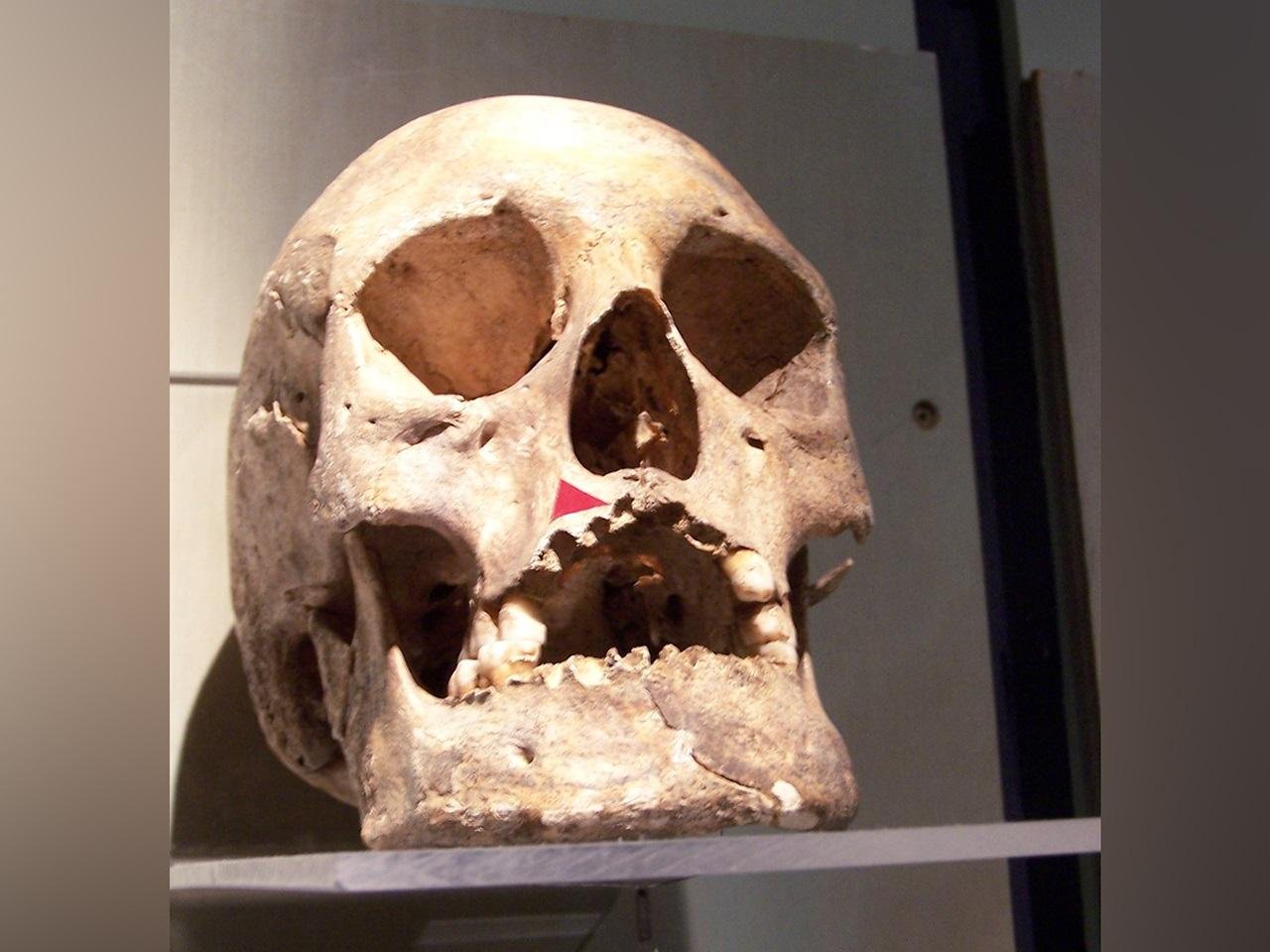
Cranium of a leper, showing deformed eye sockets, nose, jaw, and chin. On display at the Ribes Vikinger Museum, Denmark. Credit: Cnyborg / CC BY-SA 3.0

The skeletons, unearthed at Chile’s Atacama Desert archaeological sites of El Cerrito and La Herradura, belonged to two adult males who lived around 2000 BCE. The skeletons bore signs of leprosy, such as widened nasal cavities and thickening of the hand bones. When scientists studied the skeletons, they were surprised to find highly intact M. lepromatosis genomes, with better DNA preservation than in many modern samples.

While Mycobacterium leprae has long been known to be the dominant cause of Hansen’s disease—and is found in archaeological remains all over Europe and Asia dating back 5,000 years—M. lepromatosis was only identified in 2008 and is still rare today. This form of leprosy is associated with the most severe manifestations of the disease, such as diffuse lepromatous leprosy (DLL) and the potentially fatal Lucio’s phenomenon.

The two recovered genomes indicate that M. lepromatosis split from M. leprae approximately 26,800 years ago, with the American lineages diverging around 12,600 years ago—presumably coinciding with early human migration into South America. Importantly, the ancient Chilean strain has 94 unique mutations not found in modern genomes, suggesting long-standing isolated evolution.

Ancient DNA reveals rare leprosy strain in the Americas thousands of years before European contact
Children sitting beside a collection of human remains at Paco Leper Cemetery, Manila, Philippines. Credit: National Museum of Health and Medicine / CC BY 2.0

This deep divergence means that Hansen’s disease did not arrive with European colonists to the Americas, as previously believed, but perhaps originated or was independently introduced much earlier. “So far, the evidence points in the direction of an American origin,” said Kirsten Bos, group leader for Molecular Paleopathology at the Max Planck Institute for Evolutionary Anthropology, “but we’ll need more genomes from other time periods and contexts to be sure.”


RelatedStories

Malaria influenced early human migration and settlement in Africa long before farming, study finds

Malaria influenced early human migration and settlement in Africa long before farming, study finds

May 9, 2026
700-year-old mummy from Bolivia reveals scarlet fever bacterium present in the Americas before European contact

700-year-old mummy from Bolivia reveals scarlet fever bacterium present in the Americas before European contact

May 4, 2026

The study also raises broader questions about disease evolution and the limitations of our historical knowledge.

Today, M. lepromatosis remains rare, largely confined to Mexico and the Caribbean, but it has also been found in red squirrels in Ireland and the UK, highlighting possible zoonotic transmission routes. Although new cases are limited, finding it in ancient Chile provides evidence that the pathogen also circulated more widely and might have played a significant role in pre-Columbian health.

This finding showcases the ability of ancient DNA studies to reveal the lost epidemics of the past—pathogens that shaped civilizations and disappeared without a trace, until now.

More information: Max Planck Society
Publication: Ramirez, D. A., Sitter, T. L., Översti, S., Herrera-Soto, M. J., Pastor, N., Fontana-Silva, O. E., … Bos, K. I. (2025). 4,000-year-old Mycobacterium lepromatosis genomes from Chile reveal long establishment of Hansen’s disease in the Americas. Nature Ecology & Evolution. doi:10.1038/s41559-025-02771-y
Share161Tweet101Share28ShareSend

You May Also Like...

Horse domestication began centuries earlier than thought, study reveals early riding and management in 4th millennium BCE
Archaeology

Horse domestication began centuries earlier than thought, study reveals early riding and management in 4th millennium BCE

May 15, 2026
Ancient Danes kept fishing for millennia after farming arrived, study finds
Archaeology

Ancient Danes kept fishing for millennia after farming arrived, study finds

May 14, 2026
Oldest known dental treatment found in 59,000-year-old Neanderthal tooth from Siberia
Anthropology

Oldest known dental treatment found in 59,000-year-old Neanderthal tooth from Siberia

May 14, 2026
Homo erectus in Java: 140,000-year-old fossils found in submerged river valley
Anthropology

400,000-year-old Homo erectus proteins reveal genetic links to Denisovans and modern humans

May 14, 2026
Cut marks on 1.6-million-year-old bones reveal early humans moved and processed meat in Kenya
Anthropology

Cut marks on 1.6-million-year-old bones reveal early humans moved and processed meat in Kenya

May 13, 2026
280 ancient stone burial monuments found in Sudan reveal lost cattle-herding culture in the Sahara
Archaeology

280 ancient stone burial monuments found in Sudan reveal lost cattle-herding culture in the Sahara

May 13, 2026

Comments 1

  1. Editorial Team says:
    1 second ago

    Disclaimer: This website is a science-focused magazine that welcomes both academic and non-academic audiences. Comments are written by users and may include personal opinions or unverified claims. They do not necessarily reflect the views of our editorial team or rely on scientific evidence.

    Comment Policy: We kindly ask all commenters to engage respectfully. Comments that contain offensive, insulting, degrading, discriminatory, or racist content will be automatically removed.

  2. Jeremy L. Weiss says:
    11 months ago

    Not totally unexpected. Besides people, the most common vector for leprosy is armadillo which are a New World animal. If there were no leprosy bacteria in North America at the time, how could they have become such a good carrier (injectable, but not fatally susceptible).?

Follow us


Instagram
242K

Facebook
117K

Threads
46K

LinkedIn
14K

Twitter
6K

YouTube
1K
  • Trending
  • Comments
  • Latest
Shipwreck Salvage. Credit: rawpixel.com / Public Domain

2,000-year-old shipwreck discovered off Turkish coast with remarkably preserved stacked ceramics

July 2, 2025
A new study suggests the mysterious Voynich Manuscript may be a medieval cipher

A new study suggests the mysterious Voynich Manuscript may be a medieval cipher

January 3, 2026
Viking age DNA reveals 9,000-year-old HIV-resistant gene originating near the Black Sea

Viking age DNA reveals 9,000-year-old HIV-resistant gene originating near the Black Sea

May 18, 2025
3D analysis reveals Shroud of Turin image likely came from sculpture, not Jesus’ body

3D analysis reveals Shroud of Turin image likely came from sculpture, not Jesus’ body

August 3, 2025
Moses may be named in ancient Egyptian mine inscriptions, sparking debate over earliest biblical references

Moses may be named in ancient Egyptian mine inscriptions, sparking debate over earliest biblical references

July 31, 2025
3D analysis reveals Shroud of Turin image likely came from sculpture, not Jesus’ body

3D analysis reveals Shroud of Turin image likely came from sculpture, not Jesus’ body

Moses may be named in ancient Egyptian mine inscriptions, sparking debate over earliest biblical references

Moses may be named in ancient Egyptian mine inscriptions, sparking debate over earliest biblical references

$1 million prize offered to decipher 5,300-year-old Indus Valley script

$1 million prize offered to decipher 5,300-year-old Indus Valley script

Oldest ever genetic data from a human relative found in 2-million-year-old fossilized teeth

Oldest ever genetic data from a human relative found in 2-million-year-old fossilized teeth

Exceptionally large Roman shoes discovered at Magna fort near Hadrian’s Wall

Exceptionally large Roman shoes discovered at Magna fort near Hadrian’s Wall

Horse domestication began centuries earlier than thought, study reveals early riding and management in 4th millennium BCE

Horse domestication began centuries earlier than thought, study reveals early riding and management in 4th millennium BCE

May 15, 2026
Ancient Danes kept fishing for millennia after farming arrived, study finds

Ancient Danes kept fishing for millennia after farming arrived, study finds

May 14, 2026
Oldest known dental treatment found in 59,000-year-old Neanderthal tooth from Siberia

Oldest known dental treatment found in 59,000-year-old Neanderthal tooth from Siberia

May 14, 2026
Homo erectus in Java: 140,000-year-old fossils found in submerged river valley

400,000-year-old Homo erectus proteins reveal genetic links to Denisovans and modern humans

May 14, 2026
Cut marks on 1.6-million-year-old bones reveal early humans moved and processed meat in Kenya

Cut marks on 1.6-million-year-old bones reveal early humans moved and processed meat in Kenya

May 13, 2026

Archaeology News online magazine

Archaeology News is an international online magazine that covers all aspects of archaeology.


Categories

  • Academics
    • Books
    • Conferences
    • Universities
  • Articles
  • Download
  • Game
  • News
    • Anthropology
    • Archaeology
    • Paleontology
  • Quiz
  • Tours

Subscribe to our newsletter

© 2024 - Archaeology News Online Magazine. All Rights Reserved.

  • About
  • Privacy Policy
  • Terms of Use
  • Donation
  • Contact

Manage Consent
To provide the best experiences, we use technologies like cookies to store and/or access device information. Consenting to these technologies will allow us to process data such as browsing behavior or unique IDs on this site. Not consenting or withdrawing consent, may adversely affect certain features and functions.
Functional Always active
The technical storage or access is strictly necessary for the legitimate purpose of enabling the use of a specific service explicitly requested by the subscriber or user, or for the sole purpose of carrying out the transmission of a communication over an electronic communications network.
Preferences
The technical storage or access is necessary for the legitimate purpose of storing preferences that are not requested by the subscriber or user.
Statistics
The technical storage or access that is used exclusively for statistical purposes. The technical storage or access that is used exclusively for anonymous statistical purposes. Without a subpoena, voluntary compliance on the part of your Internet Service Provider, or additional records from a third party, information stored or retrieved for this purpose alone cannot usually be used to identify you.
Marketing
The technical storage or access is required to create user profiles to send advertising, or to track the user on a website or across several websites for similar marketing purposes.
  • Manage options
  • Manage services
  • Manage {vendor_count} vendors
  • Read more about these purposes
View preferences
  • {title}
  • {title}
  • {title}
  • Home
  • News
    • Archaeology
    • Anthropology
    • Paleontology
  • Academic
    • Books
    • Conferences
    • Universities
  • Articles
  • VR Tours
  • Quiz & Game
  • Download
  • Encyclopedia
  • Forum

About  .  Contact  .  Donation

© 2024 - Archaeology News Online Magazine. All Rights Reserved