• About
  • Privacy Policy
  • Terms of Use
  • Donation
  • Contact
No Result
View All Result
Archaeology News
  • Home
  • News
    • Archaeology
    • Anthropology
    • Paleontology
  • Academic
    • Books
    • Conferences
    • Universities
  • Articles
  • VR Tours
  • Quiz & Game
  • Download
  • Encyclopedia
  • Forum
Archaeology News
No Result
View All Result
Home News Archaeology

80,000-year-old arrowheads in Uzbekistan may be the world’s oldest, possibly made by Neanderthals

by Dario Radley
September 1, 2025

Archaeologists in north-eastern Uzbekistan have unearthed what are possibly the world’s earliest arrowheads from the Obi-Rakhmat rock shelter. The small triangular tools, or “micropoints,” date to around 80,000 years ago and, according to a study published in PLOS One, were likely tips for arrows. If confirmed, this would push the history of bow-and-arrow technology back by perhaps 6,000 years beyond the ~74,000-year-old examples previously found in Ethiopia.

80,000-year-old arrowheads in Uzbekistan may be the world’s oldest, possibly made by Neanderthals
Obi-Rakhmat: impacted points and bladelets. The unbroken Levallois point in the white frame (00 – OP X7) illustrates what the ideal type of micropoint was likely to be. Credit: H. Plisson et al., PLOS ONE (2025)

The points were overlooked initially, as they were usually fractured. Recent analysis, however, showed that the points were too narrow to be used as knives or spears but were perfectly suited to slender shafts, and the points have breakage patterns consistent with high-velocity impact. Researchers argue that this kind of damage is best explained by their use as arrowheads.

The discovery raises the issue of who crafted the points. Neanderthals inhabited Central Asia at this time. No recorded Neanderthal arrowheads have been found, but similar tools appear in later Homo sapiens contexts. Some scientists therefore suggest that the points were created by early modern humans, but a Neanderthal origin cannot be excluded.

In 2003, archaeologists found fragments of the skull and teeth of a child whose features were partly Neanderthal in character but also showed Homo sapiens traits. This has led to speculation that hybrids were among the population, or more probably that the site was a zone of contact between different groups.

80,000-year-old arrowheads in Uzbekistan may be the world’s oldest, possibly made by Neanderthals
Stratigraphy of the Obi-Rakhmat rock shelter and map of the excavation. Credit: H. Plisson et al., PLOS ONE (2025)

The micropoint style also provides clues. Rather than being built to withstand heavy impact, they seem to have been made to pierce prey and allow the shaft to penetrate—something seen later in modern human hunting methods. The same style of arrowheads has been found in France at Grotte Mandrin, where early Homo sapiens employed bows to hunt approximately 54,000 years ago.


RelatedStories

60,000-year-old ostrich eggshell engravings reveal humanity’s earliest geometric designs

60,000-year-old ostrich eggshell engravings reveal humanity’s earliest geometric designs

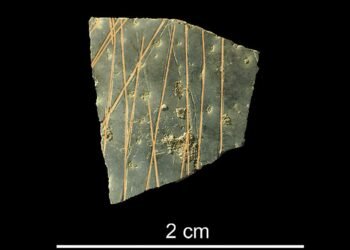
February 26, 2026
Genetic incompatibility between Homo sapiens and Neanderthals may have contributed to Neanderthal extinction

Did Preeclampsia contribute to Neanderthal extinction? new study explores a hidden reproductive risk

February 23, 2026

The Uzbek finds highlight the nuances of human spread across Eurasia. The region lies along the routes through which populations migrated from Africa, and contacts between Neanderthals, modern humans, and conceivably Denisovans may have facilitated genetic and cultural exchanges.

80,000-year-old arrowheads in Uzbekistan may be the world’s oldest, possibly made by Neanderthals
The points were too narrow to be used as knives or spears but were perfectly suited to slender shafts. Credit: H. Plisson et al., PLOS ONE (2025)

Researchers involved in the study noted that there is still more to be done. They plan to explore older sites in Central Asia and look for connections with Levantine communities, where early modern humans existed at the beginning of their spread in Eurasia. Direct evidence, such as arrows stuck in prey at hunting sites, would provide the strongest evidence of their use.

For the moment, at least, the 80,000-year-old Obi-Rakhmat tools indicate that the history of projectile technology—and the humans who created it—is older and more complex than previously thought.


More information: Plisson, H., Kharevich, A. V., Kharevich, V. M., Chistiakov, P. V., Zotkina, L. V., Baumann, M., … Krivoshapkin, A. I. (2025). Arrow heads at Obi-Rakhmat (Uzbekistan) 80 ka ago? PloS One, 20(8), e0328390. doi:10.1371/journal.pone.0328390
Share236Tweet148Share41ShareSend

You May Also Like...

Medieval monastery remains discovered beneath Borken’s historic center in Germany
Archaeology

Medieval monastery remains discovered beneath Borken’s historic center in Germany

February 26, 2026
How ancient communities adapted their diets and farming strategies in prehistoric Poland
Anthropology

How ancient communities adapted their diets and farming strategies in prehistoric Poland

February 26, 2026
60,000-year-old ostrich eggshell engravings reveal humanity’s earliest geometric designs
Archaeology

60,000-year-old ostrich eggshell engravings reveal humanity’s earliest geometric designs

February 26, 2026
Mesolithic burials in Sweden show ancient fur and feather headgear uncovered by new microscopic analysis
Anthropology

Mesolithic burials in Sweden show ancient fur and feather headgear uncovered by new microscopic analysis

February 25, 2026
Greek inscription found in Syria’s Great Mosque of Homs may reveal lost Temple of the Sun in ancient Emesa
Archaeology

Greek inscription found in Syria’s Great Mosque of Homs may reveal lost Temple of the Sun in ancient Emesa

February 25, 2026
40,000-year-old European engravings reveal structured sign systems, study finds
Archaeology

40,000-year-old European engravings reveal structured sign systems, study finds

February 25, 2026

Comments 2

  1. Editorial Team says:
    1 second ago

    Disclaimer: This website is a science-focused magazine that welcomes both academic and non-academic audiences. Comments are written by users and may include personal opinions or unverified claims. They do not necessarily reflect the views of our editorial team or rely on scientific evidence.

    Comment Policy: We kindly ask all commenters to engage respectfully. Comments that contain offensive, insulting, degrading, discriminatory, or racist content will be automatically removed.

    Reply
  2. Terry brown says:
    6 months ago

    Thank you wonderful article, I found some on the South Downs in flint, also lots of other flints that have been worked into flat, chosen for shape of course,they seem to resemble Gorilla profiles and other worked material supports that, thank you very much.Terry.

    Reply
  3. James Adams says:
    6 months ago

    Hello, I’ve got several arrowheads, some have good shape of the arrowhead but have sat and weathered for so many years they look like sandstone..I’ve takin several of these pieces and a very clean flint is inside. Just years, weather, sun, will cause that exterior. I’ve got pictures. And I’ve got 1 set that nobody has ever seen. These were found about 3 hundred yards apart from the same very rocky ditch, creek. The arrowhead was removed from the big chunk of flint. Obvious colors inside and out are different colors on each. The arrowhead is a hair smaller due to fine tuning. I would love to send an unbelievable picture but show them even more, thank you, James Adams

    Reply

Leave a Reply Cancel reply

Your email address will not be published. Required fields are marked *

Follow us


Instagram
244K

Facebook
118K

Threads
46K

LinkedIn
14K

Twitter
6K

YouTube
1K
  • Trending
  • Comments
  • Latest
Shipwreck Salvage. Credit: rawpixel.com / Public Domain

2,000-year-old shipwreck discovered off Turkish coast with remarkably preserved stacked ceramics

July 2, 2025
Viking age DNA reveals 9,000-year-old HIV-resistant gene originating near the Black Sea

Viking age DNA reveals 9,000-year-old HIV-resistant gene originating near the Black Sea

May 18, 2025
A new study suggests the mysterious Voynich Manuscript may be a medieval cipher

A new study suggests the mysterious Voynich Manuscript may be a medieval cipher

January 3, 2026
Moses may be named in ancient Egyptian mine inscriptions, sparking debate over earliest biblical references

Moses may be named in ancient Egyptian mine inscriptions, sparking debate over earliest biblical references

July 31, 2025
Mystery of Armenia’s 6,000-year-old dragon stones solved

Mystery of Armenia’s 6,000-year-old dragon stones solved

September 23, 2025
3D analysis reveals Shroud of Turin image likely came from sculpture, not Jesus’ body

3D analysis reveals Shroud of Turin image likely came from sculpture, not Jesus’ body

Moses may be named in ancient Egyptian mine inscriptions, sparking debate over earliest biblical references

Moses may be named in ancient Egyptian mine inscriptions, sparking debate over earliest biblical references

$1 million prize offered to decipher 5,300-year-old Indus Valley script

$1 million prize offered to decipher 5,300-year-old Indus Valley script

Oldest ever genetic data from a human relative found in 2-million-year-old fossilized teeth

Oldest ever genetic data from a human relative found in 2-million-year-old fossilized teeth

Exceptionally large Roman shoes discovered at Magna fort near Hadrian’s Wall

Exceptionally large Roman shoes discovered at Magna fort near Hadrian’s Wall

Medieval monastery remains discovered beneath Borken’s historic center in Germany

Medieval monastery remains discovered beneath Borken’s historic center in Germany

February 26, 2026
How ancient communities adapted their diets and farming strategies in prehistoric Poland

How ancient communities adapted their diets and farming strategies in prehistoric Poland

February 26, 2026
60,000-year-old ostrich eggshell engravings reveal humanity’s earliest geometric designs

60,000-year-old ostrich eggshell engravings reveal humanity’s earliest geometric designs

February 26, 2026
Mesolithic burials in Sweden show ancient fur and feather headgear uncovered by new microscopic analysis

Mesolithic burials in Sweden show ancient fur and feather headgear uncovered by new microscopic analysis

February 25, 2026
Greek inscription found in Syria’s Great Mosque of Homs may reveal lost Temple of the Sun in ancient Emesa

Greek inscription found in Syria’s Great Mosque of Homs may reveal lost Temple of the Sun in ancient Emesa

February 25, 2026

Archaeology News online magazine

Archaeology News is an international online magazine that covers all aspects of archaeology.


Categories

  • Academics
    • Books
    • Conferences
    • Universities
  • Articles
  • Download
  • Game
  • News
    • Anthropology
    • Archaeology
    • Paleontology
  • Quiz
  • Tours

Subscribe to our newsletter

© 2024 - Archaeology News Online Magazine. All Rights Reserved.

  • About
  • Privacy Policy
  • Terms of Use
  • Donation
  • Contact

Manage Consent
To provide the best experiences, we use technologies like cookies to store and/or access device information. Consenting to these technologies will allow us to process data such as browsing behavior or unique IDs on this site. Not consenting or withdrawing consent, may adversely affect certain features and functions.
Functional Always active
The technical storage or access is strictly necessary for the legitimate purpose of enabling the use of a specific service explicitly requested by the subscriber or user, or for the sole purpose of carrying out the transmission of a communication over an electronic communications network.
Preferences
The technical storage or access is necessary for the legitimate purpose of storing preferences that are not requested by the subscriber or user.
Statistics
The technical storage or access that is used exclusively for statistical purposes. The technical storage or access that is used exclusively for anonymous statistical purposes. Without a subpoena, voluntary compliance on the part of your Internet Service Provider, or additional records from a third party, information stored or retrieved for this purpose alone cannot usually be used to identify you.
Marketing
The technical storage or access is required to create user profiles to send advertising, or to track the user on a website or across several websites for similar marketing purposes.
  • Manage options
  • Manage services
  • Manage {vendor_count} vendors
  • Read more about these purposes
View preferences
  • {title}
  • {title}
  • {title}
  • Home
  • News
    • Archaeology
    • Anthropology
    • Paleontology
  • Academic
    • Books
    • Conferences
    • Universities
  • Articles
  • VR Tours
  • Quiz & Game
  • Download
  • Encyclopedia
  • Forum

About  .  Contact  .  Donation

© 2024 - Archaeology News Online Magazine. All Rights Reserved