• About
  • Privacy Policy
  • Terms of Use
  • Donation
  • Contact
No Result
View All Result
Archaeology News
  • Home
  • News
    • Archaeology
    • Anthropology
    • Paleontology
  • Academic
    • Books
    • Conferences
    • Universities
  • Articles
  • VR Tours
  • Quiz & Game
  • Download
  • Encyclopedia
  • Forum
Archaeology News
No Result
View All Result
Home News Archaeology

Roman hospital transformed into Byzantine church unearthed in ancient city of Kaunos

by Dario Radley
October 14, 2025

Archaeologists in southwestern Turkey have uncovered an astonishing architectural transformation in the ancient city of Kaunos—one that spans more than a millennium of history. Excavations near the city’s harbor have unearthed a Roman hospital that was later converted into a Byzantine monastery complex with a remarkably well-preserved church, offering an extraordinary window into the city’s evolution from a healing center to one of religious devotion.
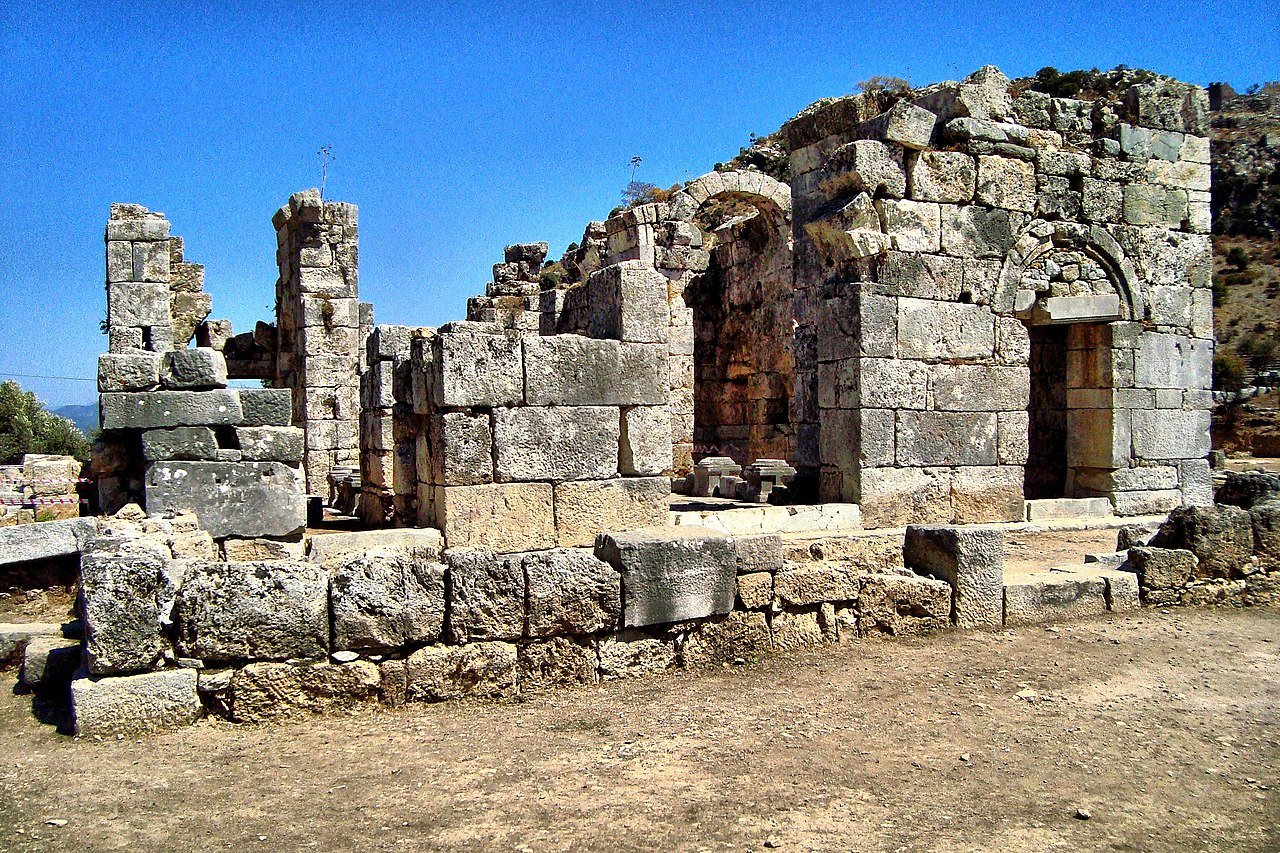
Roman hospital transformed into Byzantine church unearthed in ancient city of Kaunos
Kaunos Ruins. Haluk Comertel; CC BY 3.0

Kaunos, located in Muğla’s Köyceğiz district and listed on UNESCO’s World Heritage Tentative List, is already famous for its rock-cut tombs, a 5,000-seat theater, baths, and mosaics that are over two thousand years old. The recent discoveries, however, indicate another side of the ancient city’s history—its centuries-long life as a hub of medicine, religion, and cultural continuity.

Led by Associate Professor Ufuk Çörtük of Muğla Sıtkı Koçman University, excavations have focused on the so-called “Archaic walled monastery area.” Over the past three years, his team has uncovered layers of structures and artifacts that bear witness to the site’s evolving functions over the centuries. The earliest ruins are those of a Roman complex dating from the second and third centuries CE, which has been identified as a hospital or health center due to the vast quantity of medical instruments unearthed.

The structure featured a courtyard with rooms surrounding it, similar to other Roman hospitals known to have originated as military facilities before civilians used them. As it was near Kaunos’ ancient harbor, it would have treated residents and travelers amid the port city’s bustle.
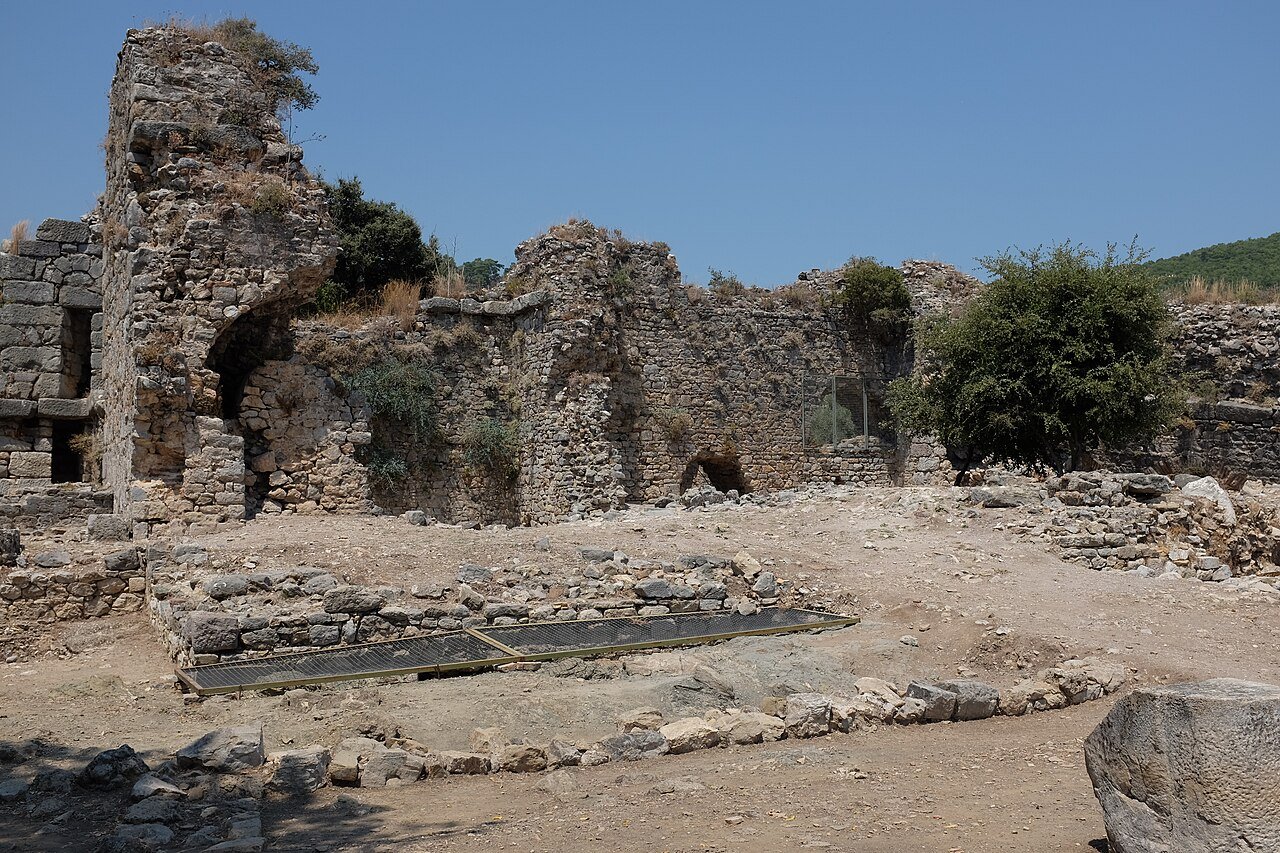
Roman hospital transformed into Byzantine church unearthed in ancient city of Kaunos
Roman baths of Kaunos. Credit: AlexanderVanLoon; CC BY-SA 4.0

By the sixth century CE, this formerly medical complex was transformed drastically. Archaeologists unearthed a large Christian church built directly atop the earlier Roman foundations—an indicator that the site had become part of a walled monastic complex during the Byzantine period. The well-preserved church reflects the city’s transformation into a spiritual center while preserving its architectural continuity over the centuries.

RelatedStories

The “Princess” of Bagicz re-dated: tree rings resolve the mystery of a rare Roman-era log coffin

The “Princess” of Bagicz re-dated: tree rings resolve the mystery of a rare Roman-era log coffin

February 20, 2026
Drone surveys reveal Roman forum and previously unknown monumental theater at Fioccaglia

Drone surveys reveal Roman forum and previously unknown monumental theater at Fioccaglia

February 15, 2026

The excavations also produced evidence of later occupation. A coin of Aydın Mehmed Bey of the Aydınoğulları Beylik, a Turkish principality from the 14th century, demonstrates that the site remained in use far into the medieval period. Çörtük noted that Kaunos experienced at least four or five distinct phases of use between the second century CE and the Turkish-Islamic period.

Roman hospital transformed into Byzantine church unearthed in ancient city of Kaunos
Rock-cut temple tombs in Kaunos. Credit: Alim Dağ

Researchers call the site a “living timeline” of Kaunos’ continuous adaptation through changing empires, beliefs, and social needs. It evolved from a healing sanctuary in the Roman world to a sacred Christian complex before becoming part of the Turkish Anatolian fabric.

The discovery underscores the ways in which Kaunos—among ancient Caria’s most significant port cities—embodied the intersection of medicine, religion, and daily life in the eastern Mediterranean.


Share72Tweet45Share13ShareSend

You May Also Like...

9,000-year-old evidence of dairy use discovered in Iran’s Zagros Mountains
Archaeology

9,000-year-old evidence of dairy use discovered in Iran’s Zagros Mountains

February 21, 2026
Oldest indigo-dyed textiles and nålbinding technique found in Bronze Age Anatolia
Archaeology

Oldest indigo-dyed textiles and nålbinding technique found in Bronze Age Anatolia

February 21, 2026
2,000-year-old human and animal footprints discovered at Lunan Bay, Scotland
Archaeology

2,000-year-old human and animal footprints discovered at Lunan Bay, Scotland

February 20, 2026
The “Princess” of Bagicz re-dated: tree rings resolve the mystery of a rare Roman-era log coffin
Anthropology

The “Princess” of Bagicz re-dated: tree rings resolve the mystery of a rare Roman-era log coffin

February 20, 2026
1.77-million-year-old Homo erectus skulls in China show early humans reached Asia sooner than believed
Anthropology

1.77-million-year-old Homo erectus skulls in China show early humans reached Asia sooner than believed

February 19, 2026
Hidden 17th-century bastion fort discovered in Świerże, eastern Poland
Archaeology

Hidden 17th-century bastion fort discovered in Świerże, eastern Poland

February 19, 2026

Comments 0

  1. Editorial Team says:
    1 second ago

    Disclaimer: This website is a science-focused magazine that welcomes both academic and non-academic audiences. Comments are written by users and may include personal opinions or unverified claims. They do not necessarily reflect the views of our editorial team or rely on scientific evidence.

    Comment Policy: We kindly ask all commenters to engage respectfully. Comments that contain offensive, insulting, degrading, discriminatory, or racist content will be automatically removed.

    Reply

Leave a Reply Cancel reply

Your email address will not be published. Required fields are marked *

Follow us


Instagram
244K

Facebook
118K

Threads
45K

LinkedIn
14K

Twitter
6K

YouTube
1K
  • Trending
  • Comments
  • Latest
Shipwreck Salvage. Credit: rawpixel.com / Public Domain

2,000-year-old shipwreck discovered off Turkish coast with remarkably preserved stacked ceramics

July 2, 2025
Viking age DNA reveals 9,000-year-old HIV-resistant gene originating near the Black Sea

Viking age DNA reveals 9,000-year-old HIV-resistant gene originating near the Black Sea

May 18, 2025
A new study suggests the mysterious Voynich Manuscript may be a medieval cipher

A new study suggests the mysterious Voynich Manuscript may be a medieval cipher

January 3, 2026
Moses may be named in ancient Egyptian mine inscriptions, sparking debate over earliest biblical references

Moses may be named in ancient Egyptian mine inscriptions, sparking debate over earliest biblical references

July 31, 2025
Mystery of Armenia’s 6,000-year-old dragon stones solved

Mystery of Armenia’s 6,000-year-old dragon stones solved

September 23, 2025
3D analysis reveals Shroud of Turin image likely came from sculpture, not Jesus’ body

3D analysis reveals Shroud of Turin image likely came from sculpture, not Jesus’ body

Moses may be named in ancient Egyptian mine inscriptions, sparking debate over earliest biblical references

Moses may be named in ancient Egyptian mine inscriptions, sparking debate over earliest biblical references

$1 million prize offered to decipher 5,300-year-old Indus Valley script

$1 million prize offered to decipher 5,300-year-old Indus Valley script

Oldest ever genetic data from a human relative found in 2-million-year-old fossilized teeth

Oldest ever genetic data from a human relative found in 2-million-year-old fossilized teeth

Exceptionally large Roman shoes discovered at Magna fort near Hadrian’s Wall

Exceptionally large Roman shoes discovered at Magna fort near Hadrian’s Wall

9,000-year-old evidence of dairy use discovered in Iran’s Zagros Mountains

9,000-year-old evidence of dairy use discovered in Iran’s Zagros Mountains

February 21, 2026
Oldest indigo-dyed textiles and nålbinding technique found in Bronze Age Anatolia

Oldest indigo-dyed textiles and nålbinding technique found in Bronze Age Anatolia

February 21, 2026
2,000-year-old human and animal footprints discovered at Lunan Bay, Scotland

2,000-year-old human and animal footprints discovered at Lunan Bay, Scotland

February 20, 2026
The “Princess” of Bagicz re-dated: tree rings resolve the mystery of a rare Roman-era log coffin

The “Princess” of Bagicz re-dated: tree rings resolve the mystery of a rare Roman-era log coffin

February 20, 2026
1.77-million-year-old Homo erectus skulls in China show early humans reached Asia sooner than believed

1.77-million-year-old Homo erectus skulls in China show early humans reached Asia sooner than believed

February 19, 2026

Archaeology News online magazine

Archaeology News is an international online magazine that covers all aspects of archaeology.


Categories

  • Academics
    • Books
    • Conferences
    • Universities
  • Articles
  • Download
  • Game
  • News
    • Anthropology
    • Archaeology
    • Paleontology
  • Quiz
  • Tours

Subscribe to our newsletter

© 2024 - Archaeology News Online Magazine. All Rights Reserved.

  • About
  • Privacy Policy
  • Terms of Use
  • Donation
  • Contact

Manage Consent
To provide the best experiences, we use technologies like cookies to store and/or access device information. Consenting to these technologies will allow us to process data such as browsing behavior or unique IDs on this site. Not consenting or withdrawing consent, may adversely affect certain features and functions.
Functional Always active
The technical storage or access is strictly necessary for the legitimate purpose of enabling the use of a specific service explicitly requested by the subscriber or user, or for the sole purpose of carrying out the transmission of a communication over an electronic communications network.
Preferences
The technical storage or access is necessary for the legitimate purpose of storing preferences that are not requested by the subscriber or user.
Statistics
The technical storage or access that is used exclusively for statistical purposes. The technical storage or access that is used exclusively for anonymous statistical purposes. Without a subpoena, voluntary compliance on the part of your Internet Service Provider, or additional records from a third party, information stored or retrieved for this purpose alone cannot usually be used to identify you.
Marketing
The technical storage or access is required to create user profiles to send advertising, or to track the user on a website or across several websites for similar marketing purposes.
  • Manage options
  • Manage services
  • Manage {vendor_count} vendors
  • Read more about these purposes
View preferences
  • {title}
  • {title}
  • {title}
  • Home
  • News
    • Archaeology
    • Anthropology
    • Paleontology
  • Academic
    • Books
    • Conferences
    • Universities
  • Articles
  • VR Tours
  • Quiz & Game
  • Download
  • Encyclopedia
  • Forum

About  .  Contact  .  Donation

© 2024 - Archaeology News Online Magazine. All Rights Reserved