
Archaeologists have concluded the latest field season at Kissonerga-Skalia, a site north of Paphos that preserves one of the most detailed records of early communities on Cyprus. This year’s work, directed by Dr. Lindy Crewe of the Cyprus American Archaeological Research Institute, has refined the picture of a settlement that developed steadily from the early third millennium BCE until its final abandonment around 1600 BCE.
This settlement developed during the Philia phase, subsequent to earlier activity at nearby Kissonerga–Mosphilia, and expanded to become an important community by Middle Bronze Age times. The excavations have demonstrated that by about 1750 BCE, the occupants initiated an ambitious construction program that radically reshaped the settlement’s northern slope. Earlier domestic structures had been deliberately dismantled and their debris used to form an extensive, artificially leveled terrace, about 1,200 square meters in area. Upon this newly created platform, builders constructed an organized complex comprising thick walls, roofed rooms, and open courtyards, whose floors were covered with hard clay or gypsum.
The scale and planning of this complex mirror broader transformations across the eastern Mediterranean, a period when maritime networks expanded, and specialized craft production increased. Nothing uncovered so far indicates that these structures were used as living quarters. Instead, installations associated with heating, grinding, storage, and material processing point toward industrial activities carried out on a significant scale. Remarkably, the complex was occupied only briefly. The settlement was abandoned early in the Late Cypriot period, leaving its final phase sealed and exceptionally well preserved.
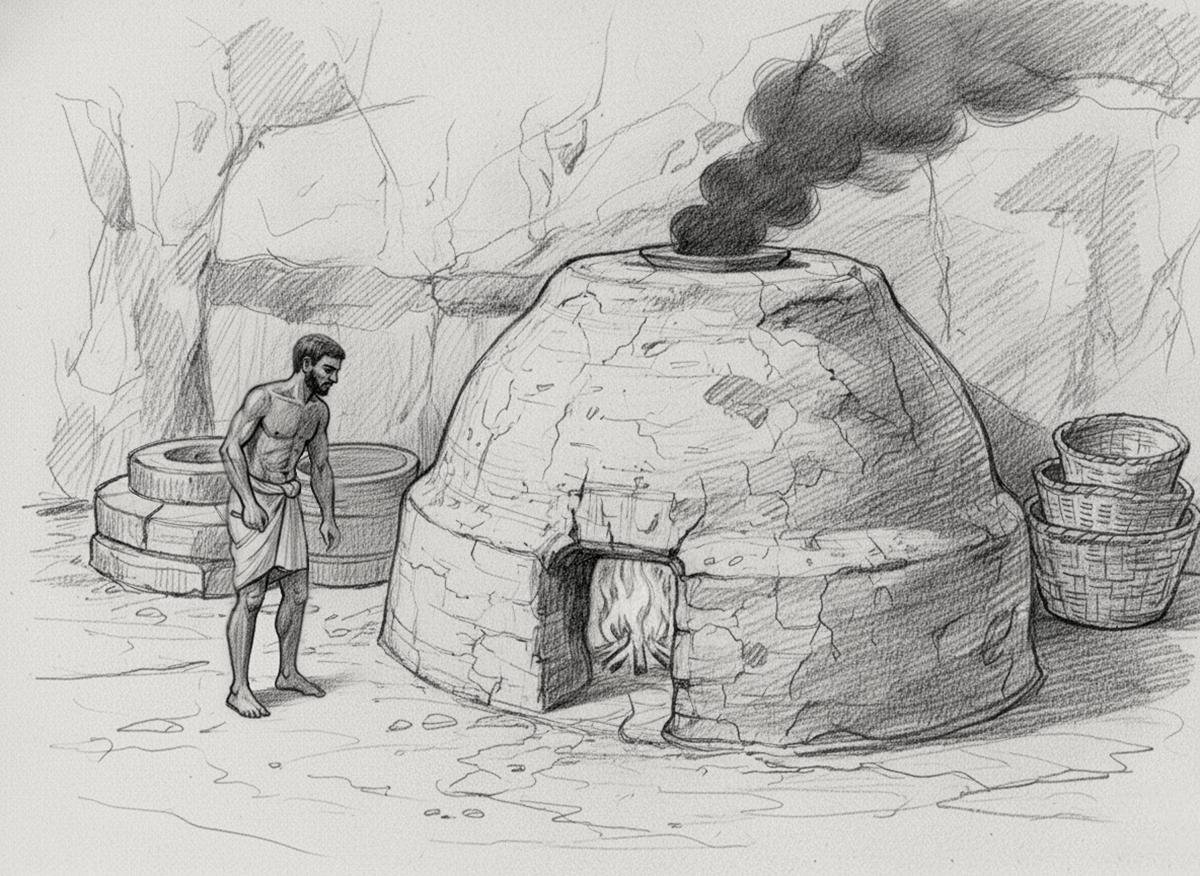
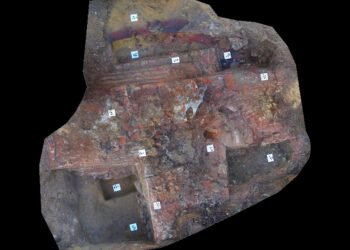
This year’s excavation concentrated on the use of the complex’s open areas, particularly one courtyard where a domed oven, about 1.5 m in diameter, had been discovered earlier. Further investigation showed that this courtyard is actually G-shaped in layout, and at its short end, the team discovered one of the season’s most striking features: a much larger, open-air oven or heating installation.
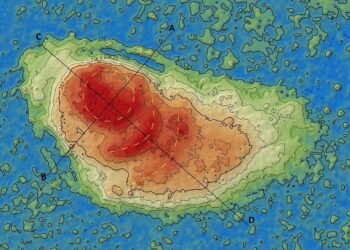
This newly excavated structure is approximately four meters in diameter and was constructed as a concave, hard-fired hollow lined with a mixture of mud and lime. It was probably surrounded by low mudbrick walls but left uncovered. Excavators recovered stone tools, fragments of plaster or lime, pottery pieces, and animal bones from within—materials that may reflect cleaning episodes or the final use of the installation. It was already out of use when a new floor was laid over the oven, and it predates the construction of the smaller domed oven in the same area.

Although the exact function of the installation remains uncertain, processing the soil samples revealed an unexpected clue: wet-sieving produced charred wheat grains and terebinth remains. This indicates that foods containing such ingredients were either prepared or accidentally burnt in the installation. These findings provide a rare insight into the culinary practices of Bronze Age Cyprus and form an intriguing part of the broader picture of Kissonerga-Skalia in a period of growing technological and economic change.










Disclaimer: This website is a science-focused magazine that welcomes both academic and non-academic audiences. Comments are written by users and may include personal opinions or unverified claims. They do not necessarily reflect the views of our editorial team or rely on scientific evidence.
Comment Policy: We kindly ask all commenters to engage respectfully. Comments that contain offensive, insulting, degrading, discriminatory, or racist content will be automatically removed.