• About
  • Privacy Policy
  • Terms of Use
  • Donation
  • Contact
No Result
View All Result
Archaeology News
  • Home
  • News
    • Archaeology
    • Anthropology
    • Paleontology
  • Academic
    • Books
    • Conferences
    • Universities
  • Articles
  • VR Tours
  • Quiz & Game
  • Download
  • Encyclopedia
  • Forum
Archaeology News
No Result
View All Result
Home News Archaeology

Signatures meant more in Mesopotamia than they do now − what cylinder seals say about ancient and modern life

November 7, 2025

by Serdar Yalçin — The earliest form of the signature came from ancient Iraq in the form of cylinder seals.

Mesopotamians, the ancient inhabitants of the land between the Euphrates and Tigris rivers, are credited for many firsts in human history, including writing, urbanism and the state. Among these inventions, cylinder seals are perhaps the most distinctive but least known.
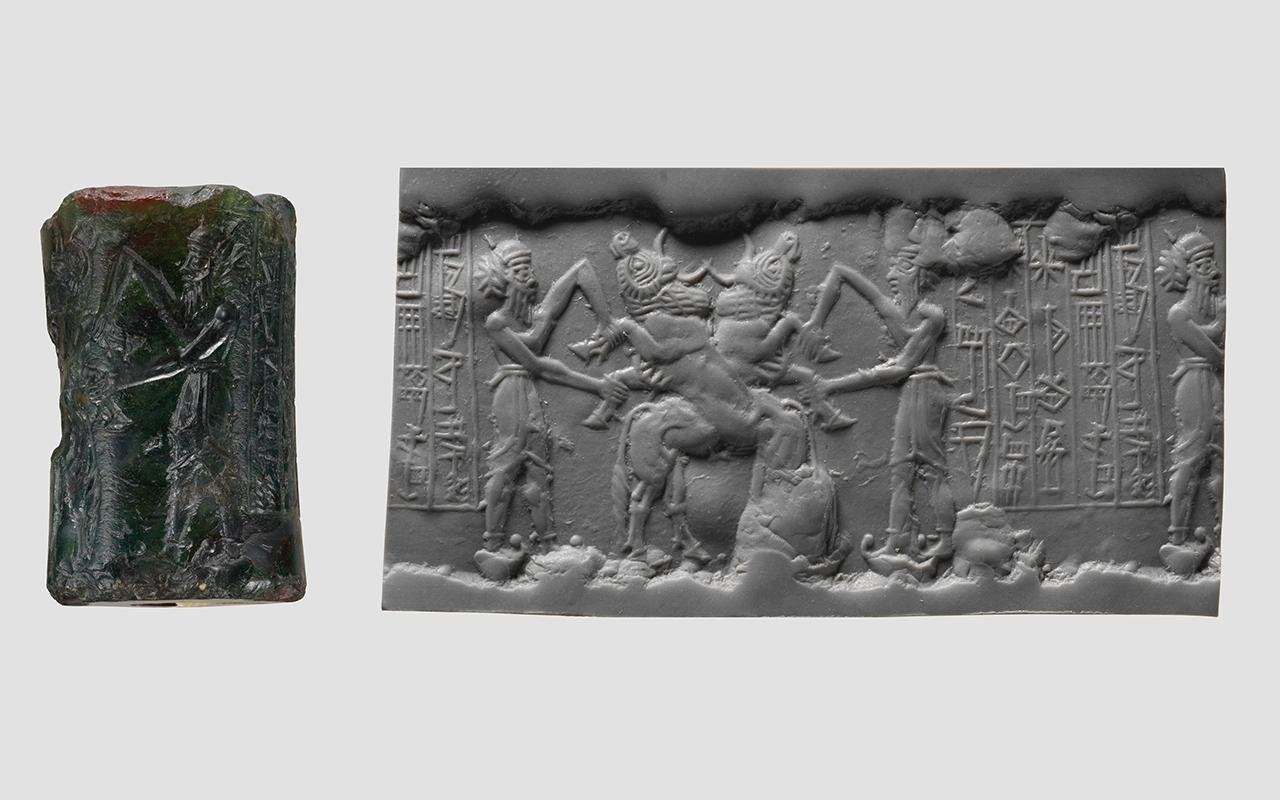
Signatures meant more in Mesopotamia than they do now − what cylinder seals say about ancient and modern life
An Akkadian cylinder seal, circa 2350-2150 BCE., depicts a contest scene. The image on the right shows the impression the seal would make. Credit: Metropolitan Museum of Art

Seals as artifacts

Thousands of these tiny objects—often no bigger than 2 inches (5 centimeters) in height and 1 inch (2.5 cm) in diameter—are displayed in museums today. They testify to an artistic tradition in ancient Iraq and Syria that remained uninterrupted from the late fourth to first millennia B.C.E.

In essence, a cylinder seal was a small sculpture that served a crucial utilitarian purpose: signing documents. It was generally made of a precious or semiprecious stone such as lapis lazuli, agate or chalcedony. Images and texts were engraved into the stone with a technique called intaglio. Notably, these engravings would need to be made in reverse of how the markings would look when it was used.


RelatedStories

5,000-year-old monumental building in Iraq reveals ties to the world’s first cities

5,000-year-old monumental building in Iraq reveals ties to the world’s first cities

November 3, 2025
Rare Assyrian inscription found in Jerusalem

Rare Assyrian inscription found in Jerusalem

October 22, 2025

When rolled on a moist clay tablet, these engravings left low-relief markings, signifying that the object’s owner authorized the written document. In this respect, a cylinder seal’s impression is the ancestor of modern handwritten and digital signatures.

Seals and identity

While cylinder seals were a creation of the Sumerians who inhabited southern Mesopotamia about 6,000 years ago, they rapidly spread to the rest of Western Asia and the eastern Mediterranean and became important items in everyday life.
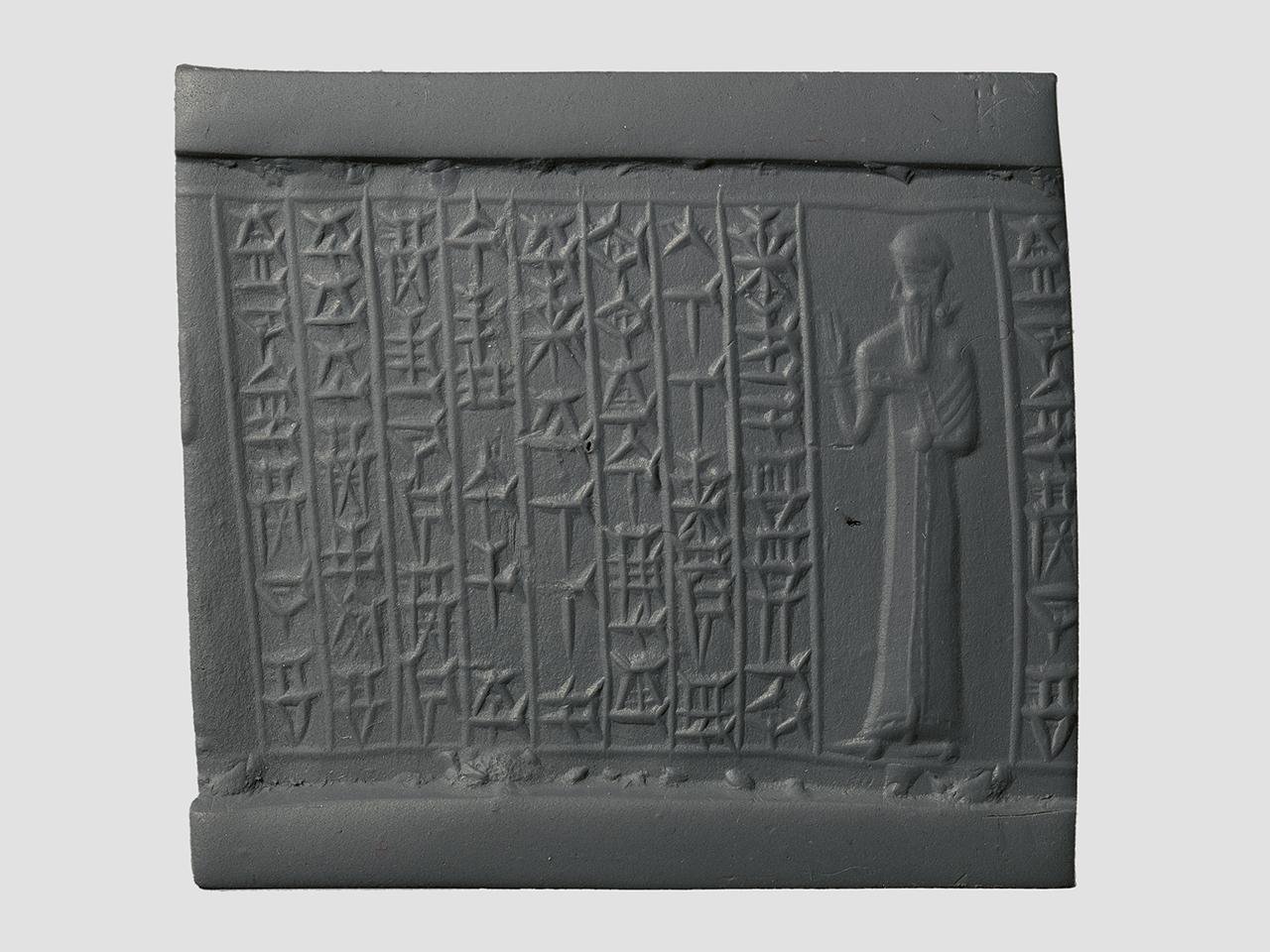
Signatures meant more in Mesopotamia than they do now − what cylinder seals say about ancient and modern life
Babylonian seal made of chalcedony, circa 14th century BCE, inscribed with a hymn to the goddess Inanna. The seal was owned by a man named Tunamisah, son of Pari. Credit: Metropolitan Museum of Art

Communities in this vast region—especially those in Mesopotamia, an area poor in raw materials—imported stones from distant lands to make their seals. Mesopotamians extracted diorite from Oman, lapis lazuli from Afghanistan, and carnelian and agate from the Indus Valley and other parts of South Asia.

Seals made of these exotic stones were extra valuable, so only the elite could afford them. Often affiliated with the state and temples, these people were typically royalty, high-level bureaucrats and priests. In contrast, people from lower classes used seals made of less valuable materials, such as limestone, clay or glass.

Mesopotamians and their contemporaries in Western Asia expressed their identities not just through the material of their seals but also through the texts and images engraved on them. The seal texts often introduced the owners with their names, genealogies, gender, professions and hometowns. Thanks to this information, researchers know that not just men but also wealthy women owned seals, albeit in much smaller proportions.

Religious identity, too, was communicated via long prayers addressed to personal gods or via images depicting gods and worshippers.

Making seals

The scope of Mesopotamian imagery depicted on cylinder seals was broad. For thousands of years, seal-cutters—the artisans who exclusively specialized in making seals—carved scenes representing daily life and nature, religious rituals, warfare, architectural vistas and mythical stories involving gods, heroes and hybrid creatures such as winged horses and griffins.
Signatures meant more in Mesopotamia than they do now − what cylinder seals say about ancient and modern life
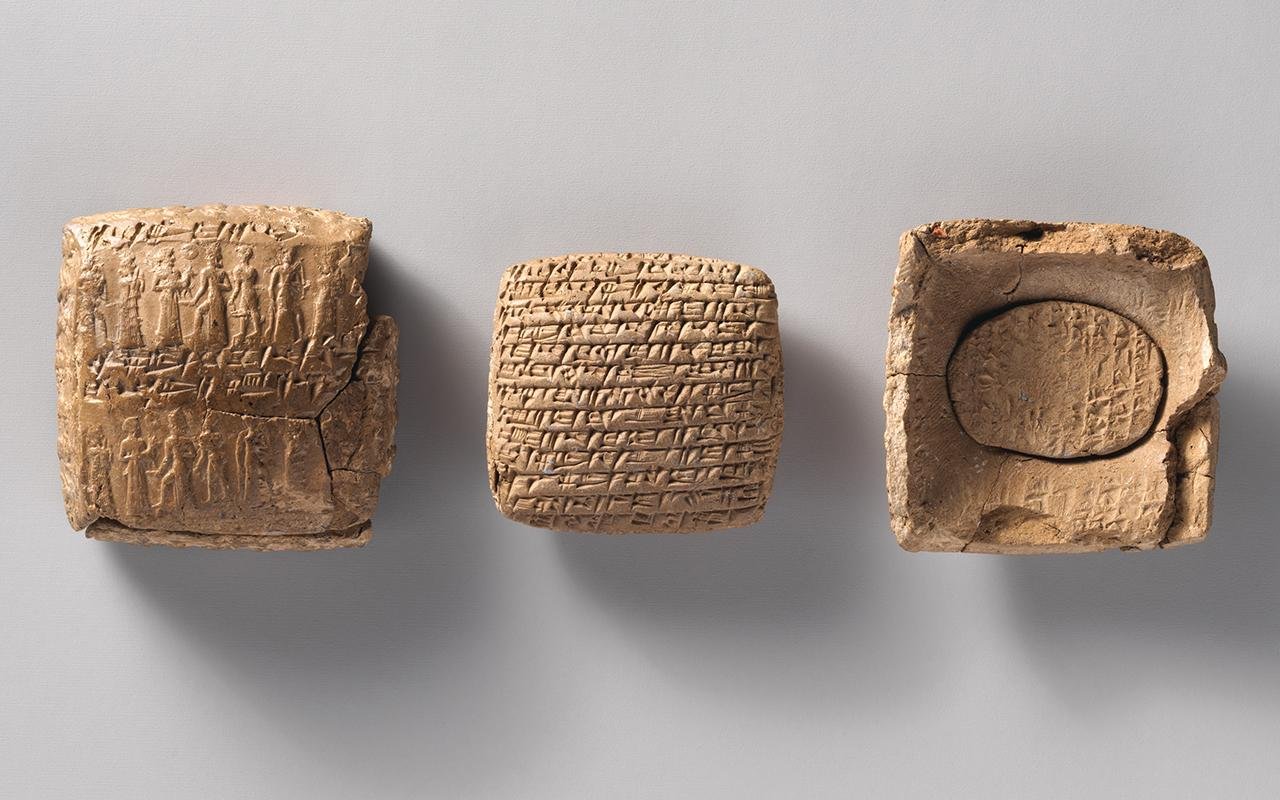
Clay envelope and tablets from Kültepe-Kanesh (now Turkey), circa 20th-19th centuries BCE. The writer, Ashur-muttabbil, impressed – or signed – the envelope twice with a cylinder seal. Credit: Metropolitan Museum of Art

Much of this rich imagery was a result of the owners’ personal choices, often referencing their identities. In some exceptional cases, Mesopotamian kings or their aides monitored and approved the designs of the cylinder seals they gifted to high-level officials.

Many seals seem to have already been carved with the popular cultural motifs before they were sold to clients, although solid archaeological and archival evidence is still needed to confirm this. When a customer bought these premade objects, they may have asked for a new inscription or some adjustments to the imagery. Most known cylinder seals were likely carved anew for elite clients, especially for those from the highest echelons of society, such as royalty.

Cylinder seals open a wide window not just into ancient Mesopotamian art and culture but also into the minds of individual Mesopotamians. Carved with personalized images and texts reflecting their views on life and society, seals were intimately connected to their owners. Losing one’s seal was considered a very negative omen for its patron. In contrast, modern signatures are often depersonalized and generic.

Cylinder seals—along with city life, organized religion and bureaucracy—were a key component of ancient Mesopotamian civilization. These features, in different forms and proportions, continue to define modern life today.

  • This article was republished from The Conversation under a Creative Commons license. Read the original publication.

Share101Tweet63Share18ShareSend

You May Also Like...

How centuries of drought doomed the Indus Valley Civilization, one of the world’s oldest civilizations
Archaeology

How centuries of drought doomed the Indus Valley Civilization, one of the world’s oldest civilizations

November 30, 2025
5,500-year-old wildcat found in Glencurran Cave rewrites Ireland’s prehistoric wildlife history
Archaeology

5,500-year-old wildcat found in Glencurran Cave rewrites Ireland’s prehistoric wildlife history

November 30, 2025
Ancient DNA from Shimao’s male skulls overturns assumptions about Neolithic rites
Anthropology

Ancient genomes rewrite the story of Shimao’s origins and its gendered ritual practices

November 29, 2025
Ice Age hunters built mammoth-bone shelters in Ukraine, new study reveals precise timeline
Archaeology

Scientists redate Ukraine’s mammoth-bone structures, uncovering Ice Age survival tactics

November 29, 2025
Medieval warrior-monk with extreme skull deformity discovered at Spanish fortress
Anthropology

Medieval warrior-monk with extreme skull deformity discovered at Spanish fortress

November 28, 2025
North American rock art dated to 6,000 years ago, revealing a 4,000-year tradition
Archaeology

North American rock art dated to 6,000 years ago, revealing a 4,000-year tradition

November 28, 2025

Comments 0

  1. Editorial Team says:
    1 second ago
    Disclaimer: This website is a science-focused magazine that welcomes both academic and non-academic audiences. Comments are written by users and may include personal opinions or unverified claims. They do not necessarily reflect the views of our editorial team or rely on scientific evidence.
    Reply

Leave a Reply Cancel reply

Your email address will not be published. Required fields are marked *

Follow us


Instagram
245K

Facebook
117K

Threads
45K

LinkedIn
14K

Twitter
6K

YouTube
1K
  • Trending
  • Comments
  • Latest
Shipwreck Salvage. Credit: rawpixel.com / Public Domain

2,000-year-old shipwreck discovered off Turkish coast with remarkably preserved stacked ceramics

July 2, 2025
Viking age DNA reveals 9,000-year-old HIV-resistant gene originating near the Black Sea

Viking age DNA reveals 9,000-year-old HIV-resistant gene originating near the Black Sea

May 18, 2025
Complete copy of the Canopus Decree unearthed in Egypt after 150 years

Complete copy of the Canopus Decree unearthed in Egypt after 150 years

September 13, 2025
Mystery of Armenia’s 6,000-year-old dragon stones solved

Mystery of Armenia’s 6,000-year-old dragon stones solved

September 23, 2025
Moses may be named in ancient Egyptian mine inscriptions, sparking debate over earliest biblical references

Moses may be named in ancient Egyptian mine inscriptions, sparking debate over earliest biblical references

July 31, 2025
3D analysis reveals Shroud of Turin image likely came from sculpture, not Jesus’ body

3D analysis reveals Shroud of Turin image likely came from sculpture, not Jesus’ body

Moses may be named in ancient Egyptian mine inscriptions, sparking debate over earliest biblical references

Moses may be named in ancient Egyptian mine inscriptions, sparking debate over earliest biblical references

$1 million prize offered to decipher 5,300-year-old Indus Valley script

$1 million prize offered to decipher 5,300-year-old Indus Valley script

Oldest ever genetic data from a human relative found in 2-million-year-old fossilized teeth

Oldest ever genetic data from a human relative found in 2-million-year-old fossilized teeth

Exceptionally large Roman shoes discovered at Magna fort near Hadrian’s Wall

Exceptionally large Roman shoes discovered at Magna fort near Hadrian’s Wall

How centuries of drought doomed the Indus Valley Civilization, one of the world’s oldest civilizations

How centuries of drought doomed the Indus Valley Civilization, one of the world’s oldest civilizations

November 30, 2025
5,500-year-old wildcat found in Glencurran Cave rewrites Ireland’s prehistoric wildlife history

5,500-year-old wildcat found in Glencurran Cave rewrites Ireland’s prehistoric wildlife history

November 30, 2025
Ancient DNA from Shimao’s male skulls overturns assumptions about Neolithic rites

Ancient genomes rewrite the story of Shimao’s origins and its gendered ritual practices

November 29, 2025
Ice Age hunters built mammoth-bone shelters in Ukraine, new study reveals precise timeline

Scientists redate Ukraine’s mammoth-bone structures, uncovering Ice Age survival tactics

November 29, 2025
Medieval warrior-monk with extreme skull deformity discovered at Spanish fortress

Medieval warrior-monk with extreme skull deformity discovered at Spanish fortress

November 28, 2025

Archaeology News online magazine

Archaeology News is an international online magazine that covers all aspects of archaeology.


Categories

  • Academics
    • Books
    • Conferences
    • Universities
  • Articles
  • Download
  • Game
  • News
    • Anthropology
    • Archaeology
    • Paleontology
  • Quiz
  • Tours

Subscribe to our newsletter

© 2024 - Archaeology News Online Magazine. All Rights Reserved.

  • About
  • Privacy Policy
  • Terms of Use
  • Donation
  • Contact

Welcome Back!

Login to your account below

Forgotten Password? Sign Up

Create New Account!

Fill the forms below to register

All fields are required. Log In

Retrieve your password

Please enter your username or email address to reset your password.

Log In

Add New Playlist

Manage Consent
To provide the best experiences, we use technologies like cookies to store and/or access device information. Consenting to these technologies will allow us to process data such as browsing behavior or unique IDs on this site. Not consenting or withdrawing consent, may adversely affect certain features and functions.
Functional Always active
The technical storage or access is strictly necessary for the legitimate purpose of enabling the use of a specific service explicitly requested by the subscriber or user, or for the sole purpose of carrying out the transmission of a communication over an electronic communications network.
Preferences
The technical storage or access is necessary for the legitimate purpose of storing preferences that are not requested by the subscriber or user.
Statistics
The technical storage or access that is used exclusively for statistical purposes. The technical storage or access that is used exclusively for anonymous statistical purposes. Without a subpoena, voluntary compliance on the part of your Internet Service Provider, or additional records from a third party, information stored or retrieved for this purpose alone cannot usually be used to identify you.
Marketing
The technical storage or access is required to create user profiles to send advertising, or to track the user on a website or across several websites for similar marketing purposes.
  • Manage options
  • Manage services
  • Manage {vendor_count} vendors
  • Read more about these purposes
View preferences
  • {title}
  • {title}
  • {title}
  • Home
  • News
    • Archaeology
    • Anthropology
    • Paleontology
  • Academic
    • Books
    • Conferences
    • Universities
  • Articles
  • VR Tours
  • Quiz & Game
  • Download
  • Encyclopedia
  • Forum

About  .  Contact  .  Donation

© 2024 - Archaeology News Online Magazine. All Rights Reserved